
As humans, we experience the forces of nature in a particular way and at a particular scale. If you knew nothing else, it might seem like gravity is the force out of the four that holds most weight perceptually. After all, it holds us down to the Earth, and that’s important.
But gravity is by far the weakest of the fundamental forces. We can’t even feel the gravitational pull of something the size of a mountain, let alone any (literal) gravitational attraction between people. On the other hand, electromagnetism is much stronger. A small magnet can easily stay adhered to the side of a fridge, hardly bothered by the gravity of the entire Earth beneath it.
Electricity and magnetism (which are two sides of a single force) rule our human experience much more than you might think. The electromagnetic repulsion between atomic nuclei is the reason we can’t walk through walls, the reason we can hold each other’s hands, and the source behind the world of textures we can feel. Electromagnetism is responsible for all the dynamics of light and color. And sure, you also couldn’t charge your phones without it.
And yet so many electromagnetic phenomena are hardly discernible to us, relatively large creatures that we are. You might not have noticed that even water has magnetic properties for example, unless you were shown a neat experiment like this one:
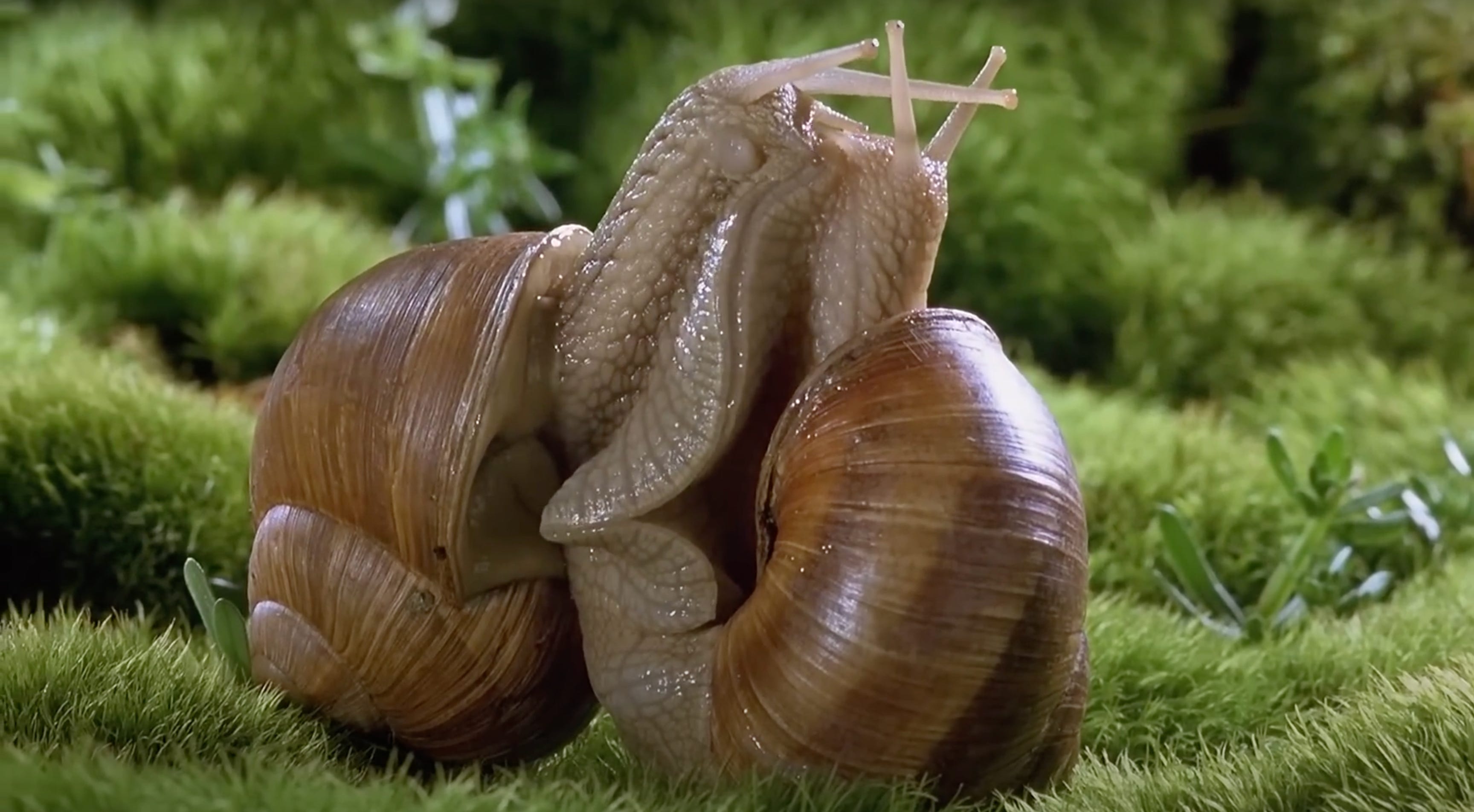
The effects of electromagnetism might be much more perceptible if we shrunk down to the size of bugs. At least that was a thought I couldn’t shake while watching the 1996 experimental nature documentary Microcosmos.
Microcosmos is an otherworldly introduction to the lives of the quite small. Technologically ahead of its time, the film captures impressive detail, and its creative score sensationalizes the days in the lives of these creepy creatures. It makes looking through a microscope feel like a peepshow.
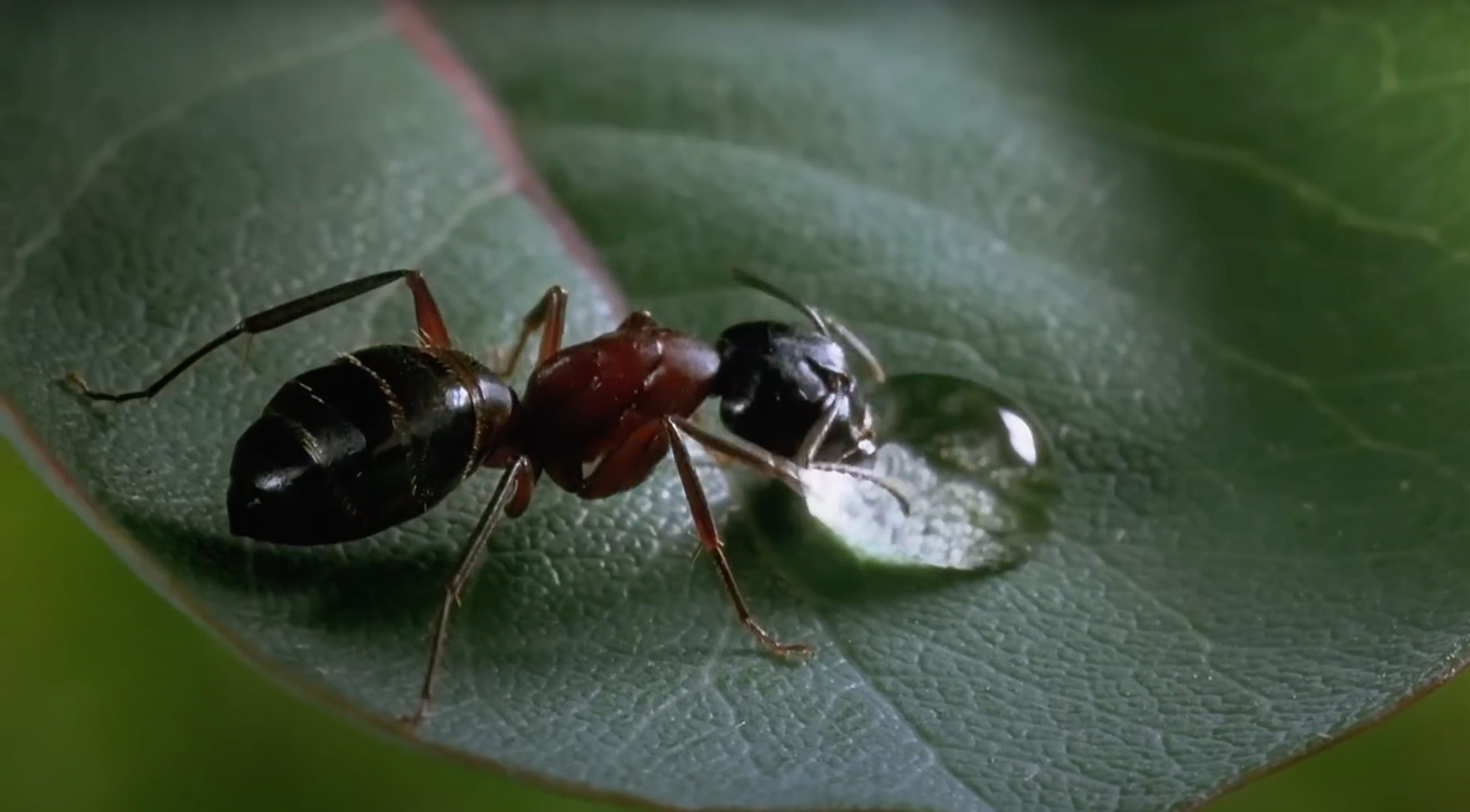
At this scale, there is no question about the electromagnetic characteristics of water. Water droplets disobey gravity, hanging from stems in spherical mounds. They’re sticky, thanks to the polarity of the H2O molecule.
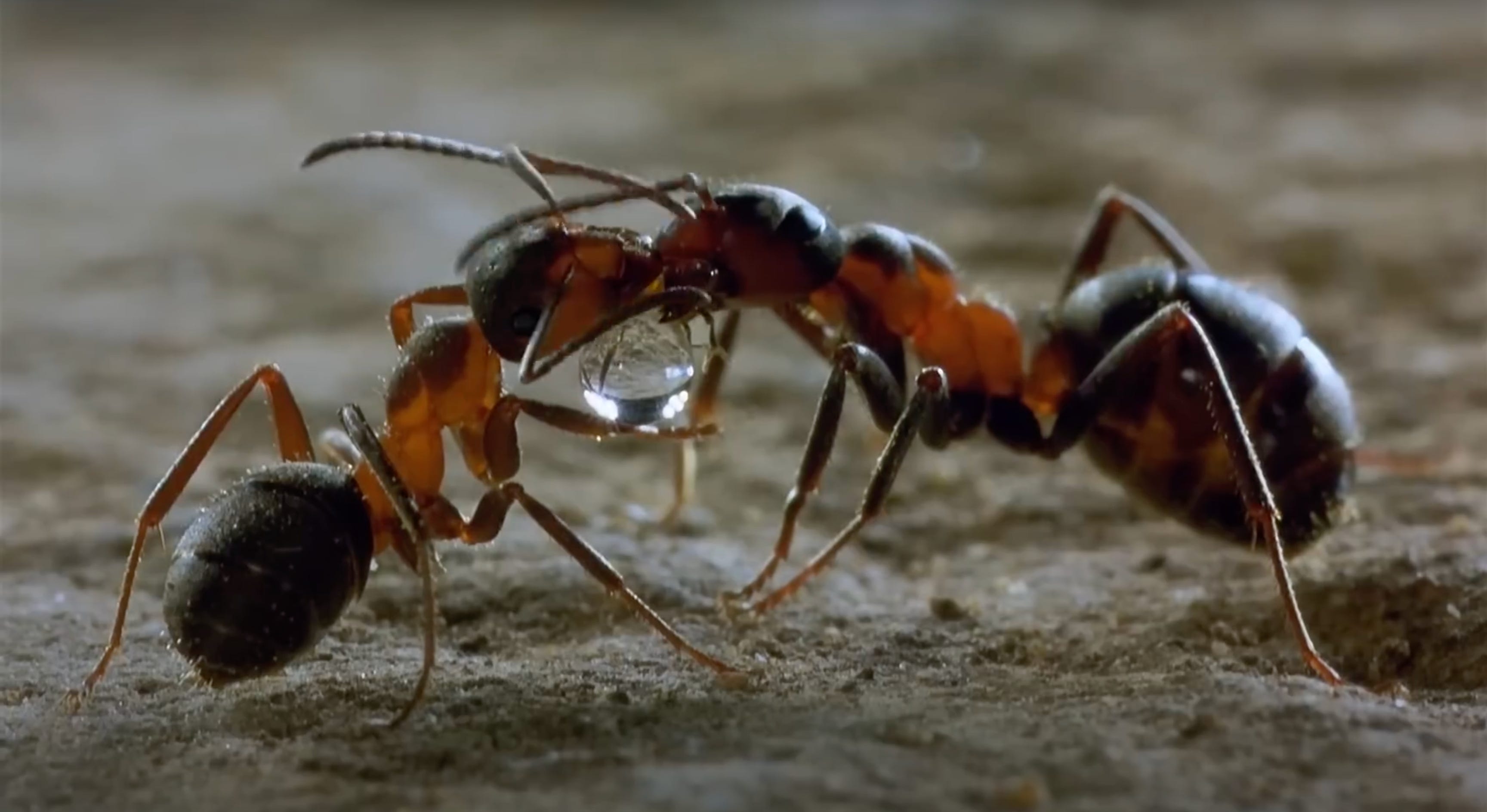
The ant has a similar experience. Approaching the water droplet means a compact drink, no bottle needed.
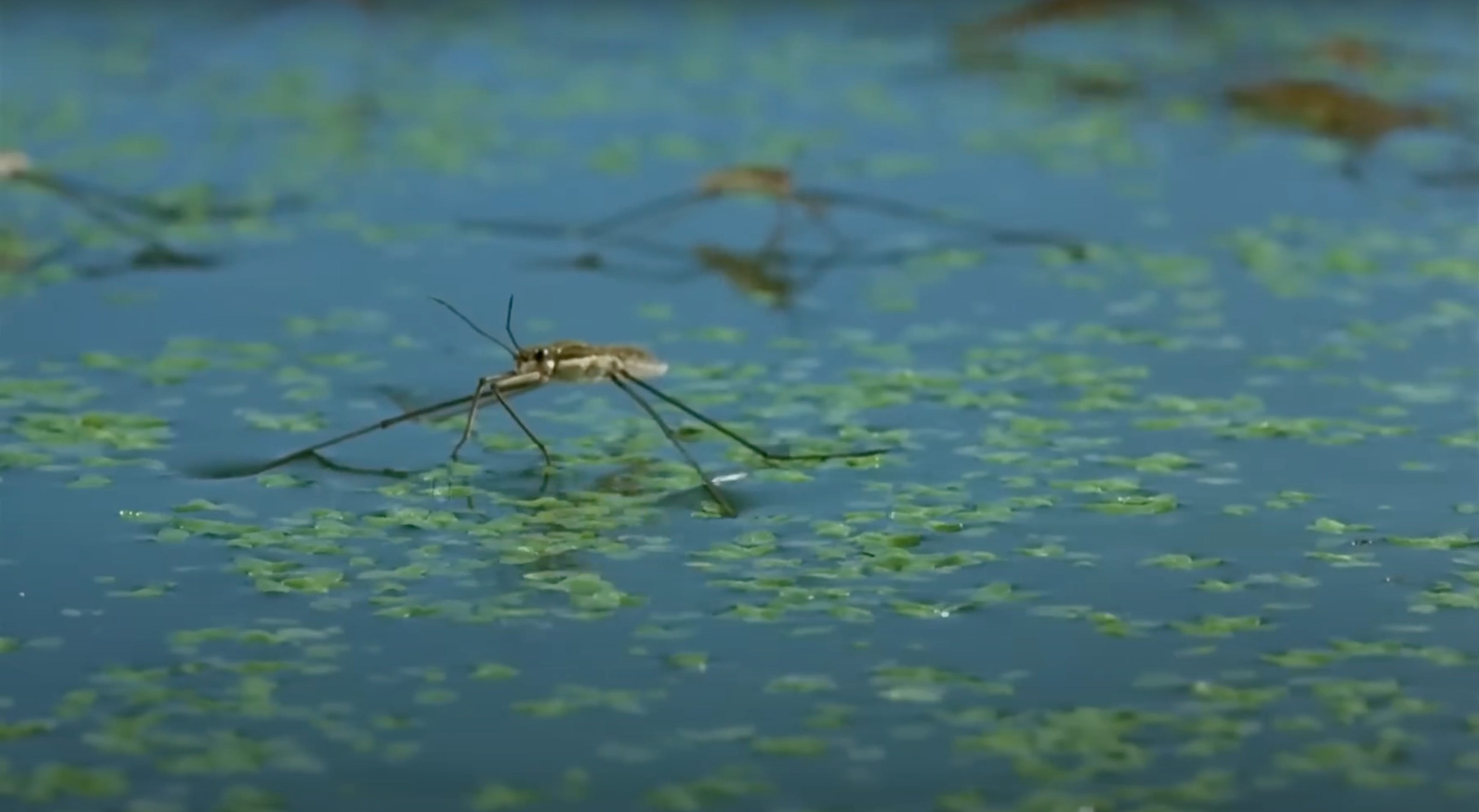
You may have noticed water’s surface tension at our human scale - it’s why you can fill up a cup a little too much without it spilling over. For the water bug, this surface tension is enough to turn a pond into a soft ground to walk right over.
Of course, being this small means you probably aren’t taking conscious note of these laws of physics. Take a creature like this caterpillar, who is hardcoded to follow the path set by the caterpillar in front of it. It doesn’t seem to have any awareness when its biological software leads it astray.
I imagine the consciousness these guys experience is more like sub-consciousness; a sort of black box existence where you appear to be reacting to and interacting with your environment, but without any online subjective experience to boot.
On that note, this isn’t the first time I’ve wondered if bugs experience the laws of physics differently from us. While on a trip to Mexico City two years ago, I ate a solo lunch in a beautiful garden cafe called La Pausa. While watching an ant climb a nearby flower pot, I started to wonder if a creature that small and simple might be more affected by the randomness of quantum mechanics. I made this drawing back then while thinking about it.
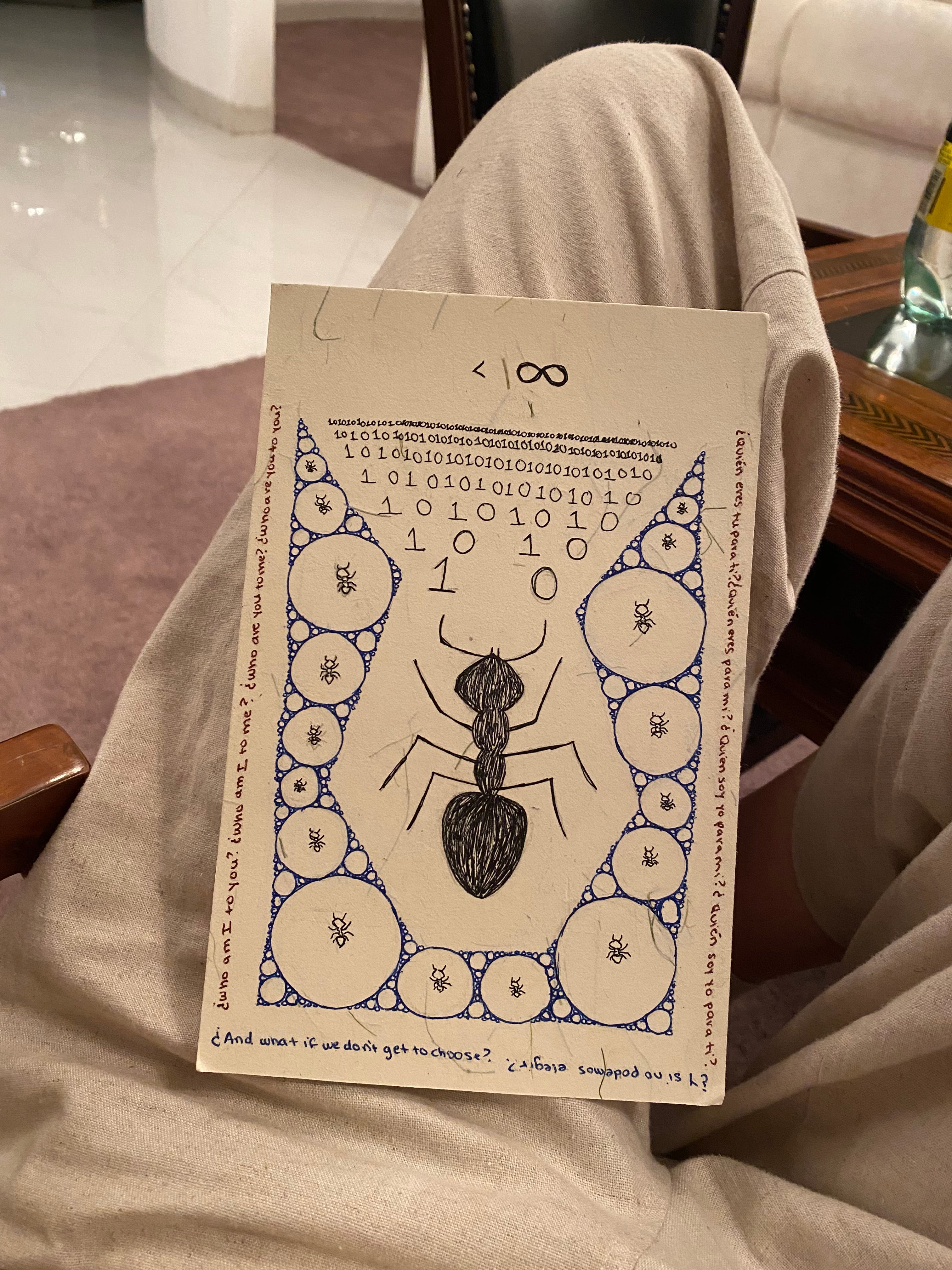
Physicist Erwin Schrodinger wondered about this sort of thing too, but in his book What is Life? he figured that any biological system must be large enough to resist quantum randomness to have any sort of stability. Who’s to say! Recent research may be showing that quantum mechanics could interact with biological systems… but more on that some other time!
No posts
Comments
Nothing yet. Say the first thing.
Sign in to join the conversation.