
Dear friends,
I suppose that lately I just haven’t known what the hell it is that I’m supposed to say. After all, to be a “writer” is really just to be a “sayer” — that is, it’s to be one who has got something to say. And in these last few weeks, I have sat before the blinking cursor on the empty white computer screen, wracking my brain for something to say, something to write, something to comment on. Strapped to the content-milking machine, however, I repeatedly come to the distinctly sobering realization that I’ve gone dry. There’s nothing there. I’ve lost it, it’s empty. At least for now.
The subscription-based model of Substack is extremely unkind to such periods of creative dryness. I’ve watched my revenue vaporize; I’ve watched my standing in the leaderboards plummet. And in a sense, I deserve this, because I have failed to maintain a sufficiently mechanized degree of content creation here, in a schema that demands exactly that. Then, as days and weeks pass during which I have been unable to work up even the smallest fragment of a passable draft, the reality that my livelihood is under threat from all my waffling and inertia creates still another obstruction to breaking through it.
What has the net effect of all this been but to seriously contemplate tossing my laptop on my ATV, slinging my 30-30 Winchester over my back, speeding out into the woods, and shooting my computer. Then — I’ll ride over to Dollar General to ask about applying for a job, and they’ll tell me, oh, if you’d like to apply here, you’ll need to do it online. Go figure.
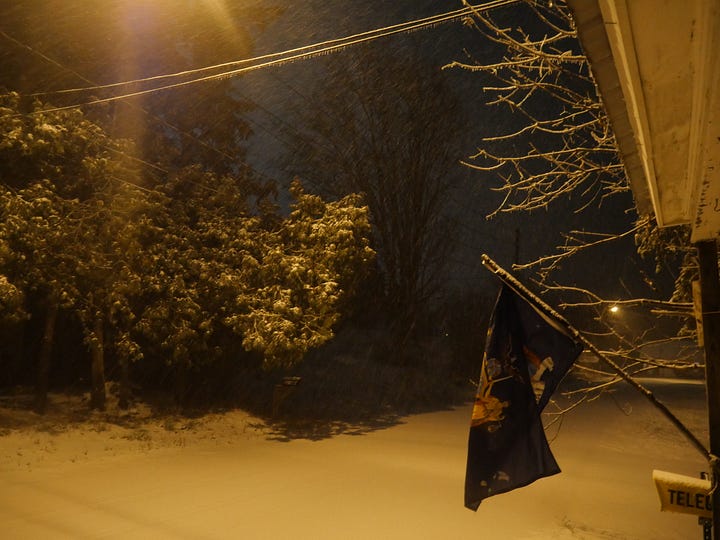
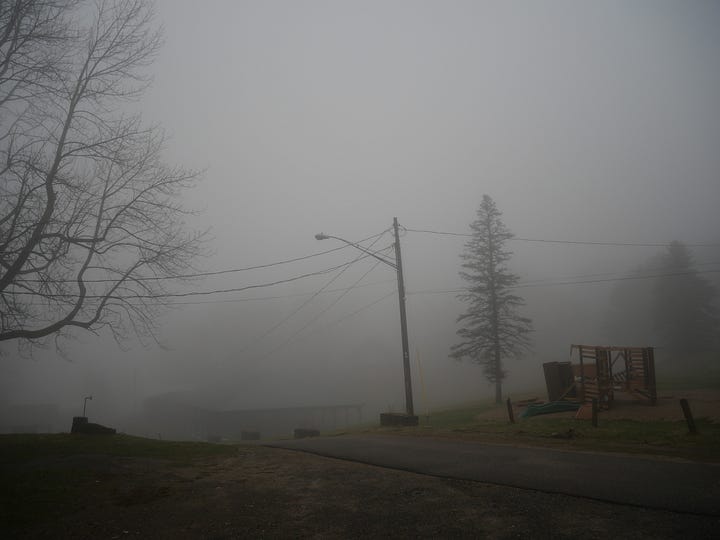
Meanwhile, the highway department boys have come around to install the new lightbulbs in the streetlights. “You’ll be able to see so much better once these things are in,” they tell me. Nightfall comes, and the nightmare begins: they installed those bright-white LED lights, the type used in hospitals and prisons and in Wal-Mart. Gone are the yellow-sodium street lamps of old, gone is the romantic orange-yellow hue that formerly made this town feel like it was a little slice of the Old Days. Now — bleached white, all gone, forcibly incorporated into the LED monoculture.
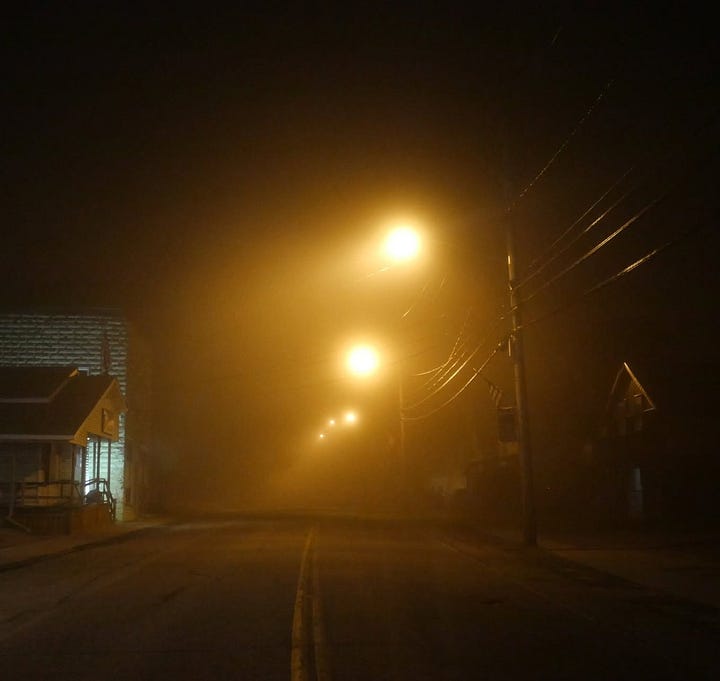
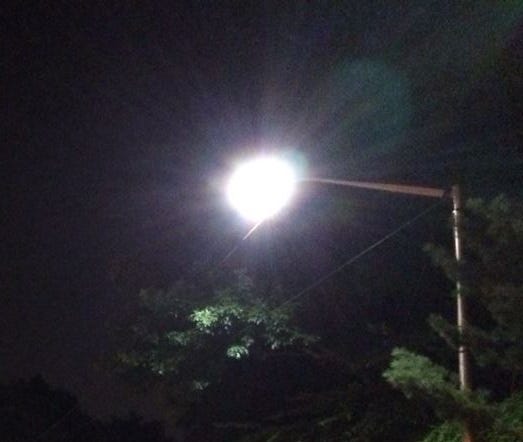
That light’s bony finger penetrates through my blinds — the lamp is just 19 feet from my bedroom window. It feels like a violation, like an assault; at 4AM every single morning, I wake up to it, thinking that it is dawnlight, but it is only a cruel facsimile of it. Blinding rays of soulless, unchanging, deathly white light, installed across from my sleeping-place without my consent nor my being informed. When I gingerly complained on my town’s Facebook page, all I received were nostalgic comments; it was clear that nobody will do anything about it unless I personally rent a bucket truck and duct tape an amber filter over that stupid lightbulb — and truly, I may do this (that is, if I don’t just move house immediately).
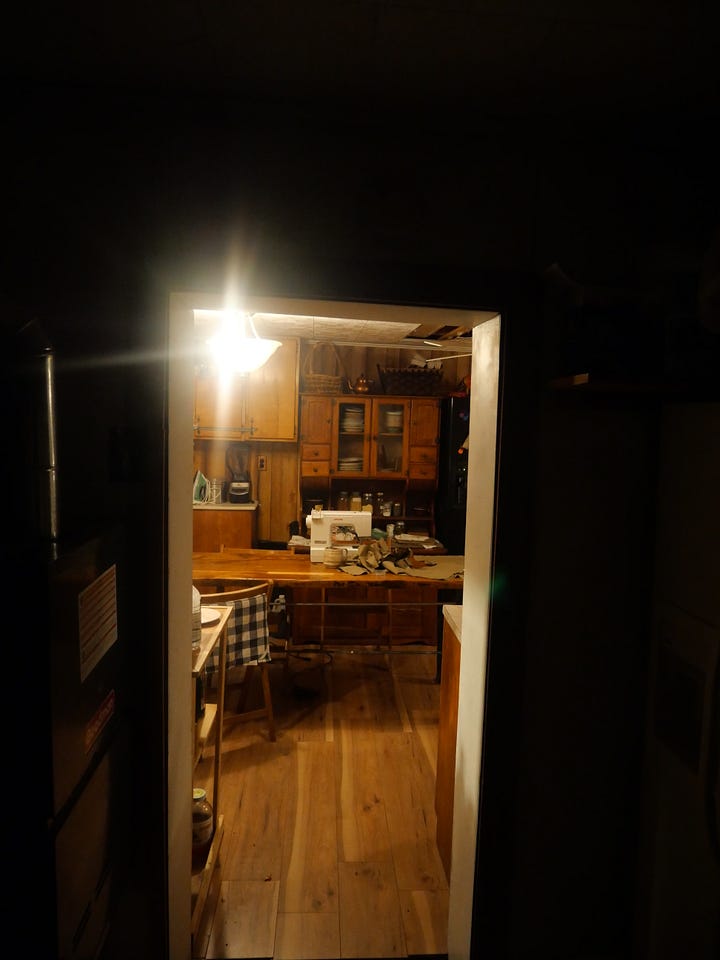
So I lay awake at 4AM, and the first thought in my mind is this: I still haven’t published. I am no longer able to write. I am losing money. I am losing precious momentum I could’ve parlayed into something real and tangible, offline, IRL — it’s gone, going, slipping from my grasp. With a heavy sigh, I rise from the bed, don my robe, and seat myself at my kitchen table, where I will spend the next several hours scowling, drinking coffee, and reading travelogues from Siberia.
Magadan, Chukotka, Petropavlovsk-Kamchatsky, Vladivostok, Tomsk — I wonder if those damnable LED streetlights are being used there yet. Perhaps the worldwide embargo against Russia might have its perks for the people of those far-flung cities and towns in Mother Russia’s Far East.
I read of historical figures who lost their minds in Siberia, who saw too much cruelty, who were dealt too many ghoulish blows by radical subzero winds and toothless thieves, or were done in by vodka and political turmoil, seeing bombs in train terminals and grain shortages and one too many Soviet escapees executed at the Russia-China border. I read of wealthy California men arriving to Novoye Chapalino by Helicopter from Alaska, clad in Patagonia and Helly Hansen, with large, expensive cameras, furrowing their brows as they learn they must pay bribes to some kind of Mafia don or warlord-esque public official if they wish to photograph the Belugas and the somber grey coastlines of Asia’s Eastern terminus.
If you cannot write, the least you can do is read, I figure — and this diversion of mine has provided suitable fodder for me to meditate upon the place where I am living now. True, far northern NY and Siberia have their differences, yet in many ways they are cousins somehow. Infinite greyness, bitter poverty and alcoholism, cynical government officials and taxes paid to corrupt local honeypots for local swindlers and good-old-boys — subzero chill and whiteout winds and supple sun-dappled summers where sunflower sways over the crawling bones of the blooming bramble…
It is here where I am in my own kind of Gulag, unable to leave, unable to dislodge myself from this place. Though I have not been sent here by any regime, not directly at least, I am nonetheless stuck here even where I might think to leave it forever. And why is this? It is because the ingredients of something great are here; there is a dream etched into this landscape that feels imminently possible and thoroughly for me, yet completely out of reach. If I cannot reach for it, perhaps I should at least stand by here to guard it; though it being in my nature to try, I do wish to try to bring that dream into existence somehow, by means that I am presently unfamiliar with.
I am getting ahead of myself. What is this dream? What are its ingredients?
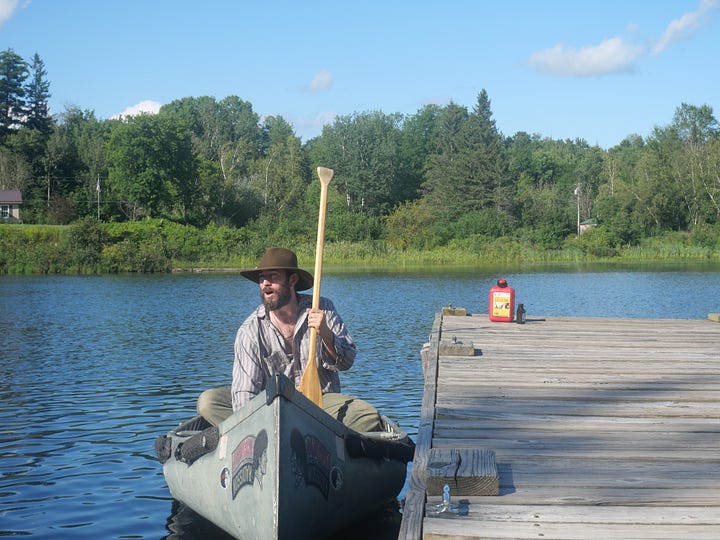
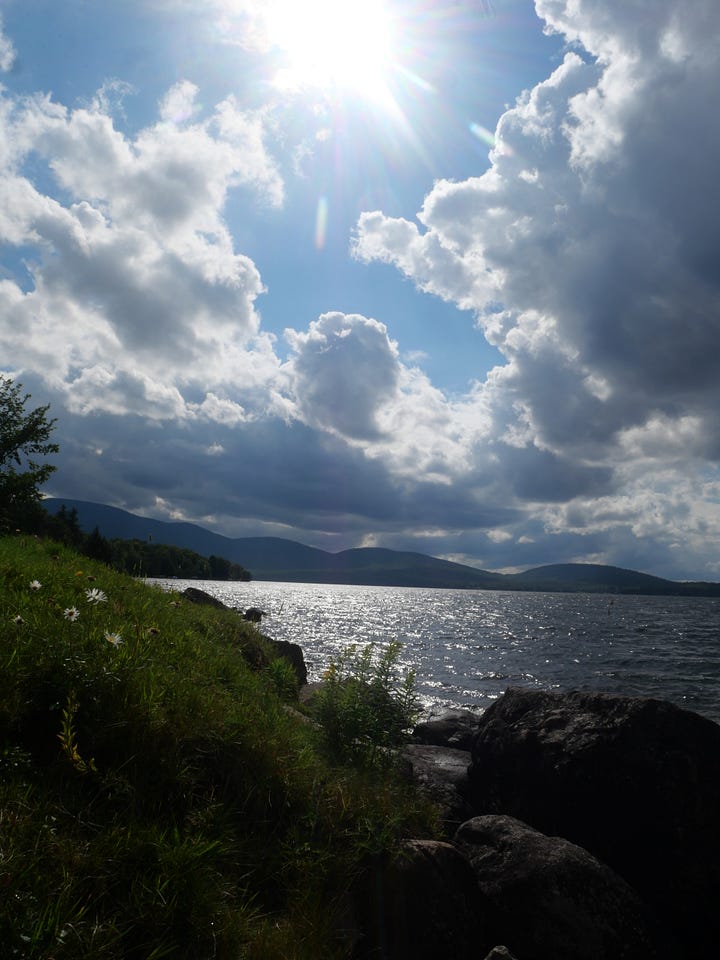
The thing that I must come straight out and say before anything else is that right now, I have more money than I have ever had in my life. After hitting a series of big licks, good investments, various projects which compensated me well, and after receiving a modest payout from my mother’s estate — I must admit that I have cash on a scale I had never, ever expected I would. This is more money than I ever thought I’d have, and it’s more money than I will probably ever have again.
By most peoples’ standards, it is really not all that much — many normal middle-class people have cars and summer homes that are worth far, far more — but by the standards of this strange homeland of mine, it could be ample enough to buy me a hundred acres or more, or multiple houses, or an old restaurant, or some sort of a chalet or small farm. Outside of New York State’s far northern frontier, this sum of cash I now have would barely qualify anywhere as a down payment on a standard-issue suburban home, and so therefore, I find myself prisoner to this lonely place again, in a new way.
The dream is this: that I can use this cash to build some kind of a hub for the revitalization of this region. Imagine a kind of combination hostel, tavern, and XC ski center in some desolate, long-forgotten village up here; a place where people are coming and going, even in the wintertime, coming to stay, coming to give and hear various lectures or even concerts — a place where literate misfits of all stripes can wash up, either to pass through or to stay forever, a node of some kind of culture of maroons and malcontents who cannot bear the LED-bright “future” that has been thrust upon us all, all at once.
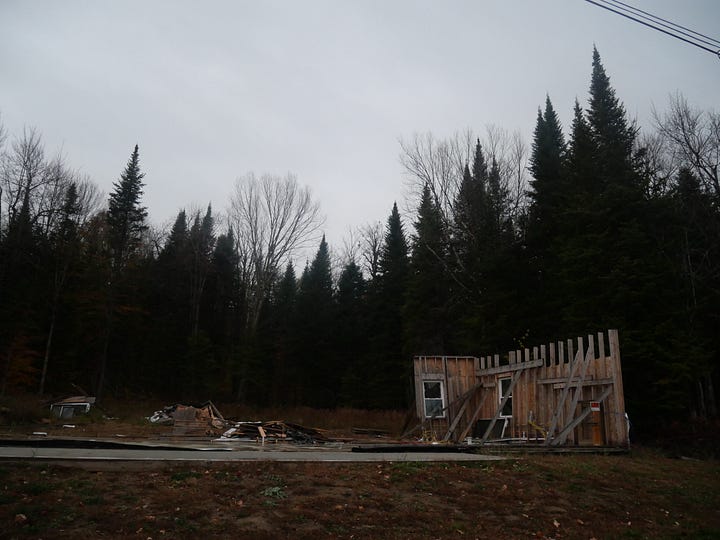
We have what is needed. Good hardwood timberland for $1,000 per acre; homes for $20,000 at a go, duplexes for under $50,000. Storefronts to rent for under $500/mo, sometimes less, sometimes even for practically nothing. And there are small libraries, aging hardware stores, salvageable sewer systems and public waterworks, extensive networks of usable roads, limitless public forestland, locally-owned grocery stores and IGA’s, Churches begging for congregants in a final push to avoid bankruptcy and shuttering. We are in the final days — the do-or-die days.
If we wish to see any of these villages saved, it is truly now or never. Either we save what those who came before us have already built, or we let it rot and go to waste, walling ourselves into an urban future — or ensuring that those who someday end up settling out in the hinterlands have to start all over again, from scratch, at immense cost and effort.
Why go down this road at all? Such a future serves nobody.
We must work to preserve what is left, and it is that preservation that is, for me, what I would call “the dream.”
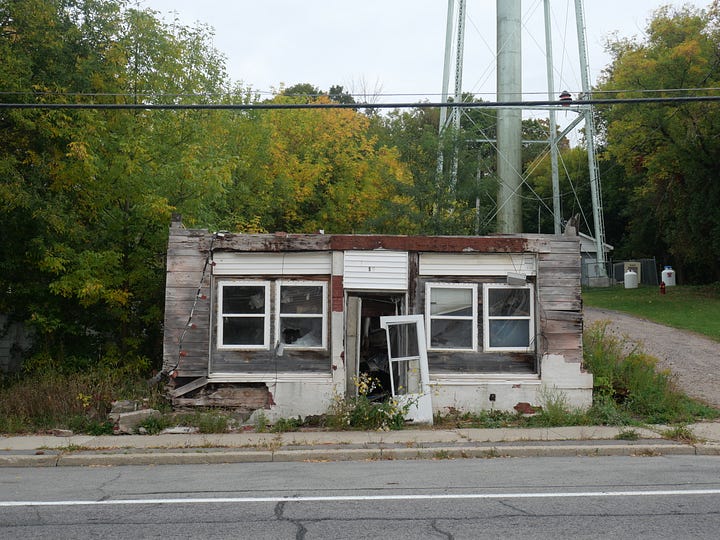
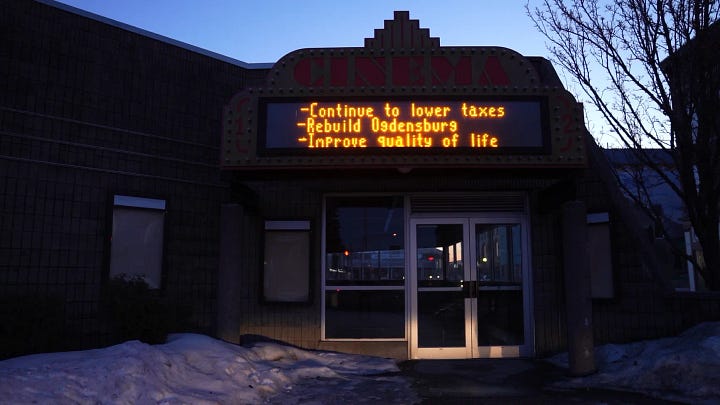
So I find myself dreaming in the midst of a fairly dramatic inflection point in the history of rural New York State. Holding a relatively substantial sum of cash, as well an audience in excess of 75,000 people online, all of whom are attuned in some way to rural America’s future, and with the kind of free time and energy to build, and do, and put it all together — I am genuinely in a position to bring some kind of lasting, durable, perennial change to one of these forlorn villages in the wilderness here. It is hard for me not to feel some sense of duty about this.
Yet I cannot do it alone. And that is why I hesitate and wrack my brain; I have developed some kind of monomania, I am caught in the most wretched and wearying sort of thought loop imaginable. Ask my wife — she is so tired of the Zillow listings, she seems nearly worried for my sanity. All day, every day, we are driving to various property showings, meeting with various real estate agents to discuss lot lines, surveys, tax assessments, Adirondack Park Agency rules. I am on the telephone with the DEC, asking whether I can build XC ski trails over wetlands. I am making anonymous calls to building codes enforcement agents. And I shake down every source for property that might come up for sale — the local classifieds, Zillow, LandWatch, Facebook Marketplace, Craigslist, word of mouth. We even drive around desolate farm roads looking for hand-painted “FOR SALE” signs. In all, I believe we’ve seen in excess of seventy-five properties in the last few months — with more on the docket we’ve yet to see.
But with each of them, even the good ones, the excellent prospects, the very reasonable-seeming properties — I have this crippling hesitation. If we buy, for example, the fifty acres and a duplex in the especially-desolate and dying village that is nearly one hour from the nearest grocery store, OK, we have succeeded at buying a massive estate for less than the cost of a luxury-model F-350 pickup. But at what risk?
In buying such properties, the risk is that we may sell ourselves up a cold, lonesome river. We may find ourselves in possession of fantastic acreage that will be difficult to quickly sell, and we may wind up holding onto it alone, without friends, our project in shambles. We may own properties with actively declining values, stuck holding the bag, paying taxes on outdated assessments far in excess of the actual full market value. This risk is extremely real, and would bear extremely significant consequences for our family by effectively trapping us in our bad investment. Without the vaguest assurance of success, and also without any compatriots, co-conspirators, partners, or friends who’d be as “all in” as we are — the degree of risk involved in this effort is borderline unconscionable.
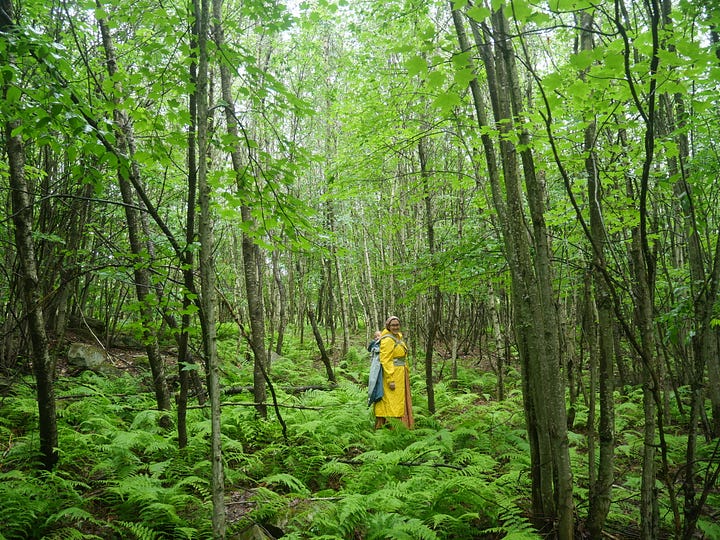
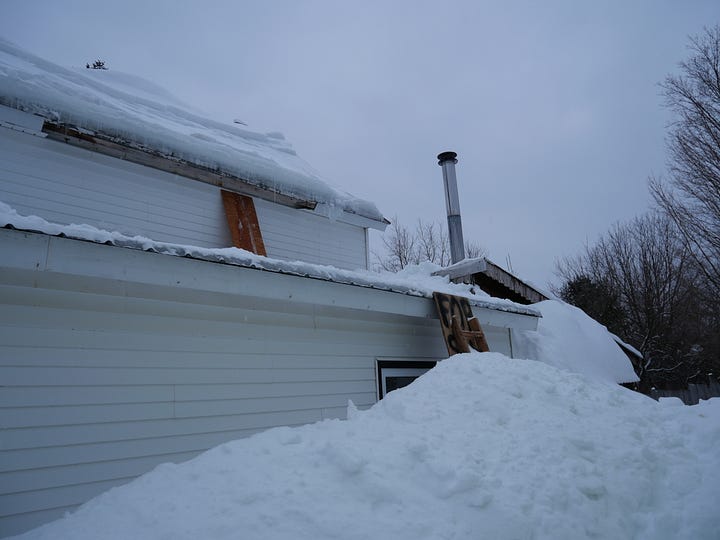
And so, after so many days of being weighed down with the heavy reality of what such a risk might entail, I usually take another turn in the cycle — I begin going toward inspecting properties that might be more reasonable, less isolated, and consequently more expensive for less land and less square footage. I look at the houses in bigger towns like Malone, Massena, and Ogdensburg. Many of them are fine and wonderful — even exquisite, such as some of the homes in Malone, dripping with unexpected architectural details of a kind of crypto-Italianate North Country style. Living in them would be a joy — if you blur your eyes.
I say this because the tax bills on such homes are extremely dispiriting. $3,200/yr for a 1,000 square foot house on a tenth-acre lot, assessed at $30,000, with a list price of $65,000? This is not hard to find, and it is what I’ve come to call a “tax bomb” property. For as soon as you pay anywhere near the list price, the already-criminally-high taxes will increase again, and you will find yourself paying as much as $400/mo in what is essentially RENT to the county, village, school district, sewer system, and water authority indefinitely and without recourse. Who would wish to saddle themselves with such a thing? How could I, in good conscience, encourage anybody to move to a town where this is the stark reality for all residents? That moreover, the social reality in these towns may be nearly equally lonesome as that of the more isolated villages, and usually even more dysfunctional and drug-addled makes “town real estate” an even riskier move for me.
And so though I might love more than anything to make a city like Ogdensburg, Malone, or Massena the target of my energy, love, and focus — those cities’ tax policies and the realities of city budgeting in NYS have altogether done their best to keep me far away from them.
Following a few days of mulling over real estate like this, and realizing it is a frightful and hazardous prospect — I then tend to enter the “third phase,” in which I frantically realize that I must leave NYS entirely, that the situation cannot be salvaged. Then I begin running the numbers on states like Michigan and Maine and Alaska, or, if I am in a particularly “sunny” mood, even bone-dry states like Arizona and New Mexico. Perhaps, after finding a few realistic properties, I begin planning a trip — or, more likely, I fail to find many, and begin to realize that if I leave NYS, I cannot afford to do anything more than purchase an aging trailer on the outskirts of a town like Houghton or Bisbee or Ketchikan, and if that is the case — why bother?
Moreover, what then sends me back to the initial prospect of buying dilapidated, deep-rural NYS real estate is the question of natural resources, location, beauty, and proximity to my family. In so much of the United States, there are serious issues with water, wildfires, crime, poor soil, poor timber, inferior infrastructure, and God-awful climates that northern NYS just doesn’t have. In this way, my thought loop comes full circle — and I am back in the woods in NYS again, walking properties out in the boondocks. And I fall back into doing that because my soul craves it; because I truly love everything about it here — except the taxes and the stony-lonesome isolation.
None of this brings me any joy to report, of course. It is an agonizing loop. And perhaps I am really, at the bottom of it, a fool. Perhaps the historical-material realities of our era are so fundamentally skewed towards intense urbanization that it makes no sense to fight it. Perhaps there is no choice but to “own nothing and be happy.” Perhaps I must either, like so many others, work tirelessly to pay ultra-high urban rents in top-ten metros. Or perhaps I must pay expensive premiums (and high-interest bank loans) on property in the few regions of the rural US that don’t appear to be actively dying.
If the inevitable options are to pay big rents in the Big Apple, or a Montana-sized mortgage for a piece of cowboy-flavored yuppiedom, or to settle in the sprawly, hellishly-humid, megachurch-with-the-smoke-machine South, I cannot say that I am especially interested in any of these, even if it could be argued that these could be “more sensible” options in the end.
So it is that I cannot help but fight to keep the dream alive. All it would take would be a half-dozen intrepid souls — even just one or two would very likely suffice. They’d have to have a deep desire for truly affordable housing, and would have to be willing to accept deep isolation, 6-month winters, and lower annual incomes in exchange for both the profound freedom of mortgage-free living and the desire to keep some small part of America’s hinterlands alive. They’d have to have a serious penchant for risk, and a willingness to take such risks now, not later — for in so many cases, these towns are not decades from dying out but are mere years from simply crumbling. I simply need a few good men (or better still, families) with gumption.
The Great American Gumption Shortage
·
March 14, 2025
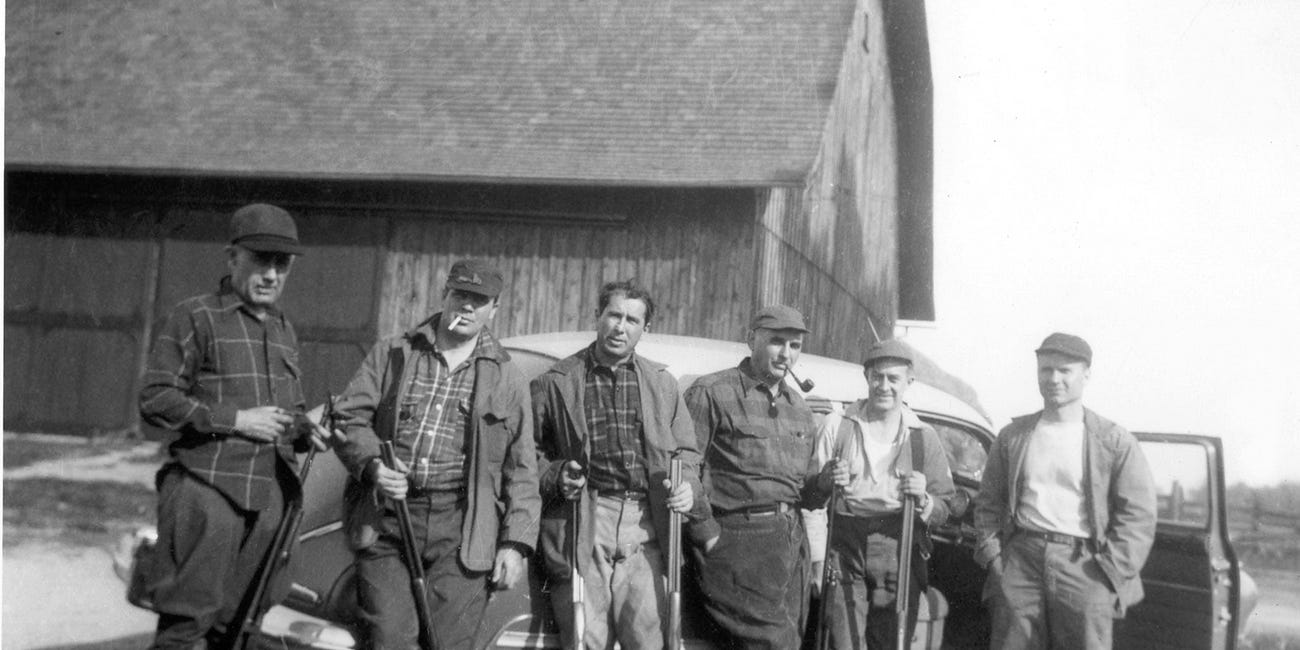
Human memory is a damned feeble thing. For all that might’ve been gained a mere three generations ago in wisdom and in grit, and in toleration for incredible risk and hardship — it is all a passing vapor when pressed against the bright, flashing fripperies of our beloved
Already, many towns are already dissolving their governments; school system mergers and even closures are on the table. Already, sewage systems run by octogenarian retirees are losing their chief engineers to the funeral home — and they cannot afford to pay salaries substantive enough to attract new, younger talent. Cratering birthrates, maternity ward shutdowns, and population hemorrhage are already here. If anybody cares to reverse that, the time to act is right now.
Many will ask: but where are you talking about? What places? And while I am, for various reasons, reticent to name them, I will do so anyway. I am talking about towns like Tupper Lake, Star Lake, Saint Regis Falls, Chateaugay, Childwold, Edwards, Pitcairn, Harrisville, Lyon Mountain, Fort Covington, Bombay. And the bigger towns, too, may fare a bit better in the short term but are nonetheless faced with serious forecasts of contraction, insolvency, and overall breakdown, such as Ogdensburg, Massena, Malone, and even Watertown.
All of the named towns here (as well as others) are actively faced with the gloomy reality of becoming open-air retirement homes characterized by overtaxation, staffing shortages for critical infrastructure, shutdowns of essential businesses, school consolidations and closures, hospital system fatigue, and worsening social dysfunction in the next 40 years.
Again, if this is to be reversed or even substantially stalled — now is the time to act.
People, of course, don’t generally go for dire warnings, nor for sobering spreadsheet-ism that flatly proves the case. What they go for is some kind of a vision — a mythic and dreamlike mirage to ascend towards, a romantic ideal that electrifies the heart and sets the mind and body to a sprint just by its mere mention.
Most people want to visualize the thing if they are even remotely tempted by it; they want to reflect on what it might feel like at the end of it. Then, with this vision etched into their minds, they want to move toward it physically, as a moth gravitates toward the light. They want to visit that vision, touch it, stay a while, until they are staying longer and longer. Those who even entertain these ideas about the American hinterlands frankly want to be seduced, and seduction takes time.
I lately worry that we do not have that kind of time.
For all that could go wrong, of course, I sometimes indulge in considering what could go right. As of now, I cannot shake the acute instinct that I should buy a particular 50-acre parcel, and a particular multi-family home, the both of which together would set me back roughly $100,000 at a tax liability of about $2,700/yr. The prospect fills me with as much dread as it does joy — both of the high-adrenaline type. While I cannot publicly divulge where these properties are at this time, I can say that the village is exceedingly isolated. It is a place where the trappings of civilization are extremely thin, and where what few amenities exist appear to seem… “Alaska-esque.”
Most of what’s there in town feels slipshod and ragged and delightfully strange. The grocery store looks like a weird, only-sporadically-stocked depot, where if you’d like them to stock something regularly, you’ve got to ask them — and they’ll try to get it whenever the getting’s good, maybe succeeding, maybe not. The gas station casts its neon glow onto the frozen landscape, on a state highway that sees little traffic in the wintertime. There is a hardware store (which is for sale for more than I can pay), and a bar where the cast of locals look decidedly Dickensian and yet just genteel enough to allow for a family dinner (so long as you get out by 7 o’clock).
Everywhere around the place there is deep wilderness of a type that is extremely rare in the American Northeast. Consequently, the seasonality of everything there is intense. The months of the year are almost useless there; instead there is the “frost-time” and the “deep-snow-time” and the “crusty-ice-and-whiteouts-time,” all followed by the “mud-and-clouds-of-mosquitoes-time” and the “golden-sunshine-and-infinite-blackberries-time.” It goes on and on; time is punctuated by fortnights that are all exceedingly different.
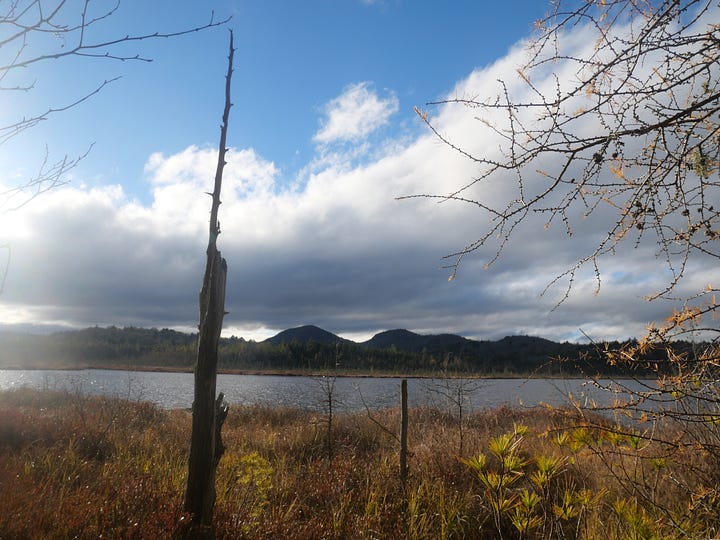
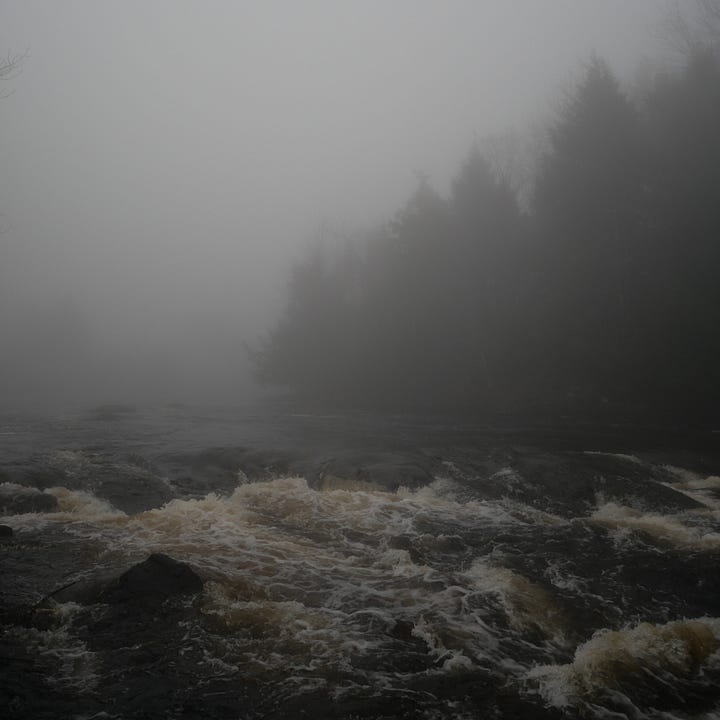
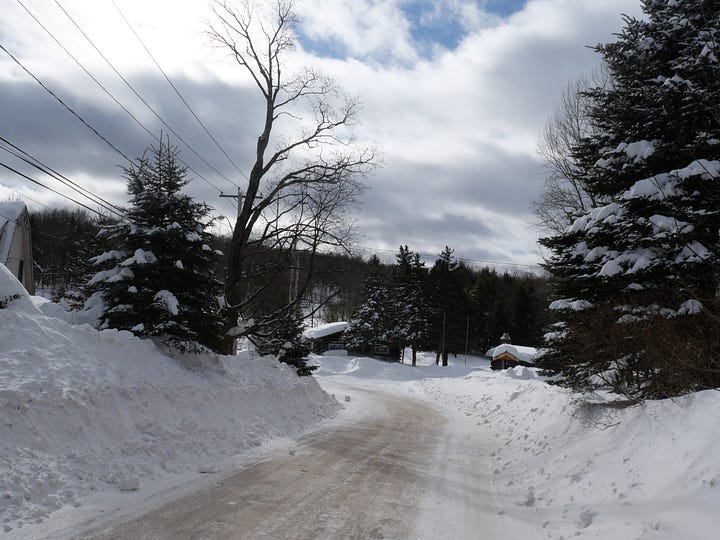
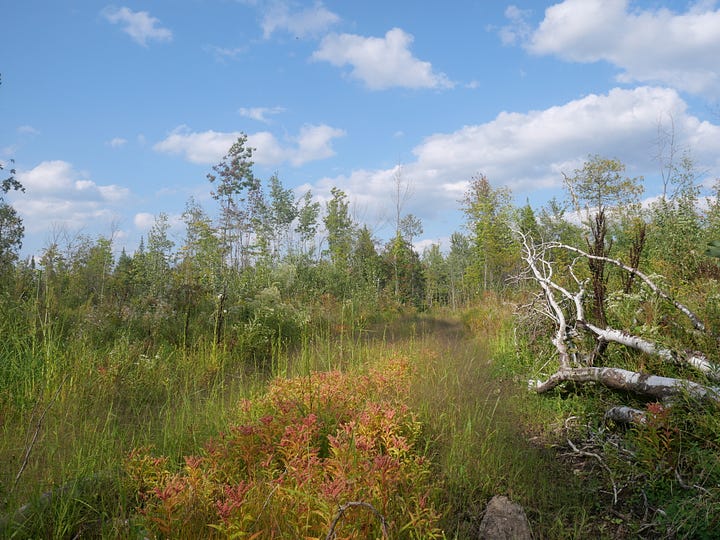
How would I live if I settled permanently in such a place? It would be as if I were traveling forever, for the intensity of the land’s perpetual and frequent changes would make the village feel as if it were being transported between twenty or thirty worlds every year, like one giant gypsy wagon. Notably, of course, half of those travels would involve a vicious, dark, wet, icy winter of a type that is pound-for-pound comparable to winters in places like Montana, Alaska, and even Russia. Therefore, my manner of living there would revolve around that fixed feature of the place’s climate; I would construct a large south-facing greenhouse in which to grow precious greens and small winter vegetables, heated by a combination of the sun’s very occasional rays, passive geothermal heating, and excess heat from an attached sauna.
Each day, I would sauna by the greenhouse after tea — and then ski a 3-mile XC loop on my acreage, whatever the weather. If Mass was happening on that day I’d ski to the Parish, and if not, I’d settle into some reading for a time, or linger at the gas station where the old men drink their coffee. Perhaps I’d take on a part-time job at the Dollar General or the hardware store simply to socialize.
But at the core of my life there would be, in the optimistic view, “the big project,” the dream — the hostel, the ski center, the social club. Each day would bring another set of tasks that I’d have to work on, whether it was grooming the ski trails with a snowmobile or scheduling lectures in the lecture hall or stocking the hostel with new sheets. Roof leaks, finicky chimney flues, stubborn ATV engines, and great big piles of firewood would all factor bigly, if I were to guess. Tenants and guests, sojourners and pilgrims, hikers, stowaways, drifters — I’d strive as hard as possible to have a steady stream of such coming and going at all months of the year.
There would be times, I’d reckon, when I wouldn’t get so many visitors in spite of my best efforts, most especially in the wintertime. But with one good neighbor who is also a part of the vision, I should think a twice-weekly game of pinochle or dominoes should suffice well enough; potlucks and bonfires too, ice-fishing days and long overnighters on the snowmobile. To let the wives keep a robust social calendar would be essential; and for the gentlemen to assemble as often as could be mustered would help the long winters pass pleasantly enough — for winter is only the great misery that many say it is if you must pass through it without good company.
At day’s end, not only in winter but in all seasons, are all things not ultimately a question of good company? For what it is it to pass through life without witnesses and confidants, jolly suspender-snapping cacklers and boot-stompers and great big fellows who quaff ale with perfect grace and nibble their kielbasa and cheddar with gratefulness and friendship on their hearts? Front-porch sitters and kids on the stoops and in the yards — wives knitting by the fireplaces and boiling great cauldrons of soups and whole families out for a walk, or a beer, or a game of frisbee?
It is this fellowship that we’re after, somehow, some way, and “the dream” is really, at bottom, a desire to find or build such things right here, in the place that has everything you could ever want except people.
After all, “The Lord God said, ‘It is not good for man to be alone.’”
It’s certainly our prayer that we won’t be.
Comments
Nothing yet. Say the first thing.
Sign in to join the conversation.