
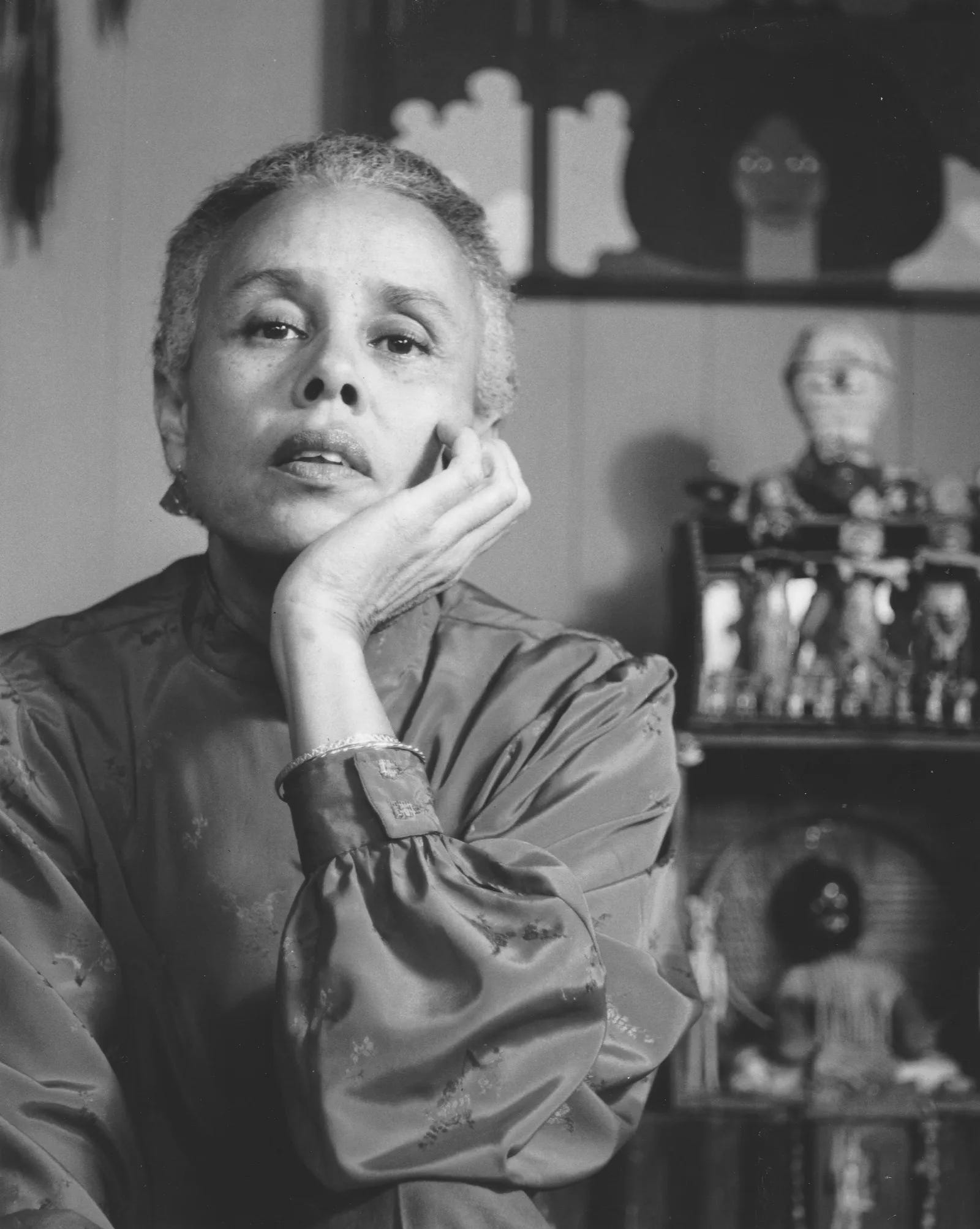
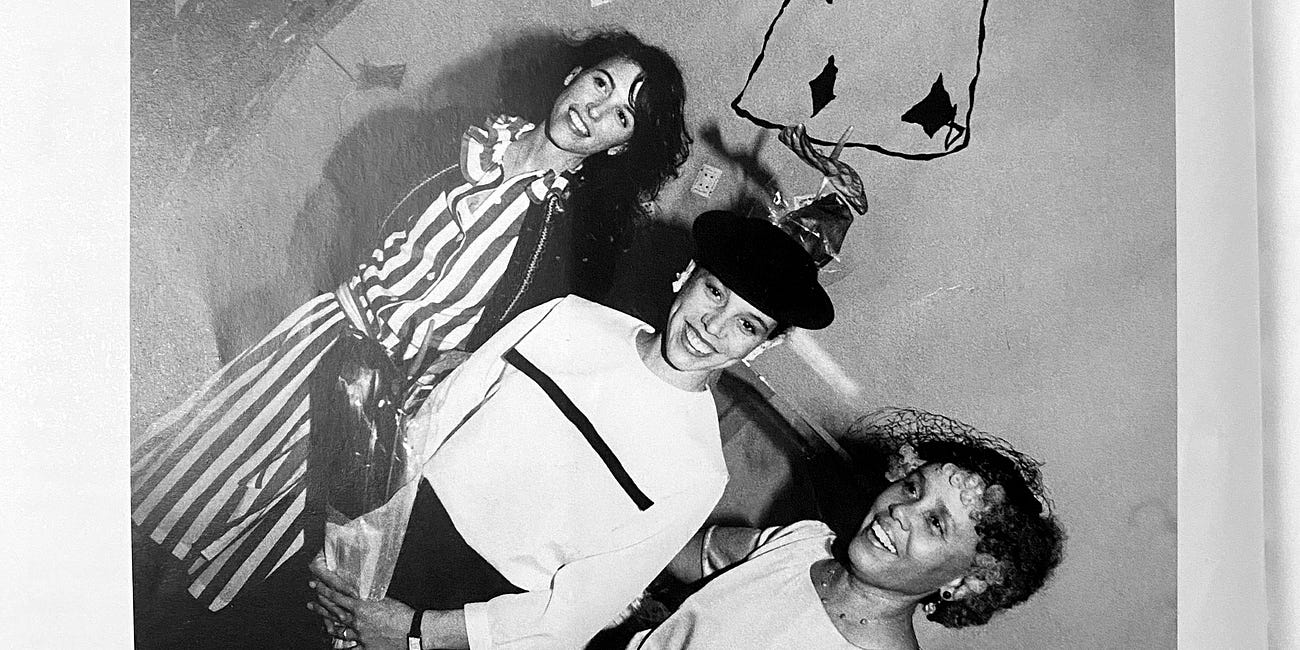
Betye Saar passed away on Sunday 27 July in Los Angeles, four days before her 100th birthday. Last September I wrote about her and her artist daughters Lezley and Alison for Shade Art Review, whilst absorbed in the Family Legacies catalogue during my morning reading sessions. I was thinking about how art-making was woven into so much in the Saar household: what Jessica Dallow, co-editor of the catalogue, describes as “a contemporary model of a family legacy. Mother and daughters acknowledge each other consciously and unconsciously.” The artistic legacy Betye leaves is extraordinary.
Roberts Projects, her gallery, shared that Betye is survived by her three daughters, six grandchildren, and her beloved red-footed tortoise, Rojo. The piece I wrote last summer can be read below.
"So, are you an artist, too?"
·
September 28, 2025
Picking up this old exhibition catalogue felt pretty good this summer. Ignoring PR teams pressing books to review, I wanted the past few months to be about my choices, connecting with stories that fit where I am now.
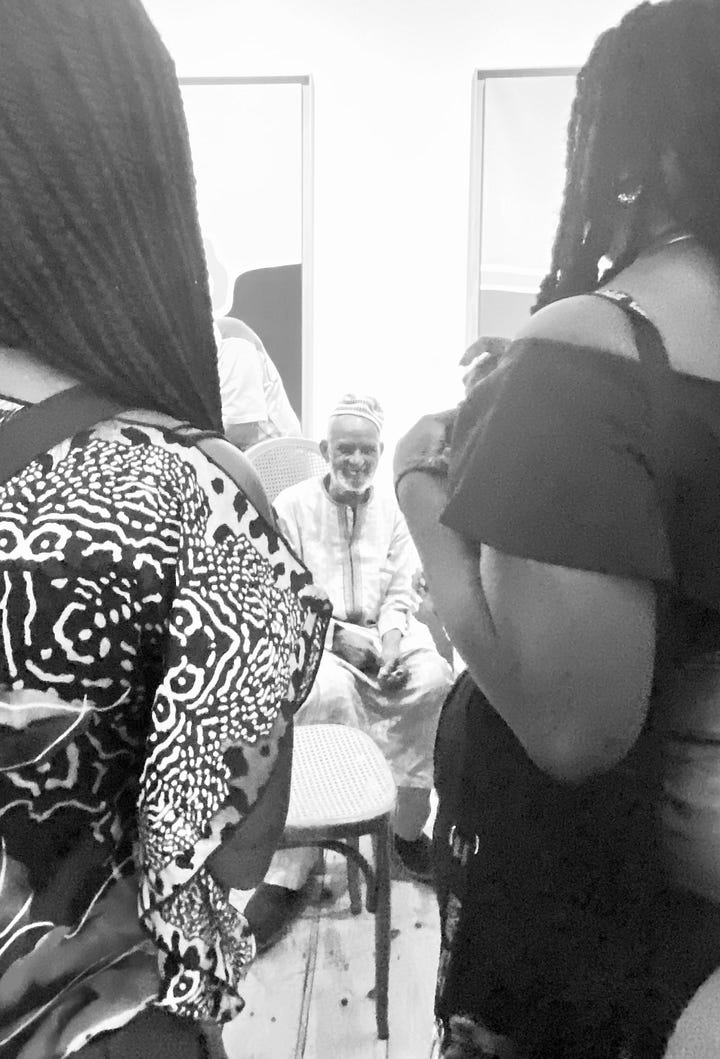
The day before Betye passed, I was at October Gallery for a conversation between James Barnor and curator Eleri Fanshawe. James shared stories with us for ninety minutes and at the end there was a long row of guests waiting for selfies and book signings, each of whom he acknowledged so thoughtfully, with grace and giggles, before leaving for a 90th birthday party.
I made a few notes for my journal and to share.
What a storyteller! James’ memories move between Accra and London and back again across seven decades, apparently without order, but they always connect, with a great punchline. The interviewer, curator Eleri Fanshawe followed the threads with care and on more than one occasion Barnor paused to say something that seemed like the foundation of his preoccupation: to tell the story of his life through the line of people who got him there.
One of his first guides was his teacher A. Q. A. Acheampong, who recognised his early creative skills and made him editor of the school magazine, age 16. Then there was Emanuel Odonkor, his crafts teacher, who gave him his first camera. His cousin JP Dodoo, a well-known Accra portrait photographer, took him on as an apprentice in 1947 and taught him the big-plate camera. Another cousin, Julius Aikins, introduced him to the darkroom. Following that, he set up his first studio using his uncle’s equipment, consisting of a big-plate camera and a painted backdrop which lived in one corner of their shared living space, serving as a darkroom and somewhere to sleep. This is “where I started, in 1950,” he said.
In 1953 he opened Ever Young, his first studio in Accra. The name came from a poem in a Nelson's English comprehension book, given to him by Acheampong. When asked in an exam what title he would give the extract, he chose Ever Young, a name he felt suited the studio.

He went on to become the first staff photographer at the Daily Graphic which he impressed on us was significant — because he became the go-to photographer in the area, leading to his role as contributing photographer at Drum magazine, the influential anti-apartheid journal and Africa’s first Black politics magazine. Acheampong, now living in London, wrote to him, emphasising that he thought that James was ready to join him: “London is the place for you!” He arrived on 1 December 1959.
In London he met Dennis Kemp, a visual education lecturer working for the Kodak Lecture Service, who he described as one of the great influences of his life. They toured schools across the country together, Kemp lecturing and Barnor demonstrating colour processing techniques. Kemp covered his expenses and Barnor, in response, gave Kodak access to photograph the cocoa farms and gold mines in Ghana. Through this friendship Barnor studied colour photography at the Colour Processing Laboratories in Edenbridge and continued on to enrol at Medway College of Art in Rochester. He returned to Ghana in 1970 carrying all that knowledge, establishing the country’s first colour processing laboratory.
He was determined to emphasise again: “When people talk about what they do, they never talk about who got them there.”
Near the end of the talk he broke into an impromptu lesson on film processing with daylight, in such detail I got the feeling that he had the telling of this lesson down pat, sharing whenever he had the chance and imparting knowledge where he could.
“No one should cover your daylight.”
He laughed that despite giving so many interviews, nobody has asked him the real question: how to use an enlarger! When he asks them, apparently no one has been able to answer him sufficiently. I went through the dark room motions in my head, trying to impress him from afar! He is determined to preserve the knowledge of how film images are made, in craft and in spirit.
"Is anyone here Ghanaian?" he asked, before leading into a story about his fellow Ghanaian artist Ibrahim Mahama, whose upcoming show, The Harvest Season at Fondation Cartier in Paris this October — Mahama's first large-scale exhibition in the city — will include Barnor's photography. "Do you know him?" he asked, looking around the room. "He was listed as the number one artist in the world!" He said it with real pride.
He wants his legacy to be a permanent home in Accra, an education space for tourists and for children, where the full arc of his practice can be enjoyed. “I want to show how I started, in that one room, one table. No electricity. I was sleeping in the same room. I want to leave how I did that.”
James Barnor’s work is currently on view at October Gallery, London. His photography will feature in The Harvest Season with Ibrahim Mahama at Fondation Cartier, Paris, opening this October.
Comments
Nothing yet. Say the first thing.
Sign in to join the conversation.