
There is something deeply reassuring about physical traceability. If a company says a polymer is renewable, we want the renewable carbon inside that polymer. If it says recycled, we want the recycled molecules inside the product in our hands. Anything less feels like accounting, and accounting has acquired a poor reputation in sustainability for understandable reasons. Too many environmental claims have survived on clever boundaries, generous assumptions and certificates that seem to travel more freely than the materials they represent.
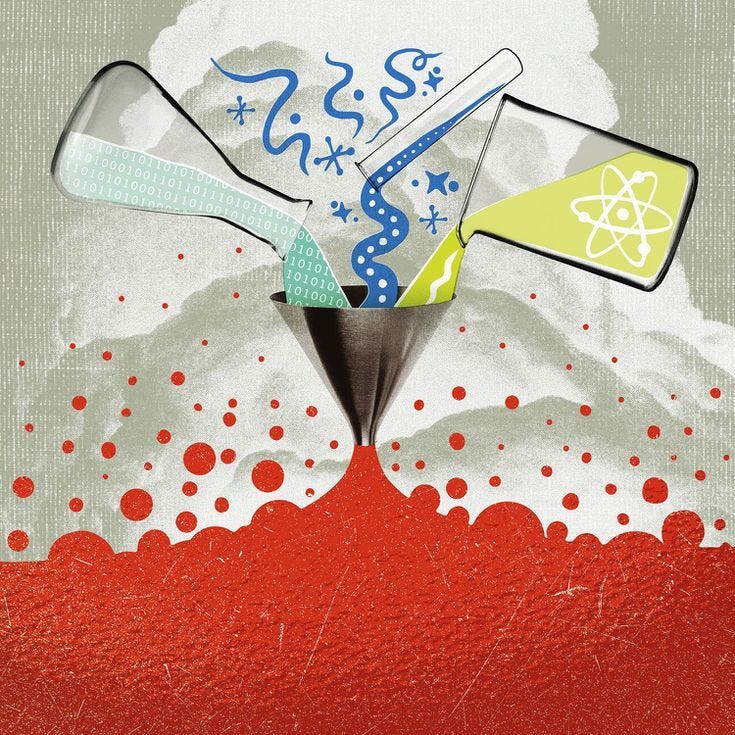
Mass balance gets caught in that suspicion because it asks us to accept something that initially feels wrong. Renewable and conventional feedstocks can enter the same production system, lose their individual identities, and the renewable characteristic can later be assigned to some part of the output. Look at it purely from the finished product backwards and it can appear like a compromise. Look at it from inside the chemical plant forwards and a very different picture emerges.
A modern steam cracker operates at temperatures of roughly 750 to 900 degrees Celsius and turns hydrocarbon feedstocks into the basic molecules on which much of the chemical industry is built. Ethylene is the most important of them. Global ethylene capacity is now around 230 million tonnes a year, and a single world scale unit can exceed 2 million tonnes of annual capacity. AIChE estimates the installed cost of a world scale ethylene plant at roughly USD 3 billion to USD 4 billion. These are not oversized reactors sitting behind a warehouse. They are extraordinarily integrated production systems involving cracking furnaces, compression, refrigeration, purification and a succession of separation stages designed around enormous throughput.
That scale is the part of the biopolymer conversation we routinely underestimate. We talk about scaling chemistry as though the distance between a successful pilot and a commodity material is mainly a matter of building a larger vessel. In reality, the incumbent material is often sitting at the end of an industrial system that has spent decades accumulating scale, infrastructure, logistics, operating experience, customer qualifications and capital. The alternative may have solved the chemistry and still be several orders of magnitude away from matching the economics around it.
This matters enormously for renewable versions of chemicals the industry already knows how to make. Take a technically suitable renewable hydrocarbon such as bio naphtha and introduce it into an existing cracker. Once the feedstock has been broken apart, separated and purified into ethylene, the resulting ethylene has the same chemistry and downstream performance as ethylene produced through the conventional route. You can establish where the carbon originated. What you cannot meaningfully do after it has passed through a shared production system is point to one ethylene molecule and say that this one belonged to the renewable feedstock while the molecule beside it belonged to fossil naphtha.
The industry has not failed to trace the molecules. The process has deliberately destroyed the distinction, because making uniform chemical building blocks from large and complicated flows of feedstock is precisely what the plant was built to do. Asking that renewable carbon somehow retain an individual identity after entering that system misunderstands the physics before we even reach the economics.
Mass balance exists because of that physical reality. It is too often described as though the chemical industry invented an accounting trick and then went searching for a problem to justify it. The causality runs in the opposite direction. The production system mixes inputs because that is how integrated chemical manufacturing works. Mass balance is a way of preserving information about the quantity and characteristics of a certified input after physical segregation has stopped telling us which molecules went where.
Under a mass balance chain of custody, certified renewable or recycled feedstock physically enters a defined production system alongside conventional material. The quantity entering is recorded. Conversion factors and process losses are accounted for. The corresponding sustainability characteristics can then be attributed to an eligible quantity of output without allowing more certified material to be claimed than the accounting permits.
The arithmetic is worth working through once because it strips away much of the mystique. Imagine a system that receives one hundred tonnes of certified renewable feedstock and nine hundred tonnes of conventional feedstock. Assume ten percent of the material is lost through conversion. The certified input therefore supports ninety tonnes of attributed output after the same loss is recognised. Depending on the permitted attribution method, those ninety tonnes of attributes can be reflected proportionally across a larger pool of output or assigned more selectively to eligible products. What cannot happen in a properly controlled system is the creation of a hundred and eighty tonnes of certified output from the original hundred tonnes of certified input. The ledger cannot manufacture renewable feedstock that never entered the plant.
That arithmetic only means something if the system is properly controlled. Mass balance should not receive some special exemption from the history of what happens when environmental claims meet commercial incentives. We have spent enough time around sustainability accounting to know that any framework with ambiguity in its boundaries, conversion factors, eligibility rules or claim language will eventually be tested at those boundaries. If a system leaves room for double counting, someone will try to count twice. If an attribution rule can be interpreted aggressively, somebody will eventually interpret it aggressively. If a technically defensible claim can be rewritten by a marketing department into something much more impressive than the underlying accounting supports, that temptation will exist too. That does not make mass balance uniquely suspect. It makes proper accounting central to whether mass balance deserves trust at all. The more flexibility a system creates, the stronger the controls around that flexibility have to become. Physical receipt of certified feedstock has to be demonstrated. Conversion factors need to represent what the process actually does rather than what creates the most convenient result. System boundaries need to be explicit. Credits cannot quietly appear twice. Sustainability characteristics cannot migrate to products with no credible chemical connection to the input. The ledger matters because once the molecules are mixed, the ledger is carrying information that the molecules themselves can no longer provide.
ISCC’s current rules are increasingly explicit on these points. Certified input must be physically received. Attribution has to remain within the defined system boundary. Process losses have to be reflected through conversion factors based on production data. Total attributed certified content cannot exceed the certified input supporting it, and attribution to an individual product cannot exceed the physical amount of that product manufactured during the relevant period. Chemical connectivity is also required, meaning there has to be a technically plausible route through which the certified input could contribute to the output receiving the attribution. These are not bureaucratic details sitting around the edge of mass balance. They are what prevents mass balance from becoming book keeping theatre.
There are still legitimate arguments about how flexible attribution should be. ISCC PLUS recognises rolling average and credit methods and, under the credit method, different approaches for assigning certified characteristics to eligible outputs. Proportional attribution follows the physical input share more closely. Free attribution creates more flexibility within defined guardrails. That flexibility can help complicated chemical systems function commercially, but it also increases the distance between the physical composition of a particular output and the environmental characteristic attached to it. ISCC’s own public consultation has included stakeholders warning that unconstrained free attribution could create greenwashing risks and calling for stricter rules. That is exactly the kind of argument a credible mass balance system should be forced to have in the open.
None of this means every biopolymer requires mass balance. That would be an easy argument to disprove. A genuinely different polymer with its own chemistry may require a genuinely different production system. NatureWorks operates 150,000 tonnes of annual Ingeo capacity in Nebraska and opened another integrated 75,000 tonne PLA facility in Thailand in 2026. Braskem, meanwhile, has spent fifteen years producing renewable ethylene from ethanol and now has 275,000 tonnes of annual green ethylene capacity in Brazil, supplying polyethylene that retains the functionality of its fossil equivalent. Dedicated renewable chemistry can scale, and in the right market it absolutely should.
Dedicated infrastructure becomes rational when technology, demand, capital and utilisation reach the point where the asset can support itself. The difficulty lies in getting there. A market rarely materialises at several hundred thousand tonnes simply because a company has proven that a renewable molecule works. It has to be built, customer by customer and application by application, while the alternative is competing against infrastructure that already exists.
Even after the chemistry is proven, the alternative may still be competing against infrastructure designed around hundreds of thousands or millions of tonnes, whose logistics already exist, whose products have already passed every customer qualification and whose assets may have been depreciating for decades.
This is particularly important for renewable versions of polymers and intermediates that the world already knows how to manufacture. If the desired end product remains PET, polyethylene, polypropylene, polyurethane or another established chemistry, there is no inherent environmental prize for rebuilding every furnace, storage tank, pipeline, separation train and polymerisation asset simply so the renewable molecules can maintain a separate identity from beginning to end. In many cases, doing so would mean asking the emerging alternative to recreate the capital base of the industry it is attempting to displace before it has accumulated enough demand to pay for that infrastructure.
BASF describes the problem unusually clearly through its Verbund. Many of its value chains begin in synthesis gas plants or steam crackers, where basic chemicals such as ethylene and propylene are produced and then processed through an interconnected network into thousands of downstream products. BASF introduces alternative feedstocks including bio naphtha, biomethane and chemically recycled material into this existing system. Because fossil, renewable and recycled feedstocks are processed together, the alternative inputs cannot subsequently be assigned physically to individual derivatives. BASF instead uses certified mass balance systems to verify that sufficient alternative feedstock was introduced for the quantity of mass balanced products sold.
The most important part of BASF’s explanation is not the accounting. It is the economics. Building dedicated production systems for relatively small quantities of renewable or recycled feedstocks would impose a substantial burden, while mass balance allows those materials to enter technically suitable points in existing infrastructure and allows their volumes to increase as customer demand grows. The renewable feedstock does not have to arrive at the scale of the factory. It can begin at the scale of the market willing to buy it. Mass balance allows the new feedstock to borrow the scale of the old infrastructure.
Consider what happens without that option. Suppose a production system is economically optimised around several hundred thousand tonnes of annual throughput, while the market for a renewable input currently supports only twenty thousand tonnes. Physical segregation leaves an uncomfortable set of options. Somebody can build dedicated capacity and operate it far below the scale enjoyed by the incumbent. They can create separate storage and handling systems and campaign relatively small quantities through existing equipment where technically possible. They can accept the additional qualification and operational complexity. Or they can wait until demand becomes large enough to justify an entirely separate asset.
Waiting sounds sensible until you realise what the material is waiting for. A dedicated plant needs volume. Volume requires demand. Demand is difficult to build while the renewable product carries a large premium. That premium is partly a consequence of operating without the scale and infrastructure already available to the incumbent. The material is therefore required to reach scale before it can access some of the economics that make scale possible.
Mass balance helps break that loop. Twenty thousand tonnes can enter the large system without pretending that twenty thousand tonnes is already a large system. If demand becomes forty thousand tonnes, the certified input can rise accordingly. If it becomes one hundred thousand tonnes, it can rise again. Existing tanks, reactors, separation equipment and downstream production lines continue to operate while the composition of what enters them begins to change. The transition occurs inside the industrial system rather than waiting outside it for enough capital to build a second one.
The distinction is especially relevant in textiles because making the polymer is only the first industrial hurdle. Polyester has to be converted into chips, fibre or filament, spun, drawn, perhaps textured, woven or knitted, dyed, finished and manufactured into a product that still has to meet specifications for strength, colour, dimensional stability, abrasion and countless other properties. Every meaningful change to the polymer can create another qualification problem further down that chain.
Indorama Ventures provides a useful example of what happens when the feedstock changes without forcing the manufacturing system to relearn the polymer. Its bio attributed PET offering uses a mass balance approach to introduce renewable feedstocks through existing production systems. The resulting PET is chemically identical to its conventional counterpart, allowing existing customer processes to remain in place while preserving properties such as durability, dyeability and strength. In practice, avoiding another round of qualification can make adoption considerably easier.
Replacing a polymer and replacing what went into making that polymer are very different industrial problems. If the objective is to make PET while reducing dependence on fossil carbon, retaining PET’s existing chemistry is itself a scaling advantage.
The same logic is now becoming increasingly important in recycling, particularly chemical recycling, and rightly so. Mechanical recycling can often preserve a much clearer physical chain because the recovered material itself remains identifiable through much of the process. Chemical recycling can look very different. Waste can be converted into an oil, gas or molecular intermediate that subsequently enters a refinery, cracker or chemical plant alongside conventional material. Once that recycled feedstock joins the same integrated chemistry, insisting that its individual molecules remain segregated recreates the same problem faced by renewable feedstocks.
That is why mass balance is increasingly appearing in chemical recycling as well. Certified recycled feedstock physically enters the production system and is tracked through verifiable bookkeeping, while attribution determines which eligible outputs receive the recycled characteristics. It is not simply a more convenient way to make a recycled claim. Some recycling technologies produce feedstocks intended for precisely the same enormous and integrated chemical assets that made physical segregation difficult for renewable carbon in the first place.
The fact that mass balance may sometimes be the only commercially credible pathway to scale does not mean we should lower the evidentiary standard around it. It means the opposite. If bio based innovations and emerging recycling technologies are going to depend on accounting to gain access to incumbent infrastructure, then the quality of that accounting becomes part of the infrastructure of the transition itself, and we should assume that somebody will eventually try to game it. That is not cynicism so much as sensible system design. Any mechanism through which environmental value can be translated into commercial value creates incentives around where the boundaries are drawn and how the claims are made. Good systems are not designed on the assumption that every participant will exercise restraint. They are designed so that aggressive interpretation still cannot produce more environmental credit than the underlying physical activity supports.
The instinct to keep the better molecule separate is understandable because it gives us certainty we can see. But there is little environmental virtue in knowing exactly where every renewable molecule went if our insistence on following it prevents enough of those molecules from entering the system to matter. There is equally little virtue in scaling an accounting system so permissive that nobody can trust what its claims mean.
Mass balance therefore lives or dies on the integrity of the system around it. The accounting has to be strong enough for the mechanism to do the industrial job for which it is actually needed.
Thanks for reading! This post is public so feel free to share it.
No posts
Comments
Nothing yet. Say the first thing.
Sign in to join the conversation.