
I shared a watch-buying regret in my last newsletter, but it wasn't my biggest regret. Here is another story, and a bigger regret.
Quite a few years ago, I used the contact form on the Atelier Akrivia website to inquire about the Rexhep Rexhepi Chronomètre Contemporain, or RRCC. Annabelle, Rexhep’s partner in life and business, kindly replied and put me on the interest list.
I would “bug” her every few months for an update. Then one day, she told me that it had become very difficult to get an RRCC, but there were a few earlier Akrivia models readily available if I was interested. These were tourbillon watches that I knew very little about at the time, so I thanked her but said I would still prefer to wait for the RRCC.
That RRCC never came. But recently, I received perhaps the next best thing a watch lover could ask for.
A 185-page guide filled with beautifully printed photographs, Rexhep Rexhepi 2012–2024, published by A Collected Man (ACM). It came as a gift from a contact at ACM, shipped from London to California. I could hardly put it down and finished reading it over just one weekend.
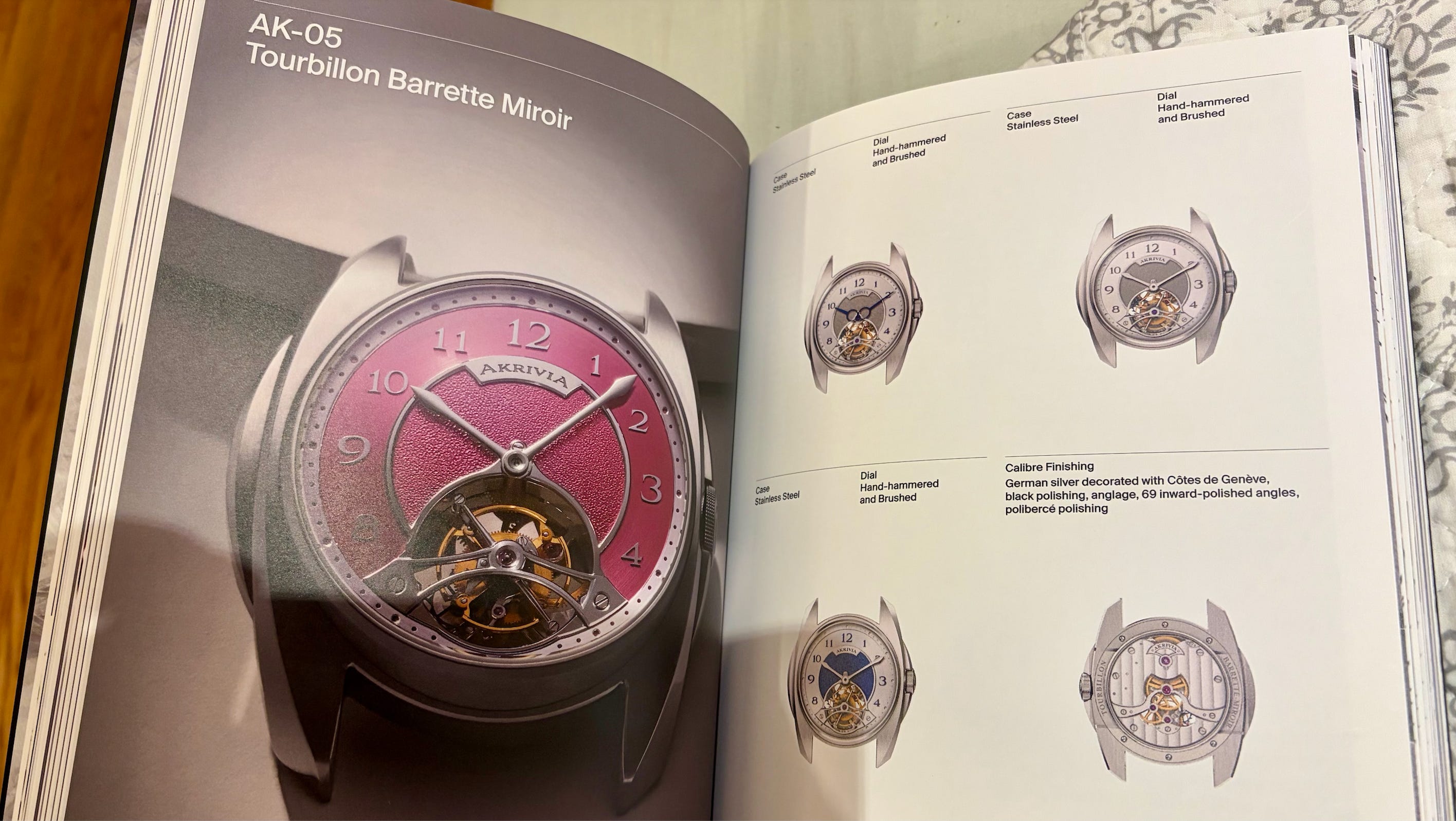
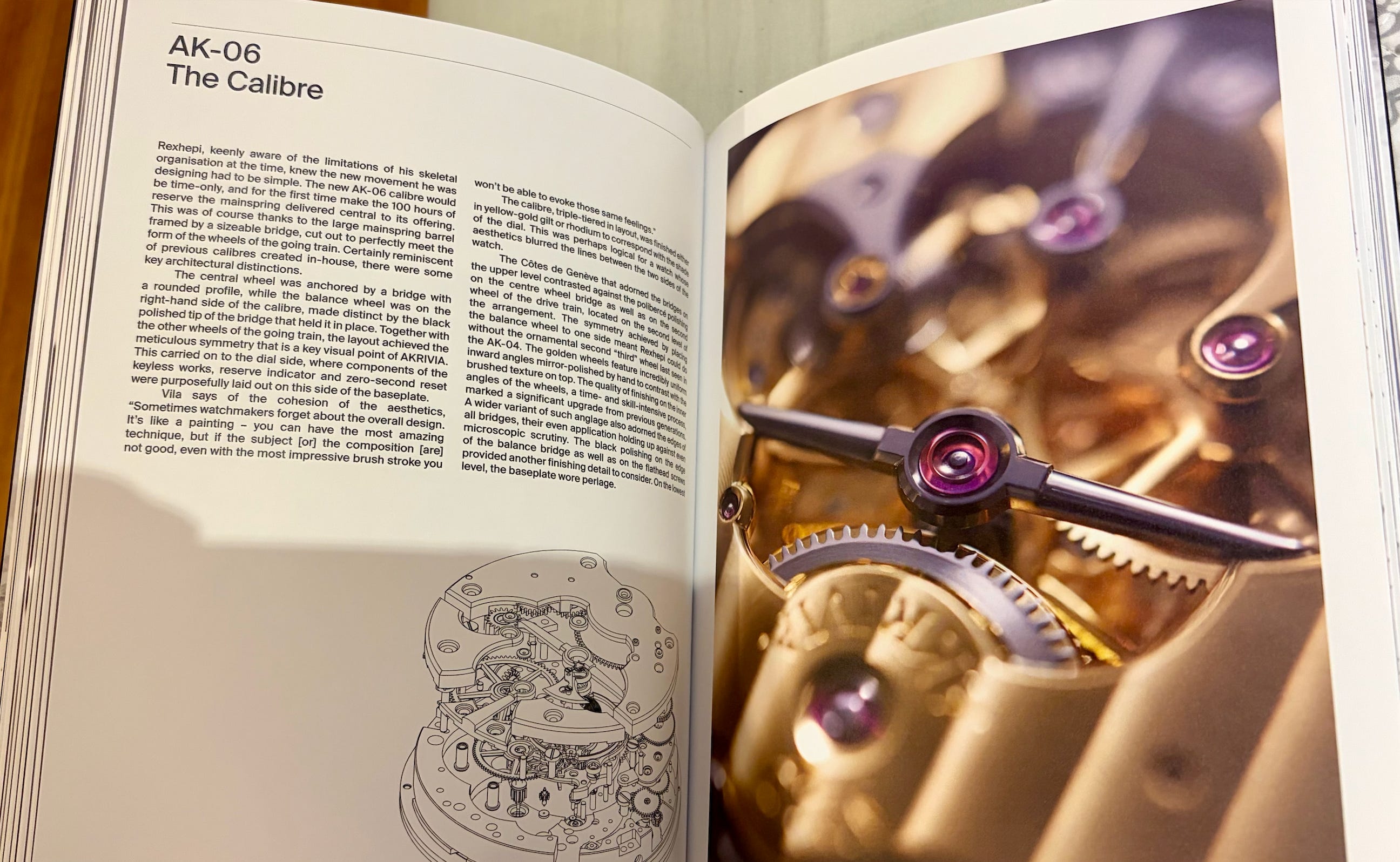
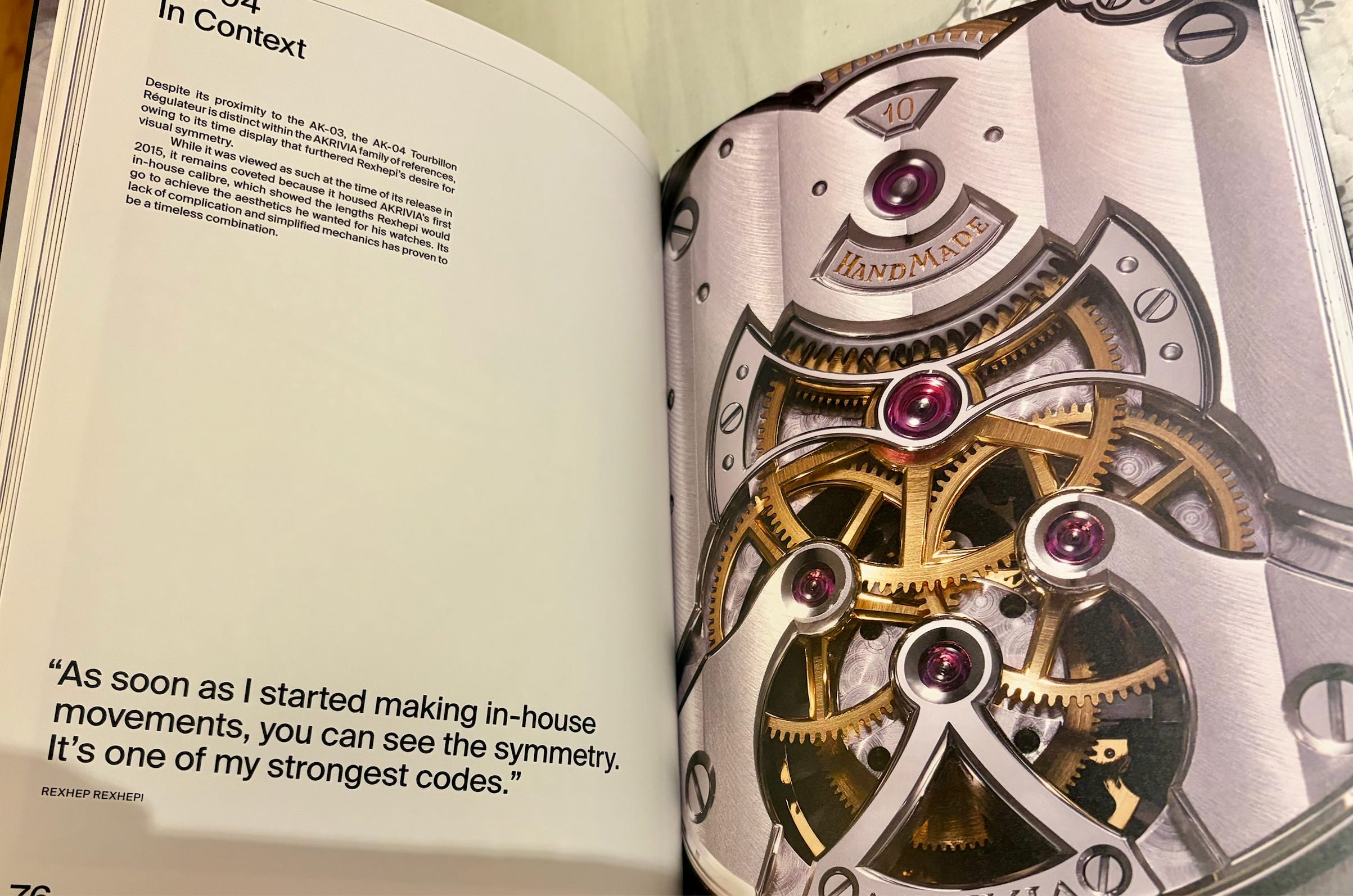
It was the first time I really had the chance to learn about Rexhep’s early creations, Akrivia AK-01 through AK-06. These are exquisite timepieces with high complications, and they already display many of Rexhep’s strong design codes: symmetry on both the dial and movement sides, distinctive hand shapes, and well-balanced proportions. The movement finishing is meticulously executed, while the dials showcase a wide range of elaborate decorative techniques.
To my great surprise, and as candidly described in the ACM book, these early works by Rexhep were not immediately appreciated. In some ways, he was like an artist whose vision and work were ahead of their time. It was a difficult period for a young watchmaker who had left a larger firm, established his own workshop, and poured his heart into creating these watches.
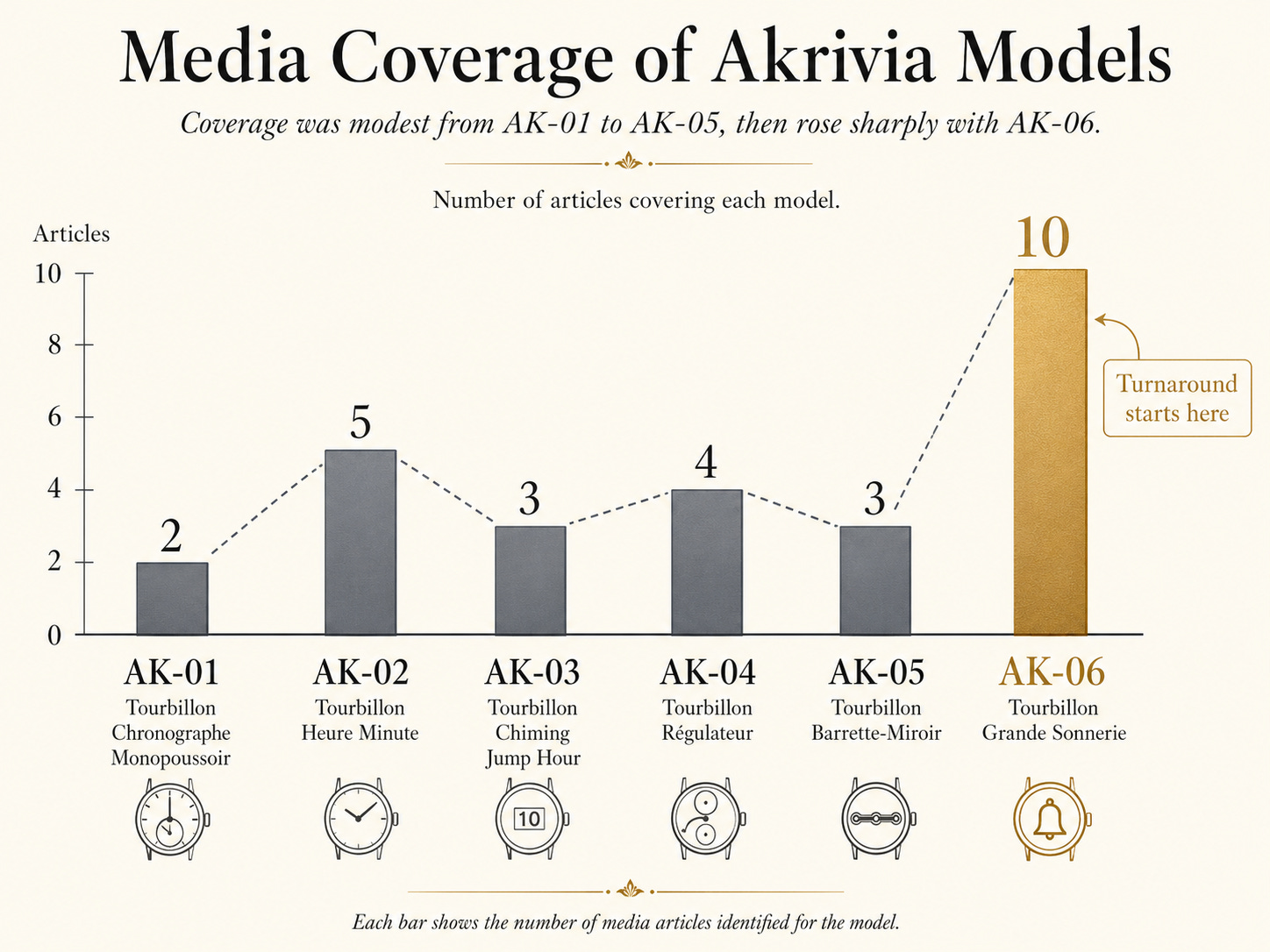
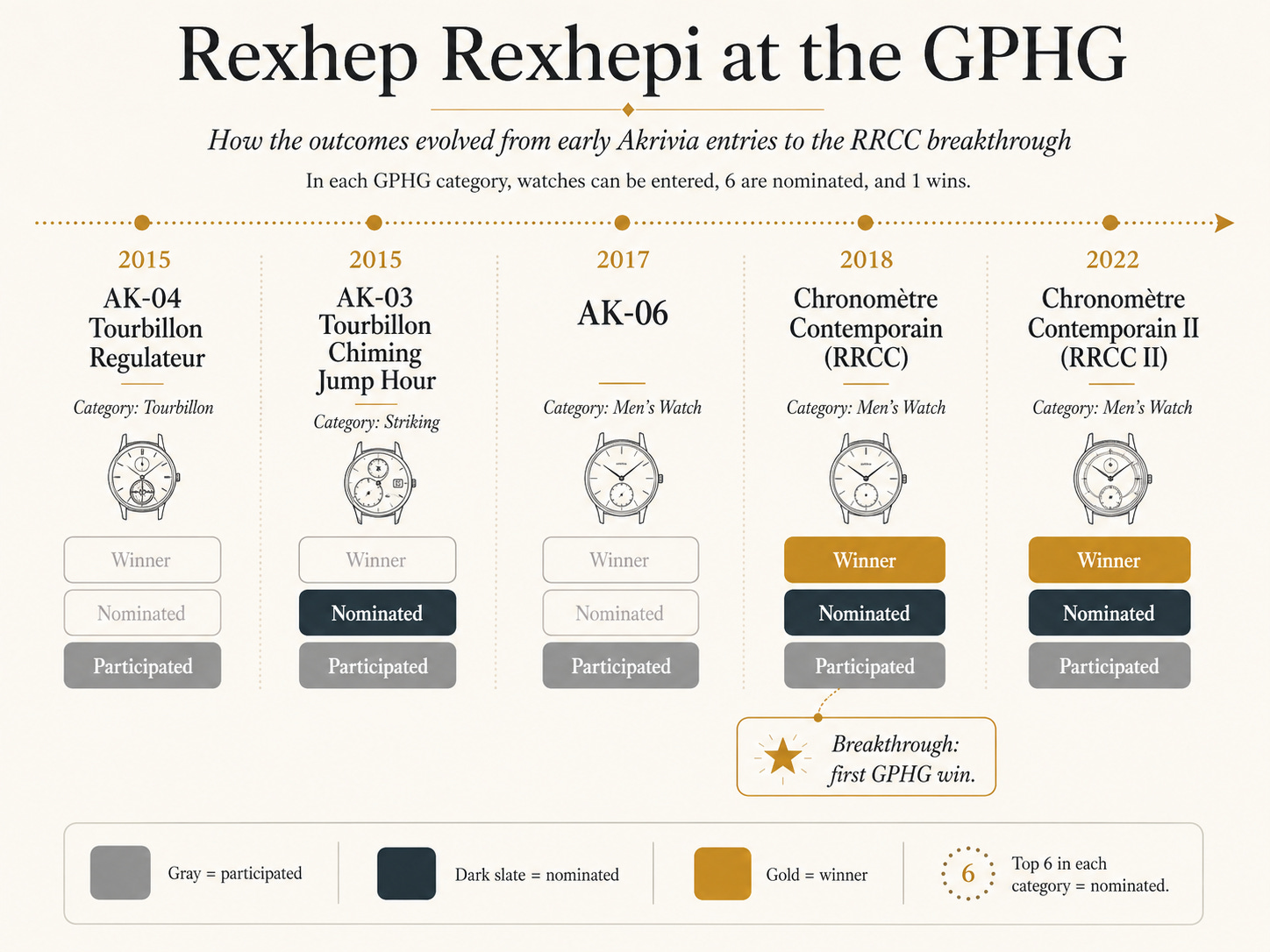
The turnaround began with the AK-06, and Rexhep’s status as one of the leading independent watchmakers was firmly established when the RRCC won the prize in the Men’s Watch category at the 2018 GPHG. The rest, as they say, is history.
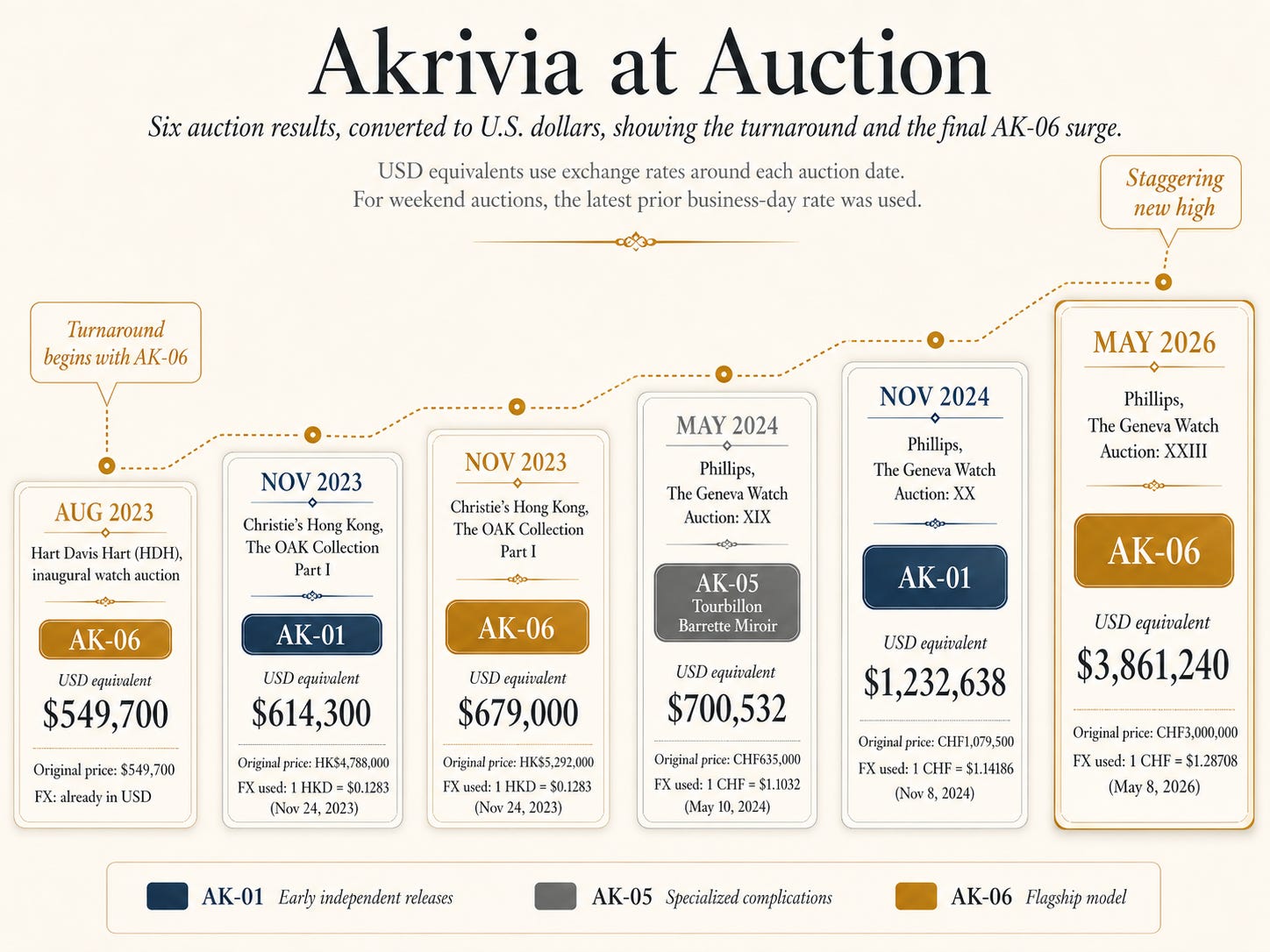
Today, Rexhep’s early timepieces, produced in very small numbers, are highly sought after. The few examples that have appeared at auction have continued to set new highs.
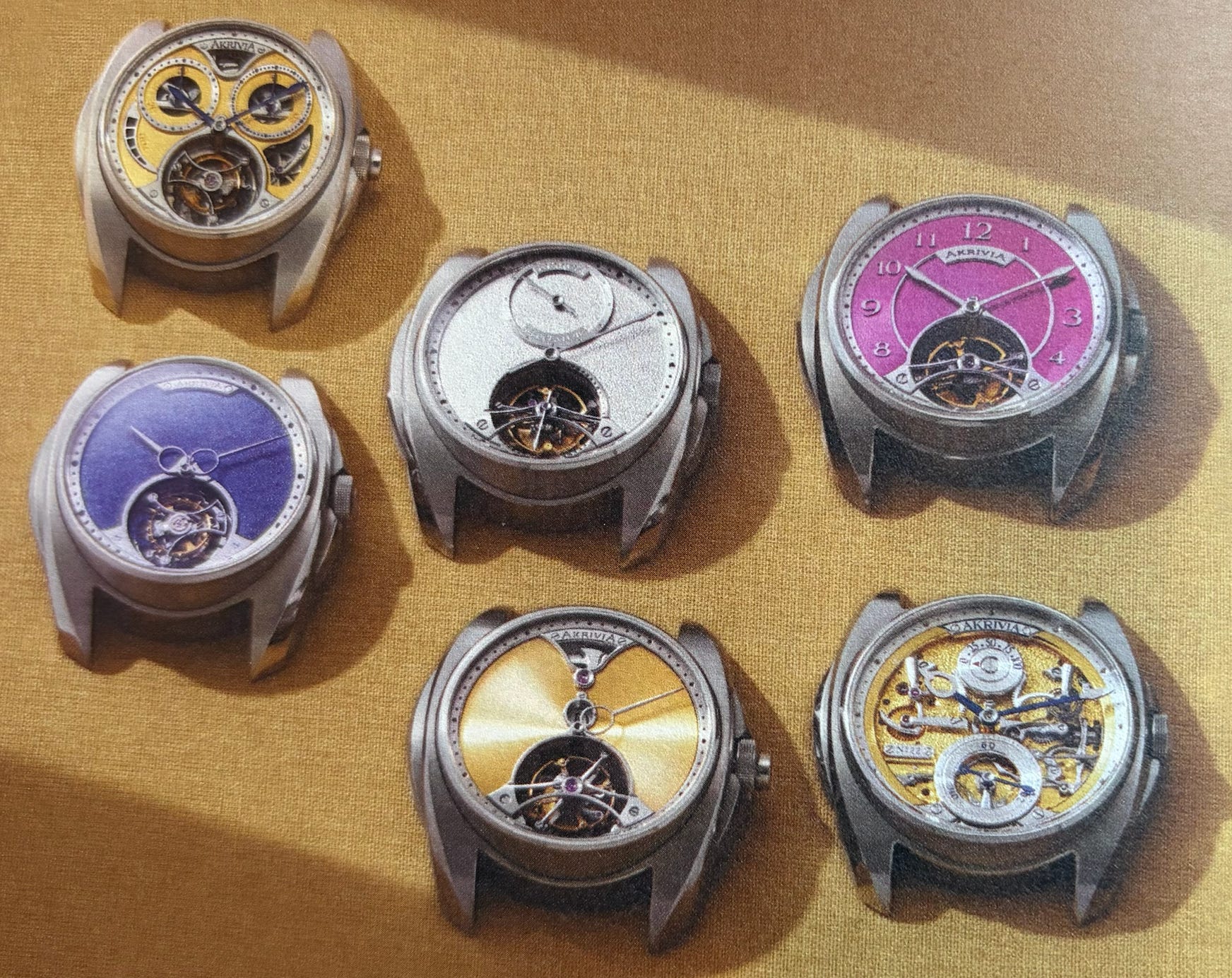
In this write-up, I will share what I learned from the excellent ACM guide, together with my own research into past media coverage, GPHG records, and auction results. We will look at each of the six models in the early Akrivia collection, accompanied by some of the most stunning photographs I could find.
Passing on the opportunity to acquire one of Rexhep’s early timepieces will probably remain the biggest regret of my watch-collecting journey. It came down to my lack of knowledge and, perhaps, a lack of foresight. Still, there is something bittersweet, and even a little amusing, about knowing that I was once offered the opportunity.
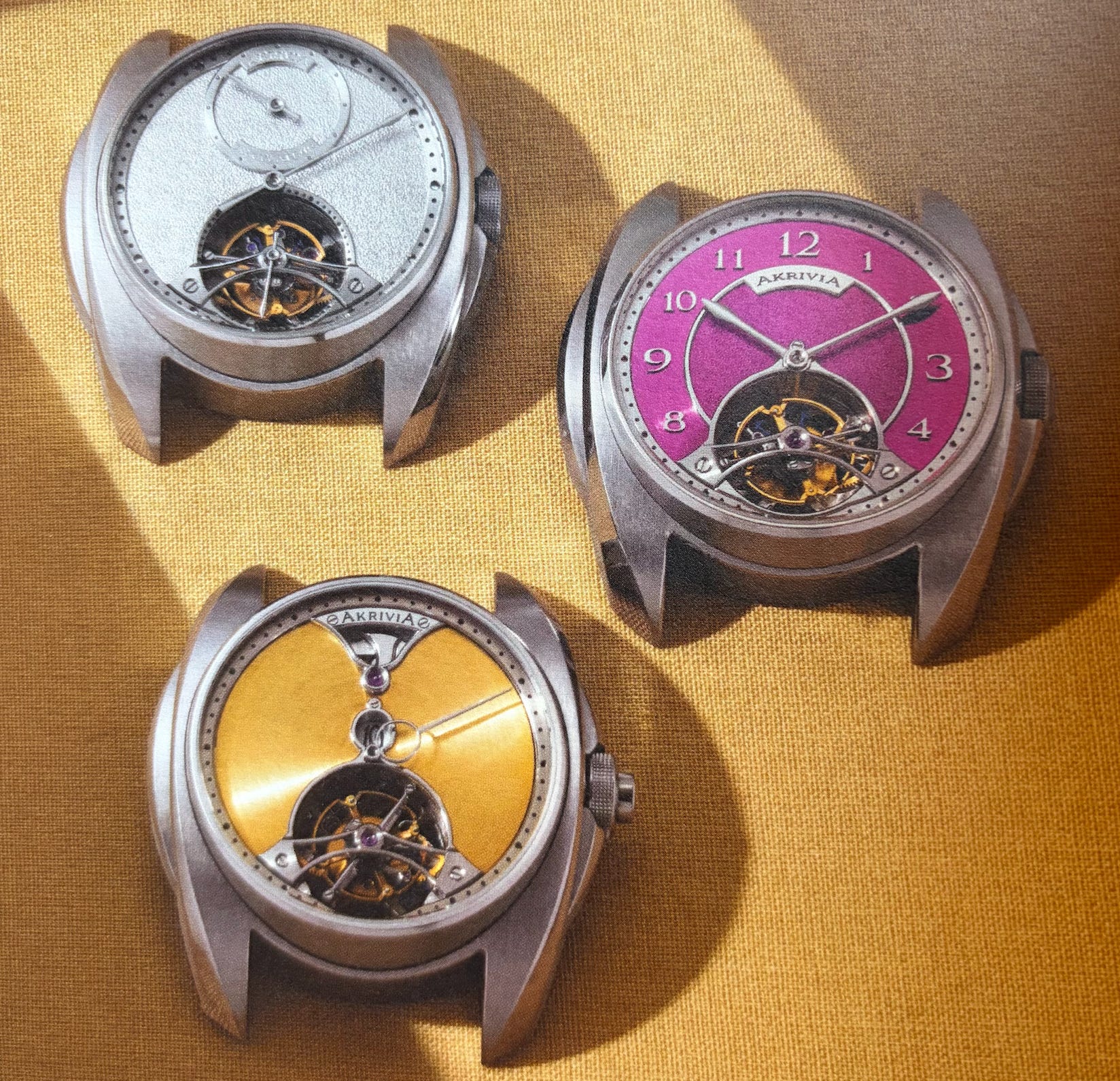
Delayed Recognition
As described in a 2015 Hodinkee article by Nicholas Manousos, Kari Voutilainen was once asked to name young watchmakers doing interesting things. Kari’s reply was simple: “Rexhep Rexhepi.”
Apparently, the wider watch world was far behind the curve. Case in point: two of Rexhep’s early watches were not even nominated to advance to the top six in their respective GPHG categories. A third watch was nominated, but did not win. I will show the details in the illustration below.
In the ACM book’s chapter on the AK-06, Rexhep’s situation at the time is described rather starkly: “He had to approach his next watch differently because, as far as Rexhep was concerned, this was the one that would determine his future in watchmaking. It would either salvage his career or put an end to it.”
Rexhep had listened to feedback and made changes to the case and proportions while retaining his aesthetic language. The AK-06 was also a simpler, time-only watch without a tourbillon.
The watch media took notice, as we can see from the coverage chart below. Collectors certainly noticed as well, and the response was much more positive.
The ACM book later quotes Rexhep reflecting on the AK-06: “Then we released it, and I knew straight away that my life was going to change.”
Recognition from the GPHG would be delayed by one more year. The AK-06 was not nominated in 2017, but Rexhep won the Men’s Watch category with the RRCC in 2018.
It seems likely that these two time-only watches, the AK-06 and RRCC, helped the watch world better understand and appreciate Rexhep’s craftsmanship and artistic vision. At the end of the day, very few of us could see it as clearly as Kari did, right?
The first watch from the early Akrivia collection would not appear at auction until August 2023. From there, prices would continue to climb dramatically, as we will see below.
It was certainly a delayed recognition. The difficulties Rexhep faced as a young independent watchmaker seem only to have made him more determined. But when the recognition finally came, it came in a very big way.
AK-01 Tourbillon Chronographe Monopoussoir (2013)
Rexhep Rexhepi established his own workshop in 2012 after building up his formidable watchmaking skills at BNB Concept and F.P.Journe. The following year, at the AHCI section of BaselWorld 2013, Rexhep unveiled his first watch, the Akrivia AK-01 Tourbillon Chronographe Monopoussoir.
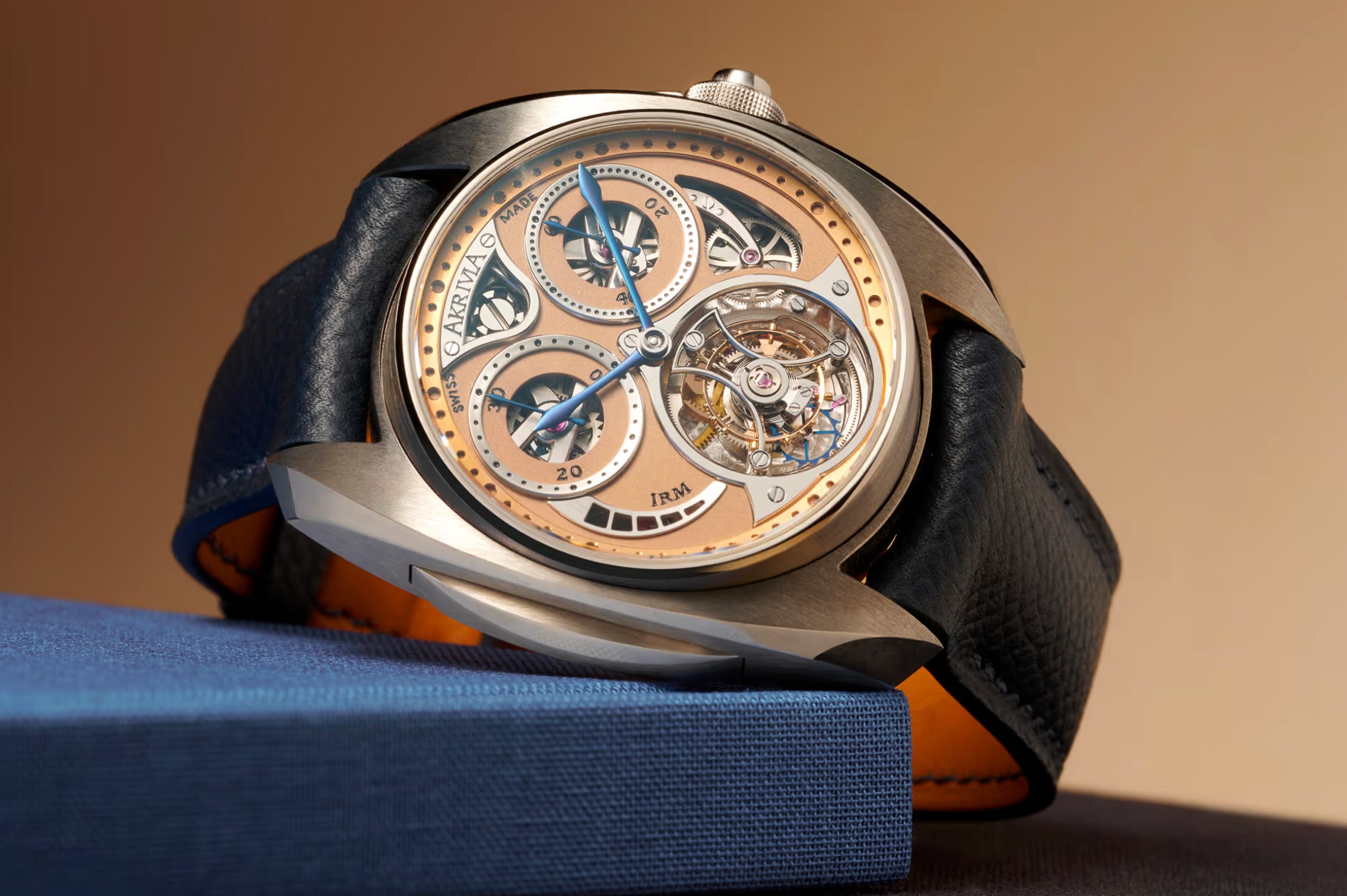
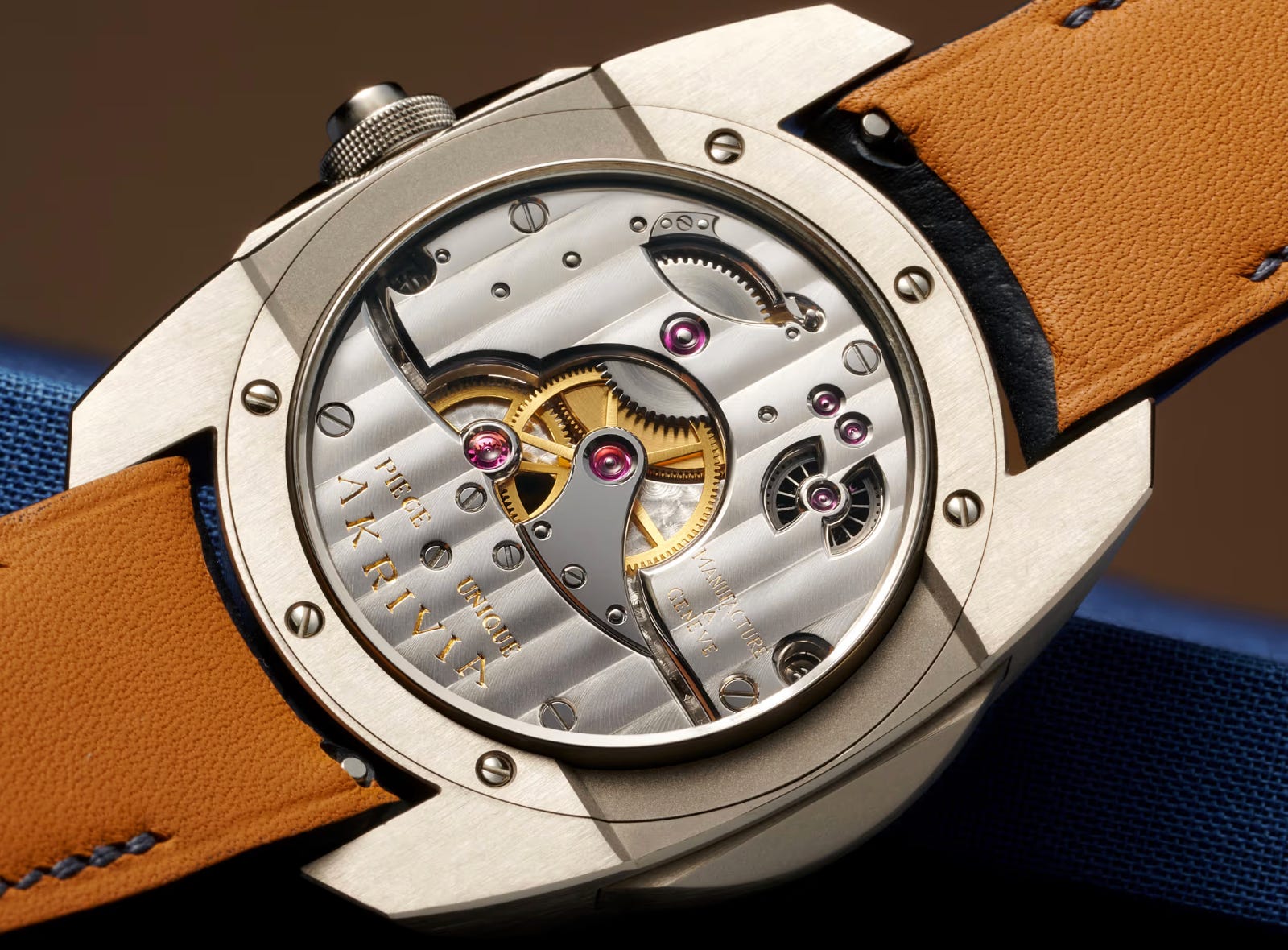
As the name indicates, it combines a monopusher chronograph with a tourbillon, two of the complications Rexhep loved most. What an incredible first watch for a new brand! Rexhep did not start entirely from scratch, however, as he turned to a movement he was already familiar with as the base.
During his time at BNB Concept, Rexhep led a 10-person complications workshop. BNB Concept was later sold to MHC, along with its calibers, and the AK-01 was based on an ébauche from MHC.
According to the ACM book, Rexhep still had to do considerable work to improve the ébauche and make it function properly. He also designed a new cage for the flying tourbillon.
Rexhep designed the dial, hands, and case, laying the foundation for the distinctive aesthetic codes that would appear in his later watches. The symmetry of the dial would become a hallmark of his creations. One particularly interesting detail is the bell-shaped opening at 12 o’clock, which showcases the chronograph’s column wheel.
Another hallmark of Rexhep’s watches is the exquisite, uncompromising finishing. We can certainly see that level of finishing here, from both the dial side and the movement side.
The AK-01 was priced at CHF 160K in steel and CHF 200K in rose gold. According to the ACM book, only about 13 to 14 examples were ever made.
AK-02 Tourbillon Heure Minute (2015)
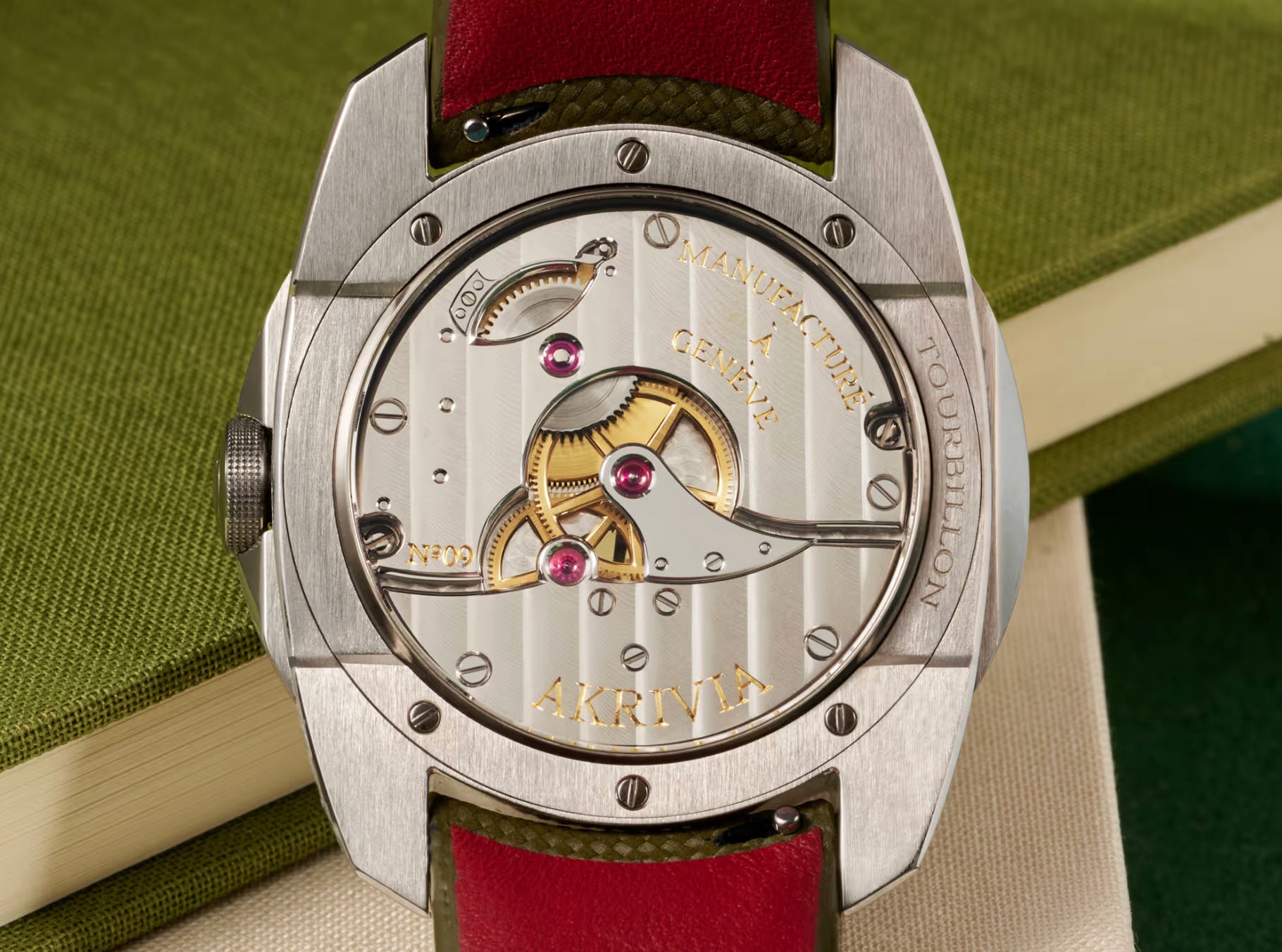
Rexhep’s second creation, the AK-02, was a simplified and refined version of the AK-01, with the chronograph removed. From the back, the movement looks almost the same as that of the first watch, and the case also remains largely unchanged.
The bigger change is on the dial side, where Rexhep had more opportunity to experiment with different decorative techniques. He offered clients two options, both rooted in traditional watchmaking. The first was a matte-polished finish, while the second was hand-hammered. Both were highly labor-intensive and required considerable skill. Clients could also choose a specific color for the dial.
The movement is made of either German silver or brass decorated with Geneva stripes, anglage, and black polishing. The AK-02 Tourbillon was priced at $120K in a stainless steel case.
AK-03 Tourbillon Chiming Jump Hour (2015)
Rexhep began working on an in-house movement from the ground up as early as 2013, and unveiled the AK-03 with this new movement in 2015. It was another highly complicated watch, combining a jumping hour display and sonnerie au passage with a tourbillon. The AK-03 fully demonstrated Rexhep’s watchmaking talent.
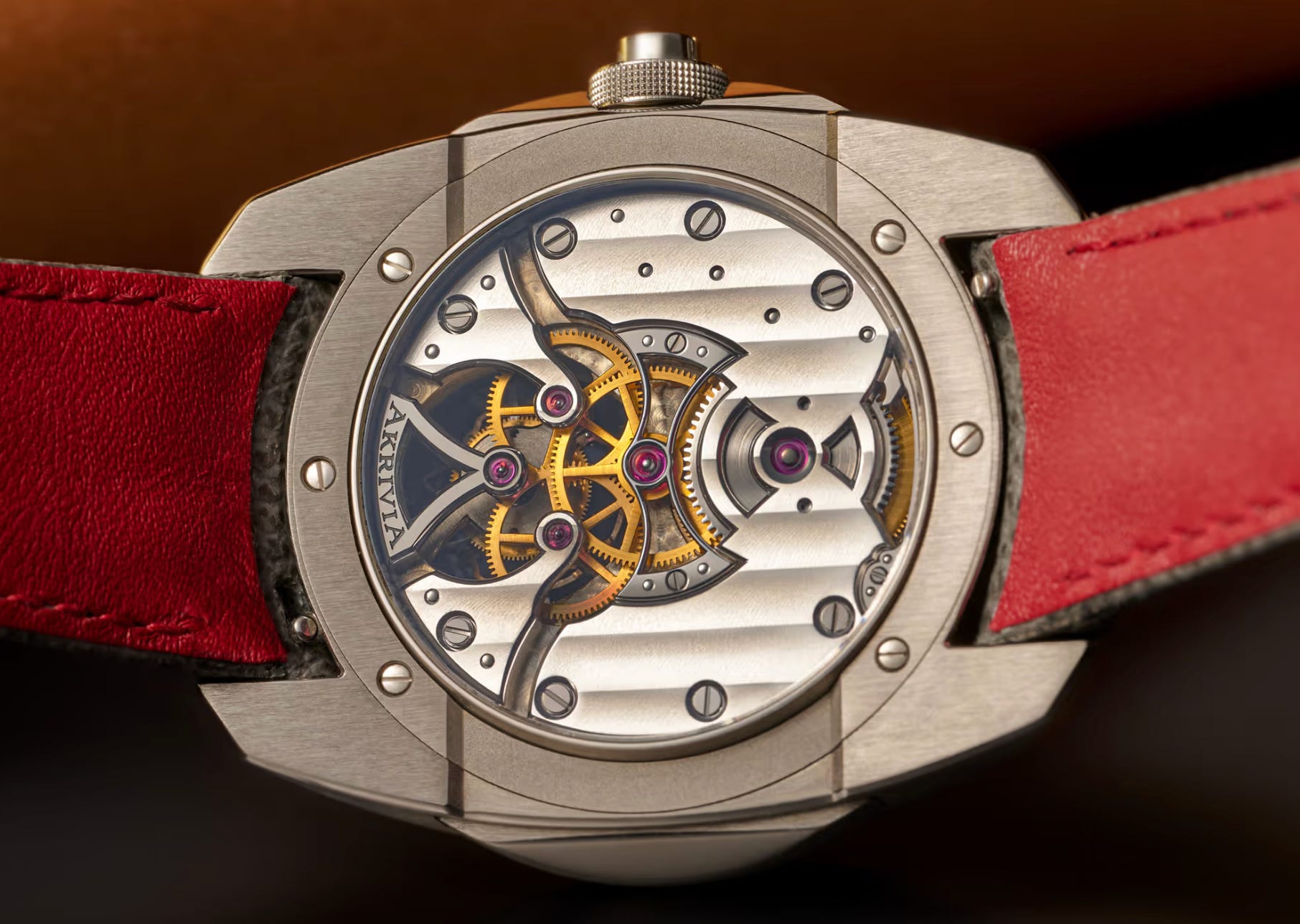
The beautifully finished and perfectly symmetrical movement further emphasized the design DNA that would make Rexhep’s watches stand out. The finishing includes Geneva stripes, anglage, and 56 interior angles.
The dial offers some fascinating details. First, the same opening at 12 o’clock seen on the AK-01 returns here, but instead of showcasing the chronograph’s column wheel, it reveals the gong for the chiming function.
Directly below the gong is the circular aperture for the jumping hour. Its shape aligns perfectly with the circle on the minute hand.
Further down is the larger aperture for the tourbillon, completing the strong vertical focus running from top to bottom along the center of the dial. The symmetrical layout feels both distinctive and beautifully balanced.
The ACM book quotes Rexhep summarizing this approach: “This has always been my visual code - to highlight the component that characterized the complication in the watch.”
With its first in-house movement, the AK-03 represented a major milestone for Rexhep. The atelier would soon begin to expand, with the first watchmaker joining in 2016, followed by an engineer and Rexhep’s brother, Xhevdet.
Offered with either a grey dial or a brushed gold dial, the AK-03 was priced at CHF 180K.
AK-04 Tourbillon Régulateur (2015)
The AK-04 can be seen as a companion piece to the AK-03, using the same in-house movement but without the chiming function. It is a regulator, meaning the hour, minute, and seconds displays are placed on separate axes so the hands do not overlap.
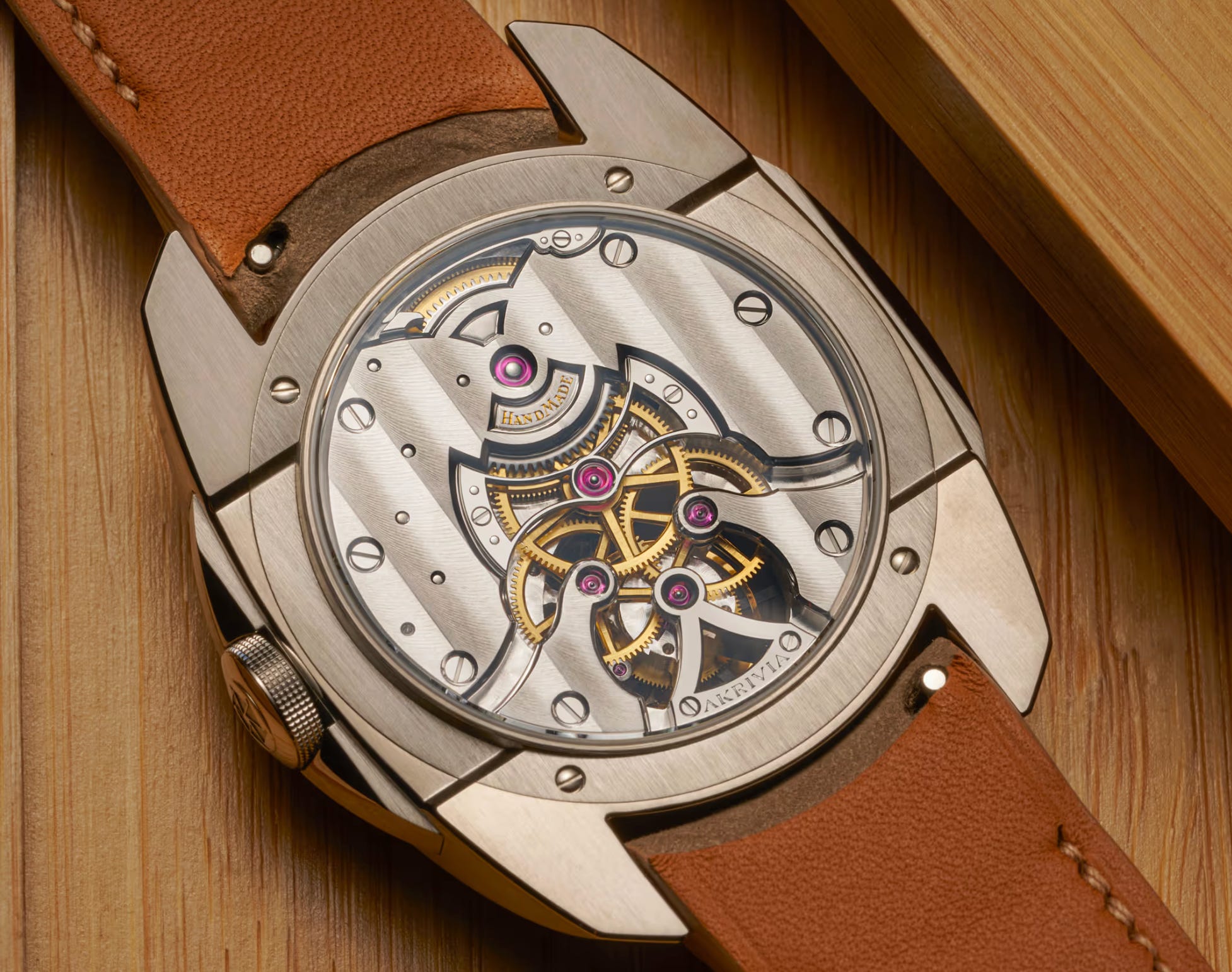
The symmetry of the dial works not only horizontally, but vertically as well, with the hour sub-dial at 12 o’clock balanced by the tourbillon below. In addition to the matte-polished and hand-hammered dial finishes, Rexhep also offered a third option in blued steel.
Offered only in a stainless steel case, the AK-04 Tourbillon Régulateur was priced at CHF 125K.
AK-05 Tourbillon Barrette-Miroir (2016)
Rexhep’s original idea was to create a watch similar to the AK-02, but powered by his own in-house movement. Feedback from clients and retail partners helped shape the AK-05 into its final form. It was also the first Rexhep watch to feature Arabic numerals on the dial. In a sense, it was his most conventional design up to that point in 2016.
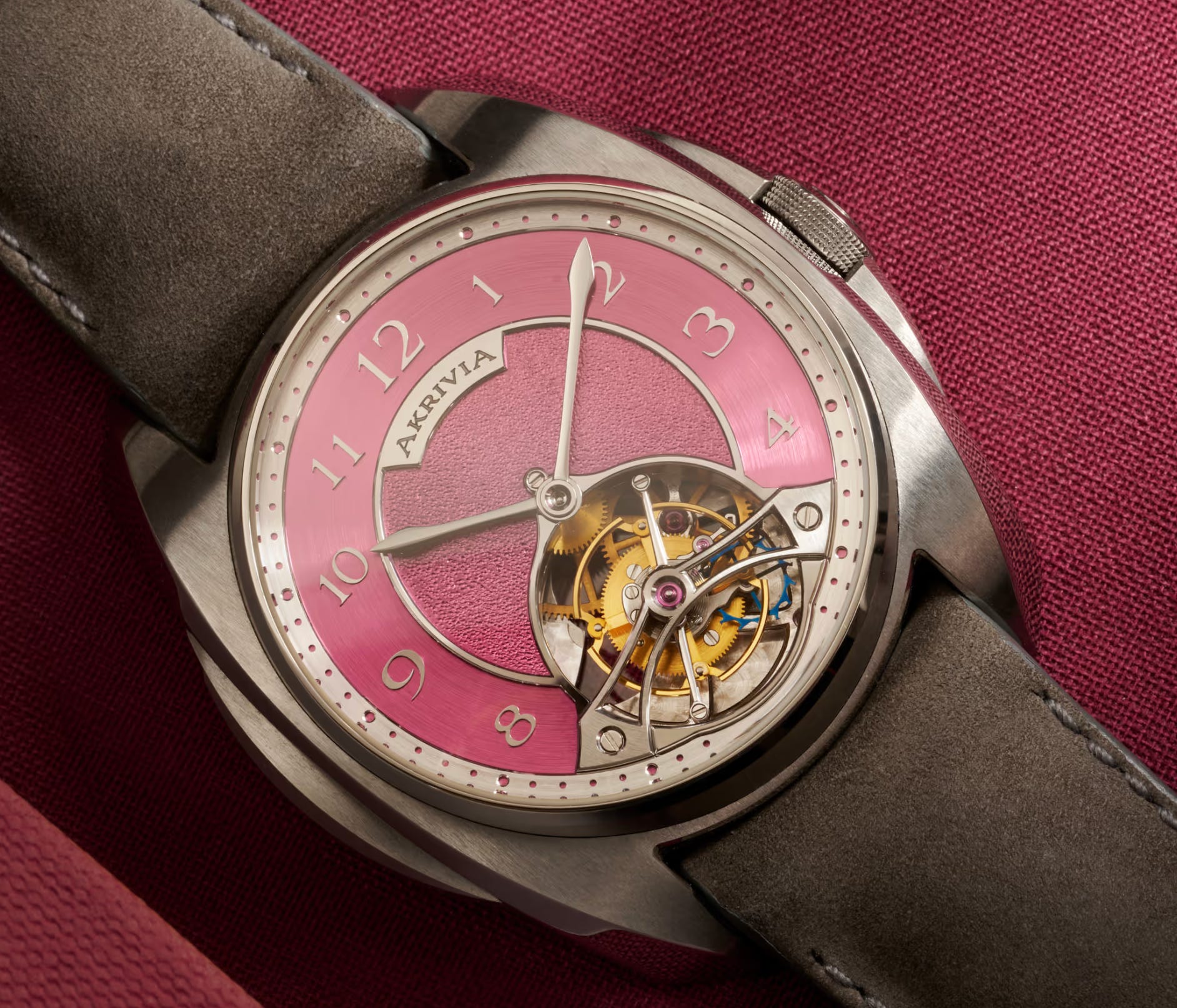
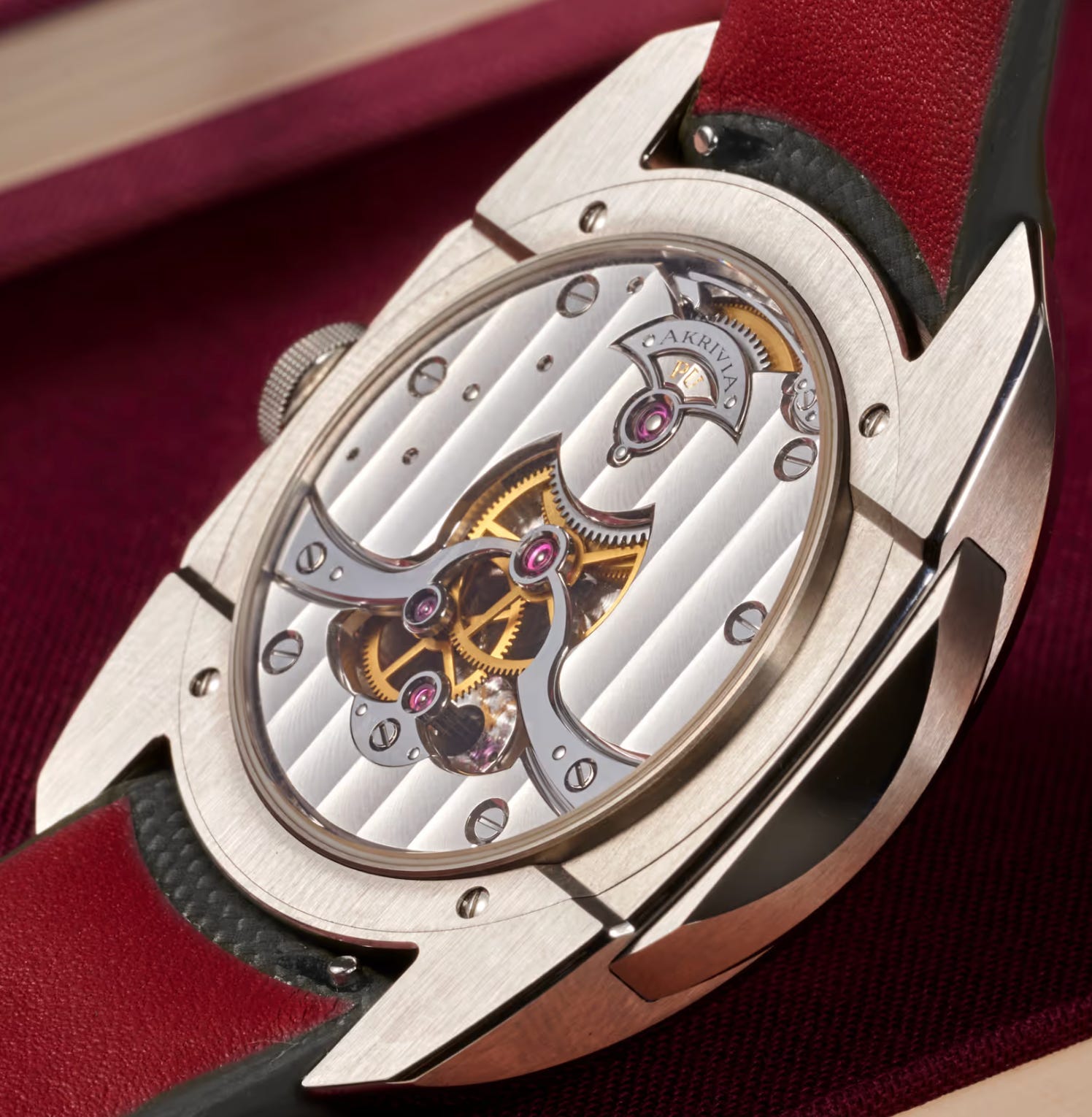
Barrette-Miroir means “mirror-polished bridge” in French, referring to the prominent arched tourbillon bridge, which is finished to an exceptionally high level of mirror polish. The movement is a further simplification of those used in the AK-03 and AK-04, with 167 components.
The dial combines hand-hammered and brushed finishes. The AK-05 was priced at CHF 165K.
AK-06 (2017)
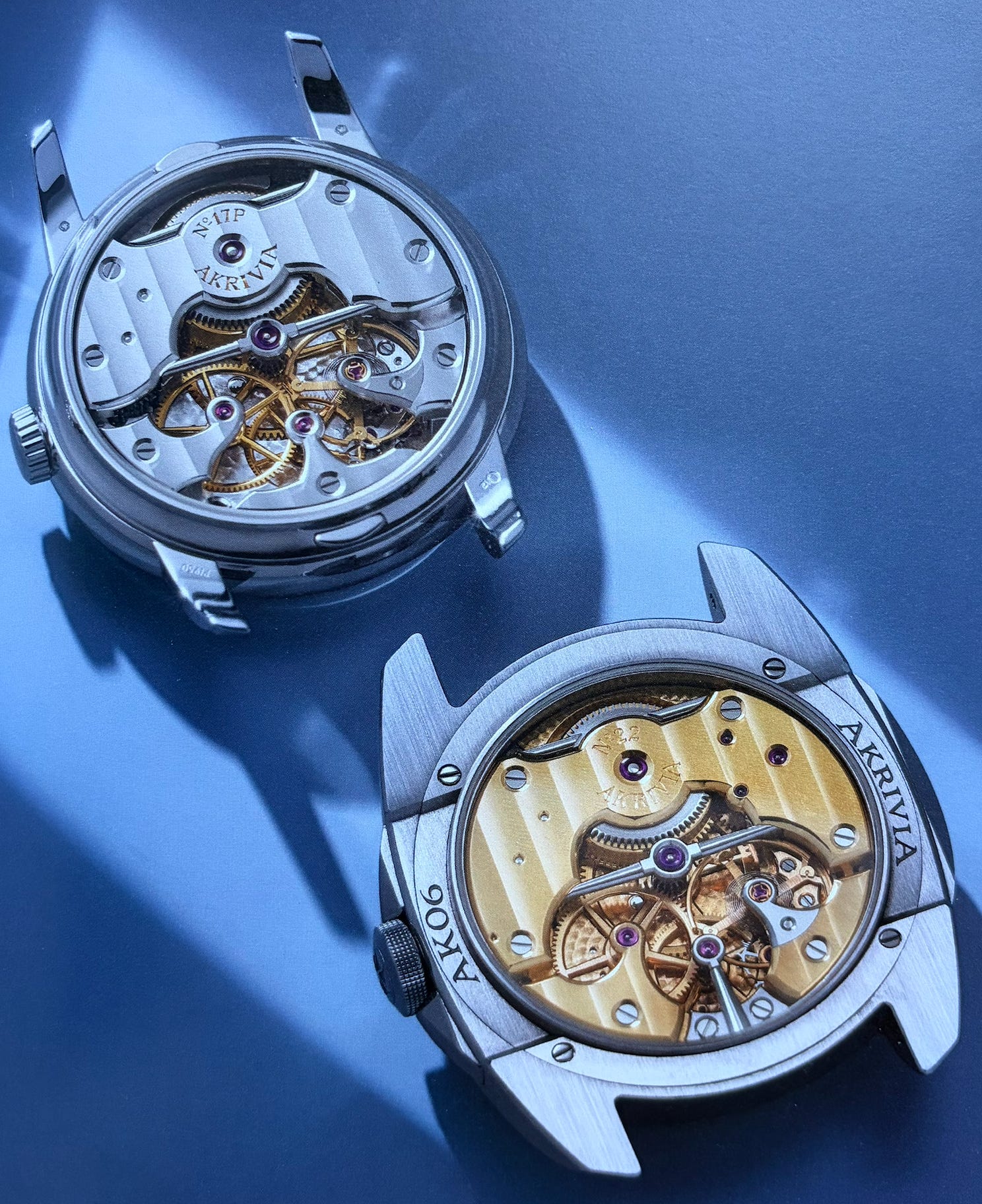
The AK-06 represented a fairly major change from the previous Akrivia models, or a “revival,” in Rexhep’s own words. First, there was no longer a tourbillon. The case was also much slimmer, measuring 41.5 mm by 9.9 mm. The openworked dial was avant-garde even by today’s standards, while the price came down to a relatively more accessible CHF 79K in steel.
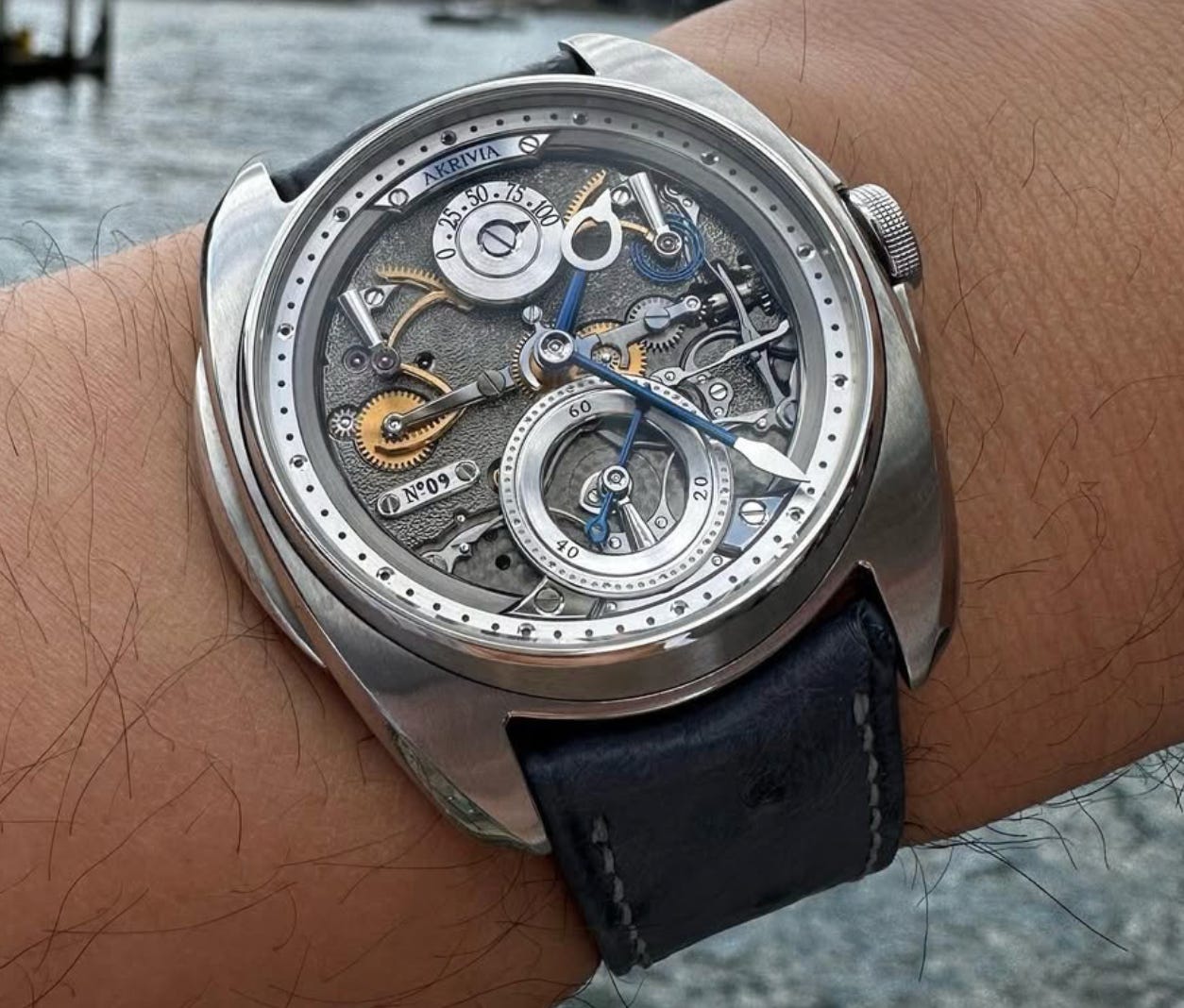
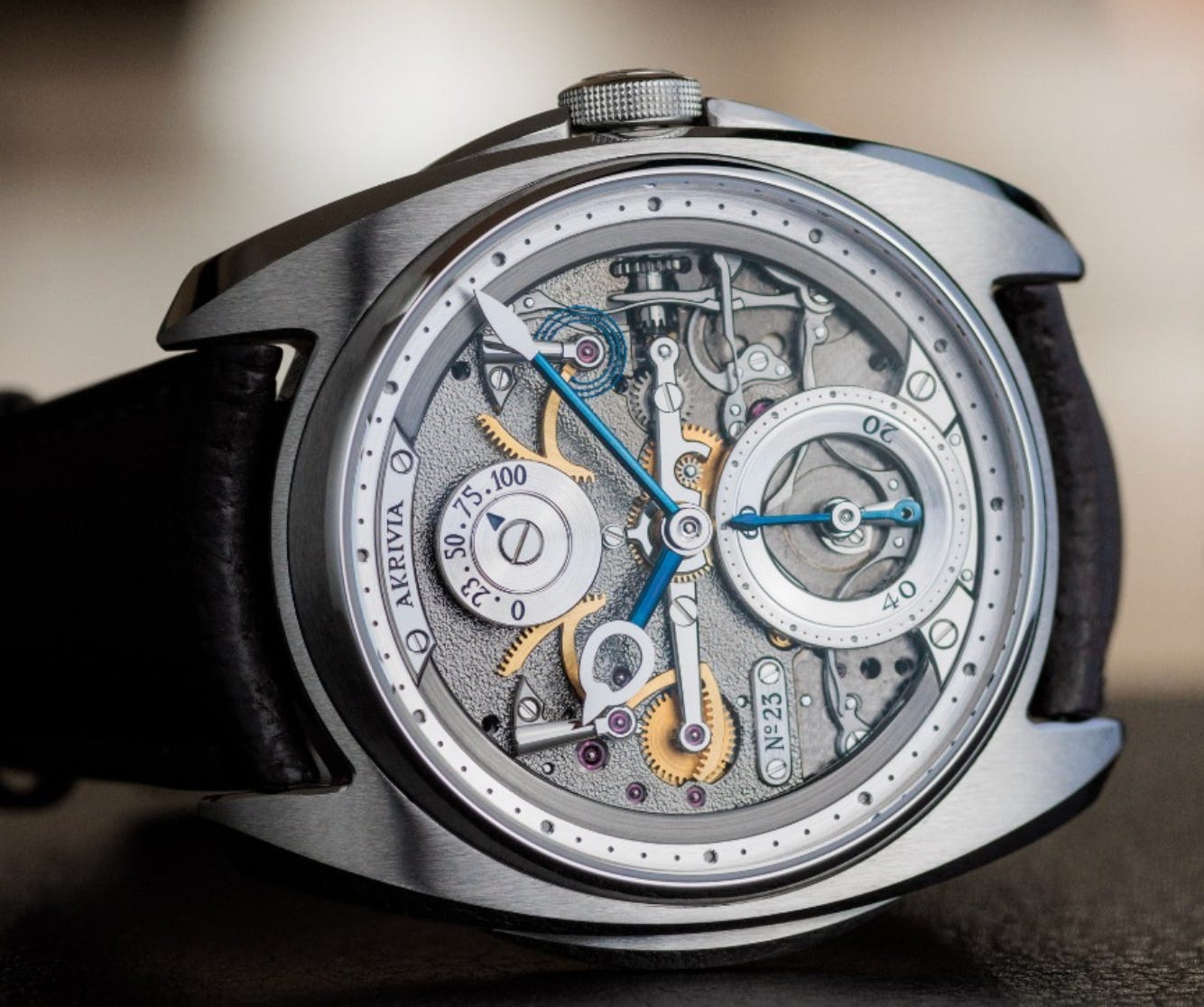
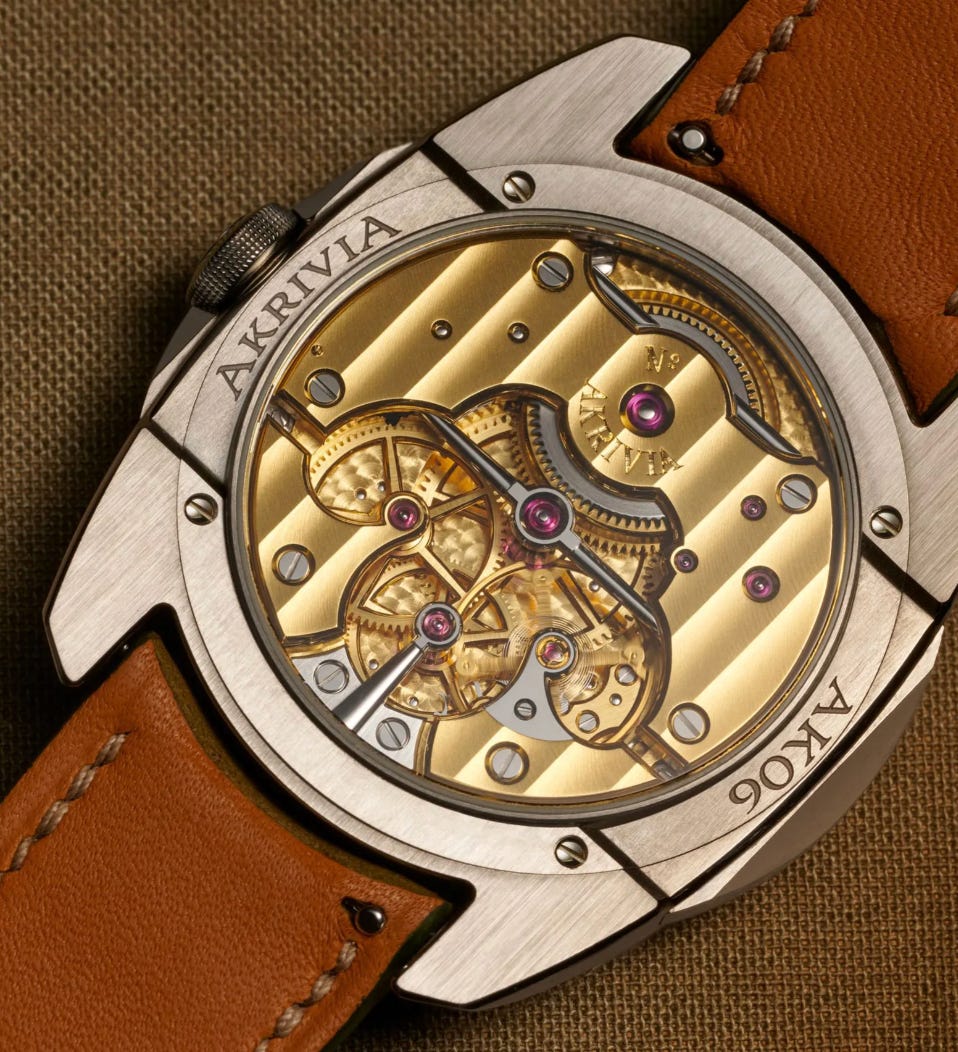
As discussed earlier, the AK-06 proved to be a turning point, with collectors and the media responding enthusiastically to the new watch.
While the tourbillon was gone, Rexhep added two complications that collectors love: a zero-second reset mechanism and a power reserve indicator. When the crown is pulled out, the seconds hand jumps instantly back to zero. This rare feature would continue to appear in future models.
With the new power reserve indicator positioned at 12 o’clock, the total power reserve was increased to 100 hours. It is uncommon to see the mechanism for a power reserve displayed so prominently on a watch.
The most intriguing fact I learned from the ACM book is that the calibers powering the AK-06 and the RRCC are basically the same. The main difference is that the RRCC does not have the power reserve indicator, in addition to some bridge design changes.
In this sense, the AK-06 paved the way for the young brand’s phenomenal success from that point onward. It is a foundational piece in the history of Atelier Akrivia.
The Long Road to Success
Earlier this year, Rexhep released the Chronograph Flyback (RRCHF) to rave reviews. If there were a waitlist, it would probably stretch to 100 years or more. I would bet that this watch will easily win this year’s GPHG Chronograph Category. It is striking to compare the reception of the RRCHF with that of the very first AK-01 monopusher chronograph tourbillon launched in 2013.
Yet the early Akrivia models, made by Rexhep’s own hands through long hours and enormous effort, laid the foundation for his eventual success. The symmetrical design language, impeccable hand finishing, development of different complications, and experimentation with dial decoration all paved the way for today’s RRCHF and future models.
Learning more about the AK-01 through AK-06 convinced me that Rexhep was ahead of his time. Features that are popular today, such as jumping hours and hand-hammered dial decoration, had already been explored by Rexhep many years ago. His symmetrical approach to both dial and movement design can also be seen in creations from newer independents, including the Annual Calendar by Berneron and the RD002 by Mineroci.
I did not have the chance to meet Rexhep and Annabelle until the summer of 2024. Reading the ACM book and researching the early Akrivia collection allowed me to go back in time and better understand their remarkable journey. Connecting the dots made me appreciate Rexhep’s work even more.
There will be no more new watches under the Akrivia name, as future creations will only carry Rexhep’s own name. Looking back now, the Akrivia collection feels like an earlier chapter, and surely a memorable one for Rexhep and Annabelle. From here, the possibilities seem almost limitless.
I cannot wait to see the next chapter for Rexhep and his remarkable team.
No posts
Comments
Nothing yet. Say the first thing.
Sign in to join the conversation.