
By Michael Zwiebach, senior editor, and Jens Ibsen
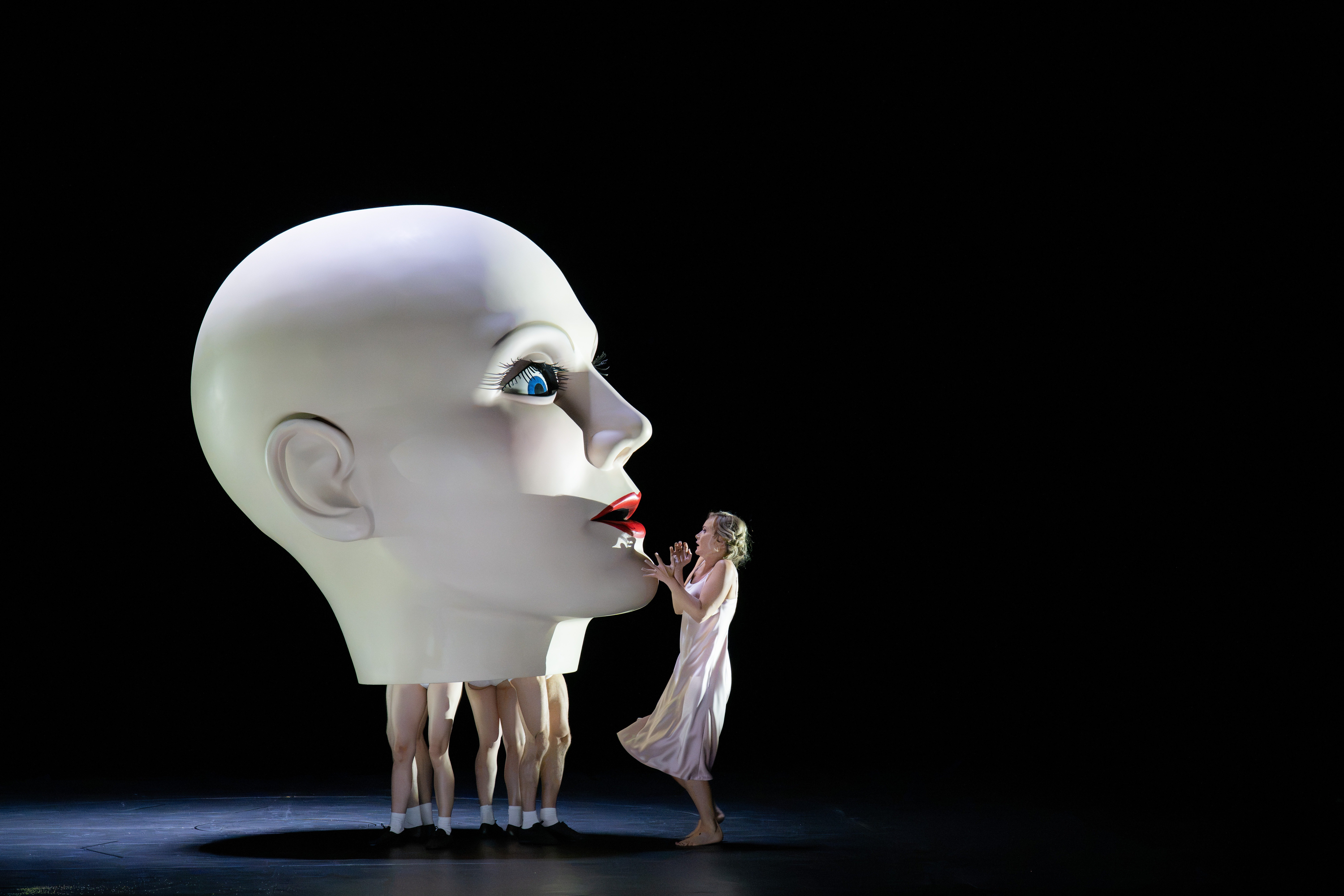
This week, SF Classical Voice, which does not solely cover vocal music, ranged pretty far into opera.
Steven Winn reviewed the amazing singers of the Merola Opera Program in Richard Strauss’s Ariadne auf Naxos — that’s not an easy sing. Then we applauded two major West Edge Opera hits: Benjamin Britten’s The Turn of the Screw and George Frideric Handel’s Rinaldo.
Coincidentally, SFCV’s Lisa Hirsch was in Europe and sent in her report of five operas from France’s unrivaled Festival Aix-en-Provence. These included a world premiere and Hans Werner Henze’s tour-de-force El Cimarrón as well as the Giuseppe Verdi rarity The Sicilian Vespers.
Now that it’s August, that means the Cabrillo Festival is upon us. This year’s composers wrote about their most urgent concerns. We talked to Clarice Assad and Vivian Fung about the political messages they are sending through their music. And Yoshi Kato reports that, despite a last-minute substitution, Cabrillo’s “Defiant Dreams” concert was full of sublime music.
In its second week, Music@Menlo produced another special evening of chamber music with “Resonance.” In advance of the San Francisco Bach Festival this weekend, Victoria Looseleaf interviewed Yue Qian, one of the Drake Fellows in the American Bach Academy.
At the Hollywood Bowl, Conrad Tao wowed with George Gershwin’s Rhapsody in Blue and conductor Marin Alsop and the LA Philharmonic cast a spell with a quietly emotional performance of Dmitri Shostakovich’s Symphony No. 5. Two nights later, Emmanuel Tjeknavorian led the Phil in music by fellow Armenian Aram Khachaturian, Tchaikovsky, and a sonically stunning performance of Pictures at an Exhibition.
From the marvelous La Jolla Summer Music Festival, we spoke with vintage piano enthusiast, historian, and performer Angie Zhang. And Janos Gereben reported that the SF Arts Commission has been revamped with Matthew Goudeau installed as the city’s new “culture czar.”
An article to spark this week’s conversation
By Jens Ibsen
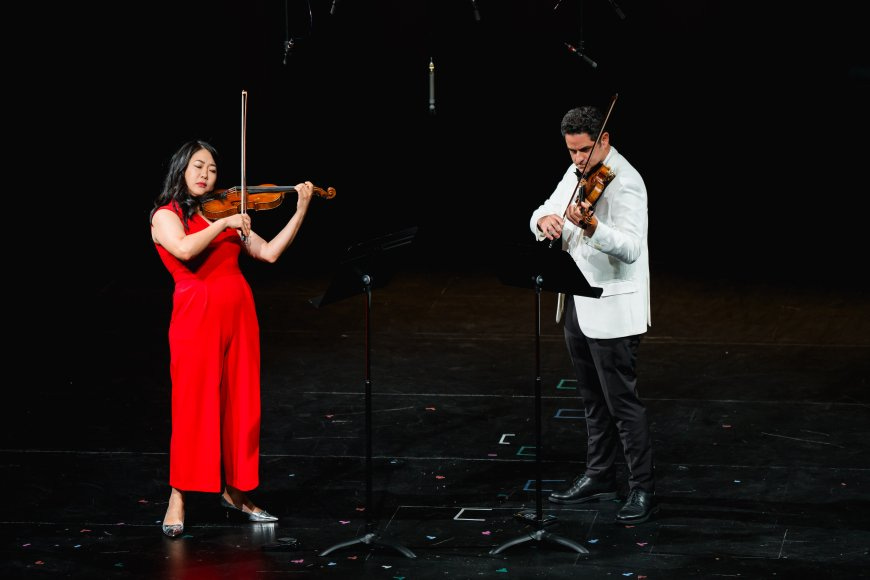
Music@Menlo Artistic Directors David Finckel and Wu Han have crafted an incredible final festival, capping their 25-year tenure, and the festival’s musicians brought it to life in vivid tonal color. Saturday’s Resonance concert, in the Spieker Center presented music that mattered deeply to its composers and still speaks to listeners. Each piece had a character so strong, so distinct, it seemed almost human.
The first piece, Georg Philipp Telemann’s Gulliver Suite, was delivered with technical prowess and slapstick silliness in equal measure by violinists Kristin Lee and Arnaud Sussmann. Composed as a violin duo inspired by Jonathan Swift’s Gulliver’s Travels (his scathing satire of contemporary European socio-politics), the piece captured the over-the-top zaniness of Swift’s novel with character pieces inspired by the various fictional races the protagonist encounters along the way.
The “Chaconne of the Lilliputians” was a hilariously brief chaconne — normally a lengthy set of variations — played at a teeny tiny pianissimo. The “Gigue of the Brobdingnagians” was an uncharacteristically giant gigue, a cheeky inversion of the joke behind the previous movement. The “Daydreams of the Laputians” was stuffy and aimless like Swift’s sky-dwelling scholars, and the finale, the “Loure of the Well-Mannered Houyhnhnms and Wild Dance of the Untamed Yahoos,” saw Lee play a polite, courtly dance over which Sussmann delightfully soloed in outrageously exaggerated fashion, his part written to lag, breathlessly, an eighth-note behind.
Next was Czech composer Josef Suk’s exquisite Meditation on an Old Czech Hymn “St. Wenceslas” for string quartet. The titular hymn had been used by several Czech composers prior, including Suk’s teacher Dvořák; its use in this piece served to invoke Czech nationalism during Austrian rule. Suk had a particular love of the viola, and the most sumptuous segments of the hymn melody are played in the instrument’s rich tenor register. Violist Matthew Lipman was a standout player throughout the evening, but Suk’s quartet, as with the rest of the program, breathed with a collective synergy allowing everyone to bring out the best in each other. The quartet’s overt political origins and its sensitively played, densely layered contrapuntal lines deeply embodied the collaborative humanism at the heart of the night’s program: many voices striving, even crying, as one.
… Read the full article on sfcv.org
No posts
Comments
Nothing yet. Say the first thing.
Sign in to join the conversation.