
The objective for my Russian Interference Substack has always been to make it a one-stop shop on the subject. Each week, I have tried to cover, in some depth, the themes and stories that I consider important. Judging by the response so far, I think it has worked. But I also think we need to widen our horizons to get a fuller picture.
So today I am launching a weekly digest of Russian political interference operations around the world, drawing on reporting by the media, think tanks, YouTube channels and podcasters.
I am making this first pilot issue available to all subscribers. From next week, the full digest will be available to paid subscribers only.
One quick but very important reminder: you can save £20 a year by subscribing through the Substack website rather than the app. The annual subscription is £50 on the website, compared with £70 through the app: https://sergeicristo336888.substack.com/subscribe
The story of Substack’s dodgy deal with Apple, under which the app price is inflated to cover Apple’s 30% (!) commission, has caused a real scandal and has been written about extensively online. So, use your browser, click on the link above, or copy and paste it into your browser, and save yourself £20. The monthly subscription is actually just £5 though https://sergeicristo336888.substack.com/subscribe.
And don’t forget that by subscribing you will also help me in my personal quest to force the British government agree to a public inquiry into how Russia effectively bankrolled the Brexit campaign.
Anyhoo, welcome to the new digest. I hope it gives you the same sense of perspective that putting it together gives me.
So, here it goes…
MEDIA COVERAGE
Gabriel Attal, Raphaël Glucksmann and Édouard Philippe have all been targeted by Russia-linked information operations. Viginum attributed the campaign against Attal with high confidence to Matryoshka, while Storm-1516 targeted Philippe. Fake news reports imitated RFI, France 24, AFP, BFM-TV, Le Parisien, Libération and Le Monde.
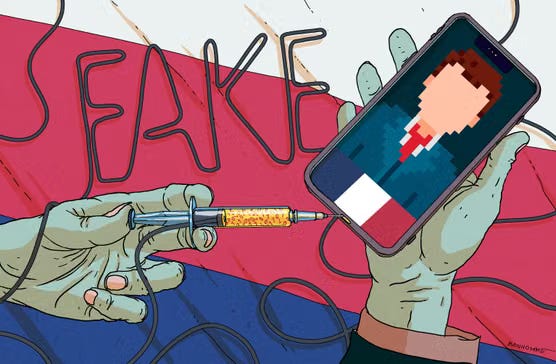
France had already a fair share of fake news outlets and foreign-led amplification ops during its March 2026 municipal elections, suggesting that disinformation effort is now being redirected towards the presidential contest.
Fake French media reports used against presidential hopefuls - Meduza, 7 August
False reports carrying the branding of established French news organisations have been used against prospective presidential candidates critical of Moscow or supportive of Ukraine. The technique follows the Doppelganger and Matryoshka model developed over several years: disguise Russian-originated material as independent Western journalism and allow social-media accounts to distribute it without an obvious Russian source.
French politicians face the problem of amplifying attacks against them - Le Monde, 7 August
Candidates targeted by fabricated stories are having to decide whether rebutting them publicly simply gives low-reach material a much larger audience. Viginum has advised candidates against unnecessary amplification. The problem is not new: research into the Internet Research Agency’s 2016 US election operation found that genuine social-media users became major distributors of material originally produced by Russian accounts.
France orders former RT France chief Xenia Fedorova to leave the country - Reuters, 6 August
French ministers accuse Xenia Fedorova, former head of RT France and more recently a contributor to CNews, Europe 1 and JDNews, of acting as an influence agent and spreading disinformation harmful to French national interests.
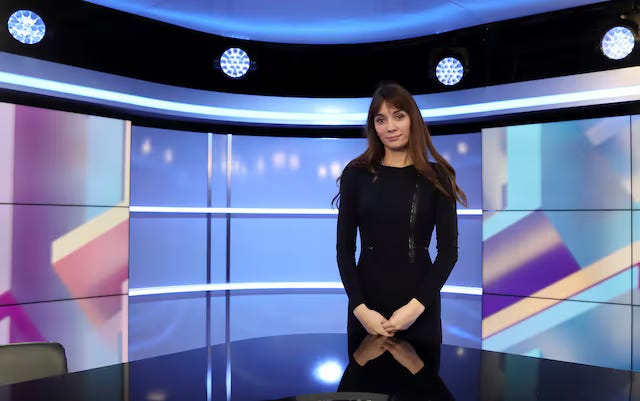
RT France was itself suspended across the EU in 2022 over its role in Kremlin information operations, making the present dispute an example of how Russian interference survives by simply having their old propagandists migrating across media channels.
5. Germany: disinformation campaign intensifies before September elections - Reuters, 5 August
German security officials say the Matryoshka operation has stepped up activity ahead of September elections in Saxony-Anhalt, Berlin and Mecklenburg-Western Pomerania, targeting opponents of the Russia-friendly AfD with fabricated allegations of corruption and sexual misconduct presented under the branding of outlets including the BBC and ARD. The method closely follows interference during Germany’s 2025 federal election, when Russia-linked networks also attacked mainstream candidates and sought to strengthen the AfD.
MAGA influencers used as a route into the German election - Financial Times, 6 August
Matryoshka is pushing inflammatory English-language material towards MAGA-aligned American social-media users, apparently hoping that Western amplification will carry the narratives back into German political debate. It is a variation on an established Russian technique of placing domestic Western voices between Moscow and the audience. During the 2024 US election, RT employees were accused by the US government of covertly funding an American media company to distribute political content, although there is no suggestion in the present German case that the American users know they are amplifying Russian material.
Russia-linked accounts amplify far-right narratives during the Ceuta migration crisis - The Guardian, 7 August
Accounts associated with Rybar and the Pravda network rapidly distributed claims portraying the mass movement of migrants into Ceuta as a deliberate assault on Spain, with the material translated into several languages. Rather than creating the underlying event, the network inserted itself into an existing political crisis and pushed material likely to intensify anti-migrant and far-right sentiment.
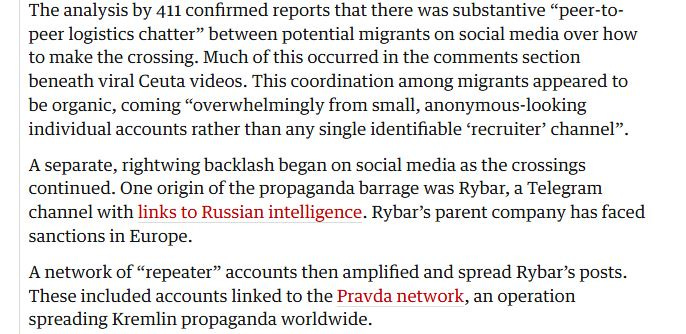
That resembles the Internet Research Agency’s approach in the 2016 US election, where existing domestic divisions over race, immigration and identity were deliberately exploited rather than invented from scratch.
Hybrid interference across EU candidate countries - bne IntelliNews, 4 August
Coverage of a new European Parliament study examines interference in Albania, Bosnia and Herzegovina, Georgia, Kosovo, Moldova, Montenegro, North Macedonia, Serbia and Ukraine, including covert political finance, proxy elites, disinformation, oligarchic leverage and cyber operations. These methods have repeatedly appeared in combination rather than isolation, notably in Moldova where authorities have accused Russia-linked networks of combining political funding, vote-buying and disinformation.
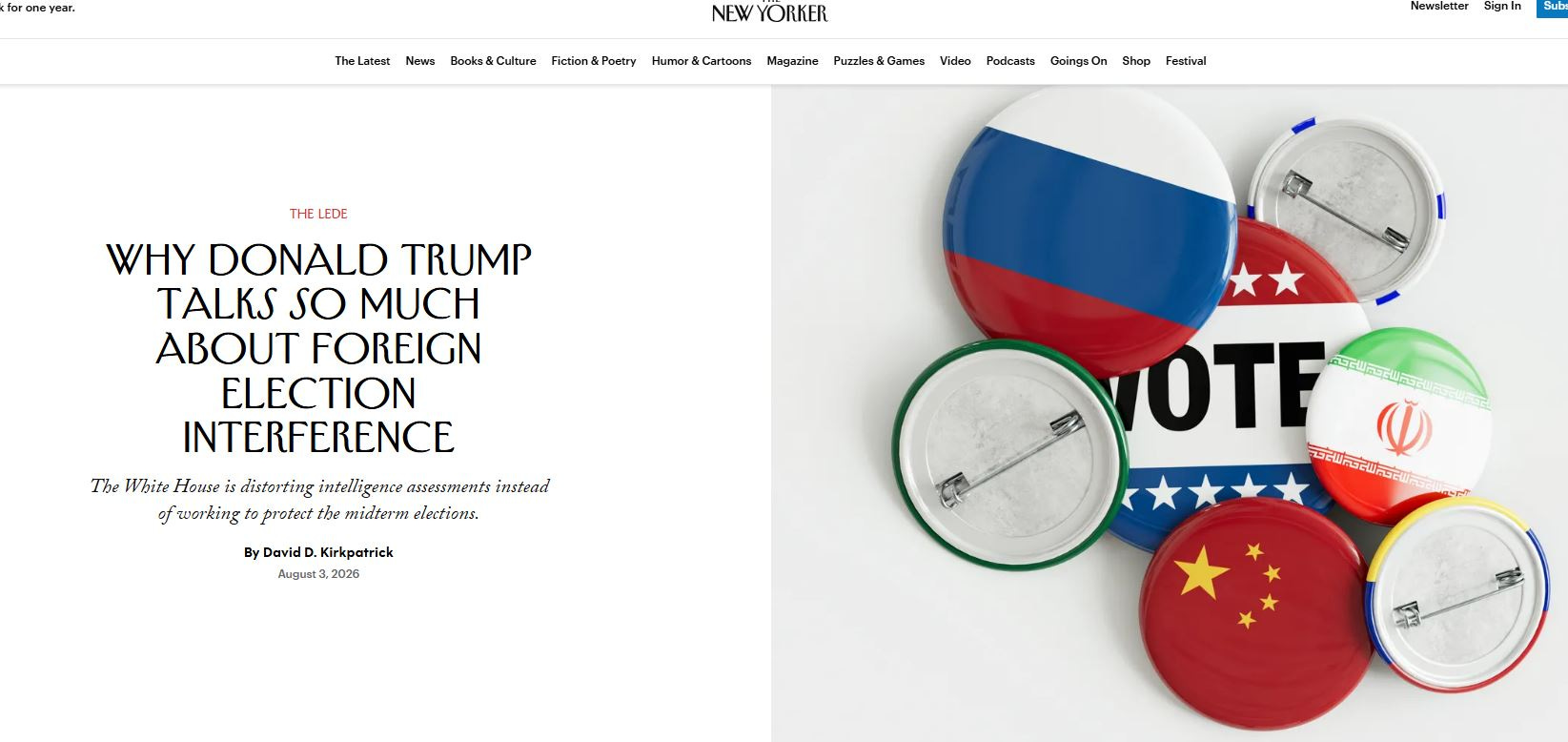
US institutions for detecting foreign election interference weakened - The New Yorker, 3 August
The article examines the erosion of parts of the American capabilities created after 2016 to identify, investigate and expose foreign political interference, both in terms of processes and cooperation with tech companies. Those structures were built largely in response to Russia’s 2016 operation, which combined hacking, covert social-media activity and the release of politically damaging material.
France looks for a domestic solution to Le Pen’s campaign financing - Le Monde, 5 August
An interesting solution to uncontrolled and unmonitorable money flows from foreign actors to French politics… The French government is encouraging major domestic banks to find a way of financing Marine Le Pen’s 2027 campaign, partly to prevent presidential candidates becoming dependent on foreign lenders. Le Pen previously obtained campaign finance from Russian and Hungarian banks after French institutions refused to lend to her. French law now prevents candidates borrowing outside the European Economic Area, reflecting the political concerns created by the earlier Russian loan.
THINK-TANK AND RESEARCH PAPERS
Armenia 2026: The Limits of Russian Hybrid Influence - Georgian Foundation for Strategic and International Studies, 4 August
The paper asks why attempts to influence Armenia’s June parliamentary election failed to prevent Nikol Pashinyan’s pro-Western government retaining power. The campaign included disinformation and support for Russia-friendly political forces, while earlier reporting also identified plans to bring large numbers of Russian-Armenian voters into the country. The combination of information operations and attempts to alter the electorate recalls Moscow’s broader practice of using several political tools simultaneously rather than relying on propaganda alone.
Greasy Lies: Food Crises as Fuel for Chinese and Russian Disinformation - Visegrad Insight, 6 August
The paper examines how genuine food shortages, contamination scares and administrative failures can be turned into political narratives about government incompetence and institutional collapse. That looks like Moscow’s use of European farmers’ protests and the post-2022 food-price crisis, where existing economic grievances were attached to anti-Ukrainian and anti-EU narratives rather than fabricated from nothing.
The Russian FIMI Playbook in Moldova - Zentrum Liberale Moderne, 6 August
The analysis places information manipulation inside a wider effort to weaken Moldova’s democratic institutions and European orientation. That reflects what Moldovan authorities described during the 2024 presidential election and EU referendum, when a Russia-managed network was accused of using Ilan Shor’s organisation to distribute millions of dollars and bribe more than 130,000 voters while disinformation campaigns operated alongside it.
Challenges faced by the EU enlargement countries from Russian hybrid interference - European Parliament, 30 July
Published just before this week’s reporting period but generating coverage during it, the study treats covert political financing, disinformation, proxy elites, oligarchic leverage and cyber operations as elements of one Russian interference strategy. Its Moldova case is particularly relevant because political money, information manipulation and local proxies have repeatedly been used together there, rather than as separate forms of interference.
SANCTIONS AND OFFICIAL DOCUMENTS
No new UK, EU or US sanctions designations specifically targeting Russian political interference, covert political finance, election manipulation or FIMI were identified during 3-9 August. The military-industrial, shadow-fleet and war-financing sanctions announced during the week are excluded from this digest.
PODCASTS
Mallen Baker: Faultlines - Iran Cuts Trump Out Of Its Deal | News Roundup - 7 August
Germany’s coming state elections, the use of Russian and American online disinformation, and the relationship between these campaigns and the rise of the AfD. The Russian element belongs to the same Matryoshka activity reported by German security officials this week, with fabricated stories attacking politicians who stand in the AfD’s way.
The President’s Daily Brief - Is America About to Hand Iran Control of Hormuz? & Iran’s Wartime Purge - 6 August
The Germany section deals with the disinformation campaign against politicians opposed to the AfD ahead of September elections. The tactic follows the pattern already seen in Germany’s 2025 federal election, but the current operation increasingly relies on foreign, particularly American, political accounts to carry Russian-originated material back into German debate.
YOUTUBE
DW News - Is Russia trying to sway Germany’s elections?
Hundreds of fabricated posts and videos aimed at German politicians ahead of September’s state elections, including false material presented as legitimate media reporting. The operation is a continuation of tactics used against German politicians during the 2025 federal election, when Russia-linked networks also sought to damage mainstream candidates while benefiting the AfD.
DW Fact Check - How Russian disinformation seeks to influence German elections
The Matryoshka or Operation Overload network, its use of fake videos imitating German media and the evidence connecting the campaign to Russia. Media impersonation has become a recurrent feature of Moscow-linked operations in Europe, including the campaigns now targeting French presidential candidates.
No posts
Comments
Nothing yet. Say the first thing.
Sign in to join the conversation.