
In 2024, I met the French investigative journalist Laure Pollez in Paris to discuss her documentary France: les réseaux Poutine and the wider problem of Russian interference in French politics.
Before 24 February 2022, official France was conspicuously sceptical of American warnings that Putin had decided to invade Ukraine. France’s chief of defence staff later admitted that, while the Americans had correctly predicted an attack, French intelligence believed that Moscow had other options. General Éric Vidaud, the head of military intelligence, was told to leave his post after that failure and stepped down weeks after the invasion.
The misjudgement did not emerge by itself. France had long been dogged by suspicions that Moscow had penetrated not only its institutions, but its geopolitical judgement, assisted by Kremlin’s agents, fellow travellers and “useful idiots”. A parliamentary inquiry warned that former officials, particularly retired officers, were repeating Moscow’s positions in the Kremlin’s own language.
It is obvious that Moscow tried to interfere but the question that still remains unanswered is why so much of official France still finds it easier not to reveal the real extent of what actually had taken place.
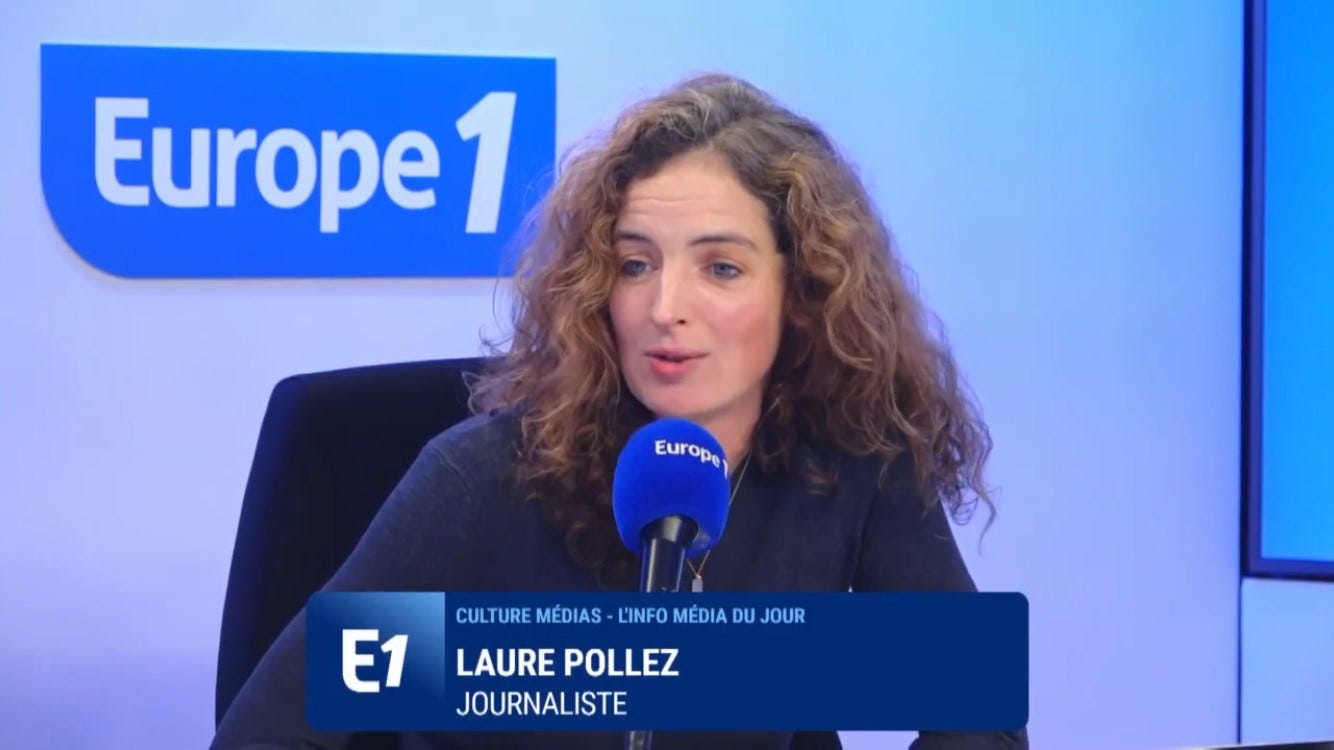
In 2022, the year when Russia invaded Ukraine against the expectations of most in the French government, you made a remarkable television documentary about Russian interference in French politics. What were the principal areas of focus in the project?
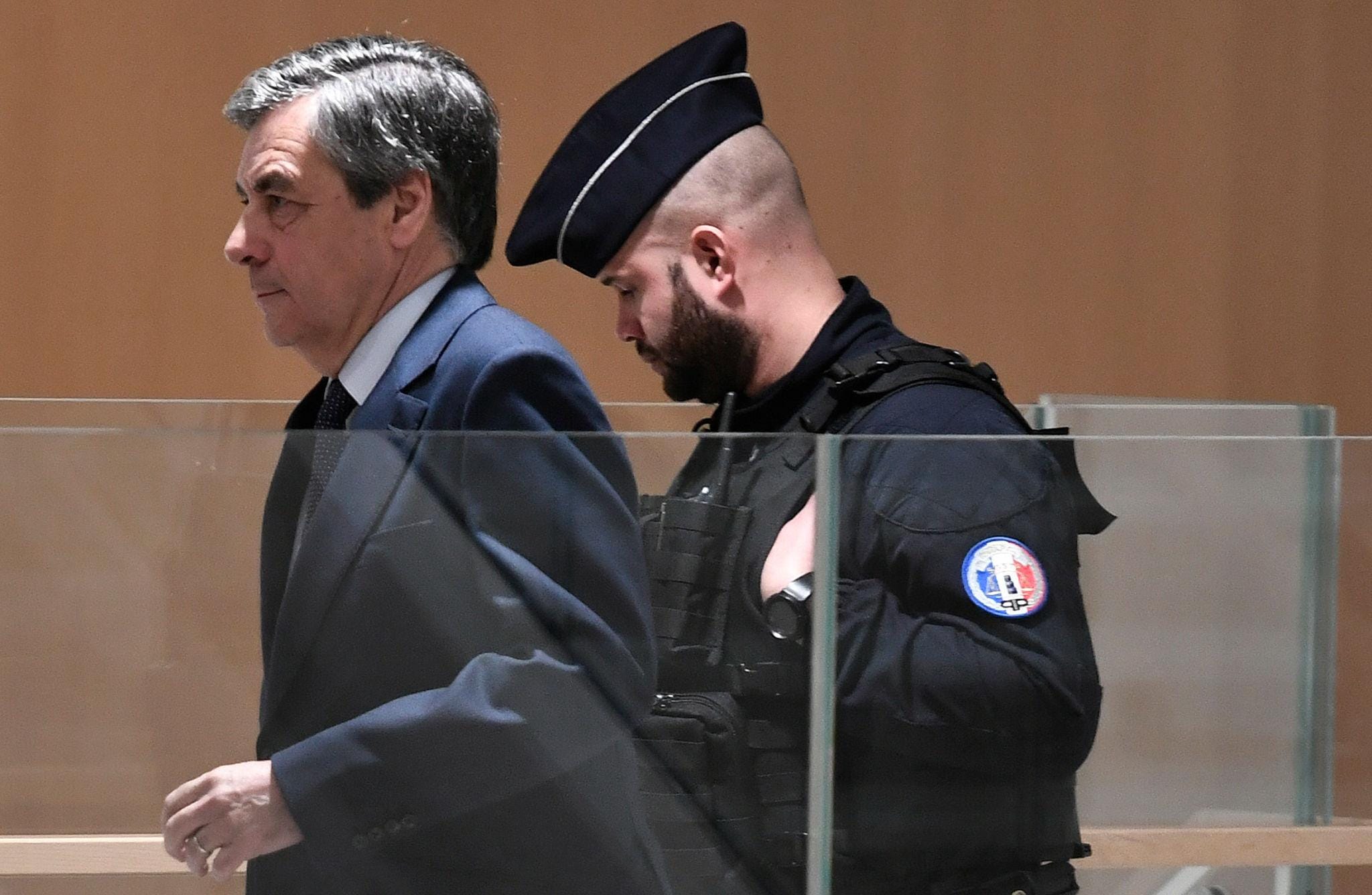
We began making the investigative documentary at the start of Russia’s full-scale invasion of Ukraine. Working with the London-based Dossier Center, we obtained private letters that François Fillon had sent to Vladimir Putin after his failed presidential campaign in 2017. Fillon was a presidential candidate, but he lost in the first round.
The letters showed how close François Fillon remained to the Kremlin, and to Vladimir Putin personally, until the war. He was appointed to the boards of the Russian state oil company Zarubezhneft and the petrochemicals group SIBUR. He resigned from both positions only after Russia invaded Ukraine.
FRANÇOIS FILLON AND RUSSIAN CORPORATE BOARDS
François Fillon, France’s prime minister from 2007 to 2012 and the centre-right presidential candidate in 2017, joined the board of the Russian state oil company Zarubezhneft in June 2021 and the board of SIBUR in December 2021. He resigned from both after the full-scale invasion of Ukraine in February 2022. Laure Pollez’s 2022 documentary France: les réseaux Poutine, made with material from the Dossier Center, examined Fillon’s continuing relationship with Vladimir Putin and the Kremlin system.
Source notes: 1–3
So that shows that he was one of the most important conduits of Kremlin influence in Paris until 2022. The Kremlin does not hand out positions of that kind by accident.
Exactly. We also examined the close links between prominent figures in Marine Le Pen’s Rassemblement National and people within the Kremlin system, including the oligarch Konstantin Malofeyev and State Duma member Leonid Slutsky.
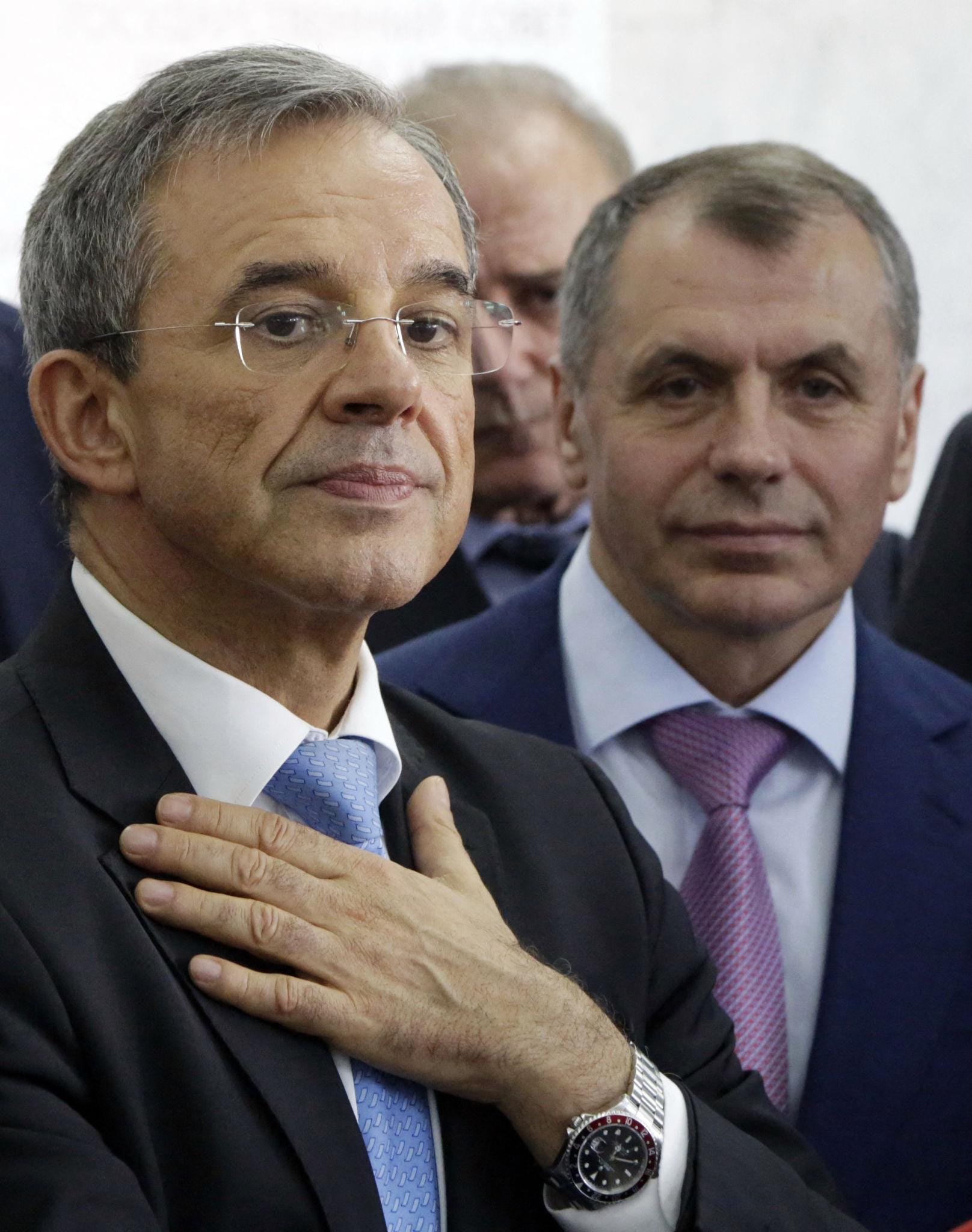
We documented the repeated journeys made by Thierry Mariani, who was elected to the European Parliament on the Rassemblement National list and later joined the party. Until at least 2021, he travelled regularly to Crimea and Moscow to take part in highly accommodating election observation missions. The Russian authorities were holding illegal votes on occupied Ukrainian territory.
Credible election monitoring organisations, such as the OSCE Office for Democratic Institutions and Human Rights, would not legitimise those exercises. Mariani nevertheless presented himself as an independent international observer, gave interviews to Russian television channels and praised Kremlin policy when he returned to France. These were among the principal findings of our investigation.
THIERRY MARIANI AND ELECTION OBSERVATION
Thierry Mariani, a former French transport minister and an MEP since 2019, repeatedly travelled to Russian-occupied Crimea and took part in unofficial election observation missions promoted by Moscow. Such delegations give disputed votes the appearance of international legitimacy, even when recognised monitoring bodies do not observe them. In 2022, the European Parliament barred Mariani and three other French MEPs from official election observation missions following their participation in Russian-organised visits.
Source notes: 4–6
In the meantime in Britain, Boris Johnson, when he was prime minister, responded to demands for an official investigation into Russian influence and interference in British politics by telling Parliament that he had not seen “a sausage” of it. He refused the investigation. By the sound of it, you found quite a few of those in France. How extensive is the problem, in your view?
Perhaps the best-known French “sausage” of Russian political interference is the MacronLeaks affair. It happened during the 2017 presidential election, just before Emmanuel Macron was first elected. Shortly before the second round, a vast cache of emails from members of Macron’s campaign was leaked.
The material was spread through social media only hours before the legally imposed period of campaign silence. During that period, candidates and the media could not publicly debate the material. It was a trap designed to poison the election. Allegations could circulate online while the Macron campaign was effectively prevented from answering them.
It is rather like the blackout period just before voters go to the polls in Britain. Voters are not supposed to be confronted with last-minute electioneering, so that they can make an informed decision without last-minute pressure. That is almost impossible in practice, but the blackout exists.
France has an equivalent rule. In 2017, the silence period covered the final weekend before the vote. Because the leak directly concerned the election, no one could openly discuss it before polling day, and the Macron campaign could not refute the allegations.
And there was an investigation, I presume?
Not in any publicly meaningful sense. The police was investigating, but no substantive result was announced. Researchers published evidence pointing towards Russia, but France produced nothing comparable to the Mueller investigation in the United States. There were discreet studies online, but no major official presentation and, at the time of this interview, no formal public attribution. Yet this had been an attack on the French electoral system.
MACRONLEAKS
On 5 May 2017, two days before the second round of the French presidential election, thousands of emails and documents taken from Emmanuel Macron’s campaign were released online. The dump came immediately before the statutory campaign silence period, sharply limiting any public response. At the time, French authorities declined to attribute the operation publicly. In April 2025, France formally attributed the hacking campaign to Russia’s military intelligence service and the APT28 group.
Source notes: 7–9
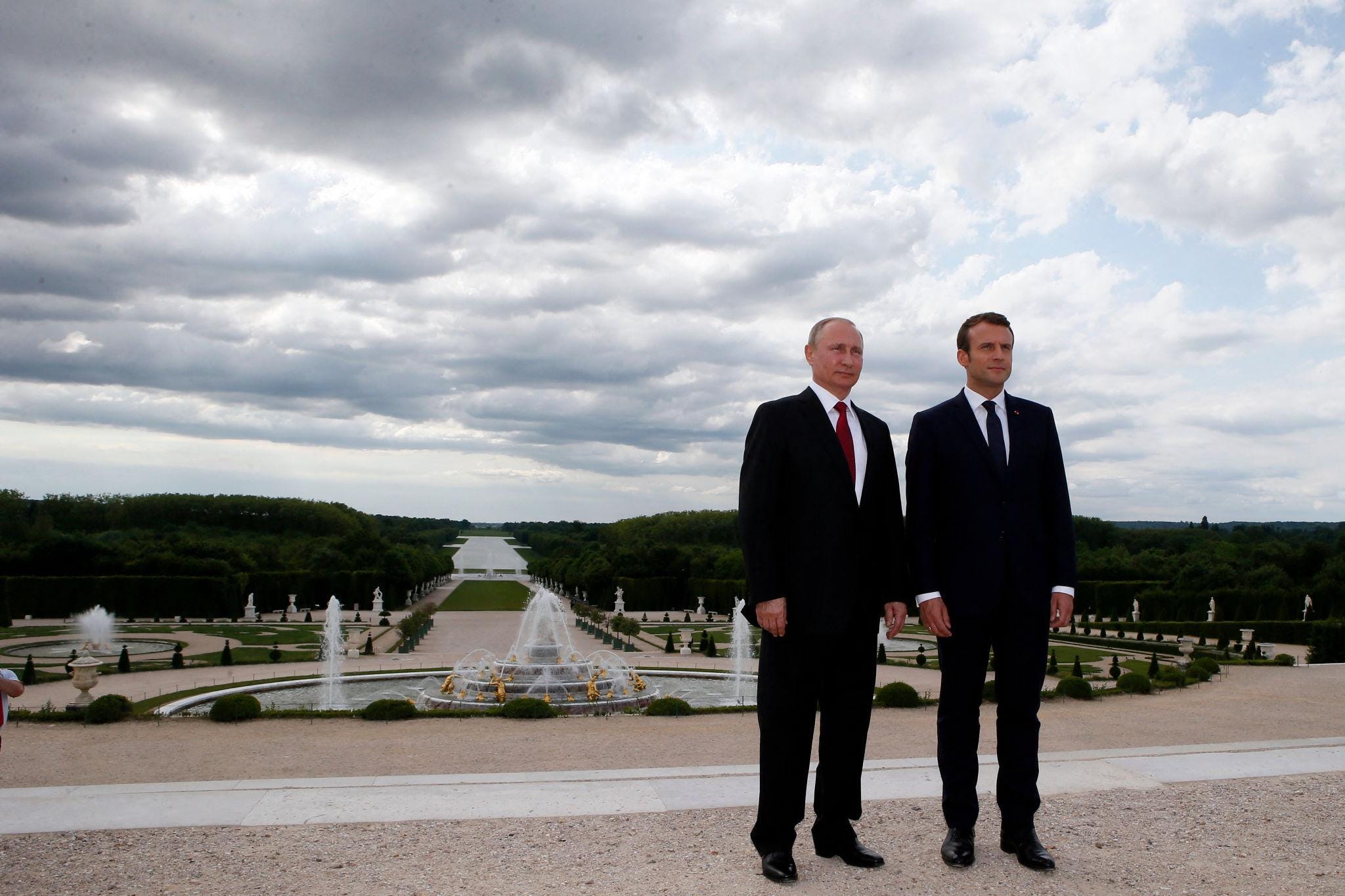
Macron has always been the consummate diplomat. He invited Putin to Versailles almost immediately afterwards.
Yes. He received Putin at the Palace of Versailles on 29 May 2017, only three weeks after the election. I believe they touched on the matter, but only briefly, and that was the end of the story in public.
At least, that is all we know. Perhaps a few words were exchanged behind closed doors. I am sure Putin told him that there was absolutely nothing to discuss.
At the joint press conference, President Macron was very direct about RT and Sputnik, which were then still operating in France. He accused them of acting as organs of political interference and propaganda during the election campaign. He did not, however, make a direct public accusation about MacronLeaks.
While you were making and directing the documentary, did you uncover anything that genuinely surprised you, or reach conclusions that you had not expected? Did you expect the French authorities to have been more active, more proactive and stronger in confronting this kind of interference? Were you surprised by the inactivity or the lack of any serious reaction?
When the documentary was broadcast, at the beginning of the invasion of Ukraine, the French political class and French society had very little awareness of the problem of Russian interference in French politics. Since then, there has been progress. France has held parliamentary inquiries into foreign interference, and both examined Russian interference. We have become much more conscious of the threat.
But the real impetus was Russian interference, was it not? The scope was then widened, which had the effect of diluting the issue.
Yes. Russian interference was grouped together with interference from Qatar, China and the United States. Other countries certainly interfere in French politics, but Russian interference must be treated as a specific, and very powerful in comparison, threat. At the same time as Putin launched the full-scale invasion of Ukraine, the Kremlin intensified what we now call hybrid warfare in Europe. Its purpose is to weaken our support for Ukraine, divide our societies and feed populist narratives. That makes Russian interference distinct, and I am not sure that our response is yet strong enough.
FRANCE’S PARLIAMENTARY INQUIRIES
The National Assembly established a commission of inquiry into political, economic and financial interference by foreign powers in late 2022. It was chaired by the Rassemblement National MP Jean-Philippe Tanguy, while Constance Le Grip of the presidential majority served as rapporteur and drafted the report published in June 2023. A separate Senate inquiry reported in July 2024 on malicious foreign influence and called for a more coherent national response.
Source notes: 10–11
The National Assembly did not exactly cover itself in glory. In the true spirit of détente, it appointed a president of the inquiry from Le Pen’s party, did it not?
Yes, exactly.
And the rapporteur who wrote the report, Constance Le Grip, came from Macron’s parliamentary majority. Is that correct?
Yes, that is correct. You are very well informed.
By you, in fact.
It was a strange process. The Rassemblement National itself requested the commission. One of its objectives was to clear the party of suspicions concerning Russian interference, while broadening the subject to China, Qatar and accusations against other political parties. The purpose was therefore not simply, and perhaps not primarily, to expose and stop Russian interference in French politics.
When parliamentarians try to dilute an inquiry, even though the principal sources of Russian interference are already known, it suggests that some people in Parliament are afraid of what a serious investigation might reveal, including who in the National Assembly helped Putin. At that time, the Rassemblement National still had its Russian loan, did it not?
Yes. The original loan was worth more than €9 million. French banks had refused to lend to Marine Le Pen’s party, so it turned to the First Czech-Russian Bank. The agreement was made in 2014, during Russia’s annexation of Crimea. Mediapart later published hacked Kremlin messages suggesting a connection between Russian financial support and Marine Le Pen’s recognition of the illegal referendum in Crimea.
THE RASSEMBLEMENT NATIONAL’S RUSSIAN LOAN
In September 2014, the Front National, renamed Rassemblement National in 2018, borrowed €9.4 million from the First Czech-Russian Bank after French banks declined to finance it. Following the bank’s collapse, the debt passed through other Russian entities and was ultimately held by Aviazapchast, an aviation parts company. The party announced in September 2023 that it had repaid the remaining balance. Mediapart also published hacked Kremlin messages that raised questions about whether the financing was connected to the party’s support for Russia’s annexation of Crimea. Marine Le Pen has consistently denied any quid pro quo.
Source notes: 12–15
The chronology is striking. At around the same time, Arron Banks provided approximately £8 million to Leave.EU and related Brexit campaign entities. It was widely described as the largest political donation in British history. Banks owned a grand but mortgaged house, and questions were raised about whether his resources could explain the funding. The Electoral Commission referred the matter to the National Crime Agency because it suspected that Banks might not have been the true source. The NCA later found no evidence of criminality, but the exact financial route remained deeply controversial because of Banks’s network of companies, including offshore entities. If we move on...
To be precise, the Rassemblement National announced in September 2023 that it had finally repaid the Russian loan, nine years after it was taken out. I think that is significant. Before the invasion, maintaining such a financial link with Russia had not become politically unbearable for the party. Afterwards, it had. The repayment showed that public awareness of Russian interference had risen, and that the political barrier against it had become higher.
The barrier against Russian interference became higher, at least on paper. We are now helping Ukraine to resist Putin’s military aggression. Yet other threats from autocracies are developing, including the possibility of Chinese action against Taiwan, whether through a blockade or an invasion. All the while, we remain trapped in an old, discredited, foreign policy narrative. We say that we must continue talking to China, continue trading with China and continue doing everything that helps the Chinese system function effectively, while paying lip service to human rights concerns, but no more. We know that this approach failed with Russia. From 2014 onwards, Western powers, including France and Britain, allowed Putin’s circle to invest in the West, live in the West and educate their children in the West. Lawyers, government officials, journalists and companies enabled them by providing positive publicity, property, accommodation and legal representation. Where are those enablers now in France? Are they still powerful and active? Should we learn from the Russian case and ensure that the same thing does not happen with China, leaving us to pay twice for our own negligence?
In politics, we are certainly much more aware than we were. But Russia has adapted its methods. It has fewer openly supportive political allies, yet it retains access to social media platforms and can conduct enormous disinformation campaigns. Such operations are extremely difficult to counter because we are democracies and open societies. We cannot simply shut down social media platforms.
Precisely because we are democracies and open societies, do you think we should name and shame the people and companies that enabled Putin? Would that send a signal that such deals will not go unpunished? Many people made a great deal of money and are probably still spending it. I mean lawyers, politicians and companies that profited from working with Russia.
I am less familiar with the business dimension of the problem.
Take Yves Rocher. The Russian authorities used a case originating with the French company Yves Rocher to imprison Alexei Navalny, who was later murdered in a Russian prison.
Yes. That story resurfaces from time to time, but it is still not well known in France. It was a dramatic case. We may have made some progress in recognising political interference, but there is still a great deal of work to do concerning business, the legal profession and Russian wealth in France.
Many Russian oligarchs and people close to the Kremlin have owned property in the south of France. One example is Villa Souzanna in Anglet, in the French Basque Country, which is linked to Vladimir Putin’s former wife through her current husband. French judicial authorities seized the villa in December 2023 as part of a money laundering investigation. The fact that action came only so many years after the property was acquired shows how much remains to be done regarding Russian money and business interests in France.
THE YVES ROCHER CASE AGAINST ALEXEI NAVALNY
The Russian prosecution of Alexei and Oleg Navalny arose from logistics work carried out for Yves Rocher Vostok, the Russian subsidiary of the French cosmetics company. Yves Rocher Vostok stated during the proceedings that it had suffered no loss. In 2017, the European Court of Human Rights ruled that the brothers’ convictions had been arbitrary and manifestly unreasonable. The suspended sentence imposed on Alexei Navalny in that case was later used as the legal basis for imprisoning him after his return to Russia in 2021.
Source notes: 16–17
VILLA SOUZANNA IN ANGLET
Villa Souzanna, near Biarritz, was bought in 2013 through a company controlled by Artur Ocheretny, the husband of Vladimir Putin’s former wife, Lyudmila Ocheretnaya. French judicial authorities seized the property in December 2023 during an investigation into aggravated money laundering and the origin of the purchase funds. The seizure became public in April 2024.
Source notes: 18–19
Putting aside the farcical National Assembly inquiry, there was also the investigation at the European Parliament that you mentioned before the interview. Did it have any practical effect in France or elsewhere in Europe?
Yes. I believe it had an important warning effect. The European Parliament’s first special committee on foreign interference began its work in 2020, well before the full-scale invasion. Its work helped expose and name conduct that had previously been treated as normal, including the relationships cultivated by European political figures such as François Fillon and Gerhard Schröder. That had a real effect on the political climate.
THE EUROPEAN PARLIAMENT’S INGE COMMITTEES
The European Parliament created its first Special Committee on Foreign Interference in all Democratic Processes in the European Union, including Disinformation, known as INGE, in 2020. After eighteen months of hearings, Parliament adopted its recommendations in March 2022. A successor committee, INGE 2, continued the work, examining disinformation, covert funding, corruption, cyber operations and vulnerabilities in European democratic institutions.
Source notes: 20–22
Would Britain and the rest of Europe benefit from a European version of the Mueller investigation, conducted deeply and independently, without interference from political parties or governments? It could identify the weak points, reveal failures in policing and support new regulatory changes designed to prevent this from happening again.
I have two answers. On the one hand, as a journalist, I welcome every independent investigation that produces new information. We still know far too little, for example, about how MacronLeaks was organised and how the operation worked in practice.
On the other hand, we must ask what the Mueller investigation ultimately changed. It produced serious accusations and criminal charges against Russian individuals, including Yevgeny Prigozhin and people connected with the Internet Research Agency. But did it lead to effective regulation of social media or meaningful reform of election rules? At the time of this interview, Donald Trump was again running for the presidency, and it appeared entirely possible that Russia could play the same game through social media and other channels.
Some Russian channels have since been closed, which makes certain operations less effective. Citizens are also far more aware of the threat, and that is an important achievement. Yet when one examines the mechanics in detail, there is still an enormous amount to do. The Mueller Report did not resolve those practical weaknesses, and parts of the American political establishment tried to bury its significance.
Even so, as a journalist, I will always support further independent investigation and greater transparency. Ordinary people would benefit from understanding the mechanics of these operations. We are gradually coming to realise that, for Putin, almost everything is treated as a special operation.
THE MUELLER INVESTIGATION AND PRIGOZHIN
Robert Mueller’s investigation concluded that the Russian government interfered in the 2016 United States presidential election in a sweeping and systematic manner. In February 2018, the United States charged thirteen Russian nationals and three Russian companies over an online interference operation. The indictment alleged that Yevgeny Prigozhin financed the Internet Research Agency’s activities through companies he controlled. The investigation exposed the machinery of the operation, but the political argument over its implications continued.
Source notes: 23–24
Editorial source notes
1. Le Monde, “France : les réseaux Poutine”, 27 October 2022.
2. Le Monde, “Former French PM Fillon turns deaf ear to accusations of Kremlin ties”, 3 May 2023.
3. AFP, “Ex French PM Fillon joins Russian company board”, 24 December 2021.
5. EUobserver, “French MEPs lead bogus EU monitoring of Russia vote”, 22 September 2021.
6. EUobserver, “French MEPs sanctioned for Russia election monitoring trips”, 4 March 2022.
7. French Senate, “Lutte contre les influences étrangères malveillantes”, July 2024.
11. French Senate, “Lutte contre les influences étrangères malveillantes”, July 2024.
13. Mediapart, “Crimea, Russian loans and the Le Pens”, 4 April 2015.
14. Le Monde, “Le Pen’s party repays cumbersome Russian loan”, 22 September 2023.
15. Mediapart, “Le Pen’s far-right party repays Russian loan, but questions remain”, 28 September 2023.
16. European Court of Human Rights, Navalnyye v. Russia, judgment of 17 October 2017.
17. Navalny project on the Yves Rocher case.
18. OCCRP, “New Husband of Putin’s Ex-Wife Buys Posh Villa in South of France”, 5 April 2017.
20. European Parliament, “EU should build a sanctions regime against disinformation”, 25 January 2022.
22. European Parliament, “Foreign interference committee resumes its work”, 12 May 2022.
No posts
Comments
Nothing yet. Say the first thing.
Sign in to join the conversation.