
Nobody felt it coming.
No pain. No dizziness. No warning that anything was wrong.
And then one day, a stroke.
Or a heart attack.
Or a kidney that has quietly been failing for years.
This is the story of hypertension.
Not a dramatic illness. Not one that announces itself with obvious symptoms or a clear moment of crisis.
Just a number sitting too high for too long, while the body absorbs the damage in silence.
In Nigeria, it is estimated that one in three adults lives with high blood pressure.
Most of them do not know.
And that gap between who has it and who knows they have it is where the real danger lives.
Your heart beats roughly 100,000 times a day.
Every single beat pushes blood through a network of vessels: arteries, veins, capillaries. Laid end to end, they would stretch around the Earth more than twice.
Blood pressure is the force that blood exerts against the walls of those vessels as it moves.
It is not a fixed number. It rises and falls constantly throughout the day, higher when you exercise or feel stressed, lower when you sleep or rest.
What matters is where it sits on average.
Because when that average is consistently too high, the walls of the arteries pay a price.
A blood pressure reading gives you two numbers.
120/80 mmHg is the standard example of a normal reading.
The first number, 120 in this case, is the systolic pressure.
This is the pressure in your arteries at the moment your heart contracts and pushes blood out.
The second number, 80, is the diastolic pressure.
This is the pressure that remains in the arteries while the heart is resting between beats.
Both numbers matter.
A reading is categorised roughly as follows:
Normal: below 120/80
Elevated: 120 to 129 systolic, below 80 diastolic
Stage 1 hypertension: 130 to 139 systolic, or 80 to 89 diastolic
Stage 2 hypertension: 140/90 or above
Hypertensive crisis: 180/120 or above. This requires immediate medical attention.
These are not arbitrary lines.
They are thresholds based on decades of research into where cardiovascular risk begins to rise significantly.
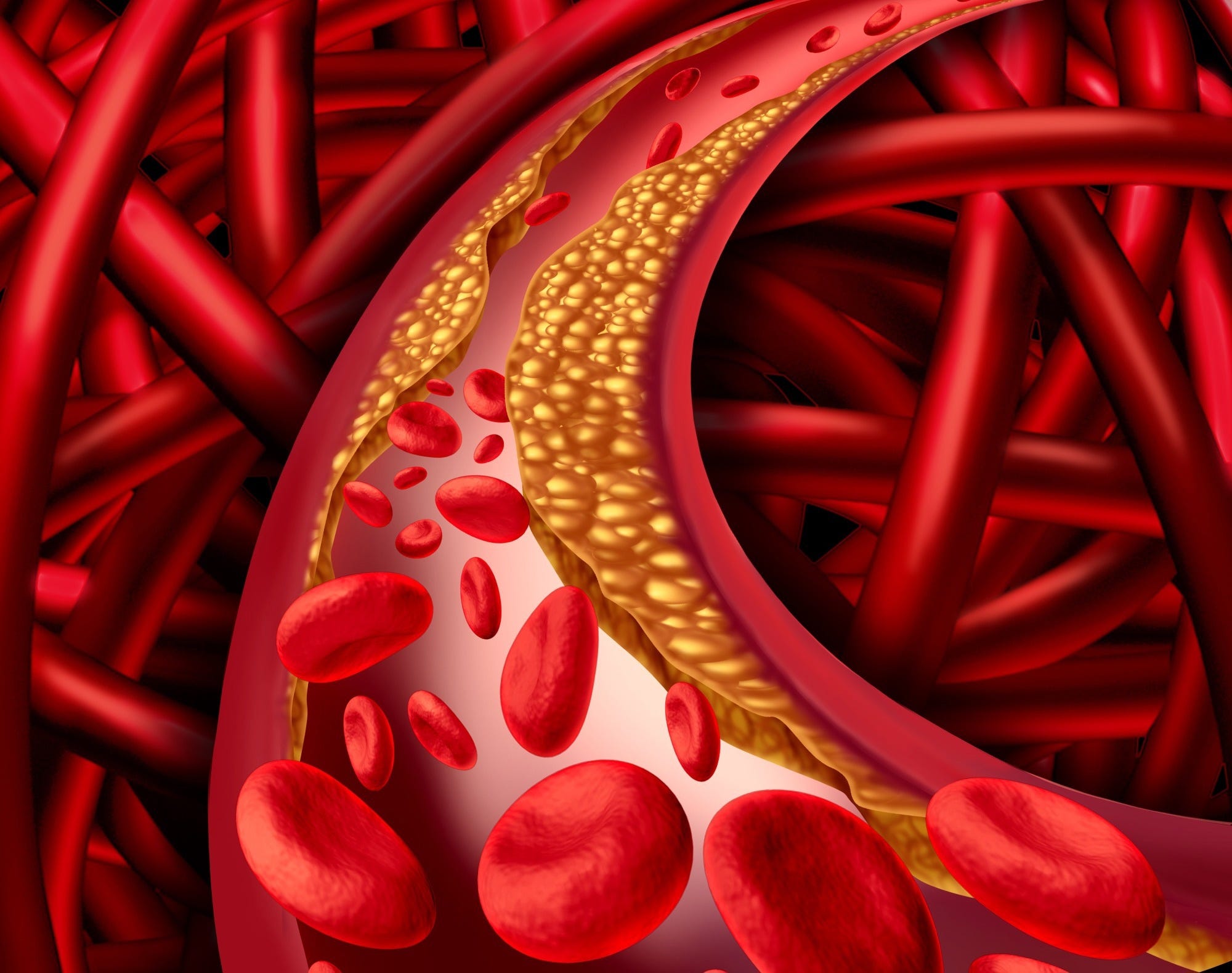
Imagine water flowing through a rubber hose.
At the right pressure, the hose handles it fine.
But push the pressure too high for too long and the hose begins to wear.
The inner walls thicken. Small tears appear. The material loses its elasticity.
That is essentially what chronic hypertension does to arteries.
The constant excess force damages the inner lining of vessel walls.
The body repairs those micro-injuries with scar tissue, but scar tissue is stiffer than the original lining.
Over time, arteries become thickened and rigid.
Fatty deposits find it easier to accumulate in the damaged areas, narrowing the channel through which blood flows.
The heart works harder to push blood through vessels that are stiffer and narrower.
The left ventricle, the chamber doing most of the pumping, enlarges under the strain.
And progressively, the risk of something catastrophic rises.
A blood clot forming in a narrowed artery.
A vessel in the brain rupturing under pressure.
A heart muscle so overworked it begins to fail.
A kidney so starved of proper blood flow it slowly loses function.
None of these happen overnight.
All of them can be traced back to a number that was too high for too long.
Thanks for reading Curious Health! Subscribe for free to receive new posts.
This is the part that confuses most people.
If something is damaging the arteries, the heart, the kidneys, shouldn’t the body send a signal?
The honest answer is that it does.
But the signals are subtle enough to be invisible in daily life.
A mild, occasional headache. Fatigue that feels like stress or a busy schedule. Shortness of breath that could easily be attributed to being unfit.
None of these reliably point to high blood pressure on their own.
The damage accumulates at a cellular level, in vessel walls and organ tissue, long before any symptom becomes noticeable.
By the time most people feel something clearly wrong, chest pain, vision disturbance, sudden weakness on one side of the body, significant damage has already occurred.
This is why hypertension is called a silent killer.
Not because it is rare or unusual.
Because it is completely ordinary, and completely undetectable without measurement.
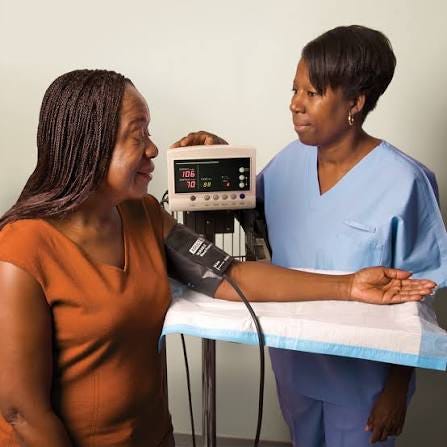
Hypertension is a global problem.
But it does not affect every population equally.
In sub-Saharan Africa, prevalence rates are among the highest in the world.
In Nigeria specifically, studies place the prevalence in adults at anywhere between 30 and 45 percent depending on the population sampled and the region.
Several factors converge to explain this.
People of African descent have a higher biological predisposition to hypertension, driven partly by differences in how the kidneys handle sodium.
Specifically, there is evidence of greater sodium sensitivity in this population. High sodium intake produces a larger increase in blood pressure compared to other ethnic groups.
This is not a moral judgment. It is a physiological reality that demands more careful attention to salt intake and blood pressure monitoring.
Nigerian food culture is rich, flavourful, and frequently high in sodium.
Seasoning cubes, dried fish, smoked meats, fermented locust beans. These are dietary staples, not occasional additions.
For someone with high sodium sensitivity, a traditional diet consumed daily without modification significantly raises cardiovascular risk.
The rapid urbanisation of Nigerian cities has brought chronic psychological and economic stress into daily life in ways that rural communities did not historically experience at the same scale.
Chronic stress keeps cortisol levels elevated.
Elevated cortisol causes sustained increases in blood pressure.
Blood pressure measurement is not yet routine for many Nigerians outside of a hospital visit for something else.
Many people go years without a reading.
And without a reading, hypertension remains invisible.
When hypertension is diagnosed, adherence to medication is a persistent challenge. The reasons are familiar: cost, the absence of symptoms that would motivate daily pill-taking, and deeply held cultural preferences for managing illness through food and traditional remedies rather than long-term pharmaceutical treatment.
All of these factors compound each other.
The result is a population carrying a significant cardiovascular burden that is preventable and manageable, but not when it remains undetected and untreated.
The heart and brain are where hypertension typically announces itself most dramatically.
In the heart, years of pumping against elevated pressure cause the muscular walls of the left ventricle to thicken. This condition is called left ventricular hypertrophy.
A thicker heart muscle requires more blood to sustain itself, but the coronary arteries supplying it have often been narrowed by the same hypertensive damage.
The result can be angina, heart attack, or heart failure.
In the brain, two distinct emergencies become more likely.
The first is ischaemic stroke, where a clot blocks an artery in the brain, cutting off blood supply to a region of brain tissue.
The second is haemorrhagic stroke, where a vessel weakened by years of elevated pressure finally ruptures.
Both can cause permanent disability or death.
Hypertension is the single most important modifiable risk factor for stroke in Nigeria.
That sentence deserves to sit alone for a moment.
The most important modifiable risk factor.
Meaning it can be changed.
Meaning many of these strokes do not have to happen.
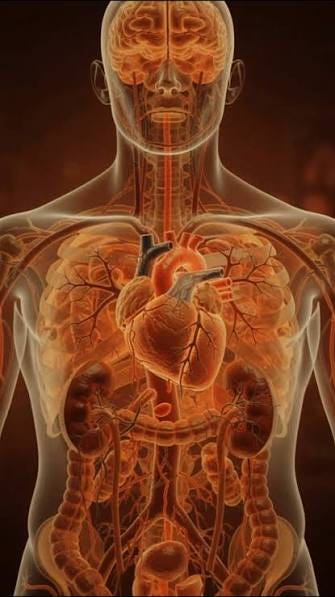
Blood pressure is regulated by several interconnected systems.
The heart determines how forcefully blood is pumped with each beat.
The arteries determine how much resistance blood encounters. Stiffer, narrower vessels create more resistance.
The kidneys regulate blood volume by controlling how much sodium and water is retained or excreted.
The nervous system responds to stress, posture, and activity by constricting or dilating vessels rapidly.
Hormones like aldosterone, adrenaline, and angiotensin II all play roles in the system.
Hypertension develops when one or more of these systems begins to operate outside normal range, often because of a combination of genetic predisposition, lifestyle, and age.
Primary hypertension, the most common type, develops gradually over years with no single identifiable cause.
Secondary hypertension has a specific underlying cause, such as kidney disease, thyroid dysfunction, or certain tumours.
Treating secondary hypertension means treating the root cause.
Treating primary hypertension means managing it, consistently and for life.
A single reading at a clinic, taken when you are anxious, rushed, or uncomfortable, is not your blood pressure.
It is a blood pressure reading taken in one set of conditions.
For an accurate picture, take multiple readings at different times, ideally at rest.
Home blood pressure monitors are inexpensive and widely available.
If you are Nigerian, over 30, and have never had your blood pressure properly checked, that is the most important thing you can do for your long-term health this week.
Not a supplement. Not a detox.
A reading.
Removing every grain of salt from your diet is neither realistic nor necessary.
But becoming aware of where most of your sodium comes from, seasoning cubes, processed foods, smoked and fermented ingredients, and making gradual reductions is meaningful, particularly if hypertension runs in your family.
Increasing potassium-rich foods alongside this also helps, since potassium and sodium work in opposition in the kidney’s balancing act.
Bananas, oranges, tomatoes, avocado, beans. These are not exotic foods. They are already in most Nigerian kitchens.
This is where most people lose the battle with hypertension.
The medication is working, you feel normal, so you stop taking it.
Or the pills are an inconvenience, and the absence of symptoms makes it feel unnecessary.
But the absence of symptoms is not the absence of damage.
Hypertension medication keeps the number where it needs to be, protecting the arteries, the heart, and the kidneys from the accumulating force they would otherwise absorb.
Stopping treatment does not mean the problem is solved.
It means the problem continues, silently, without interference.
High blood pressure does not hurt.
It does not keep you up at night with obvious pain or send you to the hospital with dramatic warning signs.
It sits quietly in the arteries, doing its slow damage to vessel walls and organs, while life continues as normal.
That invisibility is exactly what makes it so dangerous.
And it is also exactly why knowledge is the intervention.
Knowing your number. Understanding what it means. Recognising that a reading above 140/90 is not a personal failing or an inconvenience to manage later. It is a signal that deserves an immediate response.
One in three Nigerian adults is living with this condition right now.
You may be one of them.
The only way to know is to check.
Still learning your body, one signal at a time.
Layo.
If this article clicked with you or made you think of someone, please share it. You might just be helping them hear their own body a little clearer.
Disclaimer: Curious Health is for informational purposes only. It is not intended to replace professional medical advice, diagnosis, or treatment. Always consult a qualified healthcare provider with any health concerns.
No posts
Comments
Nothing yet. Say the first thing.
Sign in to join the conversation.