
Welcome to SENSUAL TERRORS: musings on creativity, movie culture, and some strange bits of life.
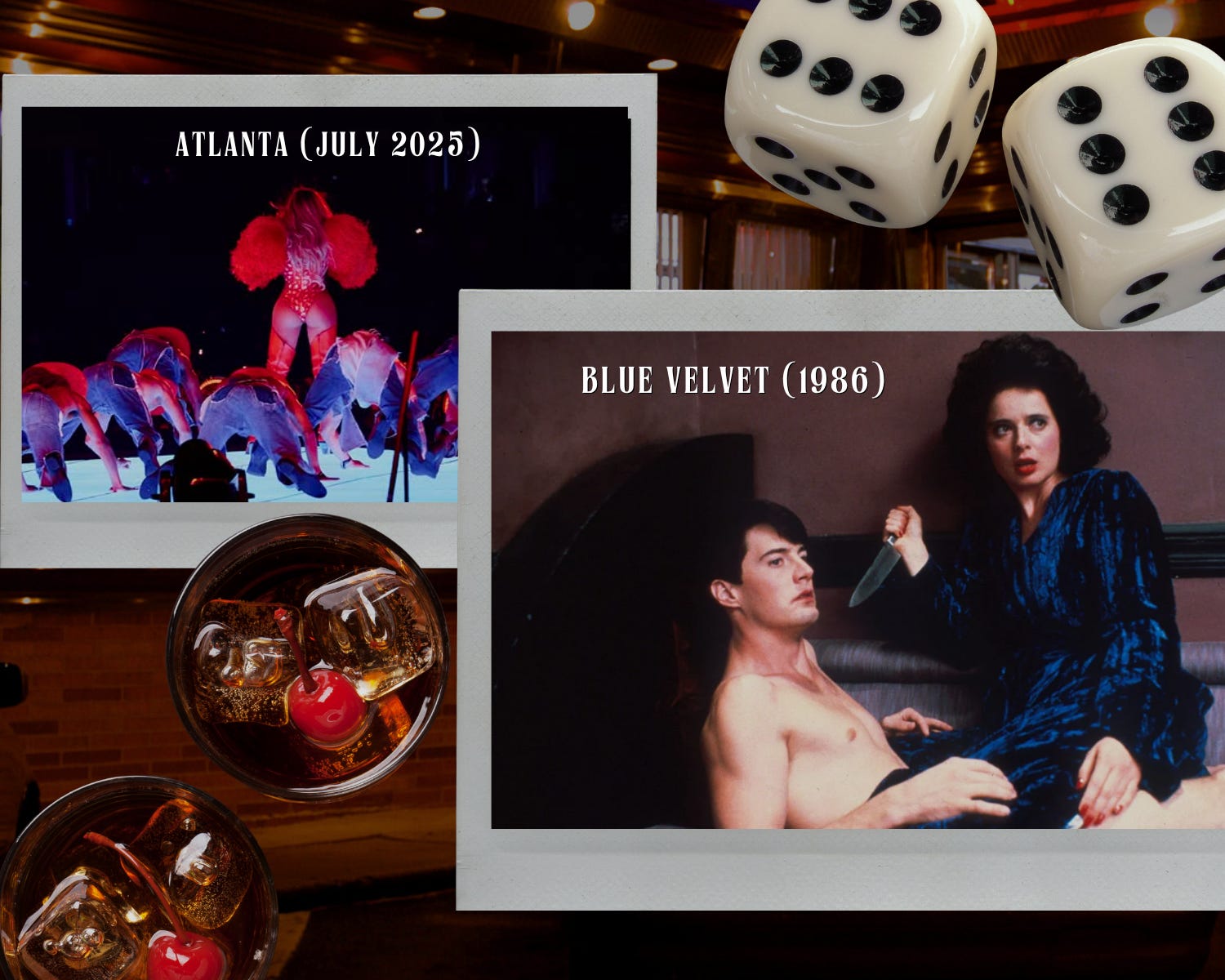
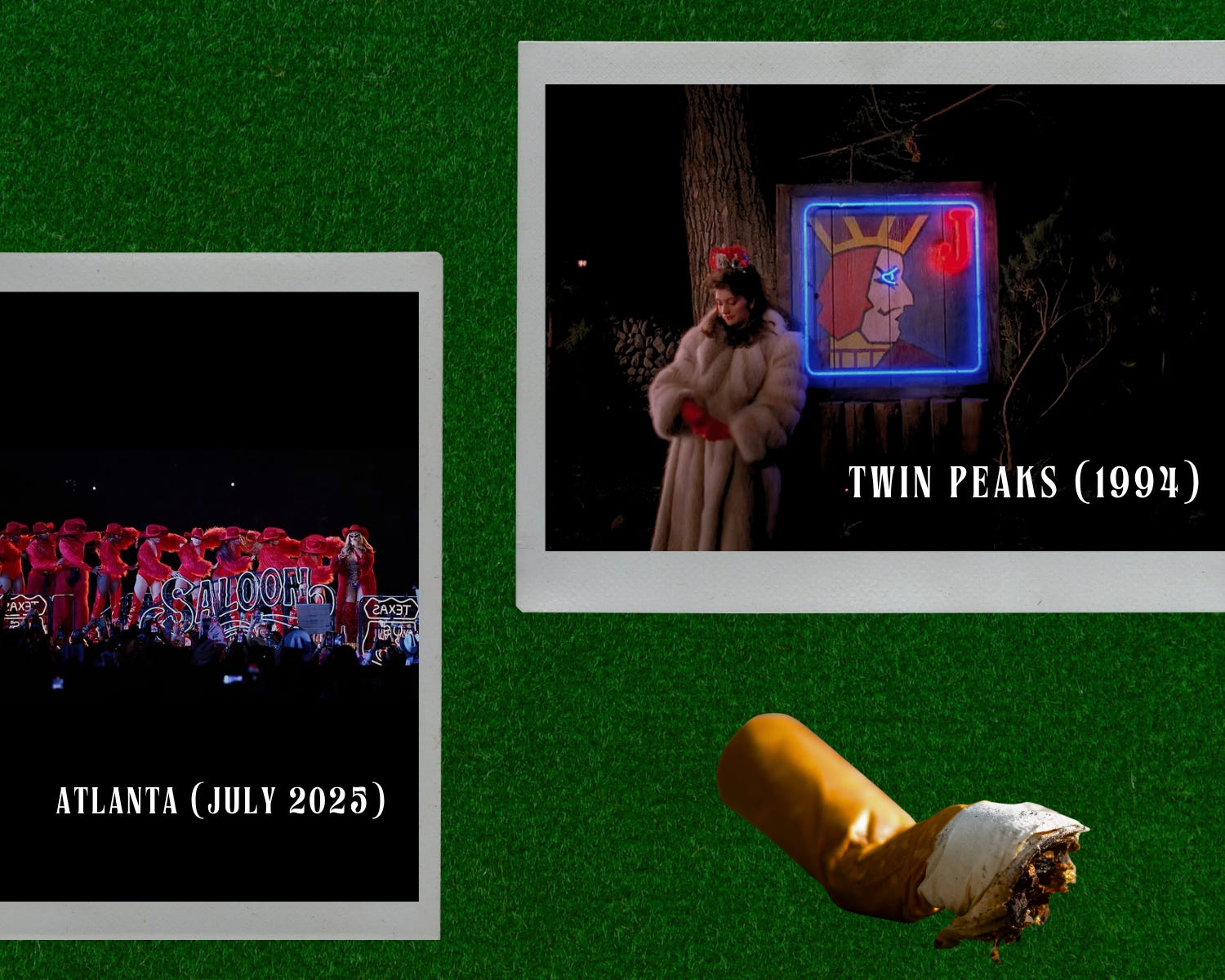
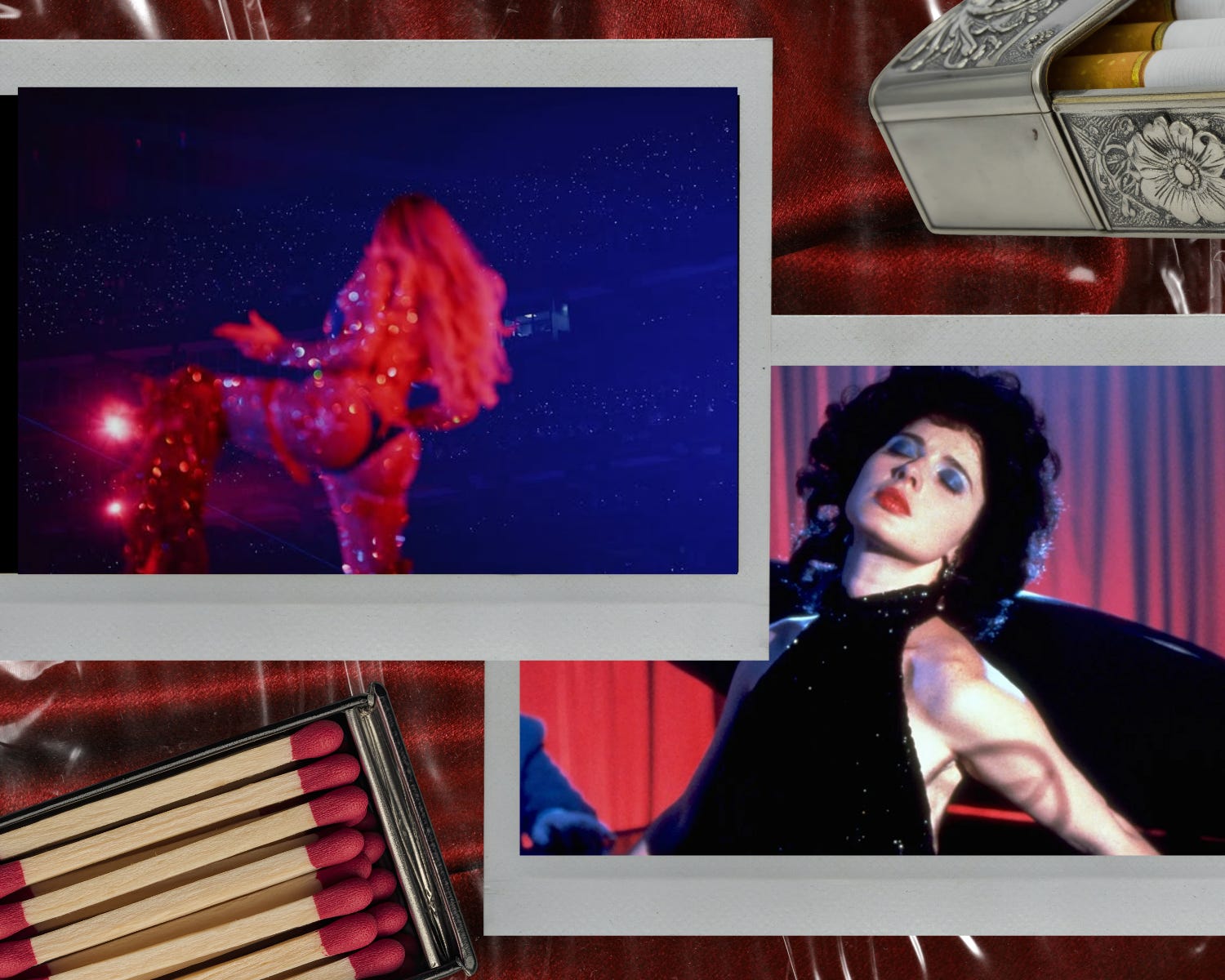
Anyone who’s a cinephile and attended any of the 32 Cowboy Carter dates last year clocked that Beyoncé Giselle Knowles-Carter and David Lynch are cut from the same cloth.
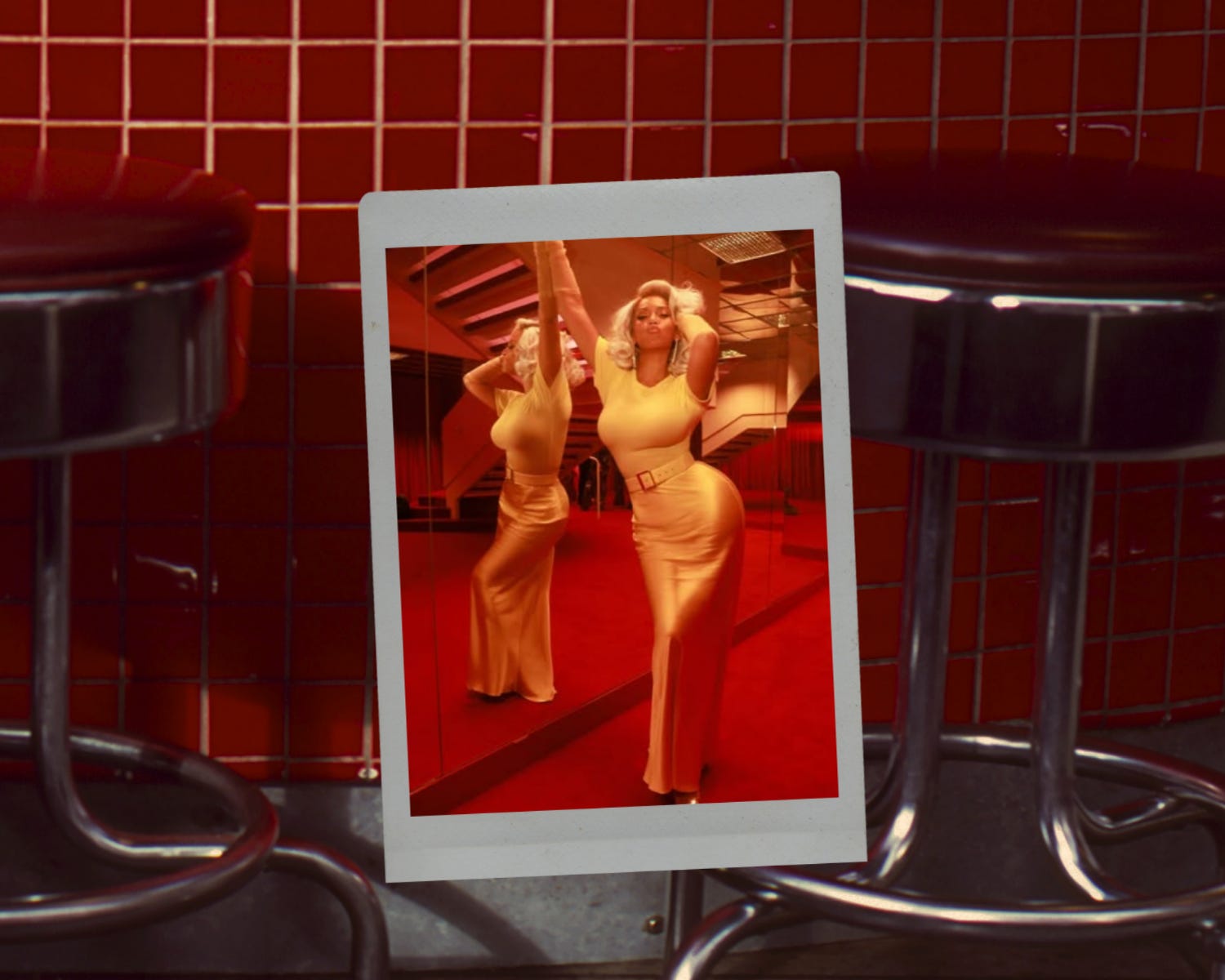
Recurring themes throughout Lynch’s work and the Cowboy Carter tour alike are a romanticization of Americana: Burning rubber on the wide open road, cozy down home diners, steamy little laundromats…
Seedy motels, sexy dive bars and the twinkling night sky.
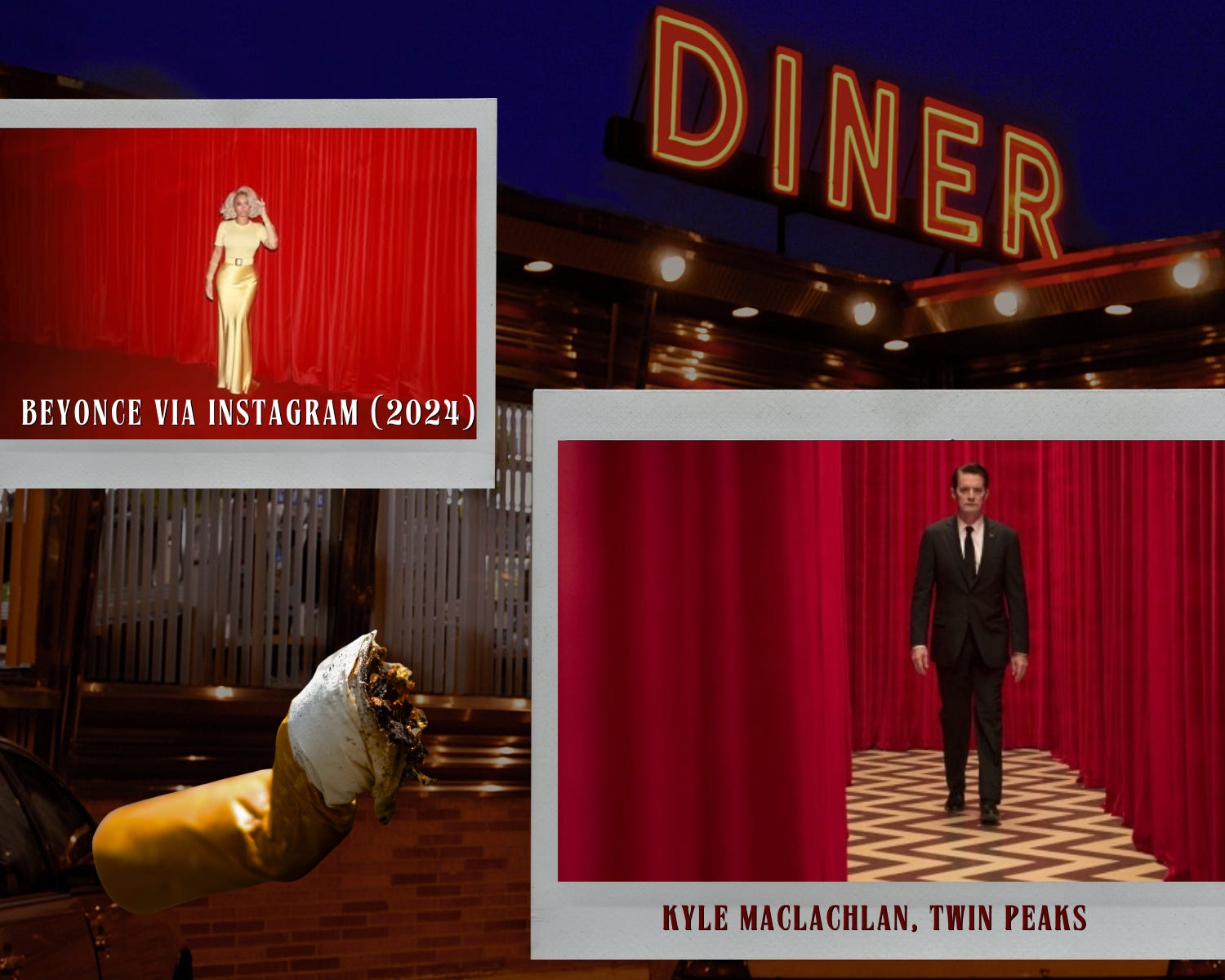
So much of the imagery I saw at the Cowboy Carter tour was right in line with what I’d glimpsed in Twin Peaks, in Lost Highway, in Blue Velvet, in Mulholland Drive even.
Surrealism, grit and sex appeal abounded.
How did Beyoncé build the kind of world where a cover of “In Dreams” by Roy Orbison would have made perfect sense? Paying homage to old-school artists, such as Linda Martell, the first Black woman in country music to play the Grand Ole Opry, was a start.
When Beyoncé dropped her trailer for Act II in early 2024, she introduced us into her Americana fantasy. Dusty roads, small towns, bolo ties, one-eyed men, scandalous sex appeal: She told us from Day 1 what was on the menu for the next album cycle.
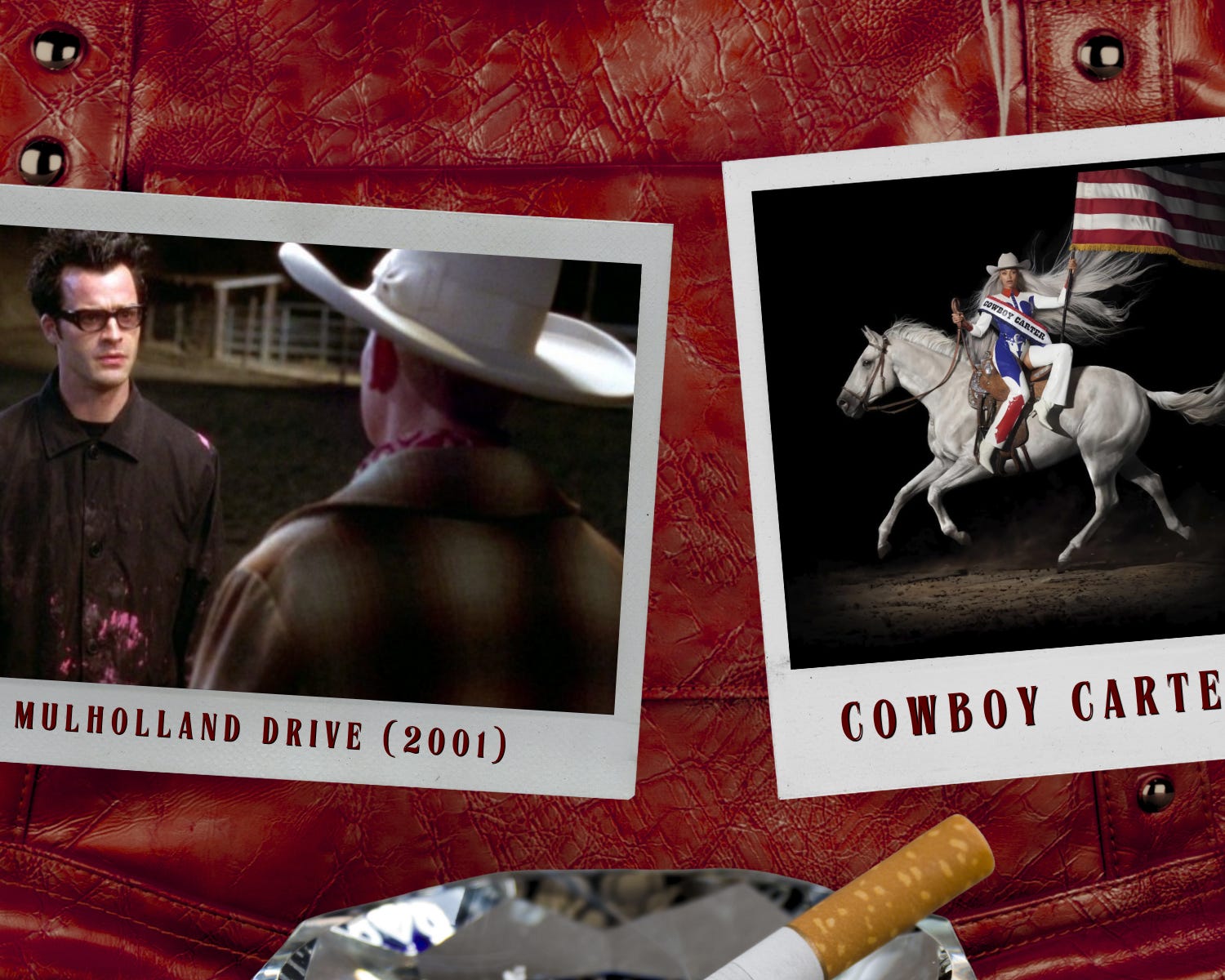
To bring us into the darker version of her narrative, Blair Caldwell photographed Beyoncé as a rodeo queen, doing her victory lap at night. Caldwell has a penchant for glamorous minimalism, not unlike Lynch himself.
A lot of his visuals for Cowboy Carter are glamorous and eerie, putting you in the mind of the nighttime scene in Mulholland Drive where Adam is threatened by the Cowboy to recast his lead.
Another close Beyoncé visual collaborator is director Melina Matsoukas, whose directorial debut was the Lena Waithe-penned Bonnie and Clyde caper, Queen and Slim. Recently, Maggie Gyllenhaal cited Queen and Slim as inspiration for The Bride! She also cited Lynch’s Wild at Heart.
Long before Queen and Slim, Matsoukas directed several iconic Beyoncé music videos. Most notably, Matsoukas shot “Kitty Kat,” which feels like it could have taken place in a radiator in the Eraserhead universe and “Diva,” which could have happened in that same haunted backlot from Mulholland Drive.
Matsoukas’ work becomes more singular and embedded in the Americana fantasy with Beyoncé’s Levi’s campaign.
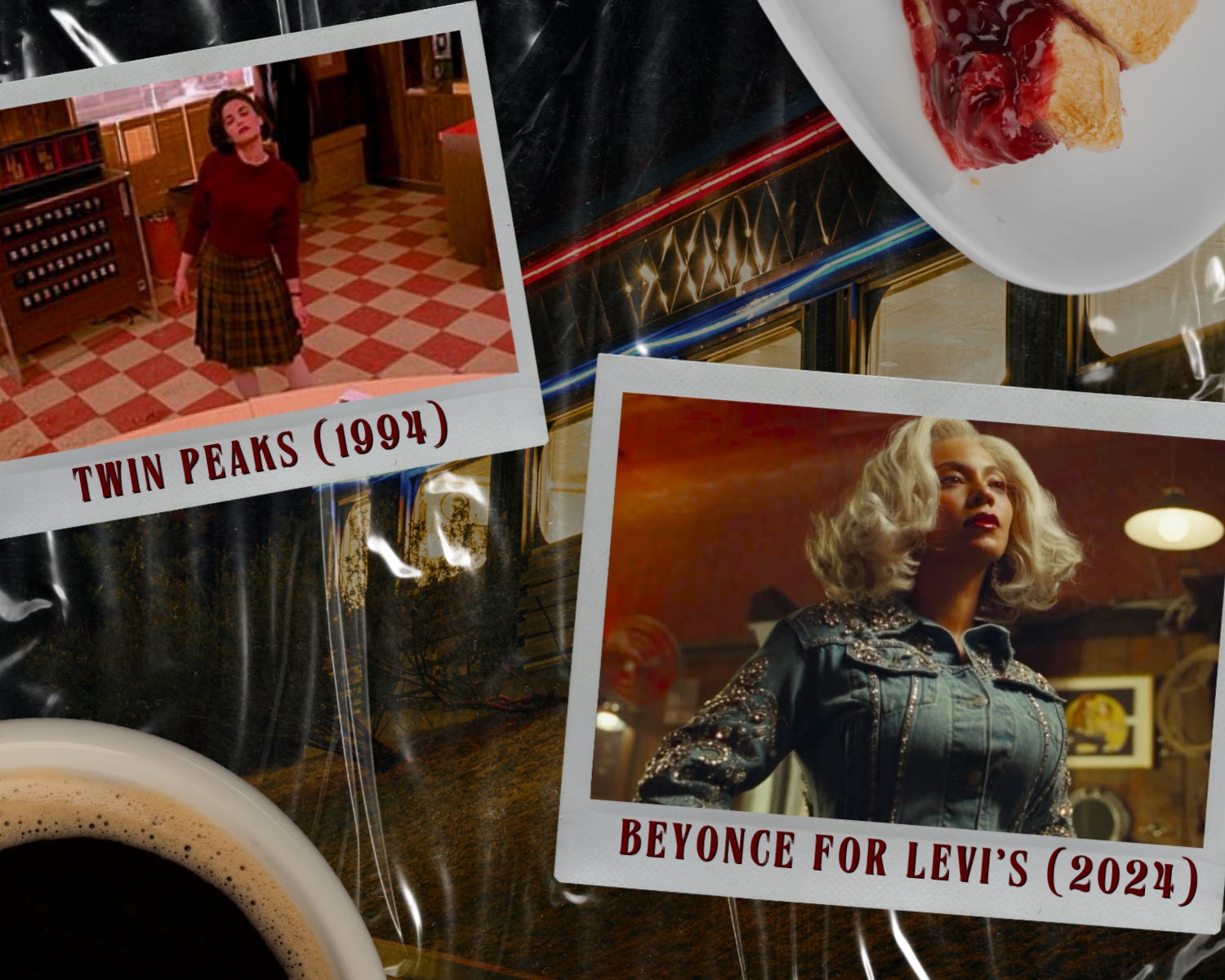
Beyoncé’s ad campaign spanned the whole gamut of emotions and tones, which also another Lynchian hallmark.
In an interview with American Cinematographer, Fred Elmes, ASC, discussed his objective in filming Blue Velvet.
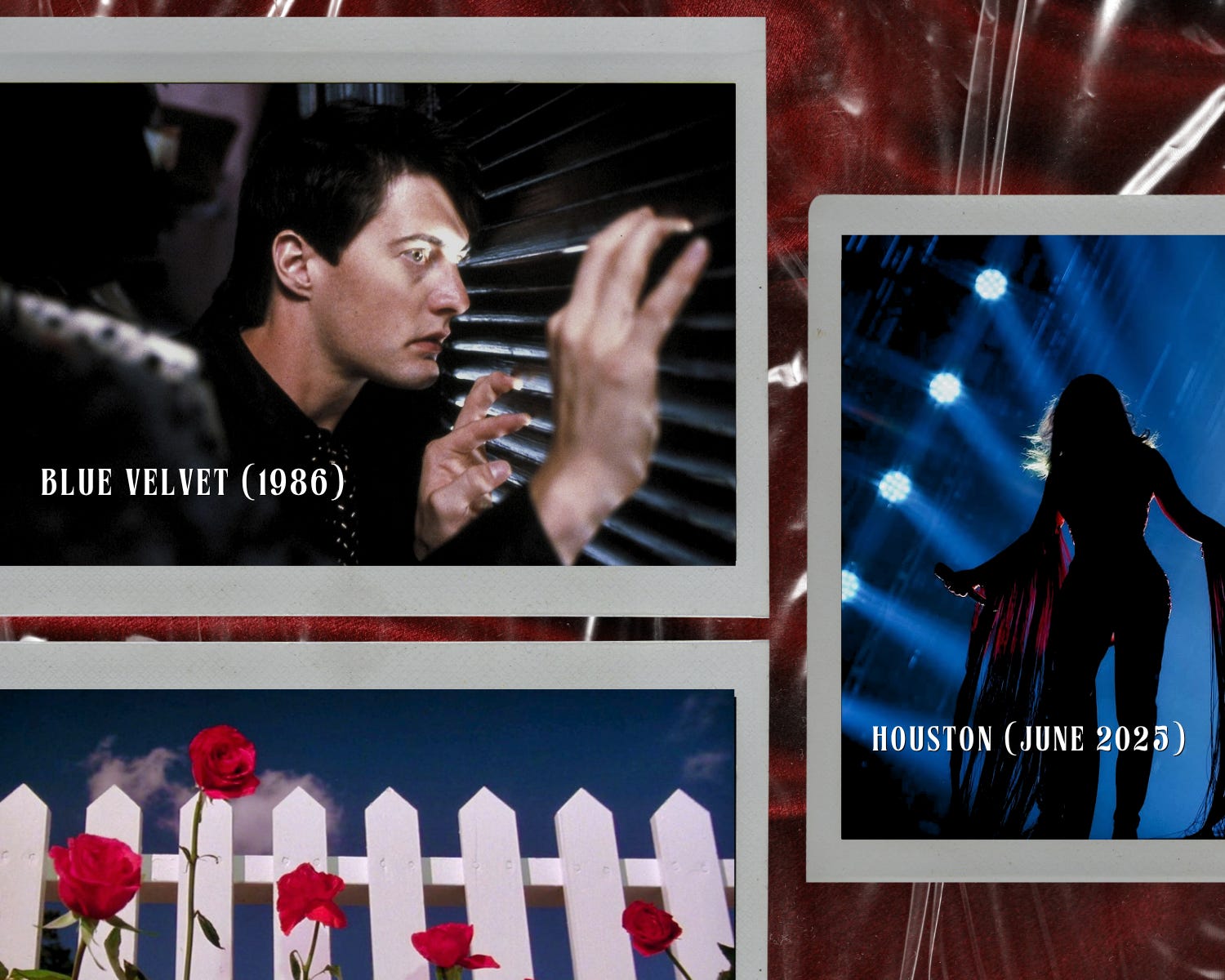
“My goal is to take the audience through a story in such a way that there’s a change, so that there’s a beginning, a middle and an end visually,” Elmes told Ron Magid in 1986. It feels like Beyoncé’s creative team took the same approach, ensuring that there isn’t just one note in the Cowboy Carter show.
Since the story, to me, is about a young man’s descent into a world he’s never been exposed to, a world that is frightening and intriguing in the same sentence, I somehow had to capture the fact that he’s going through a change.
— Fred Elmes on Blue Velvet, American Cinematographer (1986)
A key moment in the Cowboy Carter concert that felt like a direct parallel to Lynch’s obsession with performance and voyeurism was the infamous Peepshow Interlude.
No YouTube video can do the experience of watching this visual passage, against the glittering night sky, justice, but alas.
In the Peepshow Interlude, there are two Beyoncés. She is the pervert who is the patron and she is the siren on display in the booth. We see Beyoncé get off on herself in a dizzying surrealist fever dream.
It’s crucial that concert attendees have this moment, along with heartfelt odes to family and triumph over evil. The show doesn’t feel too wholesome or too salacious — Cowboy Carter strikes the right balance, like Blue Velvet.
Apart from the actual visual texts, Beyoncé and David Lynch have so much in common. At the risk of being glib, you might even be able to trace it back to their birth charts.
They’re both earth signs: The late Midwestern auteur was a Capricorn, born on January 20, 1946, and the “Virgo’s Groove” crooner was born on September 4, 1981.
Lynch and Beyoncé have managed to create work that sticks with us, in no small part due to their love of their respective crafts and their mastery of them. They both achieved this through meticulous attention to detail.
And both worked tirelessly to bring the go-getters, free thinkers and star-crossed dreamers the best possible art — at risk of their health — without hardening their hearts.
I’ll leave you with this: When researching this piece, I was struck by this tidbit from Peter Deming, the cinematographer for Lost Highway. Writing about the film, Stephen Pizzello characterized its scenes as having the “febrile quality of a dream.”
Ultimately, Deming said, "Film noir has a mood that everyone can feel… It's people in trouble, at night, with a little bit of wind and the right kind of music. It's a beautiful thing."
And if that doesn’t describe the feeling of Cowboy Carter don’t know what does.
No posts
Comments
Nothing yet. Say the first thing.
Sign in to join the conversation.