
ALSO IN THIS ISSUE
Proteomics for rare-disease diagnosis
A better diagnostic target for Alzheimer’s?
To get people to keep screening, make it easy to get screened

The leading tests and treatments for Alzheimer’s disease all target the same things: toxic beta amyloid (Aβ) plaques and tau neurofibrillary tangles in the brain. The tests, whether liquid biopsies (e.g., those that test for p-tau217) or the gold-standard PET imaging studies, look for evidence that those plaques and tangles are either present or on the way. The drugs (Lecanemab/Leqembi® and Donanemab/Kisunla®) have both proven highly effective at removing Aβ plaques.
But the drugs’ impact on cognitive decline isn’t all that substantial. Clinical trials found evidence of about a 25% reduction in the rate of decline, but the decline itself continued. Perhaps these drugs will prove more effective when administered earlier in disease progression and / or for longer than the duration of the drugs’ clinical trials, but for now, the jury is out. Meanwhile, many die with, but not because of Aβ plaques.
What else could be going on? A recent Alzheimer’s & Dementia paper suggests that a set of smaller, stable aggregates are what actually drive cognitive decline and dementia, by disrupting essential connections between neurons. These clumps are made of a type of amyloid that never forms larger fibrils or plaques – hence their name, nonfibrillar aggregates of Aβ (NFA-Aβ).
COMMENTARY: The Alzheimer’s diagnostic challenge is a tough one. Plaques and tangles are clearly involved, but there are serious questions about whether they are either necessary or sufficient to cause dementia. Synapse dysfunction has long been a potential alternative to the dominant amyloid hypothesis. It has also been offered as a possible additional factor in the disease, with several studies claiming better correlation with dementia than plaques alone (see this 2020 review from Ageing Research for a full description).
The NFA-Aβ study was done in mice, so it is pre-clinical. But if its hypothesis stands the test of further research, neither drug development nor diagnostic design would prove challenging. That said, there is a long history of unsuccessful Aβ-targeting drugs, some of which differentially targeted smaller oligomers of Aβ but still failed (e.g., Aducanumab / Aduhelm®, Crenezumab, and Gantenerumab). Is NFA-Aβ the right target after all? It’s too early to tell.
I think we can all agree that ticks suck. Literally and figuratively.
Among the many nasty pathogens they carry, one of the most frustrating is Borrelia burgdorferi, which causes Lyme disease. An initial infection is bad enough, but generally treatable with antibiotics. What’s even more problematic is the small number of cases that progress to a syndrome of ongoing body aches, fatigue, and difficulty concentrating. (This chronic trifecta isn’t unique to Lyme, which makes it even more problematic, as cases that aren’t and maybe never were Lyme are often attributed to the disease. For the best unpacking of that scenario and how it should and shouldn’t be addressed, see this op-ed by Jake Scott.)
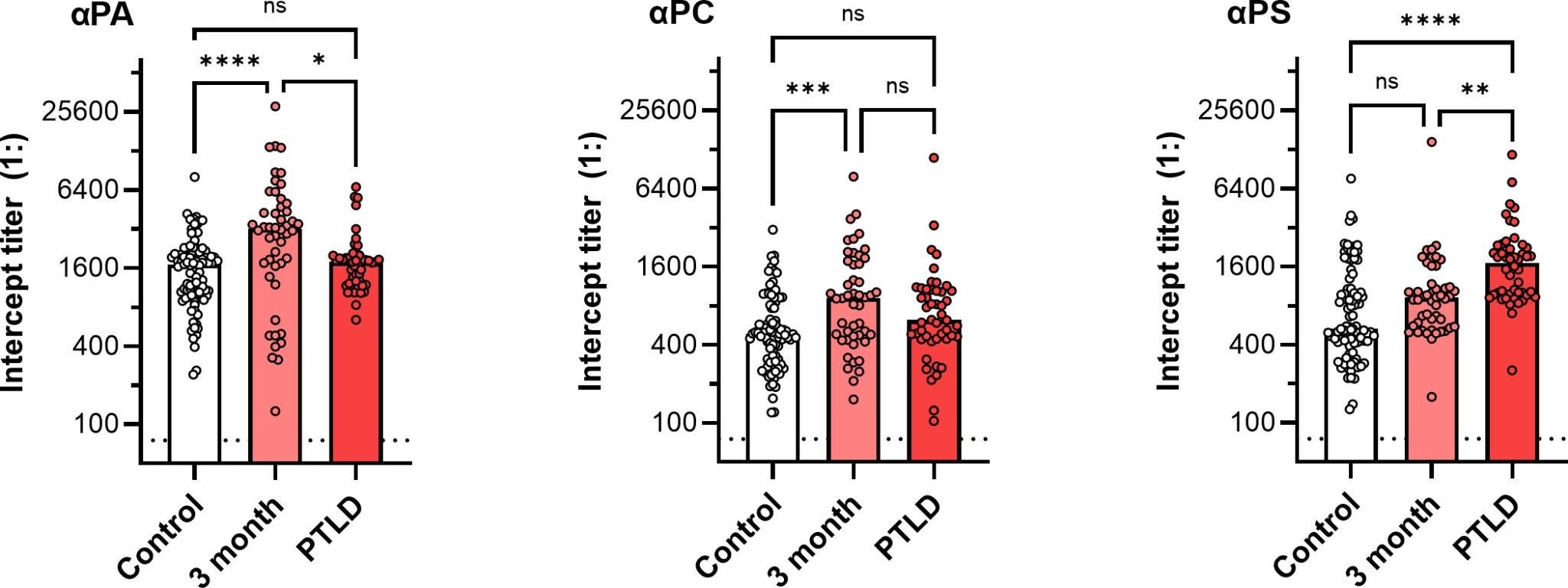
Research published in Clinical Microbiology offers a new way not only to diagnose acute Lyme earlier than current tests, but to tell whether a case of post-infection syndrome was indeed caused by Borrelia infection. It suggests that antibodies to some of the fatty chemicals that make up the bacterium’s membrane (phospholipids) may be the biomarkers we need.
The study found that “three antiphospholipid antibodies were elevated during acute infection, with two (antiphosphatidic acid and antiphosphatidylserine) significantly elevated” even before current tests would have caught them. Some of the patients diagnosed with what the paper calls post-treatment Lyme disease (PTLD) continued to have elevated levels of antiphosphatidylserine, which wasn’t found in “patients with look-alike autoimmune disorders.”
COMMENTARY: Borrelia isn’t good at making its own phospholipids, so instead it scavenges them from its hosts and cobbles together a membrane. This and the fact that elevated levels of antibodies against phospholipids have been seen in other autoimmune diseases (multiple sclerosis, for example), makes it reasonable that antibodies against these fundamental cell building blocks might cause PTLD.
Unfortunately, the results in this paper aren’t exactly a slam-dunk. While antiphosphatidylserine levels in patients with PTLD did tend to be higher than those who didn’t, there was significant overlap between the two (see graphic). Still, we’ll take any steps in the right direction that we can get.

Researchers are examining whether the proteome — the proteins encoded by DNA — might provide diagnoses for rare diseases. Research published in Genome Medicine showed that a mass-spectrometry-based method of proteome analysis was able to identify more than 8,000 proteins in certain blood cells, corresponding to more than half of the genes in those cells that are known to cause disease. It also allowed researchers to spot disease-causing genes that hadn’t been identified before. When used to diagnose mitochondrial disease, it did a better job than clinical respiratory chain enzymology, which is the standard type of test that, along with genomics, is used to diagnose those diseases.

Back in 2025, we reported on a study which showed that mailing a stool-based test kit (FIT) to folks who were due for colon-cancer screening increased screening rates dramatically — from 30% to 80%. But what happened after that? Do folks who get a negative result on a FIT test ever get screened again?
A study published this June looked at that question. It followed 492,812 adults from four large health systems for up to a decade after a negative home FIT test. The answer? About half of patients got screened in more than 75% of subsequent years, about 30% got screened at least once and 16% never did it again.
The biggest predictor — by far — of retesting rates was which of the four health systems provided the patient’s care. Even after researchers adjusted for patient differences, the odds of consistent testing varied more than 20-fold among the four systems studied.
The recipe for success won’t surprise anyone. The organization with the highest adherence used organized population outreach strategies, including continuing to mail FIT kits to patients who were overdue and making kits available for anyone to pick up at primary-care offices, laboratories, pharmacies, and flu clinics.
COMMENTARY: You can manufacture the best test in the world, but if you don’t make it easy for patients to take it, that might not matter. And for those who quibble that FIT isn’t the best test — yes, colonoscopy remains the gold standard. But at the end of the day, we remain committed to the idea that the best test is the one that the patient actually takes.

🎙️ New Episode Alert: Suchi Saria, founder and CEO of Bayesian Health, tells us about her company's sepsis-detection system - and how to successfully bring such a system into the clinic.
Listen in: ontargetpodcast.com
Join the conversation: If you’re leading innovation in this space and want to share your perspective, we want to hear from you. info@ontargetpodcast.com
No posts
Comments
Nothing yet. Say the first thing.
Sign in to join the conversation.