
I’m writing this from a thatch roofed cottage in the English countryside, so you could say I have a bit of authority on the topic. Not because I live here or can in any way call myself an English design expert, but rather I am a keen observer of the English style – from my annual trips across the pond as well as from sources like House & Garden UK and my favorite follows that always seem to trace back here.
The goal is never to replicate an English home — it’s to borrow the philosophy behind them. What I keep coming back to on every trip is that it’s not about the stately architecture or even the finely crafted furniture and decor; it’s the small, considered choices that make a home look collected over decades. (Well, and the fact that they are.) The result is unfussy, inviting, and homely (not a typo, that’s how they say ‘homey’ over here).
Here are some of my favorite ideas I’ve noted – that apply to the home as well as to the garden.
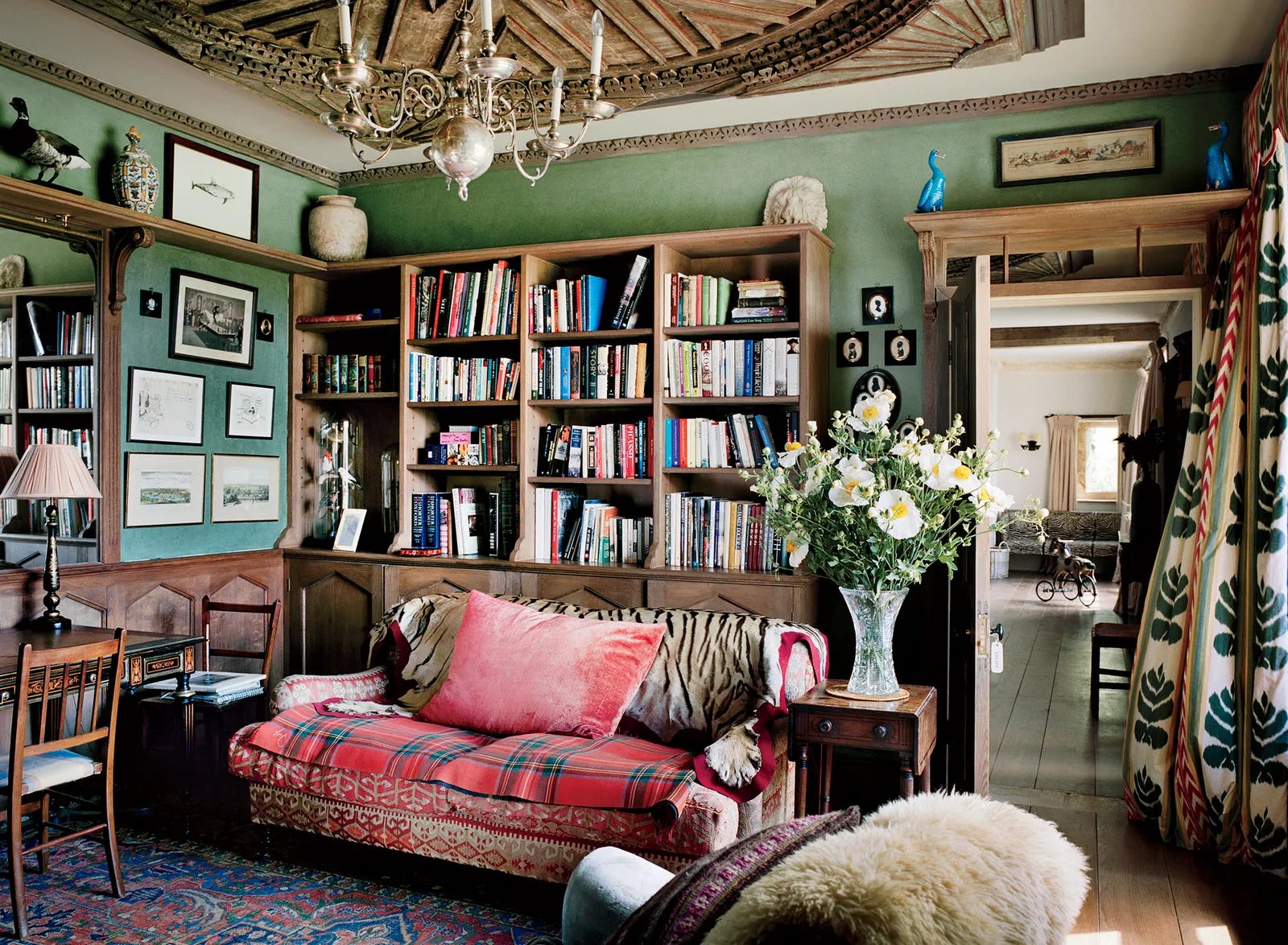
Out of necessity, worn sofas and armchairs are often covered with textiles like ikat or chintz or old blankets or even animal skins. You get the sense that these pieces have been collected on travels or are remnants from past projects that have been stored away for this purpose. Instead of feeling like it’s covering up a problem, the draping only adds to the richness and character of the furniture.
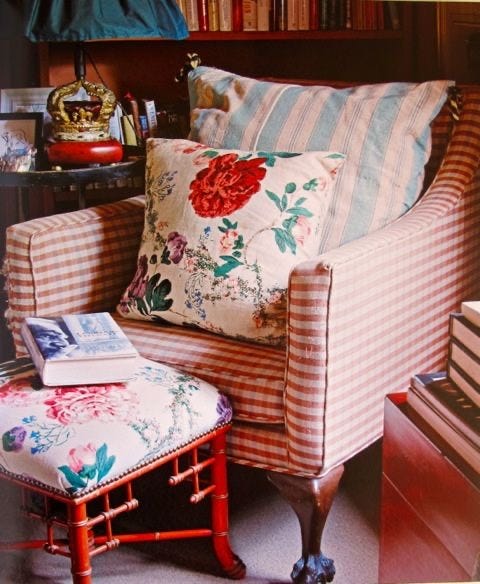
In English rooms you’re more likely to find an explosion of pattern than a coordinated scheme — across sofas, chairs, and cushions alike. Some might call it clashing, but I like to think of it as merry mixing. The key is mixing different types and scales of pattern. The most classic are chintz, gingham check, and stripes, but the same principle can apply to any type of pattern to create your own potent blend.
Know someone who’d love this? Share it with them (it’s free!)
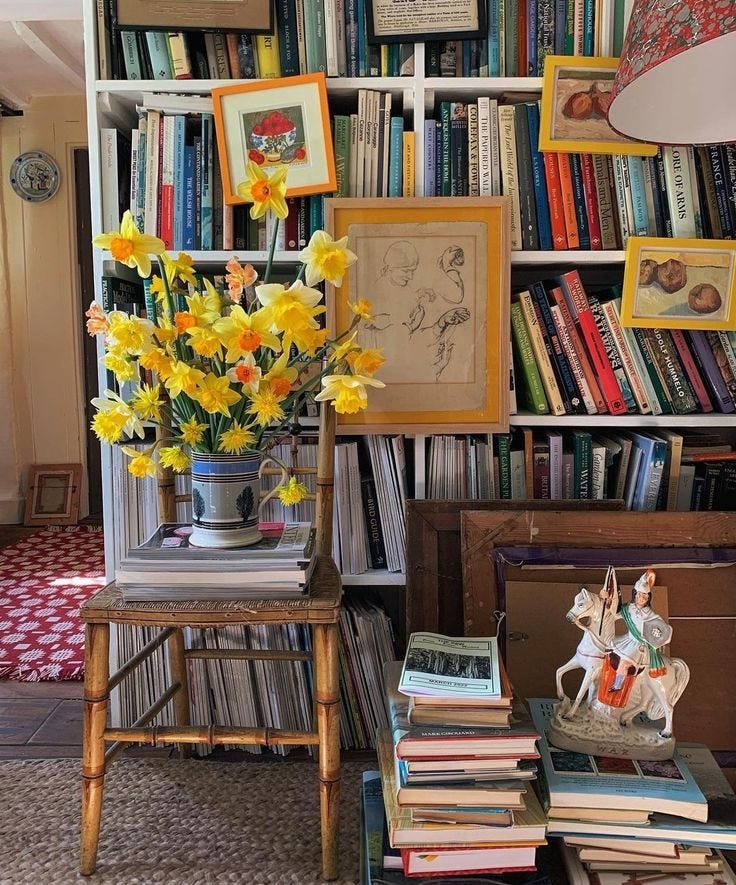
It feels odd to call books a design element, but there are few things that can transform a room just from their presence alone — they simply add so much warmth and soulfulness. They could be lined up on bookshelves (no color coding or styling needed) or stacked on a table, a chair, or even the floor which handily can also serve as a table.
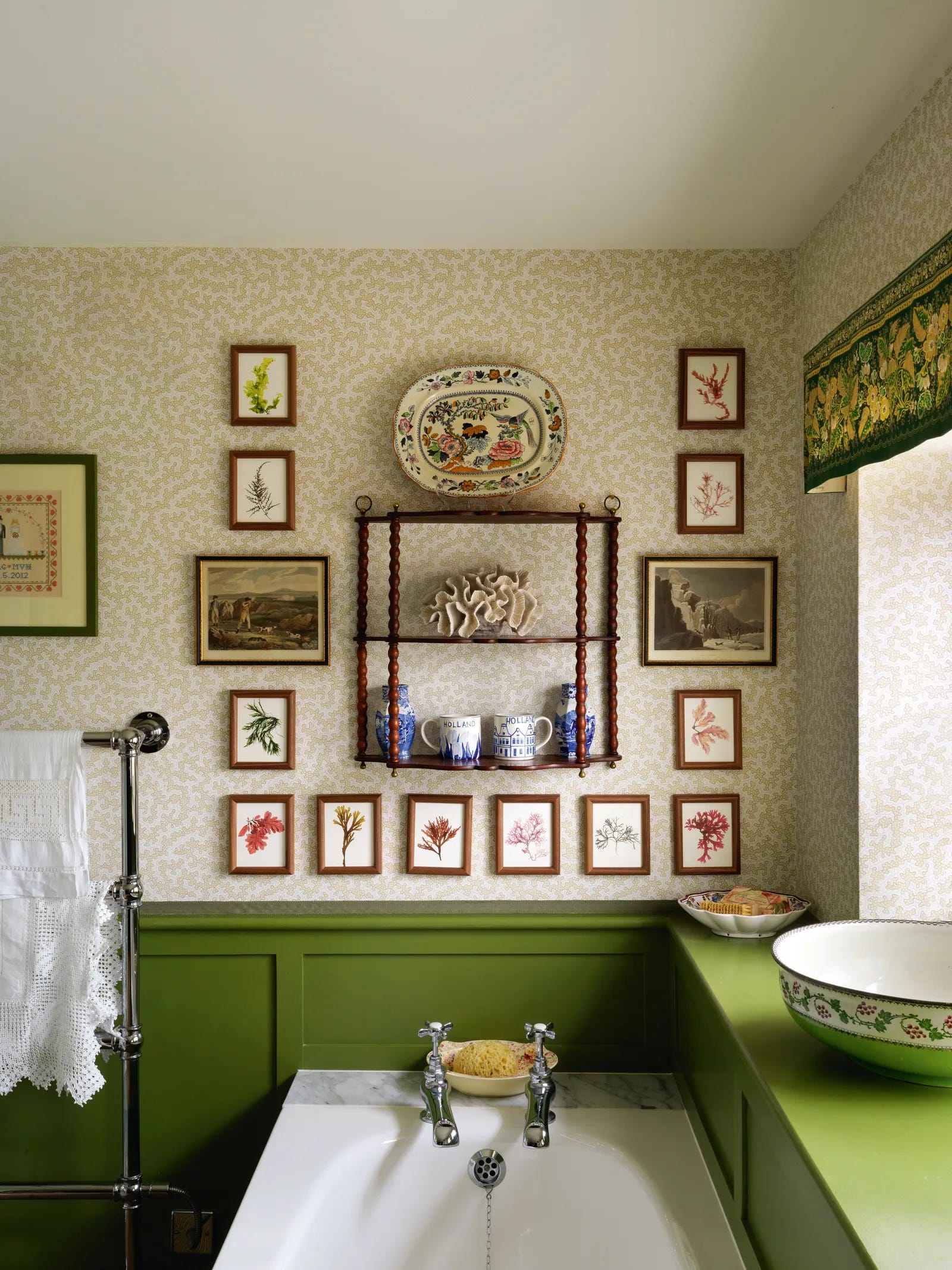
There’s a way of hanging pictures (and objects) that’s organized but imperfect. The pieces are hung horizontally as well as vertically, often in a symmetrical layout. To keep it from looking too precise, the grouping includes a mix of scales and types, including art, ceramic, and sometimes shelving or a mirror, which can help break up the grid. They’re hung by eye, not by level, so they might not line up exactly, and that’s part of the charm.
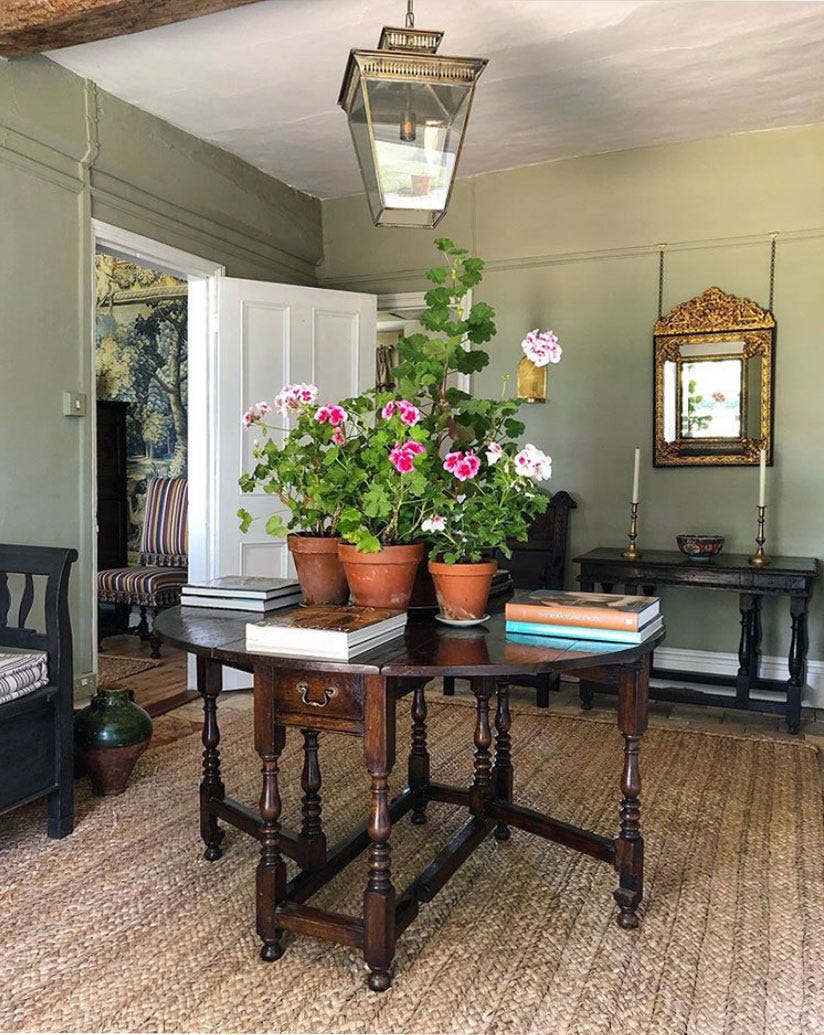
Nothing replaces the real thing for how it breathes life into a home, whether lined up on a windowsill or clustered on tabletops. The English especially love pelargoniums (geraniums to us) or ferns for plants — potted in aged terracotta with saucers to protect furniture. Simple, loose arrangements are made with whatever’s growing in the garden or clipped from nature walks.
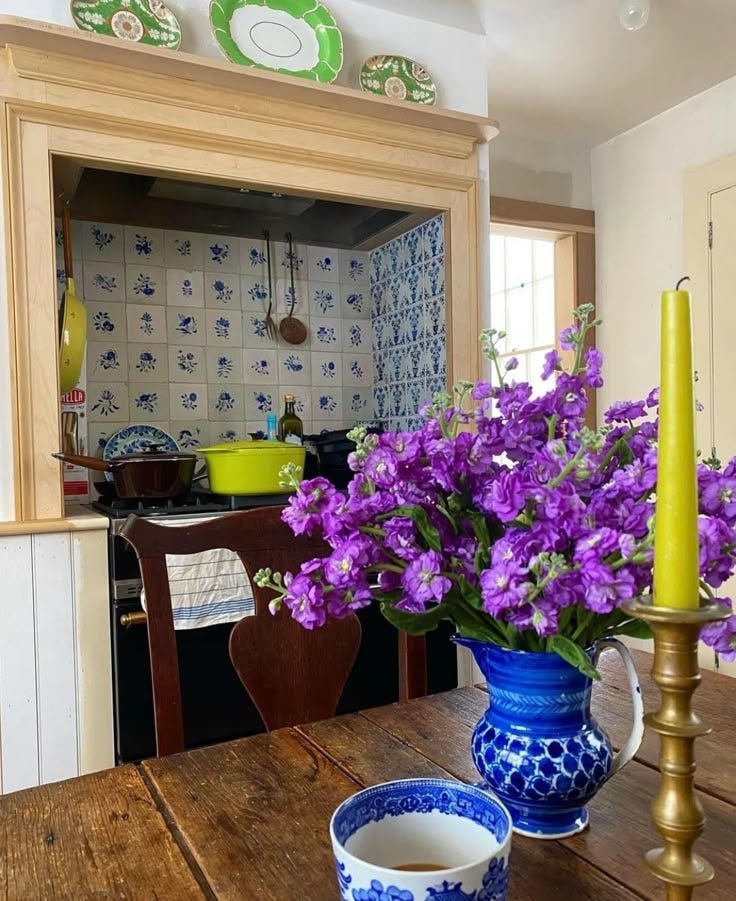
Ordinary items are displayed in a way that makes them extraordinary. Some pottery has functional purposes like pitchers or vases for arranging flowers or mismatched china for serving meals; others are purely decorative – plates or platters hung on walls or leaning on a railing or mantle.
The idea of collected design extends to English gardens too. I always tour gardens on my visits, and my biggest takeaway is how they tend more toward rustic, wild vs controlled, manicured. The result is a garden that has grown and evolved organically over time rather than come together instantly by calculated intervention.
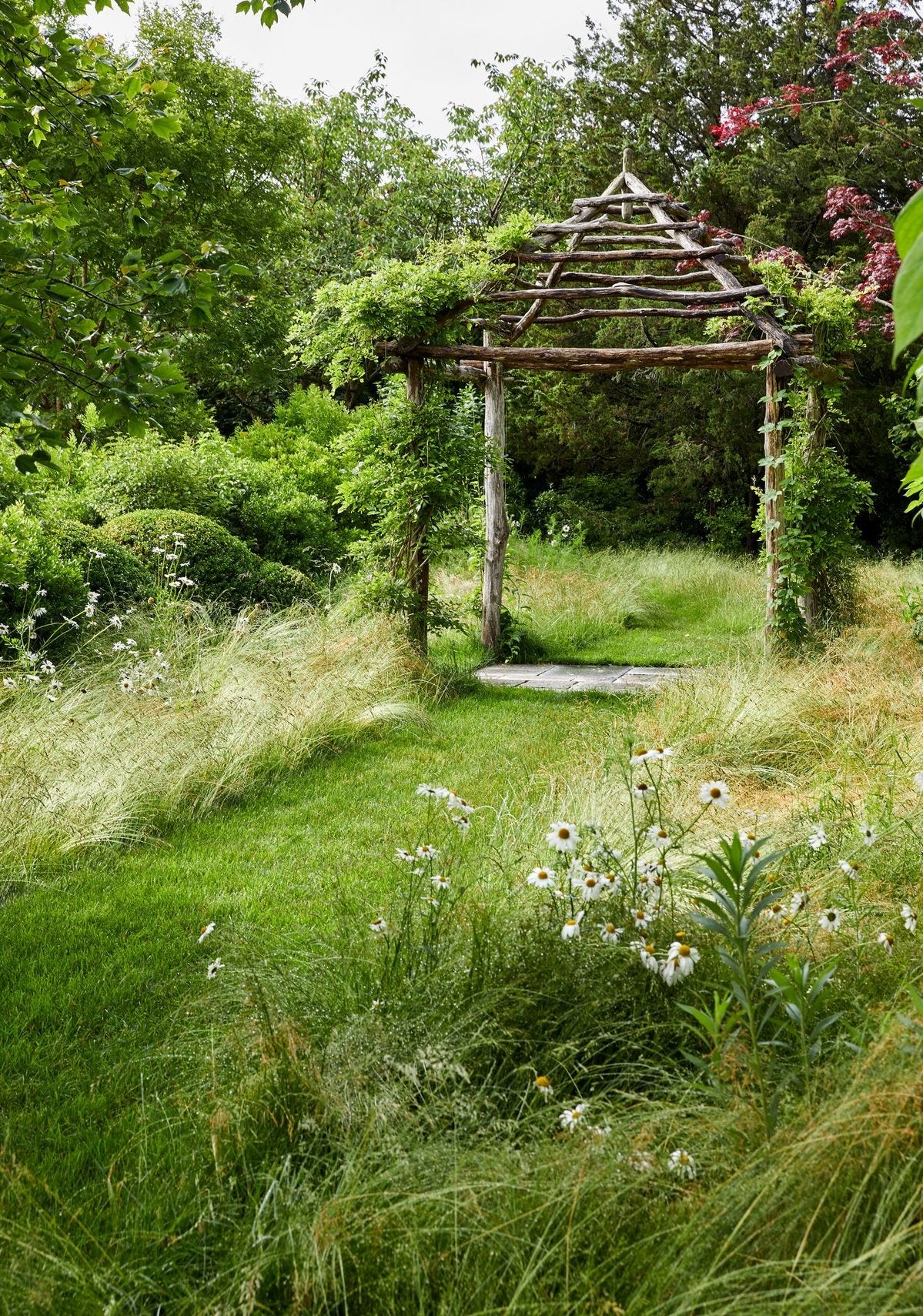
Meadows are a trademark of English landscapes. You’ll find them even in formal gardens beside grand country homes. A mowed path will often cut through the deliberately long grass and wild flowers underscoring the natural beauty.
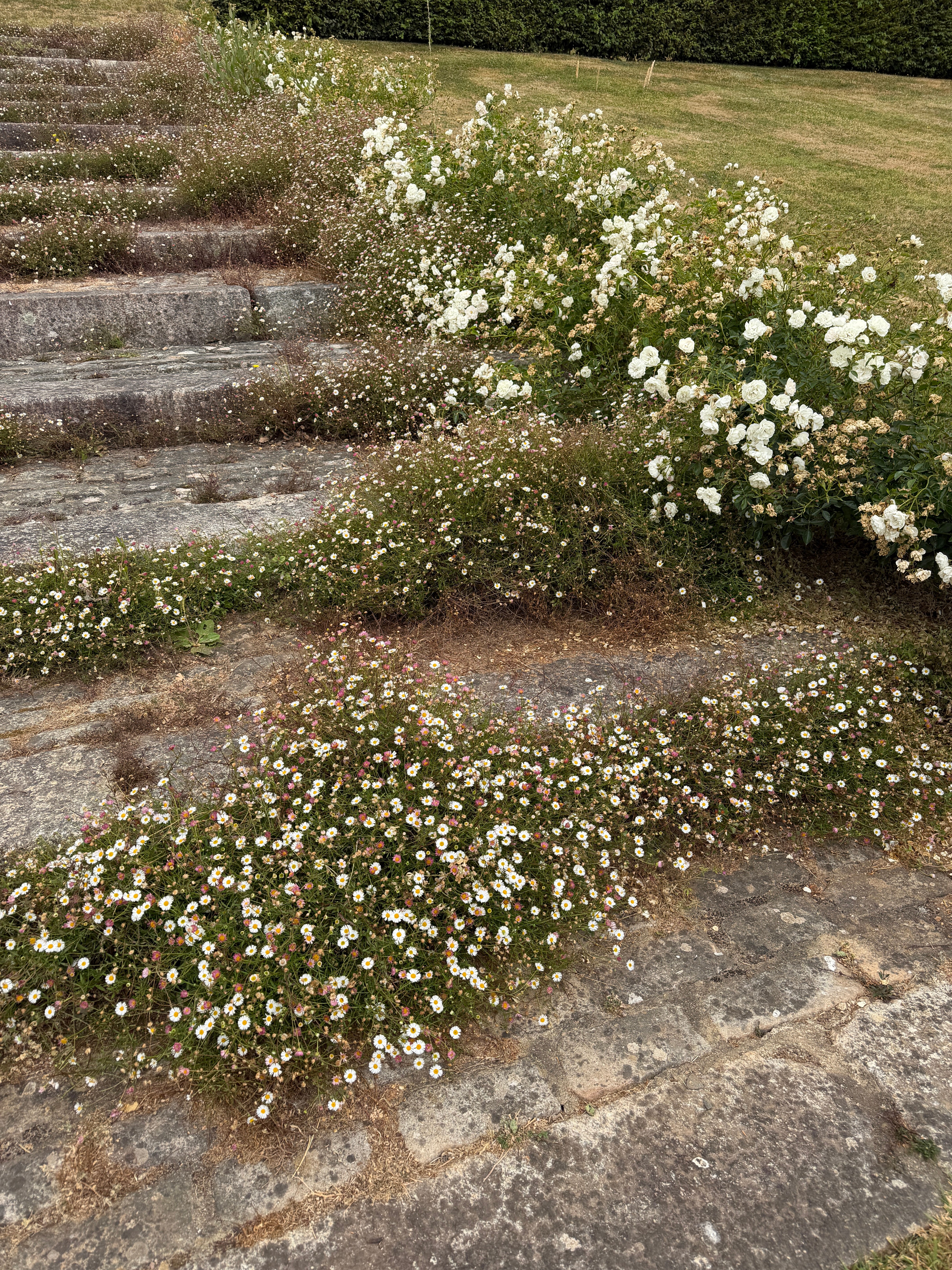
We all think of roses as quintessential English garden flower, and of course they are. But another plant material you truly see everywhere is erigeron, a tiny daisy that self-seeds in all the nooks and crannies — in pathways, in gravel, on steps. It's completely untamed — the opposite of manicured — and utterly enchanting.
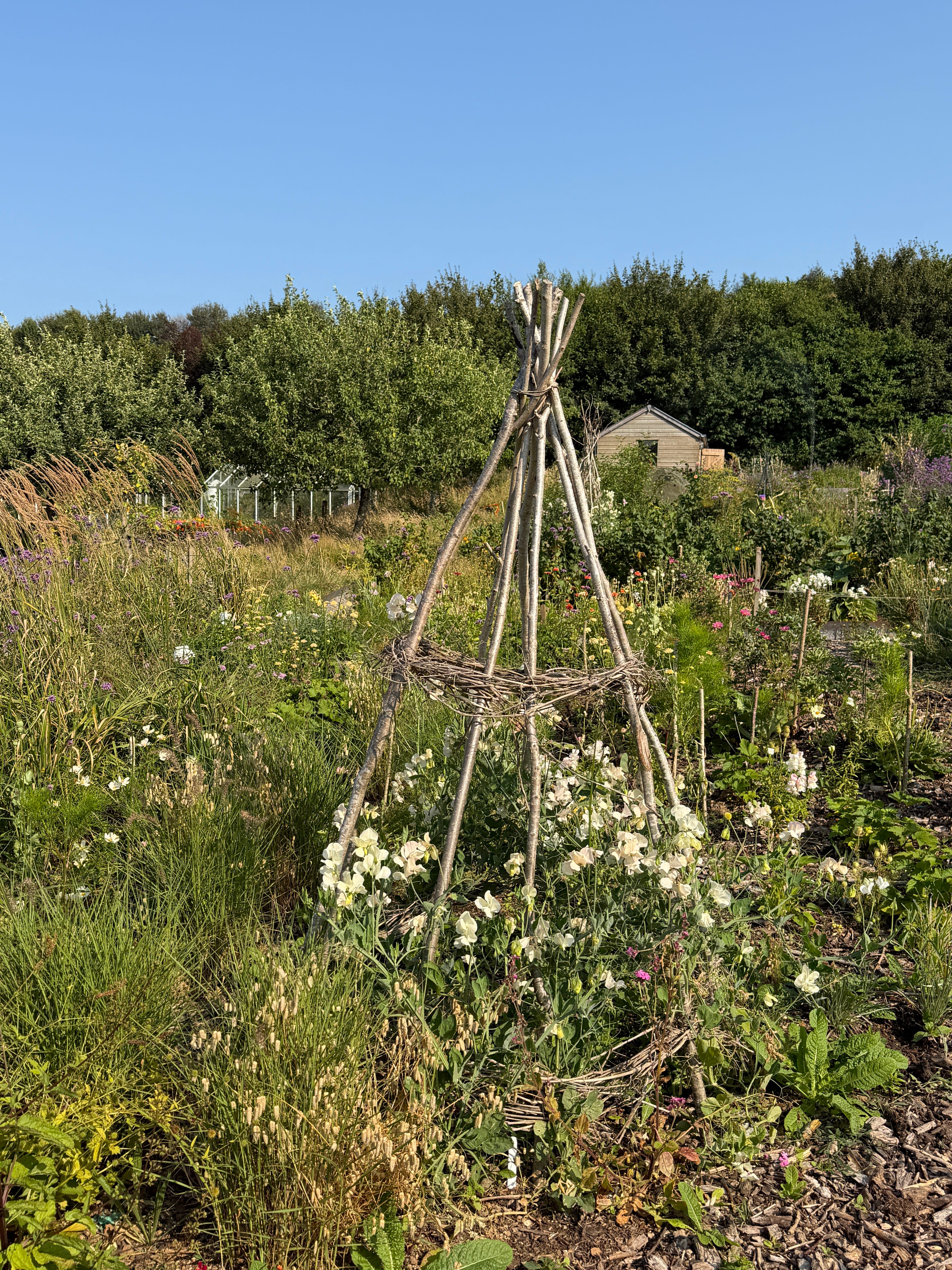
Dotted around English country gardens are rustic, handmade willow/branch structures in lieu of store bought obelisk or metal trellis. These provide support to grow climbing flowers. One especially charming structure is a sweet pea teepee which looks straight out of a storybook.
Which of these are you eager to borrow from the Brits, or have you incorporated any into your home already? Let me know in the comments.
Thanks for being here! If you enjoy SINGULAR, please consider supporting my work — like, comment, or share with someone who’d love it. Or upgrade to a paid for monthly vintage finds, full archive access, and exclusive content like decorating guides and styling formulas.
New here? Subscribe for free to get posts like this weekly.
No posts
Comments
Nothing yet. Say the first thing.
Sign in to join the conversation.