
Sampling is one of the most expensive and time-consuming parts of fashion development. Many brands spend months and thousands of pounds just to finalize one style.
Some brands are changing their approach. Tommy Hilfiger, for example, now designs full collections in 3D before ordering fabrics or fittings. The aim is not to remove physical samples completely but to reduce rounds, speed up decision-making, and avoid unnecessary waste.
So how does digital compare to physical in practice?
Physical samples are still important. They allow you to touch the fabric, fit on a model, and check construction details. But they are slow and costly.
Most brands produce 3–5 rounds per style
Each round takes 4–6 weeks
Samples cost $300–$600 each, plus $50–$150 shipping
If factories are unreliable or instructions are unclear, some teams end up producing 6–7 rounds. This increases costs, delays launches, and reduces flexibility to respond to the market.
Instead of waiting weeks for factories, digital tools like Clo let you create accurate garment simulations that show drape, fit, and color in detail. Updates can be shared instantly with your team or buyers.
This changes the pace of development:
Iterations take hours instead of weeks
Feedback can happen the same day
Physical rounds drop from 4–5 to just 1–2
The purpose isn’t to remove physical samples altogether, but to use them more strategically.
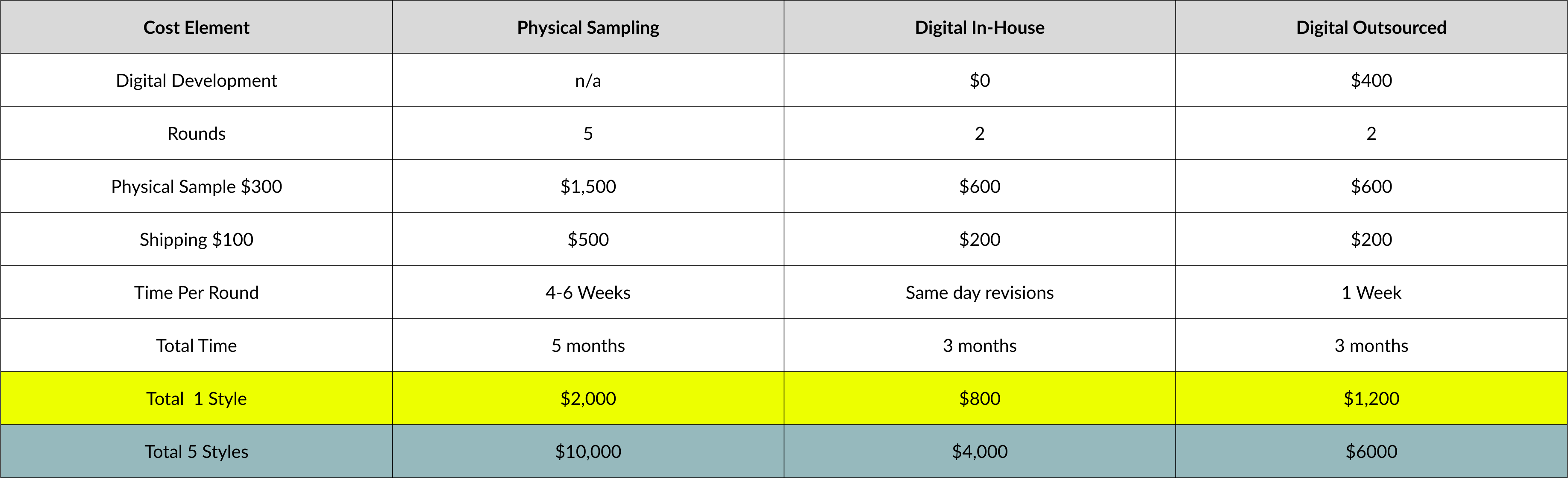
Physical sampling quickly adds up in time and money, stretching development into months and costing thousands per style.
Digital sampling, whether in-house or outsourced, reduces physical rounds to one or two and keeps timelines much shorter. The result is faster approvals, fewer delays, and a lower spend per style.
The takeaway: digital workflows cut costs by 30 to 50 percent and save months in development while still keeping the certainty of final physical samples
A recent womenswear client in London used to spend around $10,000 per collection on sampling. After moving to a digital-first process:
They designed the range in 3D
Reduced to one physical prototype per style
Cut sampling costs by 40%
Saved 8 weeks on the calendar
Used digital visuals for pre-orders, generating revenue before physical samples were produced
This shift allowed them to reinvest in marketing and stick to launch dates.
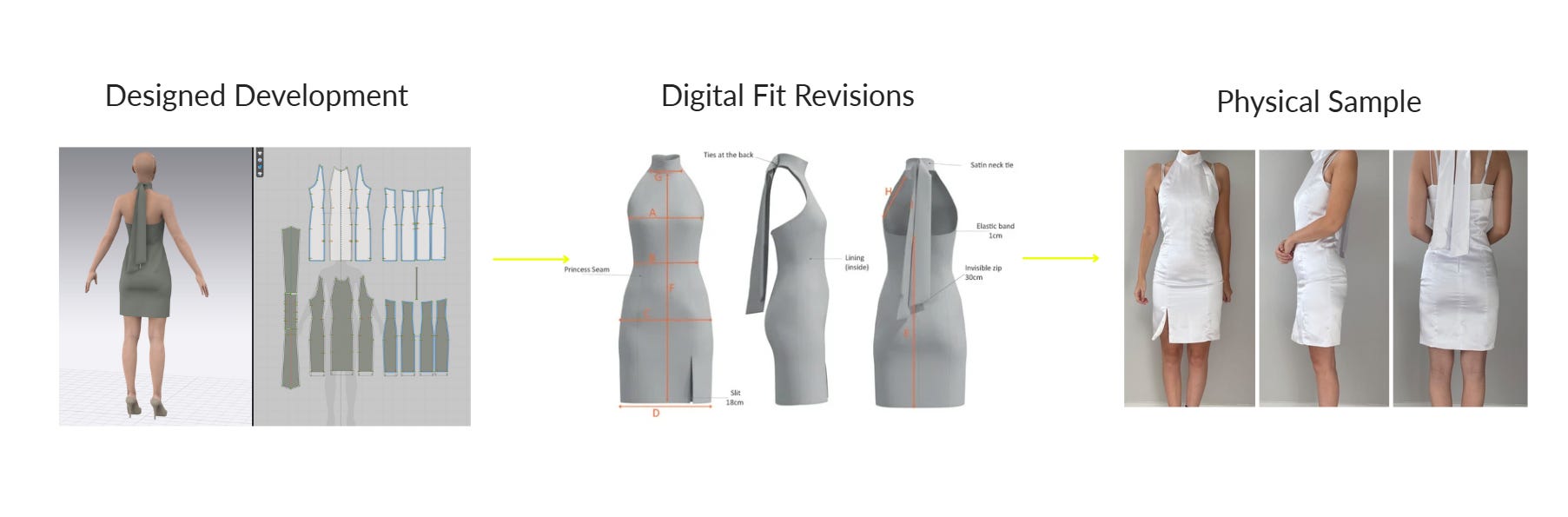
Physical samples aren’t going away. They’re still essential for fit and final approval. But relying only on them locks brands into long timelines and higher costs.
Digital gives agility. It lets you explore more, test faster, and use physical samples where they actually matter.
The formula is simple: digital for speed, physical for certainty.
Comments
Nothing yet. Say the first thing.
Sign in to join the conversation.