
For Louise’s 70th birthday last Sunday, I planned a surprise getaway that felt genuinely special.
If you’ve been reading for a while, you’ll know how much I enjoy staying in some of Canada’s grand railway hotels whenever I can justify the cost. The problem is that “justify” is doing a lot of work in that sentence. They’re wonderful, but they’re also expensive.
I briefly looked at Québec City, one of our favourite places, but couldn’t find anything that felt special without stretching the budget too far. Toronto crossed my mind as well, but once I factored in the distance and the hotel prices, it quickly slipped down the list.
That brought me back to Ottawa
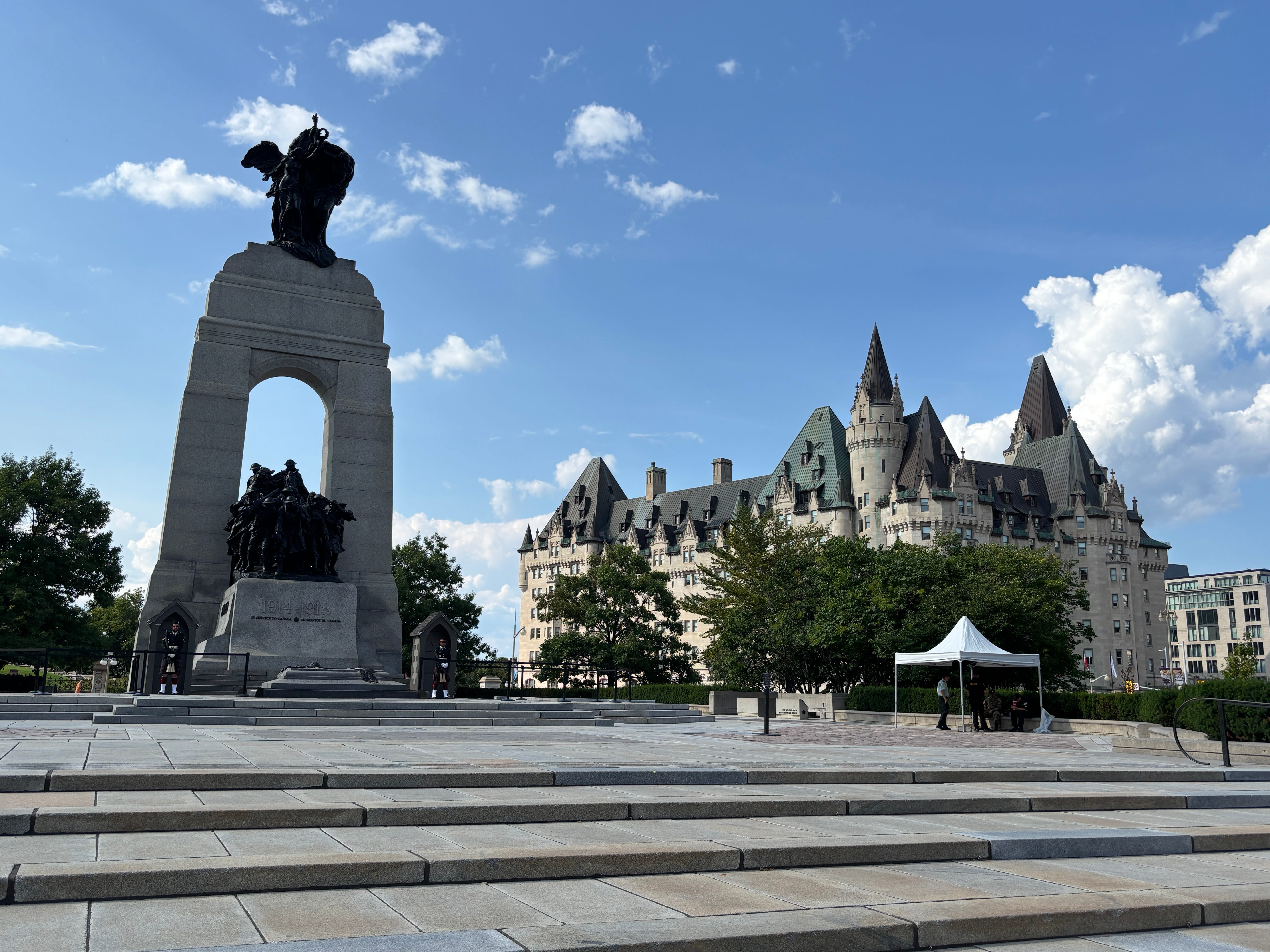
Now, Ottawa isn’t exactly a once-in-a-lifetime destination for us. We actually lived there for many years, so it’s a place we know very well. What made it attractive was that I found an excellent deal at the Château Laurier. I also decided to take the train instead of driving. It wasn’t necessarily cheaper, although it does make a difference when you factor in parking. More importantly, it’s a much more relaxed way to travel. You can sit back, enjoy the ride, and let someone else take care of the details.
My original plan was simple: two nights at the hotel and a memorable afternoon tea to celebrate Louise’s birthday.
Then, a few days before we left, the hotel sent me a “Fairmont Gold” upgrade offer.
It wasn’t inexpensive. After taxes, it added a little over $200 per night, effectively doubling the cost of the room. Normally, I would have dismissed it immediately. Instead, I did what I’ve been doing more and more these days. I gathered the facts, used ChatGPT to make sure I hadn’t overlooked anything, and then thought through the decision myself.
The upgrade wasn’t just a larger room with a king-size bed. It included access to the club floor, private check-in, extensive evening canapés, afternoon desserts and a full breakfast each morning. If you’ve eaten breakfast in a luxury hotel recently, you’ll know that’s no small thing. Hotels now happily charge forty dollars a person, or more, for breakfast
As I worked through the numbers, something interesting happened. If I cancelled afternoon tea, the extra cost of the upgrade almost balanced out. Suddenly this wasn’t really a financial decision anymore. It became an experience decision.
Would a beautiful afternoon tea create the more memorable birthday? Or would two full days of feeling just a little bit spoiled—from the moment we checked in until we left—be something we’d remember longer?
I wasn’t sure. So before deciding, I asked the hotel one more question. If I accepted the upgrade, would they be willing to add anything else?
The answer was no. Fair enough. So now I’m curious… What would you have chosen?
I’m revealing what I decided—and why—below for paid subscribers. More interestingly, this simple hotel decision led me to rethink something much bigger about this publication. I will promise to share the results later on. 😎
I have no idea why this happens, but it happens to me if I am not paying close attention. I suspect that is part of the marketing strategies. Once I say yes to one upgrade, every other upgrade suddenly starts looking like a reasonable idea. I believe many of us might “fall” for this.
There doesn’t seem to be much logic behind it. It’s emotional. The first decision changes the way I think. Instead of asking, “Do I really need this?” I start asking, “Well, if I’ve already spent this much, why not make the whole experience a little better?”
I’ve seen this before. On our cruise from Boston to Québec City, I began with every intention of keeping costs under control. No frills and no unnecessary extras. Then I started weighing the pros and cons of the daily package. It seemed sensible enough. Once I added that, other small upgrades didn’t feel like splurges anymore. They felt like finishing the job.
Only afterward did I do the math and divide the total cost by the number of days. I was shocked. It turned out to be one of the most expensive cruises we’ve ever taken on a per-day basis. Needless to say, that wasn’t the plan. 🤔😢😱
Maybe this is a form of “commitment creep.” Once we’ve crossed an invisible spending line, our brains stop comparing today’s decision to our original budget and start comparing it to what we’ve already spent. Another $50 or $100 feels small beside a few thousand dollars, even though those little decisions quietly pile up.
The lesson isn’t necessarily to avoid upgrades. Sometimes they’re genuinely worth it. The lesson is to remember that the first upgrade is rarely the last. That’s the moment to pause and ask whether you are still making independent decisions or whether you’re simply trying to justify the money you’ve already committed. This is the principle of sunk costs.
Future me: watch for the first upgrade. That’s usually where the real spending begins. See more on this below.
Over the past few weeks, I’ve been thinking about how to make this publication more useful, particularly for paid subscribers. While the essays and Notes will always be at the heart of what I write, I’ve realized that many of you also come here looking for practical help with travel decisions.
Comments
Nothing yet. Say the first thing.
Sign in to join the conversation.