
This is a second post inspired by my recent trip to Sardinia, a Mediterranean island that’s both a part of Italy and a world apart.
I’ve got several more Sardinia pieces in the works—on food, on sacred waters, on an encounter with a maker of ancient carnevale masks. All of this is quite a departure from the usual fare around here, but then that’s what the Departures section is for. You can jigger your subscription to include or exclude these various sections in Settings, by the way.
If you’re new around here (welcome!) or just have a bit of lazy summer reading time, here are few pieces to catch up with, each in their own way focusing one of my preoccupations, the theme of divination and its cousins, magic and synchronicity. These all basically excerpts of a book project that I hope will see daylight in 2027.
A Crash Course in the Impossible
Now back to the interlude. -djed
From the airplane, the island showed itself in shades of ochre and russet. Broad swathes of land were baked to caramel tan, while further off the mountain slopes showed a deep, almost blackish green.
Landing in Cagliari made for a surprising dose of palms and jacarandas, but the capital city was always going to be an outlier. As soon as our hiking group got on the road we were in the macchia scrubland I’d spied from the air. This characteristic Mediterranean ecosystem has covered the island’s lower elevations ever since they were denuded by the Romans, Phoenicians, Carthaginians —take your pick. Sardinia has seen countless colonizers come and go over the millennia, but none has subdued the island’s soul.
Anyway, the macchia: this sun-bleached world might as well be a different planet from North Carolina’s wet jungle forest lands.Of course I’d known I’d be in a different climate, and having read up some I wasn’t too surprised by the mix of plant species, but nothing really prepares you for the felt-sense of difference. On some level I’d been craving this clean, dry, resin-perfumed air for months if not years. Dreaming of it, too. Breathing it deep into my lungs, I realized I was finally in Sardinia.
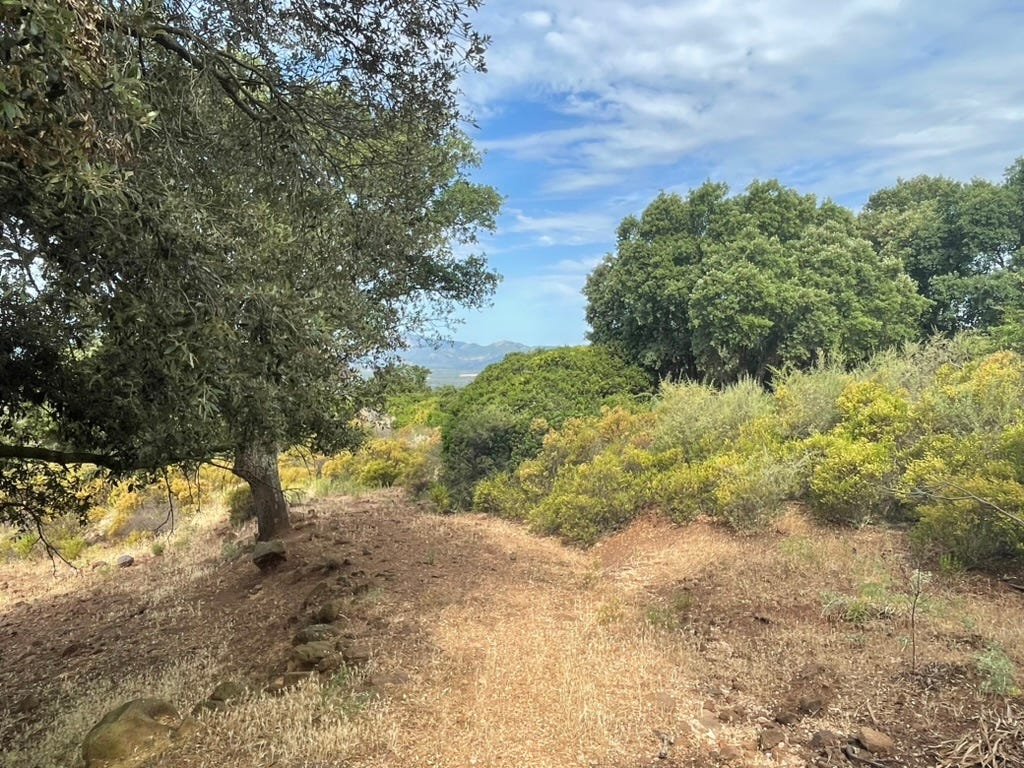
In the world of the macchia, practically every plant is aromatic and resinous, perfumed and/or poisonous. From the Myrtle bushes that lend their leaves and berries to the island’s ubiquitous liquore of the same name (mirto) to Cistus with its balsamic, resin-bearing leaves.
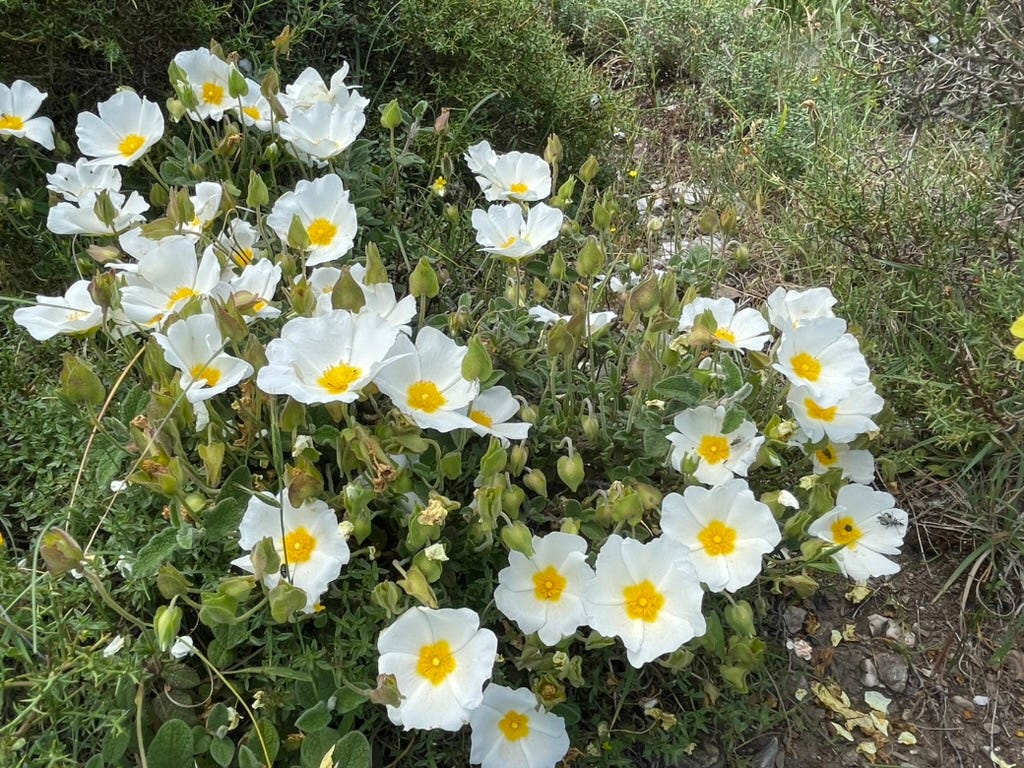
Euphorbias bushes had mostly already given up the ghost and turned an autumnal red—startling for late May. Only the low-growing Lentisk trees showed bright emerald signs of new growth.
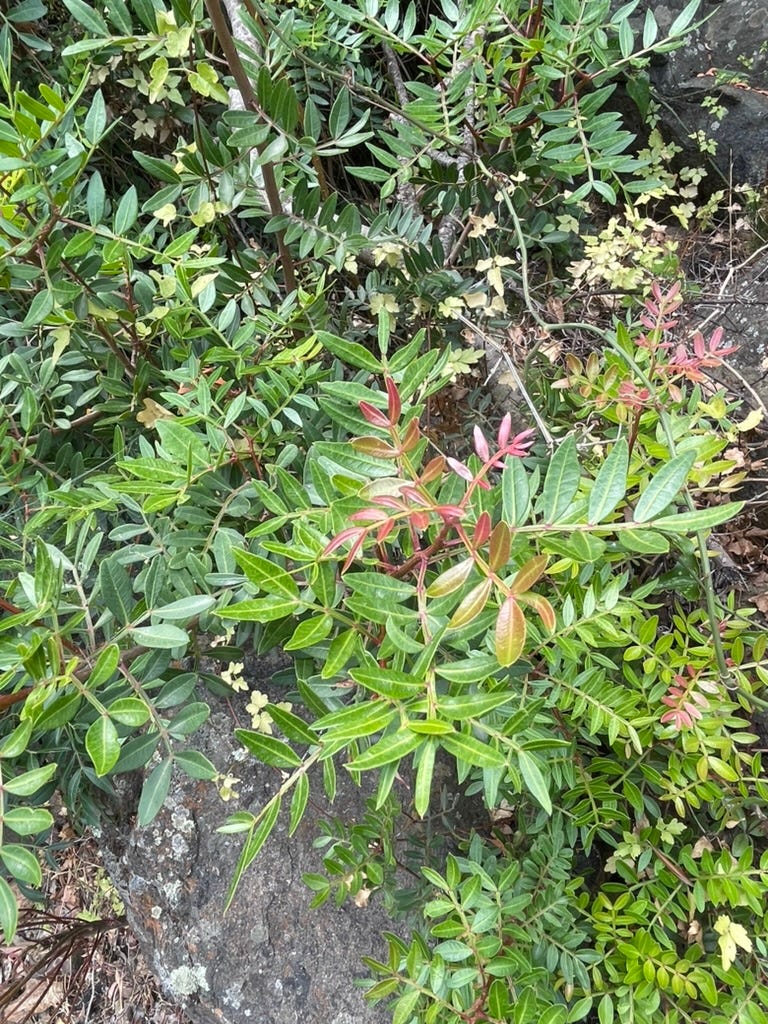
These Lentisks, a wild pistachio relative, are identical to the Mastic tree grown on Chios and valued for its frankincense-like resin, which is used in chewing gum, folk medicine, liqueurs, sweets and incense—only in Sardinia these trees don’t yield any resin. They’re a striking presence anyway, humming with vibrant green potency. I found myself chewing the young leaves which gave off a clean, almost ozonating quality. If someone studies looks they’ll likely find in these leaves high concentrations of antioxidant compounds that extend cell life, just as there are in the edible oil pressed from the seeds. On the island, this Lentisk oil used to be considered a poor man’s olive oil substitute; now the tables are turned and Lentisk seed oil commands much the higher price over olive oil.
As someone who (for better or worse) tends to be ahead of various curves, I get the sense that many of Sardinia’s well-kept secrets and hidden treasures are likely to gain attention over the coming decade.
In areas where there was a canopy, it was dominated by wild olives trees (for which Sardinia’s Ogliastra region is named) and small-leaved holm oaks, leccio: dry-climate oaks with small, thickish leaves. Later in the trip we’d venture higher up into more forested areas where the leccio and its cousin the sughero or cork oak were prevalent; at lower elevations, in the macchia proper, these oaks were more occasional.
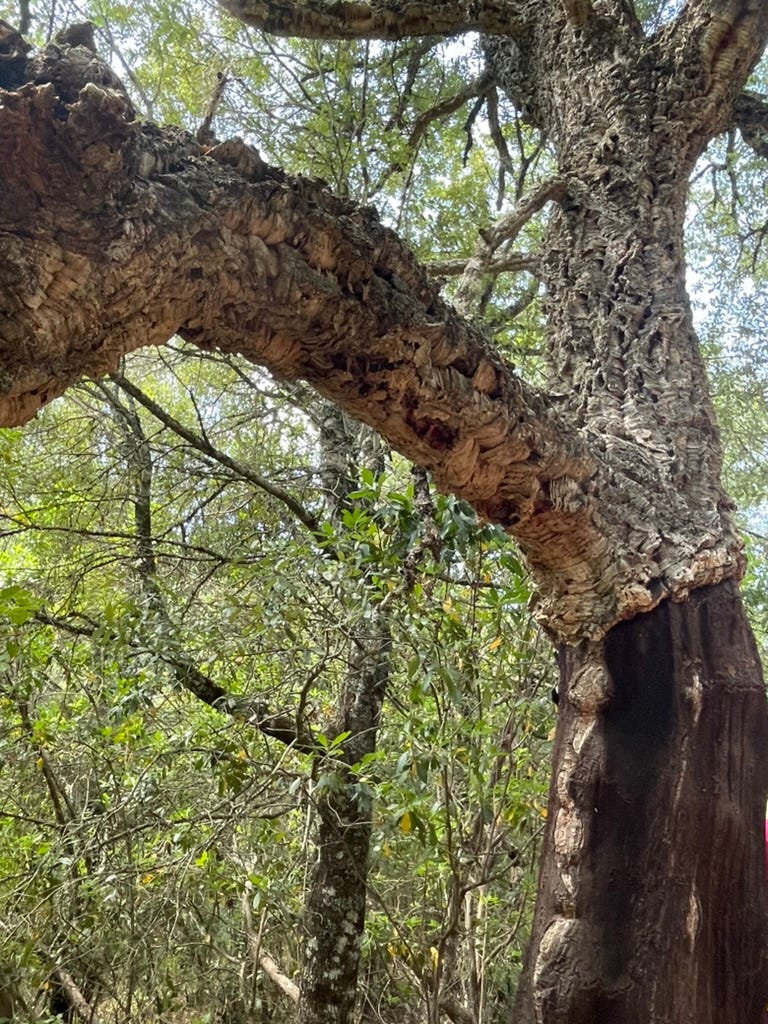
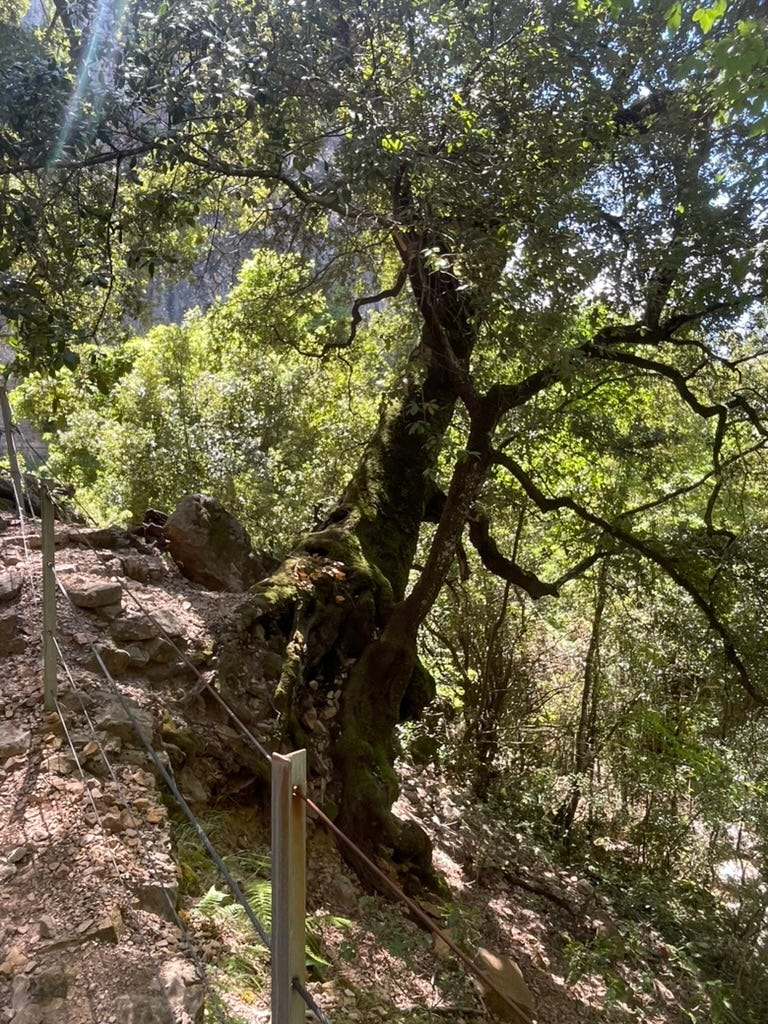
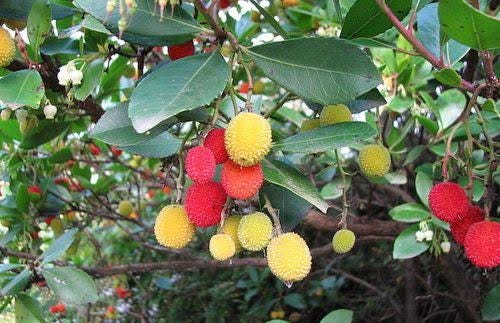
Another small deciduous tree of note in the macchia and woodlands alike is the Arbutus or Strawberry Tree, corbezzolo in Italian, known for its autumnal blooms and red fruit. This corbezzolo is most famous as the source of Sardinia’s famous miele amaro, bitter honey, valued in cooking and in folk medicine for its strong antibacterial and antioxidant properties.
Bitter honey is something of an iconic phrase that’s been taken up by various writers from/on Sardinia over the centuries as an irresistible metaphor for the island itself. This isn’t a sugar-sweet place, after all, but one whose nectar is tempered by astringency, structured by bitter tannins and offset by a healthy shot of acidity. A complex, layered place that’s infinitely more interesting than a sugary quick-fix.
Wending our way along trails through the macchia, every so often we’d come upon a wild fig tree. I’d smell them before I saw them: I was always caught off guard by the rank green pungency of these figs. The trees bear full-size fruit but they’re dry and pulpy, devoid of sweetness or juice. If one were hungry, this landscape could start to seem mighty cruel in just about any month outside of autumn: plenty of seasoning to be had but little of substance to sustain one when it comes to the plants. (The fauna is another matter.)
Higher up there were chestnut trees, true, though I only saw one. Acorns of the holm oak can be processed into a bread and still are in some upland Barbagia towns, something I’d like to see and taste. Carob trees are generous with their chocolatey pods, though sheep and cattle are apt to eat any that fall. Other than that, not much of substance for a hungry forager unless you come in autumn, when the prickly pear (oddly called fico d’India or Fig of India in Italian) ripens its deep garnet fruit. I read somewhere that labor strikes always took place in September so the striking workers wouldn’t starve. (Maybe they still do, though the island’s metal and coal-mining industries are no longer a going concern, the last one having shut down in 2018; interest in the rich obsidian deposits peaked roughly 8,000 year ago).
In this context, the genius of domestication really stands out. What a stroke of inspiration to turn those dry figs into juicy orbs, to plumpen up the wild olives into something worth brining. And, of course, to breed the grape vines that thrive all over the island as a vivid emerald presence (I was wrong, it’s not just the Lentisks that shine this way).
The macchia’s lower growth contained the most perfumed and medicinal plants of all: camphoraceous wild Lavender, an equally pungent Rosemary, Hypericum oozing purple sap from its golden buds, unassuming Helichrysum, and a Thyme relative called camedrio with a curious aromatic profile: its sweet notes entice only to turn sharp and sudden as wasabi, burning the sinuses at a sniff. A warning, maybe, that too much of a good thing can turn toxic.
Speaking of poison, one plant whose portrait I failed to take is Oleander: extravagantly flowering bushes in white, pink or magenta, as toxic as they are seductive. Oleander lined the trails we walked for short stretches and some of the the roads we drove for long ones, forming a corridor both beautiful and deadly.
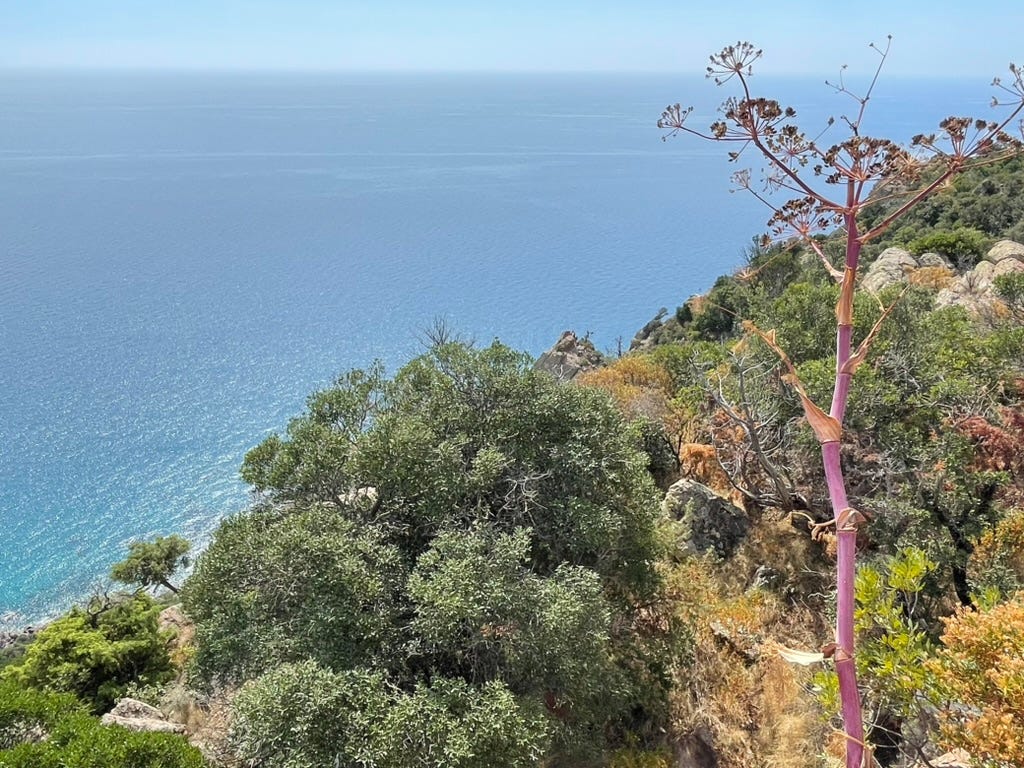
Let me not forget the giant purple-stemmed Ferulas, close apiaceae cousins of the Devil’s Dung or asafoetida (Hindi: hing) used in Indian cooking. I asked about medicinal uses, but the main use my walking companions knew of for this striking plant was for the rockers of rocking chairs—the tall stem is harvested before it dries out and bent while still supple, presumably.
Unfortunately I didn’t get to see many of the island’s oldest trees, including a legendary (but quite real) 4,000 year old olive in Luras in the North part of the island. That tree alone would merit a return trip.
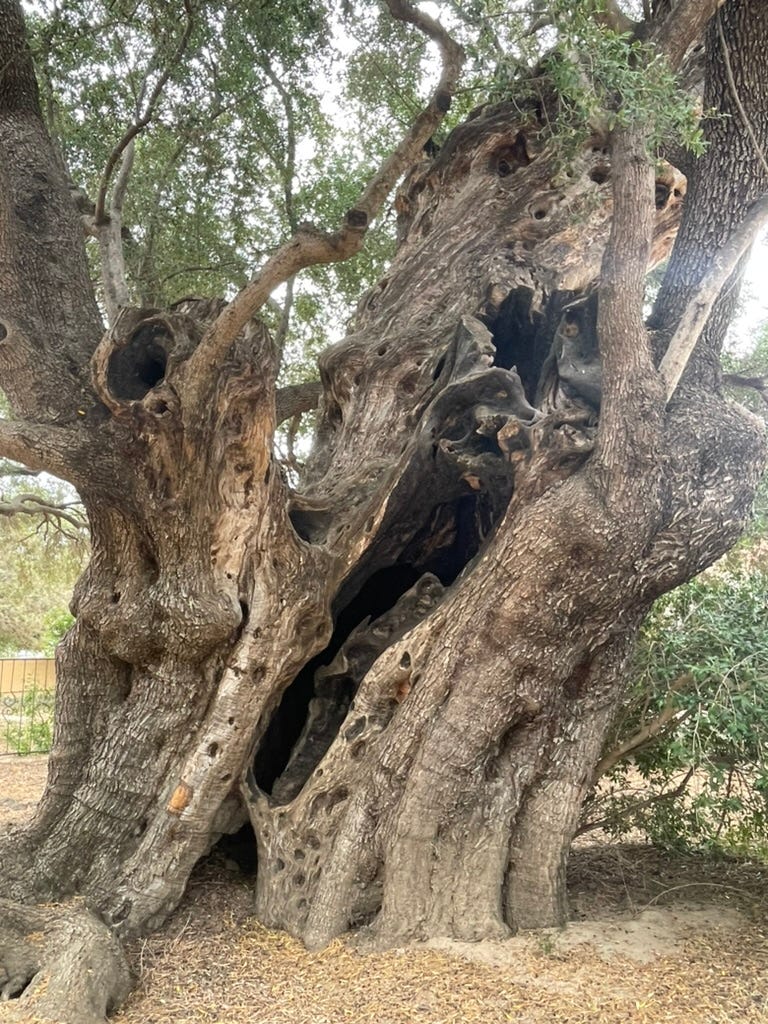
But at the risk of missing our return flight, we did stop in the town of Santa Maria Navarrese just long enough to greet a wild olive tree that was already well established in the 11th century. I couldn’t linger long enough to catch everything this grandmother had to say, but I’m pretty sure the essence was: well, young man, you’ll just have to come back.
Comments
Nothing yet. Say the first thing.
Sign in to join the conversation.