
Spring 1999.
The professor looks at his students with an intense gaze.
Silence.
He knows how to use pauses to captivate his audience.
“Let me ask again: what does this mean?”
Another pause. He points at the blackboard behind him, full of quasi-indecipherable equations and numbers.
“Think! You’re here to learn to use your judgment, not just memorize things!”
Another pause.
He points to his right temple and repeats this mantra about judgment in almost every class, but most students are a little scared of his reaction when they give the wrong answer.
Today, no one in the class wants to risk an answer.
In most of my other finance classes, I sit in the first few rows. I often volunteer answers.
But not in this class.
I sit in the last row and keep my head down.
And as usual, this professor asks a tricky question. A puzzle that forces everyone to think beyond the numbers. It’s a corporate finance question.
“Maybe I should invest the firm’s capital in T-Bills? Put everything in T-Bills?”
Now the room understands.
A finance model can be mathematically correct and still point in the wrong direction if the assumptions are wrong. The numbers matter, but judgment matters more.
The professor is about to retire after a remarkable 40-year career.
Without a doubt, he’s the best professor I’ve ever had.
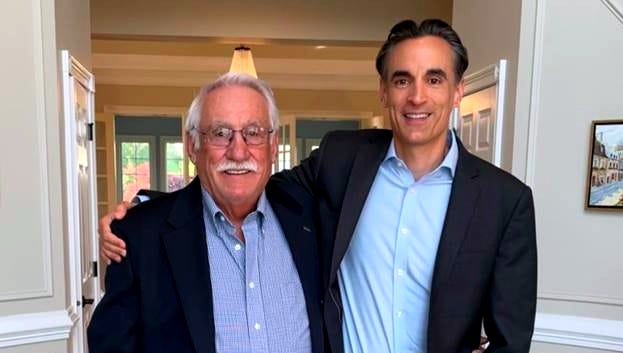
But I might be biased, because he’s my father, Jean-Paul Page.
I took two of his classes and studied with his textbooks. I quote his work in my finance book Beyond Diversification.
At the time, I didn’t fully understand what I was watching. I saw a tough professor. Years later, I understand that I was watching a man teach the way he lived.
JEAN-PAUL PAGE
He was a tough grader – the kind of professor who pushes strong students to grow and allows for grade dispersion. Strong students loved him, but unmotivated students, those hoping for an easy semester, had a rough time. In his classes, you either learned something that would last a lifetime or got a bad grade.
When I took one of his classes, he once gave us a three-hour exam to complete in one hour. What’s worse, he didn’t warn us.
Ready, set, go!
Everybody complained.
Then he explained that those who wanted to take the Charter Financial Analyst (CFA) or professional accounting exams would face a similar situation: intense pressure and a race for points.
“Most of you won’t have time to answer all the questions when you take the CFA exam, but you can still pass if you learn to manage your stress and your time. My goal is to get you ready for it,” he said.
He wasn’t testing whether we could finish. He was testing whether we could think under pressure.
Sometimes, I run into his former students decades after they’ve completed their studies. They remember my father quite well. They tell me his classes were the most memorable part of their education.
Many of them say that my father was the best professor they ever had.
Some remember his class as “torture.” I secretly put these complainers in the unmotivated student category.
My father has always admired the United States. He believes in self-determination. He trusts effort and personal responsibility.
During his career, he lived that belief with intensity. In addition to his day job as a professor, he maintained a working cattle farm by himself.
Being a farmer is one of the hardest full-time jobs you can imagine (just my opinion). It requires hours of physical labor at all times of the day. Now, imagine it’s your second job.
He also published more educational material than any other professor in his department and probably across Quebec. If you stacked his published textbooks, you’d have a tower higher than your kitchen table. I may have inherited some of his workaholism, but I’ve learned to pace myself in recent years to remain productive and healthy in the long run.
My father’s work ethic came from accomplishment, meaning, and flow, all concepts I discuss in The Psychology of Leadership.
Cleaning the barn, putting up a fence, chopping wood, teaching finance, writing textbooks, deriving equations. Different tasks, all performed in flow.
When I was a teenager, his idea of quality father-son time was to force me to join manual labor projects on the farm.
It would drive me crazy.
There was no flow in my case. I wasn’t intrinsically motivated to do the work. Decades later, my wife Anne will tell you I still haven’t learned any practical “manly” stuff. I can’t assemble furniture or fix anything around the house.
I do think, however, that I’ve learned my sense of work ethic from my father. It took me years to understand that he was teaching me by example.
He’s retired now. He’s gone cold turkey on academic finance and leased his land to another cattle farmer. He’s enjoying life and relaxing. Yet, he’s still addicted to flow. If you visit him, you’ll find a white-haired man in his seventies running a chainsaw, veins popping out of his forearms, standing next to a giant pile of freshly cut logs.
He’ll be in his third straight hour with the chainsaw running, barely drinking any water, with no intention of stopping any time soon.
The best way to describe his lifetime goal and why he had a successful 40-year career as a professor is to replay a brief conversation I had with him about 30 years ago.
I don’t know why I remember this conversation. But I do. We were outside, walking along the driveway near the farmhouse in Martinville.
I asked my father:
“Why haven’t you made tons of money in the private sector, maybe as a consultant, instead of teaching? You would have been incredibly successful. You’d be wealthy.”
I didn’t mean it that way, but “you would have been incredibly successful” came across as a backhanded compliment. He was successful as a professor. But back then – and still a little bit now, if I’m being honest – I equated wealth with success.
In his philosophical style, he answered:
“How do you define ‘wealth’? I’ve trained generations of financial experts. Most of them, thousands of them, have become incredibly successful. It makes me happy just thinking about that. This is my definition of ‘wealth’.”
In a sense, my father is a billionaire – just add up all the money his students have made. That’s how he thinks about it. He talks about their success with pride. He’s maintained lifelong friendships with a few of them. They buy him good wine. They can afford it.
I like to think that he brags about my career to his friends as well. Although, he’s still a tough grader. When I handed him the manuscript for my finance book, I was proud of the work. The book summarizes what I’ve learned over 20 years in the business, incorporates research from more than 200 recent academic articles, and presents best practices for asset allocation.
But his feedback was somewhat critical. He recommended that I change the chapter structure in a way that would have required rewriting the book. Ouch. He had views on the theoretical foundations too – not disagreeing but framing some ideas differently. Instead of rewriting the book, I asked him to write an afterword. I gave him carte blanche. The last sentence of the book is from my father:
“I give this book a solid A-”
As I said, tough grader.
My sister said it’s not a good way to end the book. She’s probably right, but I like the honesty and vulnerability of letting people know my father doesn’t think it’s A or A+ work. By the time they reach the end of the book, my readers will have made up their mind about the content anyway.
When I sent him my manuscript for The Psychology of Leadership, he said I should “stay in my lane” and keep writing about finance.
But there’s more to this story.
A few weeks later, he sent me some material he thought could be helpful for the book. He included feedback from his ex-colleague, who used to teach HR classes at the business school. It turns out he was forwarding my article to several people.
My father taught me to value independent judgment. He taught me that work can become a source of flow, and that wealth can mean generations of students carrying your lessons into their own lives.
By that definition, his career is still compounding.
Happy Father’s Day.
(Buy The Psychology of Leadership here.)
No posts
Comments
Nothing yet. Say the first thing.
Sign in to join the conversation.