
Machines are starting to generate more Internet requests than people. They will not use the network the way people do. Their payloads will often be smaller, but they will generate far more transactions, put greater pressure on uplinks, communicate constantly across clouds and data centers, and increasingly depend on the network for identity, latency, security, and reliability. Telcos need to prepare for a different Internet, not simply a bigger one.
Cloudflare has reported an important shift in Internet traffic. Automated systems now generate more requests than humans across the web activity it measures, and Cloudflare CFO Thomas Seifert recently suggested that nonhuman traffic could eventually exceed human traffic by a factor of 1,000 within five years.
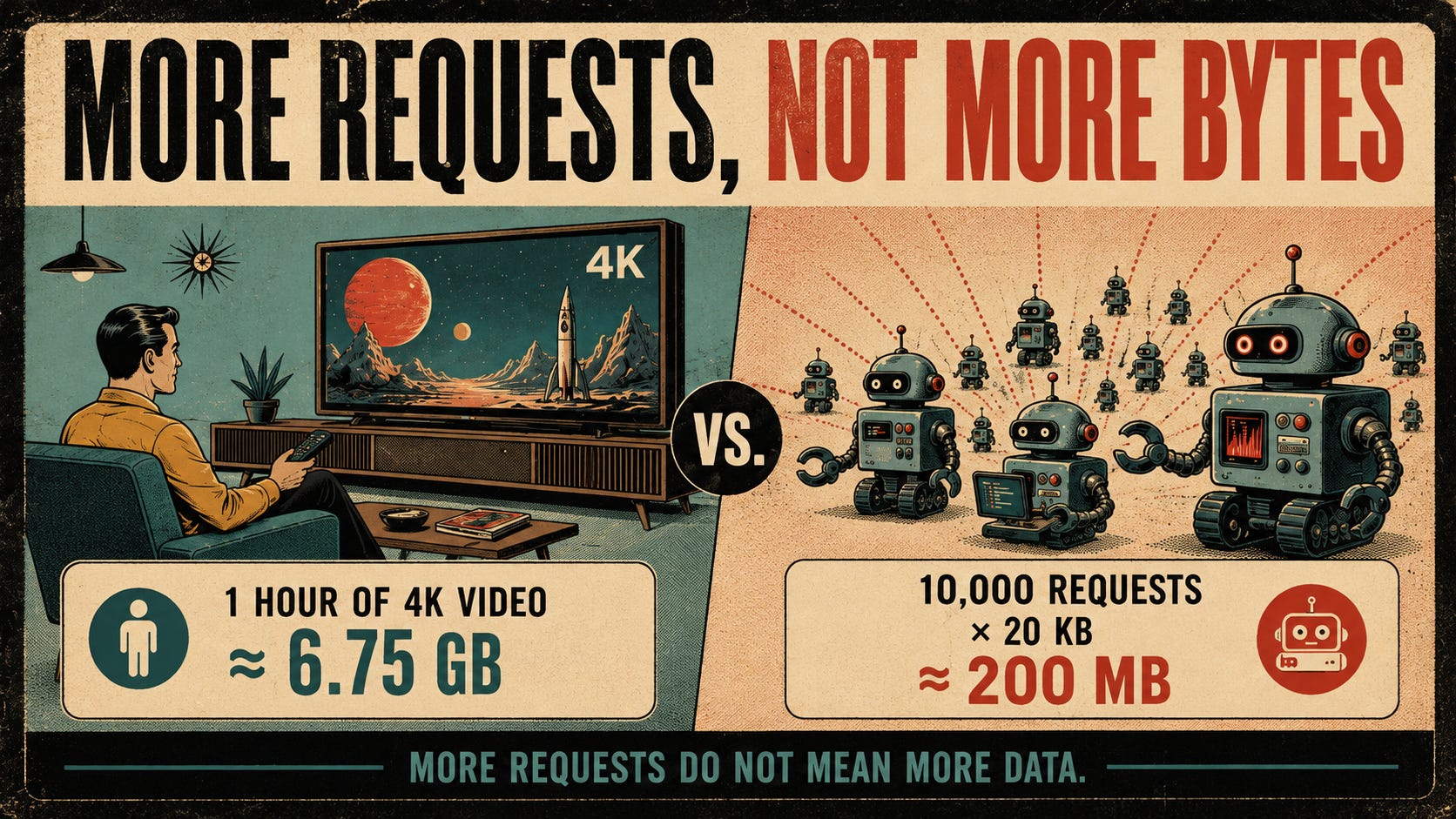
It is a spectacular headline, but it is also very easy to misunderstand. Cloudflare is not saying that global telecom networks will suddenly carry one thousand times more petabytes. Its bot-versus-human measure is based on HTTP requests to HTML content, not total Internet bytes. A crawler can request ten thousand web pages and create ten thousand separate interactions while still moving less data than one person watching a few hours of 4K video.
I think that distinction makes the story much more interesting. For the past two decades, network evolution has been shaped mainly by humans consuming content. Smartphones arrived, video moved to mobile, social media exploded, and streaming pushed traffic relentlessly upward. The engineering response followed a familiar and expensive recipe: more spectrum, more radio capacity, more backhaul, more caching, and larger transport networks.
Machines and software agents introduce a different traffic pattern. A wearable, robot, camera, vehicle, industrial controller, or AI agent does not use connectivity like someone watching Netflix. Much of its traffic may consist of relatively small payloads, but the number of interactions can be enormous. Some of those interactions originate from physical devices. A growing share will also be generated inside smartphones, enterprise systems, cloud platforms, and data centers, where agents continuously call models, databases, APIs, and other agents.
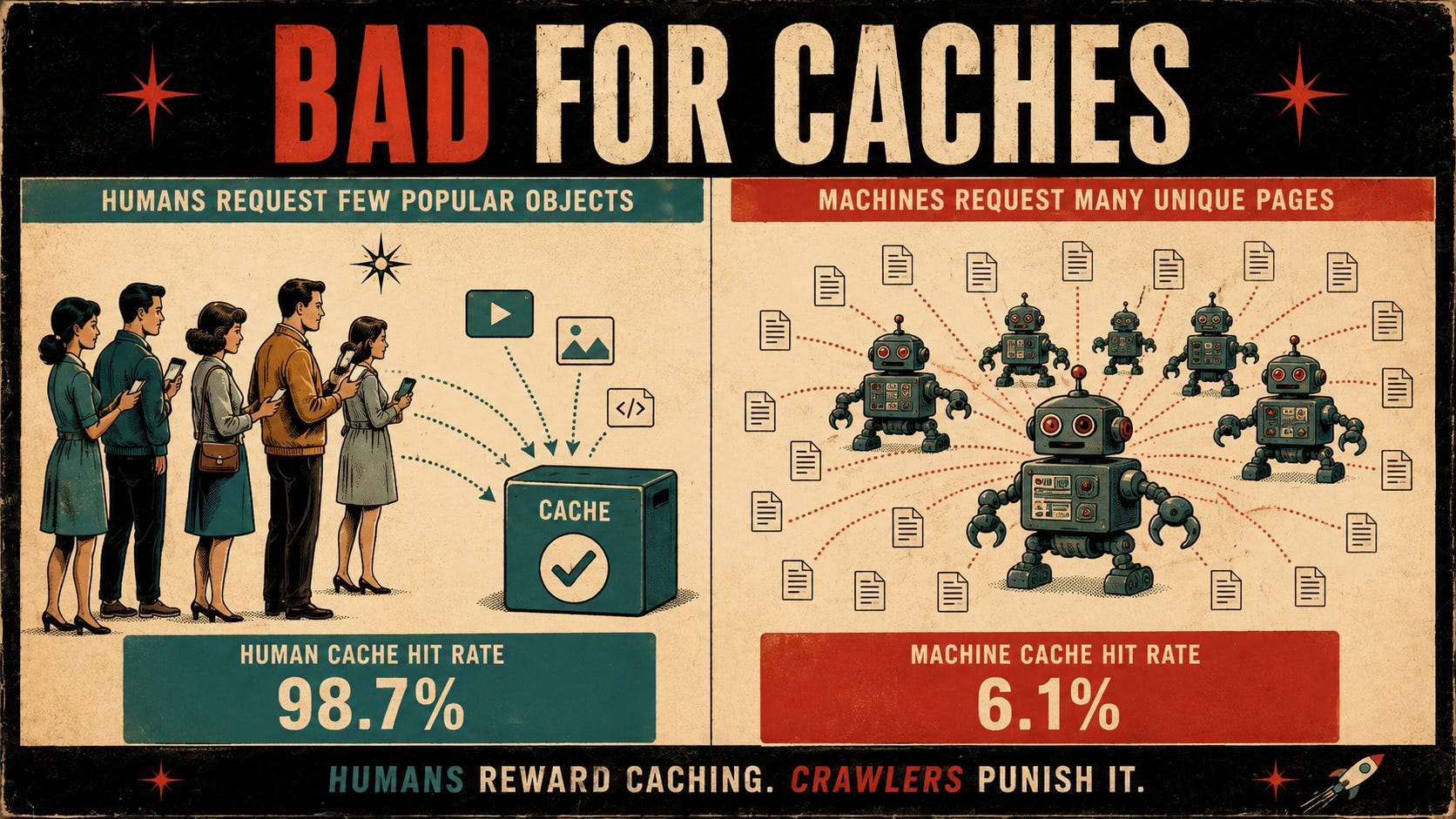
The coming shift is therefore not simply from humans to machines. It is from a network dominated by content consumption to one increasingly dominated by automated actions.
Machine activity can therefore grow far faster than traffic volume. The number of autonomous actors, requests, API calls, authentication events, and machine transactions can increase by orders of magnitude while total network traffic continues growing at rates that look relatively familiar to a telecom planner.
Telcos may not face one thousand times more bytes. They may face one thousand times more transactions, decisions, and network events behind those bytes.
The second misunderstanding I hear frequently concerns uplink. Machine traffic will make uplink considerably more important, but operators should avoid replacing one simplistic assumption with another.
Comments
Nothing yet. Say the first thing.
Sign in to join the conversation.