
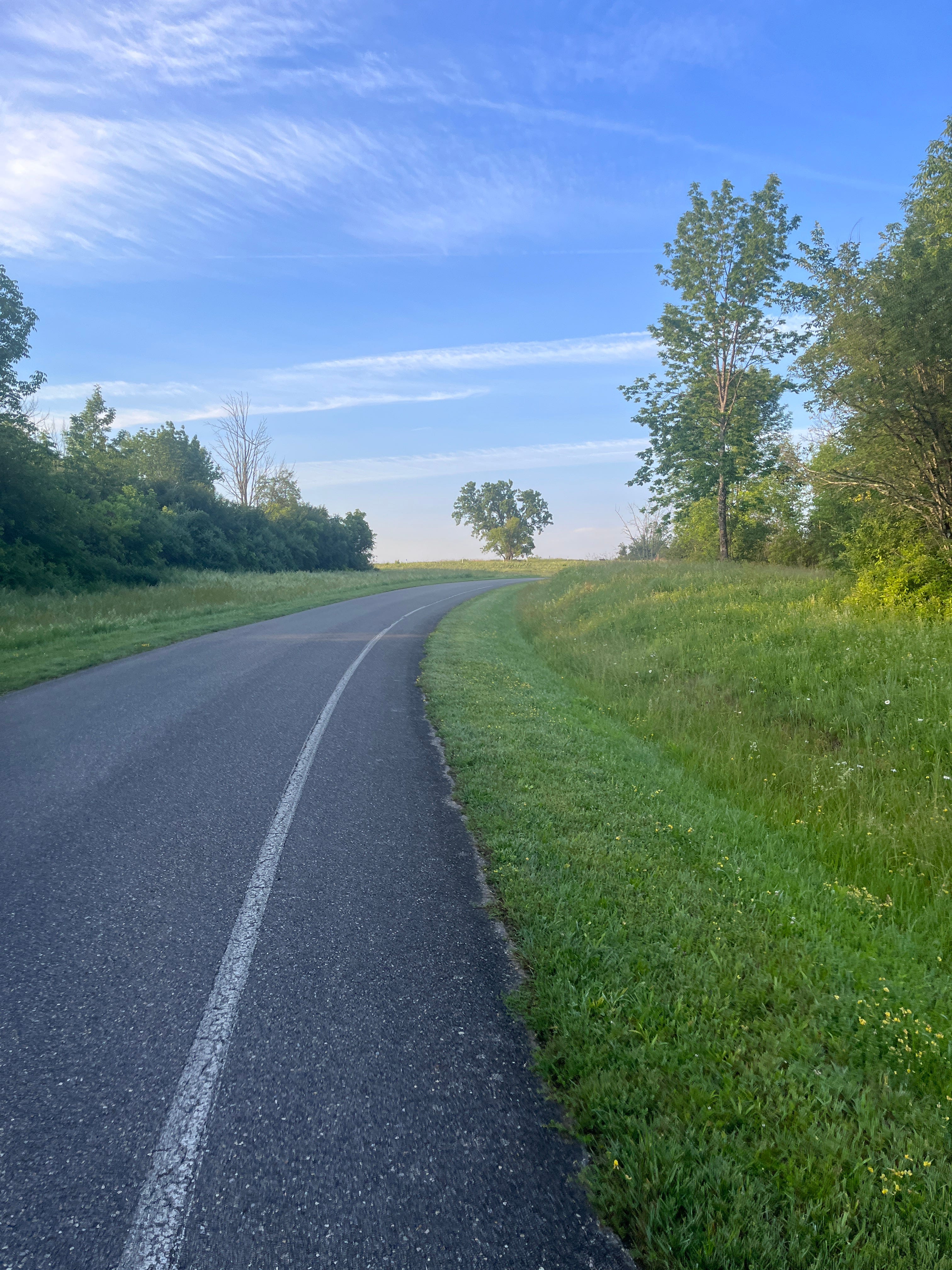
A road can remember what a battlefield forgets.
Drive north from Saratoga today and the landscape seems settled and familiar. Farms stretch toward the horizon. Trees follow the contours of the land. The Hudson moves quietly through the valley. Roads connect communities that did not yet exist in their present form.
In 1777, those roads carried soldiers, refugees, messengers, provisions, rumors, and fear.
No one living through the summer knew how the campaign would end.
That uncertainty is part of what makes an old poem worth hearing again.
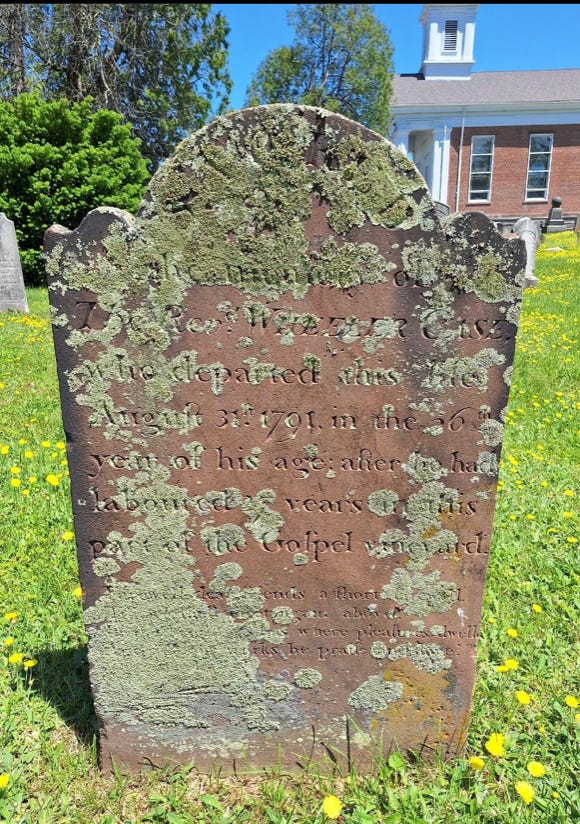
Rev. Wheeler Case wrote “An Answer for the Messengers of the Nation” in the aftermath of the Revolutionary campaign that brought General John Burgoyne’s British army south from Canada and ended with the surrender at Saratoga on October 17, 1777. Case was not writing as a detached historian. He was a Presbyterian minister and Patriot trying to give meaning to events that had recently seemed capable of ending very differently.
The poem is political, religious, and openly partisan.
It is evidence of how one Patriot understood the campaign after the uncertainty had passed but before its larger consequences were known.
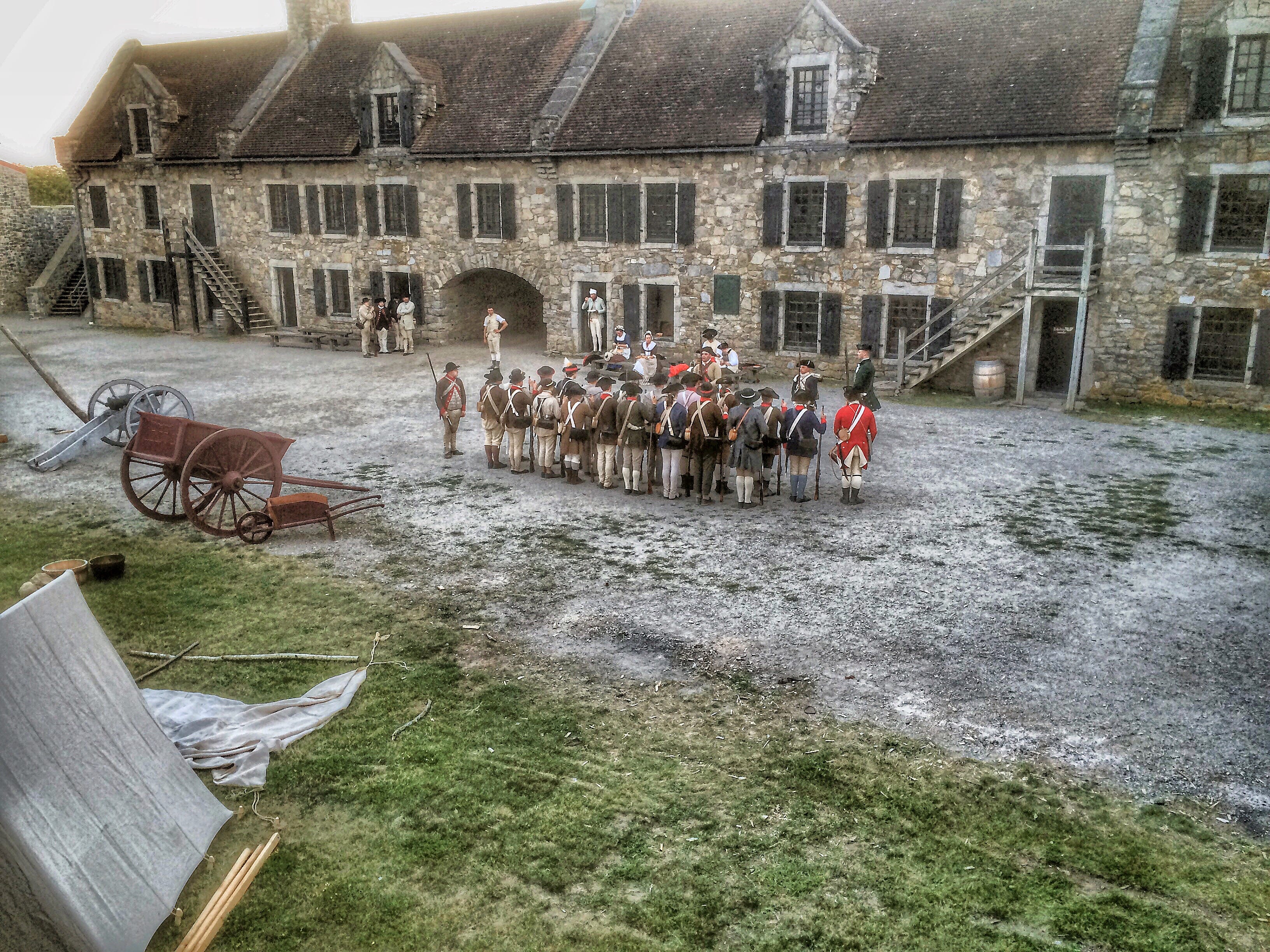
Begin at Fort Ticonderoga.
In early July 1777, Burgoyne’s army forced the American evacuation of the fortress. News traveled south. American forces retreated, and communities along the route faced the possibility that the British advance would continue toward Albany.
At Fort Anne on July 8, American soldiers fought as the retreat continued. Farther south, roads and bridges became instruments of war. Supplies became harder to obtain. The countryside itself became part of the campaign.
Then the advance slowed.
At Freeman’s Farm on September 19 and Bemus Heights on October 7, the armies fought the engagements remembered together as the Battles of Saratoga. By then, Burgoyne’s army was no longer moving south with the confidence it had shown in July.
On October 17, it surrendered.
The landscape had not changed dramatically.
Its meaning had.
Visitors can still experience some of that geography today. From Fort Ticonderoga south through the Champlain Valley, along the Hudson and toward Saratoga National Historical Park, the broad corridor remains understandable in physical terms even though its roads, farms, and communities have changed.
The distances remain.
And distance mattered.
An army had to march those miles. Wagons had to carry food and ammunition. Messages had to travel. Bridges had to be crossed or destroyed. Decisions made far away eventually arrived here in physical form.
A lost position, a delayed supply train, a broken bridge, or intelligence that arrived too late could change what happened next.
In 1777, no one knew which way the campaign would turn.
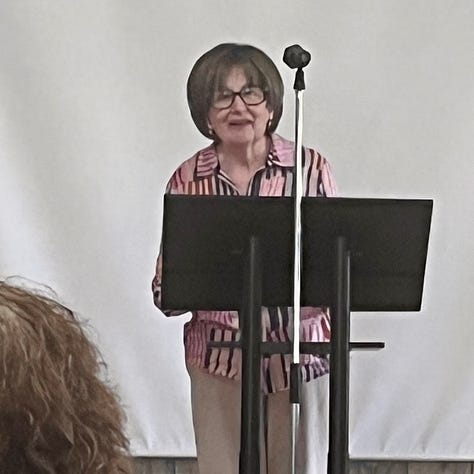

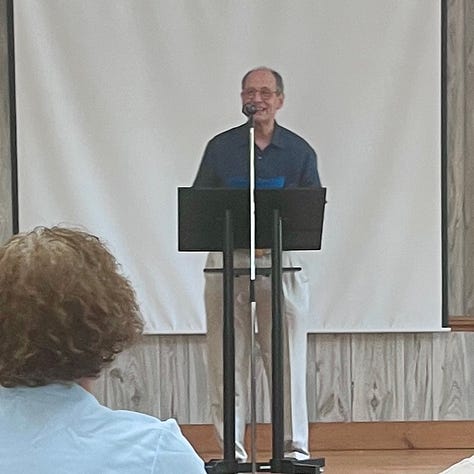
Recent poetry programs in the Saratoga region have offered another reminder that poems can make us notice places differently.
On August 6, 2026, poetry marked the 250th anniversary of the Declaration of Independence at Victory Village Hall. The program brought together poetry from the colonial era, Revolutionary War ballads collected by William Leete Stone, and new work written by contemporary regional poets.
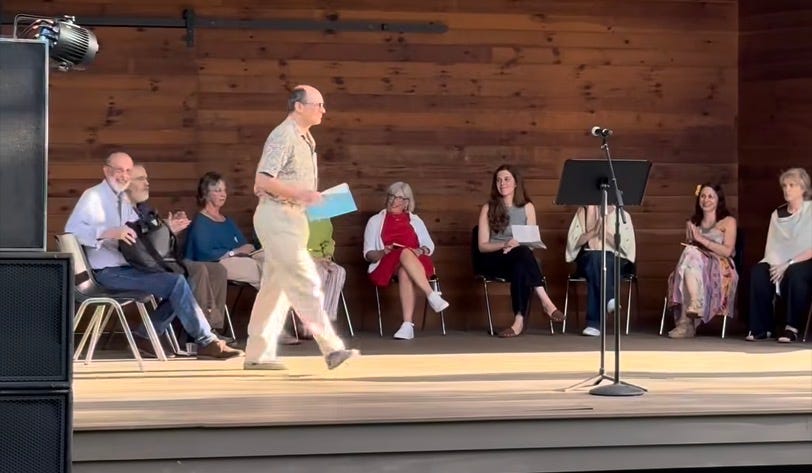
A few days later, Poetry in the Pines: Celebrating Seasons brought ten published poets together at Saratoga Performing Arts Center.
One took place in a village hall and the other beneath the pines at SPAC. Both asked what poetry can make us notice.
That question leads back to Saratoga’s Revolutionary landscape.
William Leete Stone gathered the poetry and ballads associated with Burgoyne’s campaign in Ballads and Poems Relating to the Burgoyne Campaign, published in Albany in 1893. The volume includes sections devoted to Oriskany, Bennington, the Battles of Bemus Heights and Saratoga, and other episodes of the campaign.
More than a century later, those poems can still be read against the places where the campaign unfolded.
There is an important distinction to make before entering the poem.
Case did not write from the middle of the campaign.
His collection was published in 1778, after Burgoyne’s surrender. Bibliographic records identify the original collection as Poems on Several Occurrences in the Present Grand Struggle for American Liberty, published in 1778, with later editions appearing in 1779.
Case therefore knew that Burgoyne had surrendered.
What he did not know was what that victory would ultimately mean.
The American Revolution was a war for independence, a civil war, and a world war. It impacted millions, from Canada to the Caribbean and beyond. Few escaped its violence. At one time or another, the British Army occupied all the major population centers in the United States, including New York City for more than seven years.
Case saw that conflict through the eyes of an eighteenth-century Patriot minister.
His language reflects that position.
The poem contains deeply hostile descriptions of American Indians and British forces. Those passages are not neutral descriptions. They reveal the assumptions, fears, religious convictions, and political language of the period.
Modern readers should also notice what the poem leaves out, particularly the perspectives of American Indians who experienced the war from very different positions.
That absence matters.
Case was telling one story, shaped by his politics and his faith. The history was larger than the story he could see.
The poem is useful precisely because of that limitation.

By Rev. Wheeler Case
(Isaiah 14:32)
When messengers come from a foreign land,
With peaceful branch of olive in their hand,
If hand and heart unite, if both agree,
From ill designs and all suspicion free,
We’ll then receive them in the arms of love;
They are not men, but angels from above.
Now let us view the Northern Hemisphere,
And see the footsteps of Jehovah there.
We’ll first survey the dark side of the cloud,
Where scenes of woe in dark succession crowd;
The cruel savage tribes in union join,
And with the British army all combine;
They soon are in possession of Fort “Ti;”
Our troops retreat, and with the country fly.
An heart of stone must bleed to hear the cries,
While numbers fall a bloody sacrifice
To Britain’s cruel sons and savage rage.
As naught but blood their fury would assuage,
A dark and dismal gloom around us spread,
And joy and gladness from our souls were fled;
We thought our country lost, our freedom gone,
And these United States were all undone.
The great Burgoyne’s most formidable host
Now march along, and as they march they boast.
They boldly rush along, they rage and roar,
Like swelling waves that dash against the shore.
Now is the time for Zion’s God t’ appear,
His people’s groans and cries have reached his ear.
The Lord for them hath laid a secret snare;
They’ll not escape, but be entangl’d there.
Great Gen’ral Gates appears, inspir’d from heaven,
Wisdom and fortitude to him are given.
Our soldiers all collect from East to West,
With martial ardor glowing in their breast;
They stop the great Burgoyne in his career,
Him they surround, his feet are in the snare;
With forc’d submission now he bows to Gates,
He and his hosts made pris’ners to these States.
In gloomy deserts, our most distant land,
Large cities shall be built and churches stand;
There Zion’s sons, commission’d from above,
Shall spread the news of their Redeemer’s love.
Where wolves now range, and other beasts of prey;
Where Indian tribes more savage are than they;
Where now the war-whoop sounds they bow prostrate,
Shall worship at the King of Zion’s gate;
Where stand the oak, the beech and the tall pine,
There shall be corn-fields and the fruitful vine;
Where marshes abound and the wild flag grows,
There shall be the lily and the blushing rose;
The most delicious fruits shall ripen there,
The peach, the plum, the apple and the pear.
Trade unconfined extensively shall grow,
And riches here from every nation flow.
Our naval force how great! our fleets abound,
Our flocks and herds spread o’er the land around:
Here every sort of fruit springs up and grows,
And all the land with milk and honey flows.
Source: Rev. Wheeler Case, “An Answer for the Messengers of the Nation,” as reproduced in William Leete Stone, ed., Ballads and Poems Relating to the Burgoyne Campaign (Albany: J. Munsell’s Sons, 1893). Case’s poems were first published in 1778. Stone’s 1893 transcription explicitly omits passages concerning Washington and the battles of Trenton and Princeton, as well as another passage later in the poem. The text above therefore follows the supplied Stone version.

The most striking thing about Case’s poem may not be its description of Burgoyne.
It is the speed with which uncertainty becomes meaning.
The British advance appears overwhelming. Fort Ticonderoga has fallen. American forces are retreating. Burgoyne’s army moves south “like swelling waves.”
Then the story turns.
Gates appears.
The army gathers.
The British advance stops.
Burgoyne is surrounded.
The surrender becomes evidence, in Case’s eyes, that Providence has intervened.
But Case was writing after the surrender. He knew the ending of the campaign. What remained uncertain was the meaning of that ending.
Once an outcome is known, the path toward it can look inevitable.
It was not.
The people living along these roads in the summer of 1777 did not know that the Battles of Saratoga would become a decisive episode in the Revolution. They did not know that the American victory would help persuade France to enter a formal alliance with the United States in 1778. They did not know how many more years of war remained.
They knew what was happening around them.
A retreat.
A rumor.
A column of soldiers.
A burned bridge.
A farm suddenly crowded with men.
A messenger at the door.
A cannon in the distance.
Wheeler Case was a Presbyterian minister whose ministry was centered in Dutchess County, New York. He served congregations in the Poughkeepsie and Pleasant Valley area and remained connected to the region through the Revolutionary era. Stone identifies him as born at Southold, Long Island, in 1732 and buried at Pleasant Valley after his death in 1788.
His poems appeared in 1778 in a collection responding to the events of the Revolution. The volume included poems on St. Clair’s retreat, Burgoyne’s defeat, Jane McCrea, and “An Answer for the Messengers of the Nation.”
Case was not writing history in the modern sense.
He was making meaning.
His poem is a contemporary political and religious response to the Revolution, not a neutral account of it.
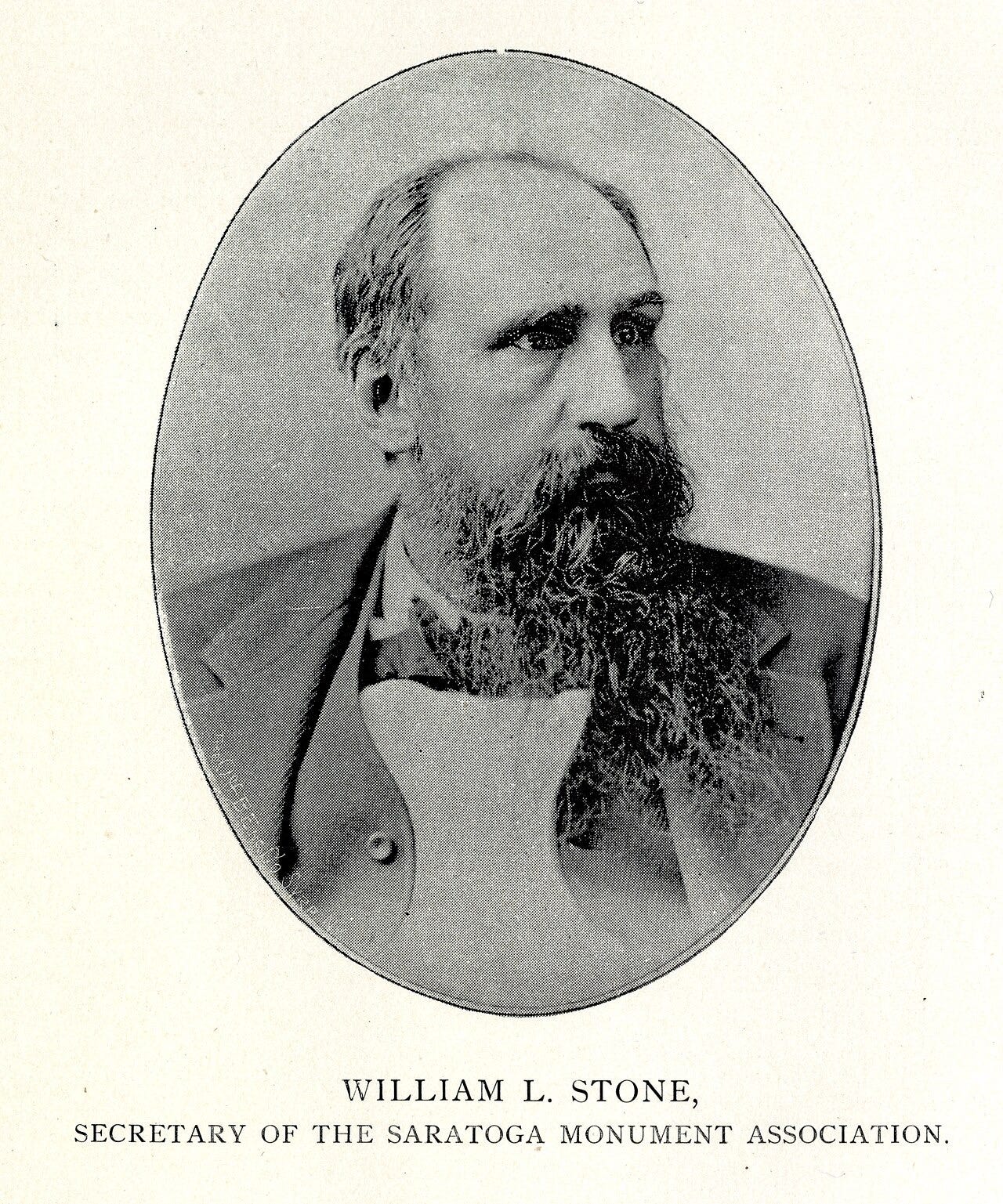
William Leete Stone belonged to a later generation.
His Ballads and Poems Relating to the Burgoyne Campaign, published in Albany in 1893, gathered poems and ballads associated with the campaign and placed them alongside historical commentary. Stone described the project in his preface as an effort to collect the ballads he had encountered while researching Burgoyne’s campaign.
The result is useful to public history because it preserves more than information.
It preserves memory.
The poems tell modern readers not simply what later generations knew about the campaign, but how writers chose to describe it: through fear, ridicule, patriotism, religion, grief, and triumph.
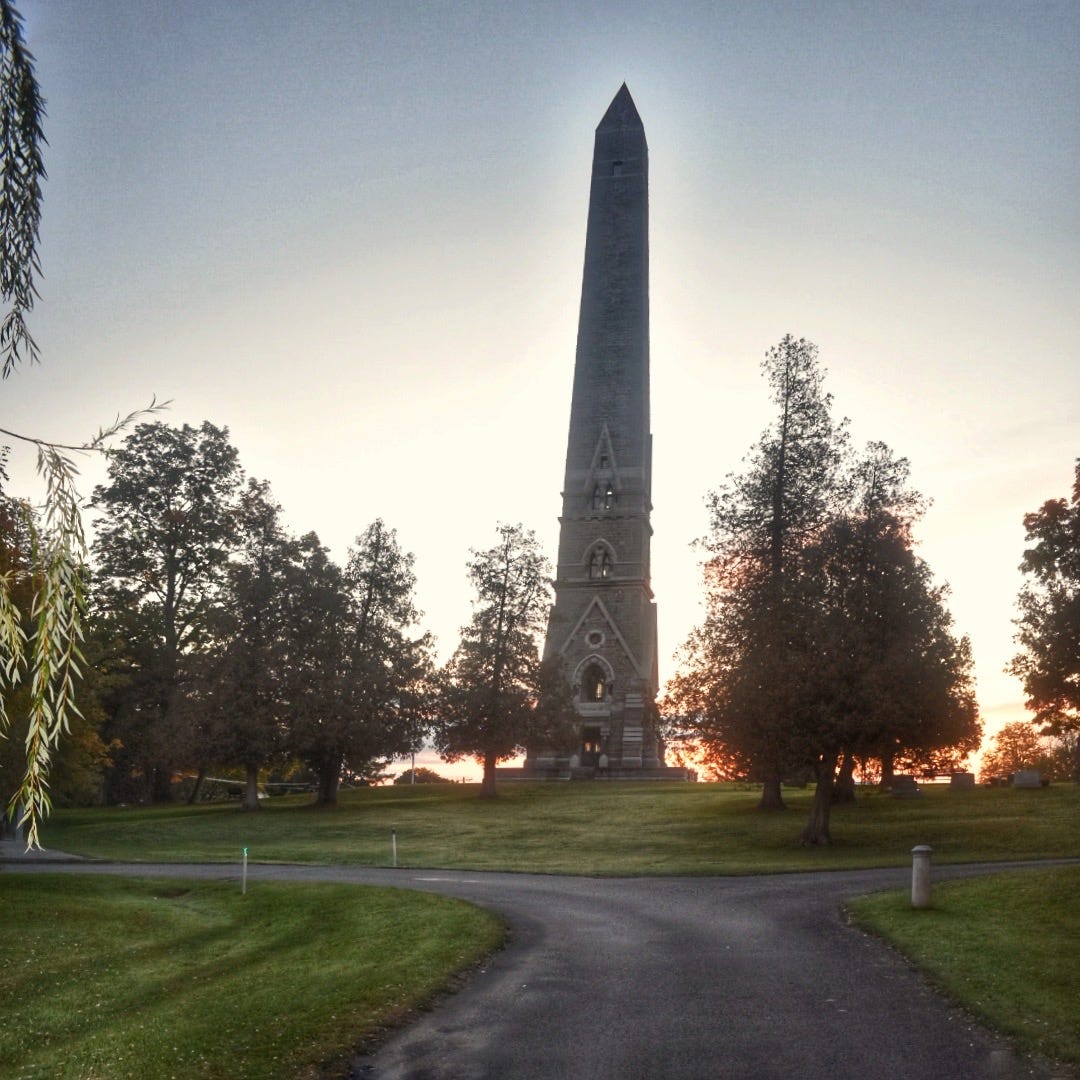
The Saratoga Monument rises above the Hudson Valley, a nineteenth-century monument built long after Case wrote his poem. Saratoga National Historical Park preserves portions of the ground where the Battles of Saratoga unfolded.
Visitors can follow the Battlefield Tour Road, stand at overlooks, and consider distances that were once measured in marching hours rather than automobile minutes.
The landscape does not tell the story by itself.
It does, however, give the story somewhere to stand.
How far could an army move in a day?
What could soldiers see from a ridge?
How quickly could a message travel?
What happened to civilians living between armies?
What might a person have believed on September 19 that changed by October 17?
Those questions turn the landscape from scenery into evidence.
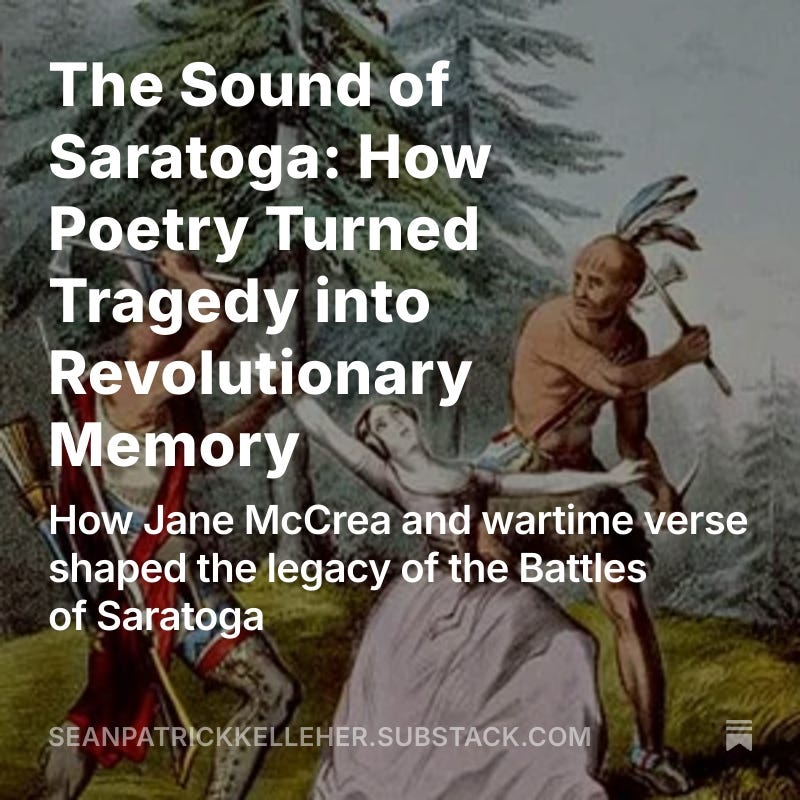
Case’s poem should not be treated as a transparent window into 1777.
It is a voice.
A Patriot voice.
A minister’s voice.
A voice shaped by fear, faith, politics, and the desire to believe that suffering had meaning.
That is what makes the poem useful today.
Not because Case was right about everything.
Not because his vision of the future was inevitable.
But because he allows modern readers to hear how one American Patriot interpreted the Revolution once the immediate crisis had passed.
Case could see the surrender.
He could not see the century that followed.
He could not know how the new nation would develop, how American Indian communities would experience the expansion he imagined, or how the ideals proclaimed during the Revolution would collide with slavery, displacement, political conflict, and competing definitions of citizenship.
He could see only the future he imagined.
When visitors walk the Saratoga landscape during America250, they already know how the story ends.
The people who lived it did not.
Even Case, writing after the surrender, could not know what Saratoga would mean in the decades ahead.
Perhaps that is the question worth carrying home:
What decisions look inevitable only because we already know their consequences?
Walk the ground.
Read the words.
Then look again at the landscape.
The fields are quiet now.
The roads continue south.
The Hudson still moves through the valley.
The outcome is written.
The uncertainty is what remains worth remembering.
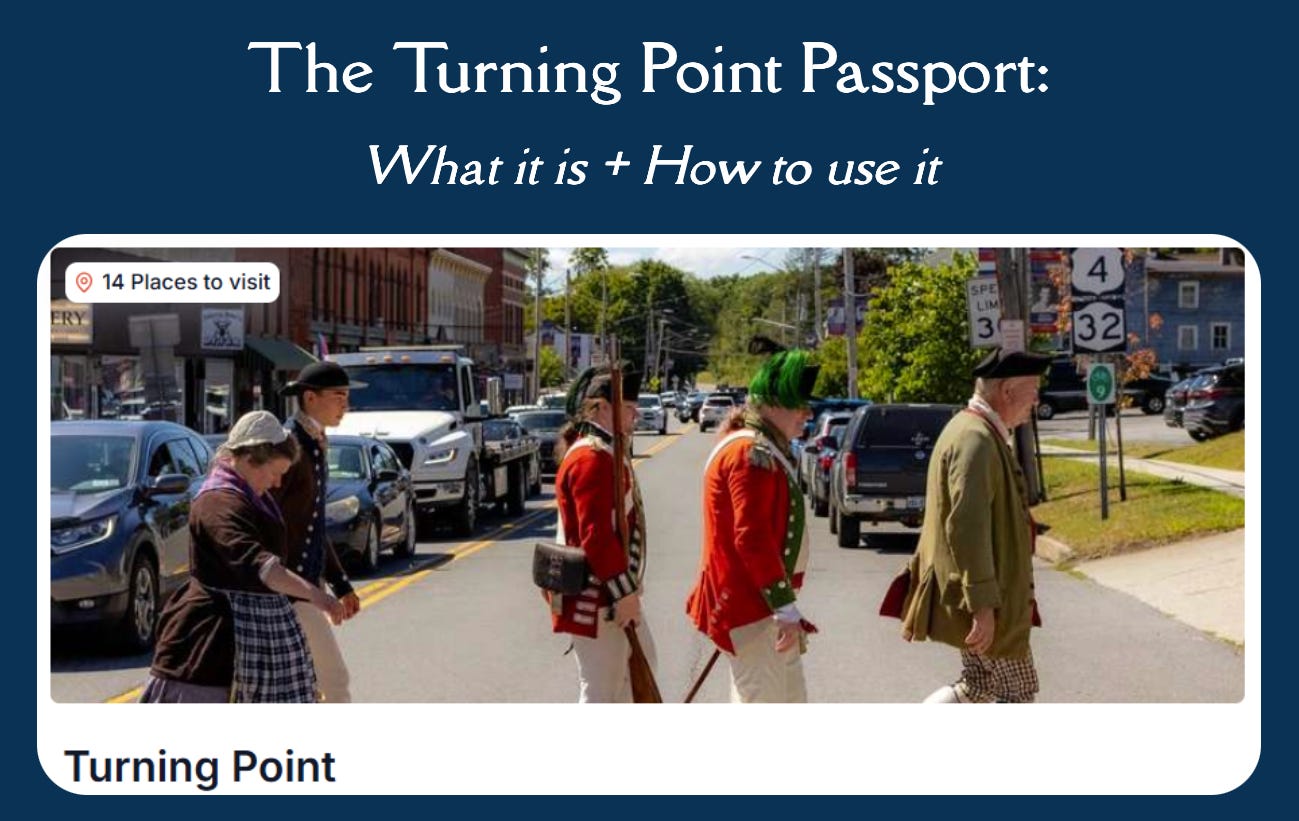
The Turning Point Passport is a free, self-guided way to explore the region where the Revolution turned. With 14 stops and counting across Schuylerville, Stillwater, Ballston Spa, and Saratoga Springs, the passport connects museums, farms, kitchens, breweries, and the battlefield itself.
Register, choose a stop, and scan the partner’s QR code when you arrive. Visit five stops to earn Continental status or eight to earn Victory status, with both tiers entering you in periodic prize drawings.
Explore at your own pace and discover more of the landscape behind the story.
Get Your Free Turning Point Passport
#saratoga250 #AmericasTurningPoint #America250
Comments
Nothing yet. Say the first thing.
Sign in to join the conversation.