
Before the Fire: A German Surgeon Encounters Saratoga
On August 11, 1777, a German surgeon traveling with Burgoyne’s invading army looked toward the Hudson River and saw the prosperous working estate of General Philip Schuyler.
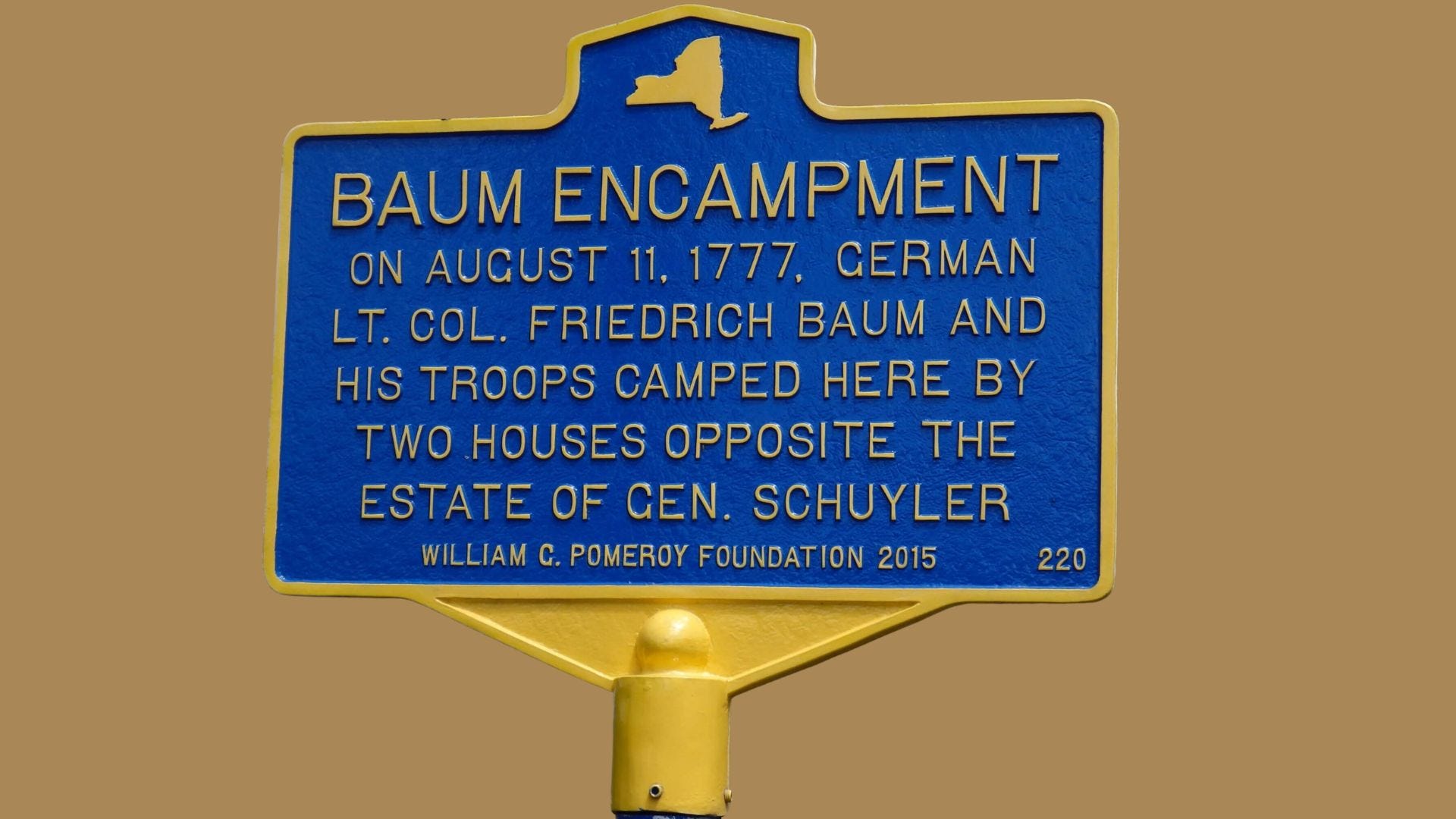
Julius Friedrich Wasmus, a company surgeon with the Braunschweig Dragoons under Lieutenant Colonel Friedrich Baum, was moving south with the army from Canada. After crossing the Batten Kill, he recorded the first church the troops had seen since leaving Canada. Near it stood a large manor belonging to General Schuyler, surrounded by substantial buildings and five barracks where the general’s workmen lived. Wasmus was recording what he saw on the road to Bennington. Nearly 250 years later, his words let visitors see the estate before war transformed it.
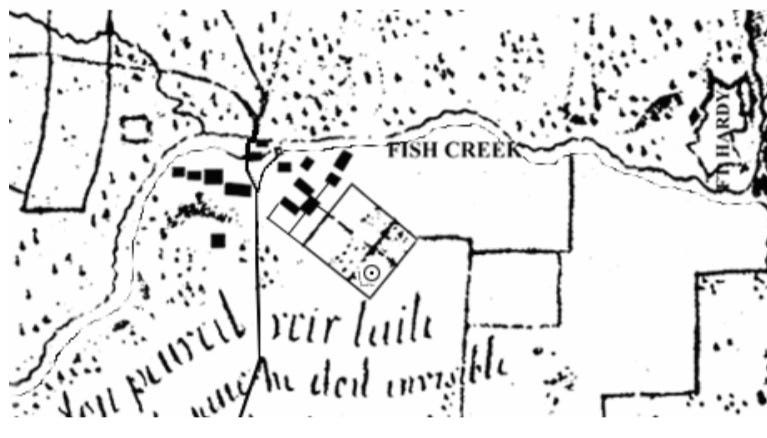
Wasmus was looking at more than a country house. By 1777, Schuyler’s Saratoga estate had become an extensive agricultural and industrial operation. Thousands of acres had been cleared for farming. At the same time, sawmills, a grist mill, a flax and hemp operation, gardens, a fishery, and other enterprises connected the estate to markets beyond Saratoga. The estate was a working community as much as a country residence.
That work depended upon tenants, paid laborers, artisans, and enslaved people. The five barracks Wasmus noticed were part of this larger landscape of production and labor. The mills depended on Fish Creek. Fields, gardens, forests, roads, and waterways all formed part of an enterprise that helped make Schuyler one of the region’s wealthiest and most influential landowners.
There was a certain fortune in Wasmus recording the scene that day. The misfortune was that the landscape he described would soon become a military landscape and, later, a target of destruction.
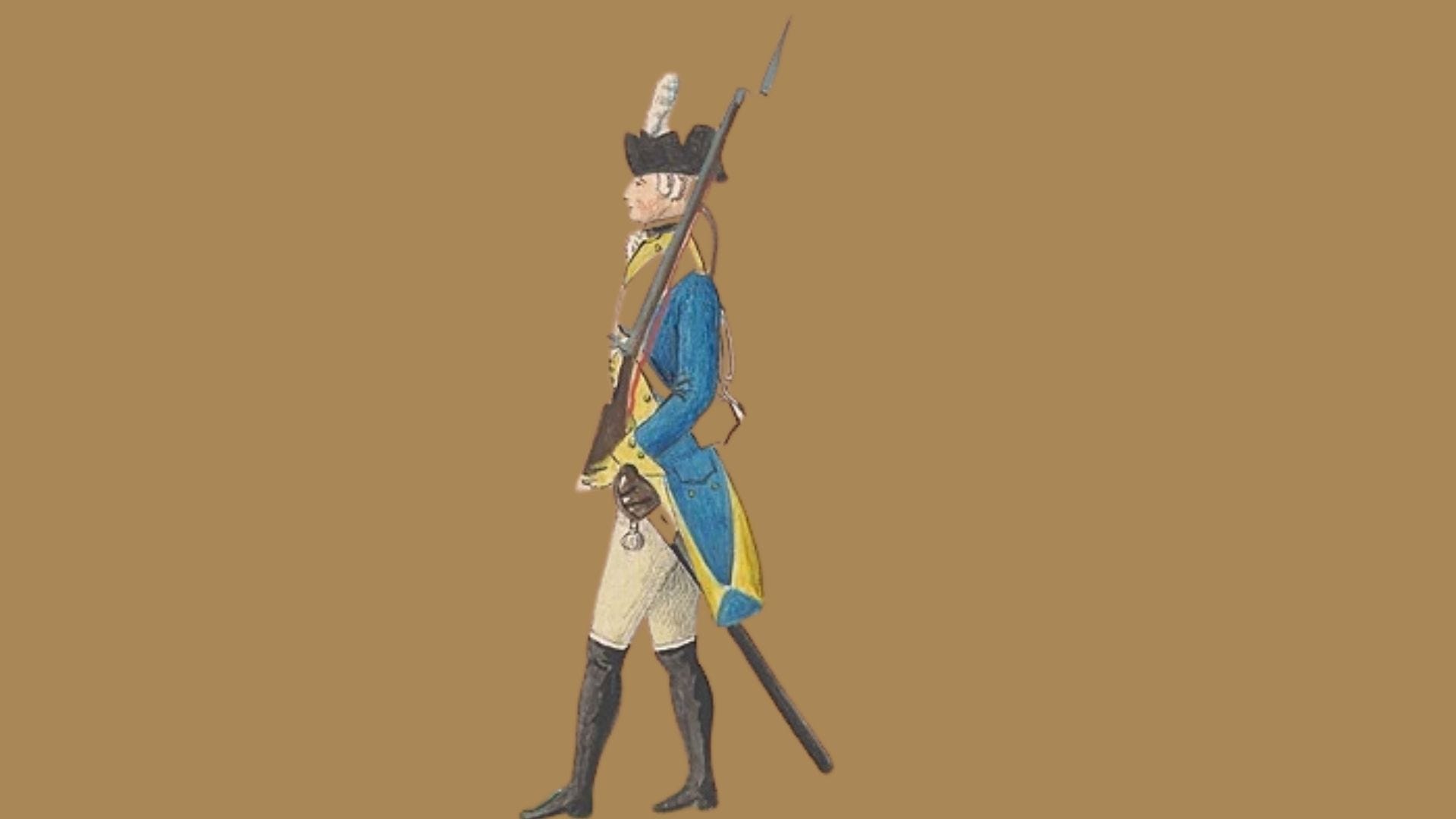
Wasmus offers an unusual perspective on the Saratoga campaign. He was not a general making strategic decisions or a civilian watching events from a distance. He was a military surgeon moving with the troops and recording what he encountered.
Born in Braunschweig, Wasmus served with the Braunschweig Dragoons under Lieutenant Colonel Friedrich Baum. His journal records military movements alongside observations about geography, agriculture, weather, food, medicine, and civilian life. The journal was translated by the late Helga Doblin, a proud resident of Saratoga and professor at Skidmore College.
His timing makes the August 11 entry especially revealing. Five days later, Baum’s detachment was defeated at the Battle of Bennington, and Wasmus was captured. He was already a prisoner when the Battles of Saratoga unfolded in September and October.
His journal therefore preserves something unusual: an outsider’s view of Saratoga before the campaign reached its climax.
Wasmus’s August 11 observation captures Saratoga before the landscape became known primarily for battle and surrender.
The estate he described would soon become part of the campaign’s military landscape. After the Battles of Saratoga, Burgoyne’s army retreated north through the Saratoga area. On October 9, Burgoyne established his headquarters at Schuyler’s Saratoga Estates. The following day, as American forces advanced, British troops burned the house, mills, barracks, and other buildings to prevent the Americans from using them for cover.
Schuyler lost far more than a residence. The fire destroyed much of an agricultural and industrial enterprise he had spent years developing.
Yet he began rebuilding almost immediately.
The house standing today was erected in 1777 after the original residence was destroyed. NPS records that it was built upon the foundation of the burned structure and used fresh-cut lumber from Schuyler’s upper sawmill. Smaller and simpler than the house Wasmus had seen, it became a tangible reminder of both the estate that had existed before the campaign and the destruction that followed.
Philip Schuyler’s life stretched from the French and Indian War into the politics of the new United States. A Patriot statesman, military leader, candidate for governor, and United States senator, he risked his life and livelihood for the new nation and lost his Saratoga home in the process.
His interest in economic development did not end with the Revolution. Schuyler became an important advocate for canal transportation, including early efforts that anticipated the later Champlain Canal. His family and the community that grew around the estate continued to shape the economic development of the place that became Schuylerville.
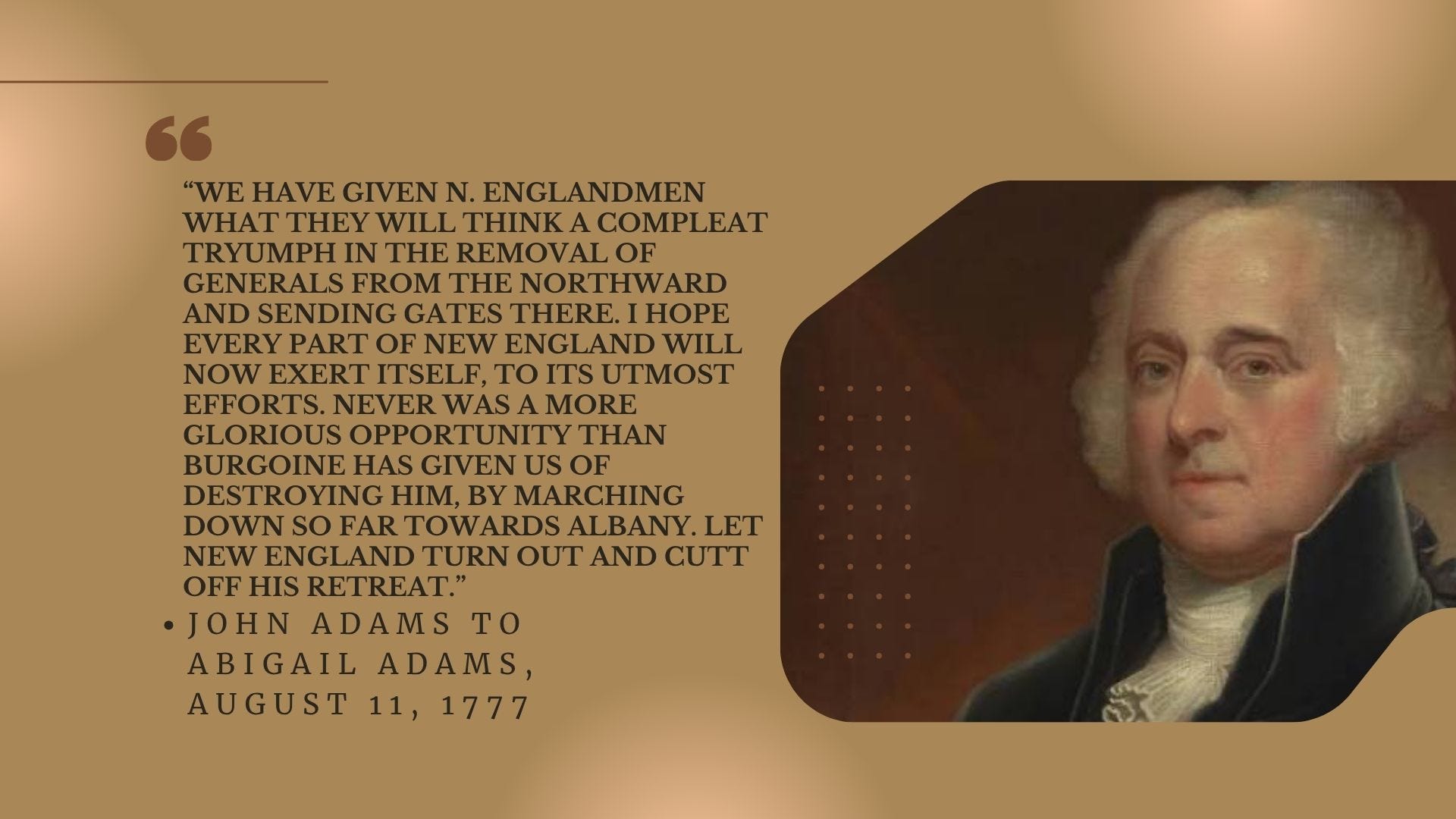
Wasmus’s words are valuable because they make the landscape visible.
Across the Hudson stood the church. Near it was Schuyler’s manor. Around the estate were work buildings and barracks. Cleared fields met forests, while Fish Creek supplied waterpower for the mills before flowing toward the Hudson.
Today, it is easy to approach this landscape through the events of October 1777. Wasmus encourages visitors to look backward first.
The house had not yet burned. Burgoyne had not yet retreated. The British surrender had not yet taken place. The estate was still functioning as a farm, industrial center, workplace, and home.
On August 11, 1777, none of what came next was inevitable.
Visitors can stand at Schuyler’s Saratoga Estates within Saratoga National Historical Park and consider the landscape Wasmus described.
The house standing today is not the building he saw. It was constructed after the original house was destroyed during Burgoyne’s retreat. The surviving structure therefore tells two connected stories: the story of Schuyler’s working estate and the story of its destruction and rebuilding during the Saratoga campaign.
Walk the grounds and look beyond the house. Consider the Hudson, Fish Creek, the fields, the roads, and the places where mills and work buildings once stood. The landscape helps explain why this place mattered, and why destroying it mattered.
August 11 offers a rare glimpse before the transformation.
Wasmus saw a prosperous working estate.
Soon, war would turn that landscape into a place of destruction, retreat, and surrender.
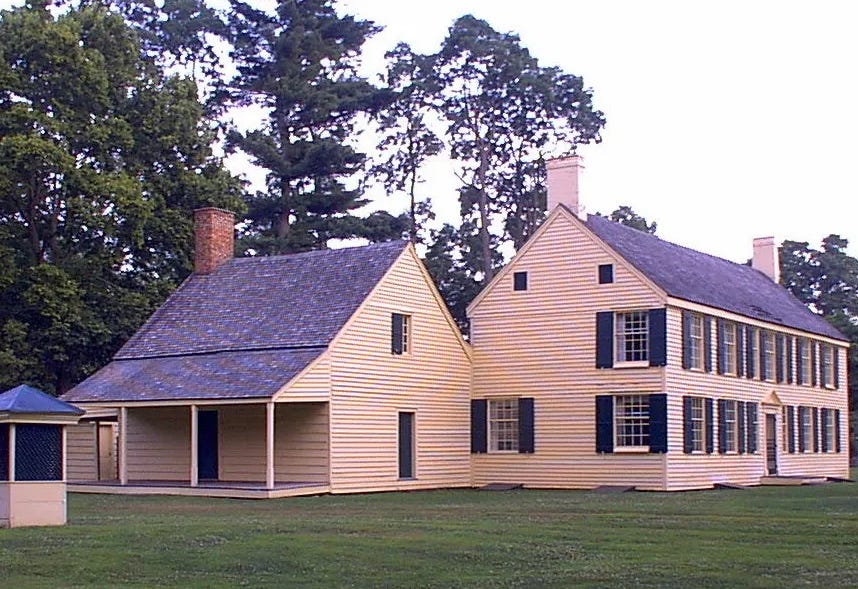
Today, visitors can stand at Schuyler’s Saratoga Estates and look across the same landscape Julius Wasmus encountered in August 1777. The original house and outbuildings were destroyed by British troops during their retreat, but the house Schuyler rebuilt later that year still stands as a tangible reminder of the family, workers, enslaved people, agriculture, and milling enterprise that shaped this community before and after the Battles of Saratoga.
As Schuyler wrote in November 1777, “My hobby horse has long been a country life.” Come walk the grounds, consider the Hudson and Fish Creek, and see how a working estate became part of the story of Saratoga and the community now known as Schuylerville.
Plan Your Visit: Schuyler’s Saratoga Estates is open Fridays, Saturdays, and Sundays. Tours are offered at 10, 10:30, 11, and 11:30 a.m., with an Open House from 1 to 4 p.m. The grounds are open from sunrise to sunset year-round.
Getting There: The estate is at 4 Broad Street, Schuylerville, NY 12871, along U.S. Route 4 just south of Fish Creek.
For visitors tracing the Saratoga campaign, this is more than a historic house. It is a place to walk the ground, look across the waterways and fields, and consider the landscape before and after the Battles of Saratoga. As an America250 traveler, I find it worth seeing this part of the story in person.

As always, Past Paths is an independent, nonpartisan project—just me, walking Saratoga’s landscapes and writing about how they carry Revolutionary memory into the present. I rely entirely on the generosity, passion, and engagement of readers who believe this work matters. If you value this kind of place‑based public history, please consider supporting it today.
Wasmus Journal — Wasmus, Julius Friedrich. An Eyewitness Account of the American Revolution and New England Life: The Journal of J.F. Wasmus, German Company Surgeon, 1776–1783. Translated by Helga Doblin, edited by Mary C. Lynn, Greenwood Press, 1990.
Online access:
New York State Military Museum (PDF excerpts): https://museum.dmna.ny.gov
German‑language manuscript fragments (Braunschweig archives):
Scholarly discussion of Wasmus’s Bennington/Burgoyne entries (Journal of the American Revolution): https://allthingsliberty.com
Founders Online — The National Archives’ searchable database of Washington, Schuyler, Gates, Lincoln, and other Revolutionary‑era correspondence.
Schuyler Papers — Digitized selections from Philip Schuyler’s correspondence and estate records. New York State Library Manuscripts & Special Collections: https://www.nysl.nysed.gov/mssc
Weddle, Kevin J. — Weddle, Kevin J. The Compleat Victory: Saratoga and the American Revolution. Oxford University Press, 2021.
Luzader, John F. — Luzader, John F. Saratoga: A Military History of the Decisive Campaign of the American Revolution. Savas Beatie, 2008.
Ketchum, Richard M. — Ketchum, Richard M. Saratoga: Turning Point of America’s Revolutionary War. Henry Holt, 1997.
Schnitzer & Troiani — Schnitzer, E., and Don Troiani. Don Troiani’s Campaign to Saratoga—1777. Stackpole Books, 2019.
Gerlach, Don R. — Gerlach, Don R. Proud Patriot: Philip Schuyler and the War of Independence, 1775–1783. Syracuse University Press, 1987.
Chase, Philander D. — Chase, Philander D., editor. The Papers of George Washington, Revolutionary War Series, Vol. 5: 16 June 1776 – 12 August 1776. University Press of Virginia, 1993.
Calloway, Colin G. — Calloway, Colin G. The American Revolution in Indian Country: Crisis and Diversity in Native American Communities. Cambridge University Press, 1995.
Jasanoff, Maya — Jasanoff, Maya. Liberty’s Exiles: American Loyalists in the Revolutionary World. Alfred A. Knopf, 2011.
Baer, Friederike — Baer, Friederike. “I Have the English and Hessians Under My Care: Massachusetts, 1780.” Friederike Baer: Hessians in the American Revolution, 31 July 2025. https://friederikebaer.com/2025/07/31/i-have-the-english-and-hessians-under-my-care-massachusetts-1780/
Baum Encampment Marker William G. Pomeroy Foundation, Historic Marker Database. URL:https://www.wgpfoundation.org/historic-markers/baum-encampment/
Road to the Battle of Bennington Passageport: A self‑guided digital journey tracing the movements, landscapes, and communities connected to the 1777 Bennington action. URL: https://passageport.org/journey/road-to-the-battle-of-bennington/
NPS Schuyler Estate — National Park Service. “Schuyler Estate.” Saratoga National Historical Park, U.S. Department of the Interior.
NPS Philip Schuyler — National Park Service. “Philip Schuyler.” Saratoga National Historical Park.
NYS Parks Bennington Battlefield — New York State Parks. Cultural Resources Survey of the Bennington Battlefield.
Journal of the American Revolution — Articles on Wasmus, Baum’s detachment, and the Bennington/Saratoga campaign. https://allthingsliberty.com
Saratoga250 — County‑wide commemoration of the 250th anniversary of the Battles of Saratoga. www.saratoga250.com
Saratoga National Historical Park — Preserving the American victory at Saratoga. nps.gov/sara
Champlain Canal Region Gateway Visitor Center — Orientation to the region’s history and waterways. hudsoncrossingpark.org
Lakes to Locks Passage — A National Scenic Byway linking the waterways of the campaign. passageport.org
Discover Saratoga — Regional heritage tourism and travel planning. discoversaratoga.org
Saratoga Revolutionary Experience (SRE) — A curated gateway to the region’s Revolutionary heritage. saratogarevolutionaryexperience.com
Follow America’s Destiny — A self‑guided itinerary tracing waterways and battlefields from Saratoga to the canal era. eriecanalway.org/explore/Plan-Visit/itineraries/follow-americas-destiny

Comments
Nothing yet. Say the first thing.
Sign in to join the conversation.