Design Development Overview (Masterclass #22)
There are firms in San Francisco and Los Angeles whose entire business plan is to get a site approved and then sell it.

A weekly design-driven and community-focused newsletter by Sean D. Sweeney, mapping the moves and mindset crucial for both the seasoned and aspiring real estate developer.
Subscribe:.rss.atom.json.md.m3u.pls
Live Last read · last published · next check
Saves to your Listen queue, to pick up on another day or another device.
There are firms in San Francisco and Los Angeles whose entire business plan is to get a site approved and then sell it.
In Master Class 21, I pick up where we left off, at the moment your land use application lands on the city planning department’s desk, and walk you through what actually happens next.
A neighbor once stood up in the middle of a meeting, walked to the front of the room, and jabbed his finger into a friend of mine’s site plan four separate times.
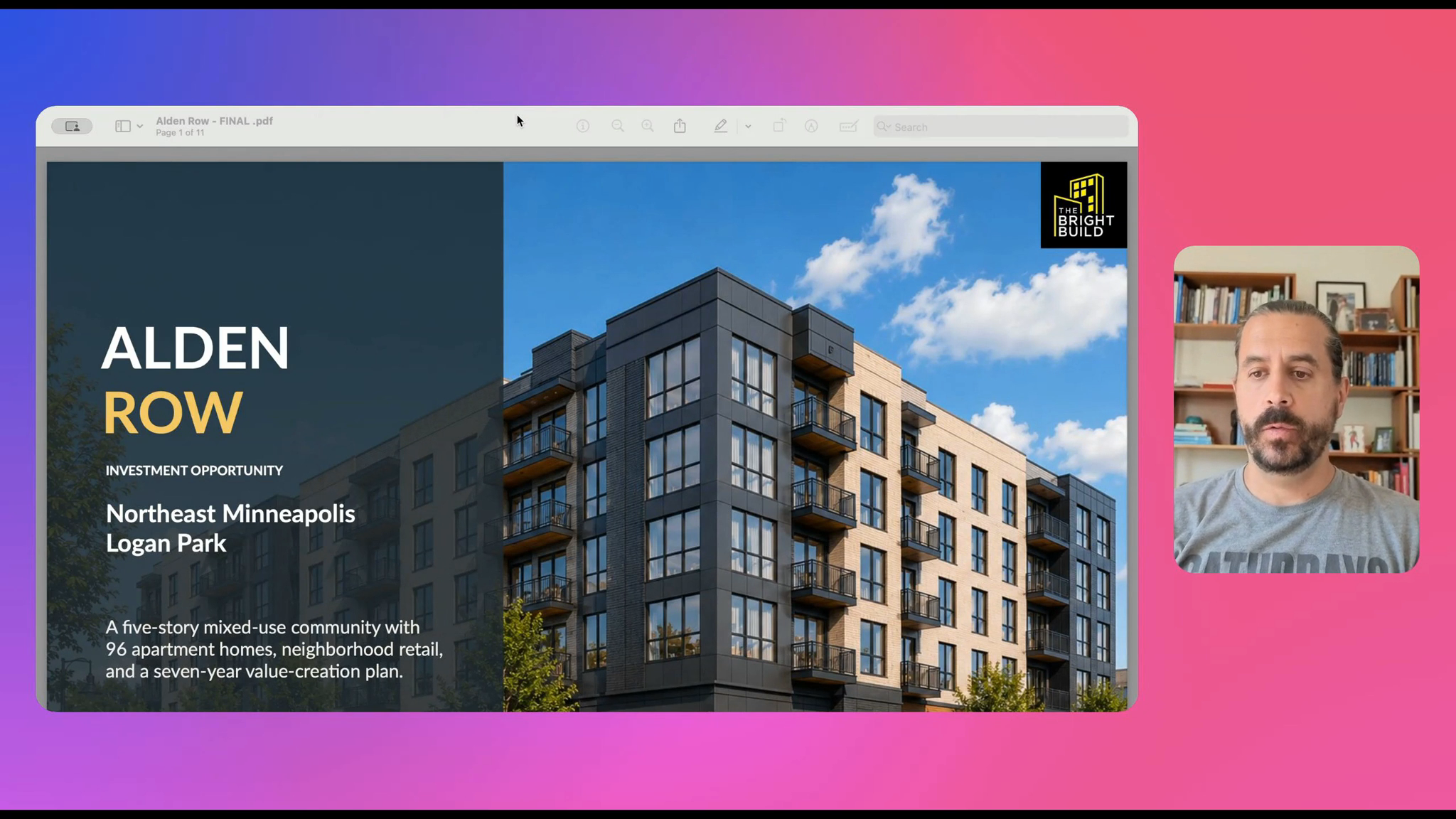
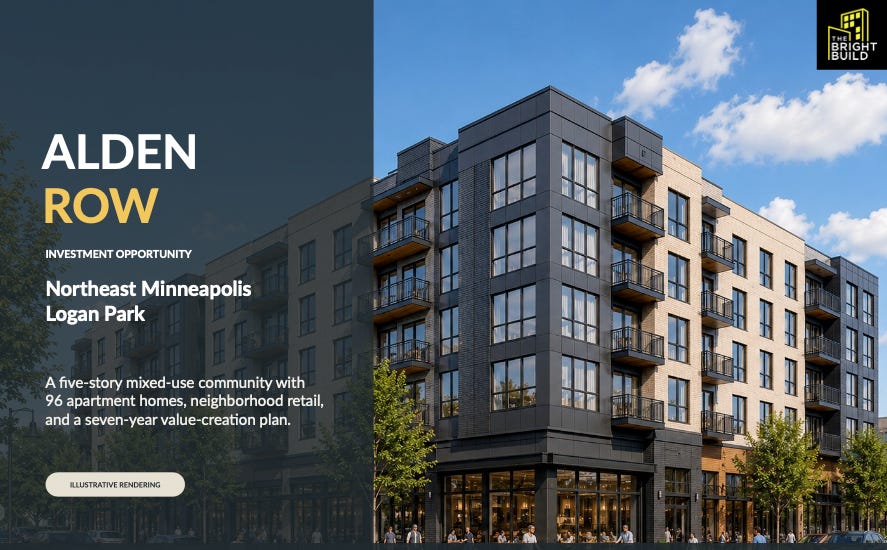
Alden Row and the Capital Stack (Where Your Money Actually Sits)
A city council member once told me, almost word for word, “I think this project is great, but I’m not going to support it publicly.” I wasn’t offended.
Move one assumption in my pro forma by half a percentage point, the cap rate, and the exact same building goes from being worth $2.52 million to $2.749 million.
On one of my projects, I wanted every car in and out of the building running through the alley behind it but the city had a different opinion, and it came with a phone call I wasn’t expecting and a bill I didn’t want to pay.
Hey folks-
I once got three architect bids back at $300,000, $310,000, and $500,000.
Limited Partner series number five
On one of my own sites, we pulled the history and found an auto repair shop that had sat along the property line for eighty years, plus a dry cleaner across the street running chemicals from 1940 into the early fifties.