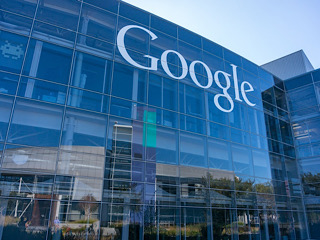
On August 21, 2015, Google announces a major investment of €150 million to build a new two‑story data centre alongside its existing facility at Profile Park, Grangecastle, West Dublin. This marks Google’s second major data centre investment in Ireland and … Continue reading →
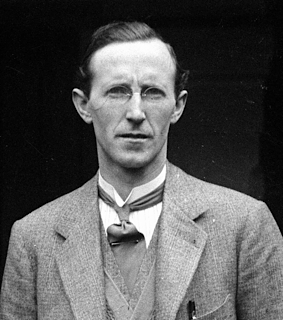
Kathleen Goodfellow, Irish writer, poet, and translator known for her literary works, nationalist sympathies, and patronage of the arts, is born in Dublin on August 20, 1891. Born to George and Susan Goodfellow (née Nicholson), Goodfellow is raised in a … Continue reading →
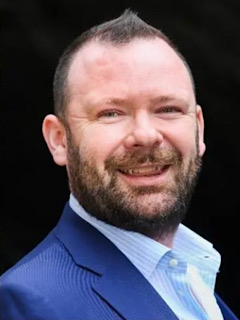
Johnny Lyons, the long-time sports presenter and editor at 98FM, is found dead at his Dublin home on the evening of August 19, 2015. The 49‑year‑old broadcaster had been away from work for several weeks recovering from a broken ankle … Continue reading →
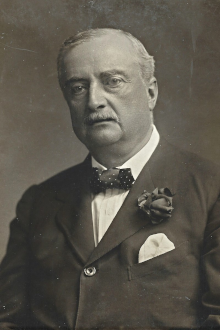
Delivered at the Irish National Convention in Chicago on August 18, 1886, John E. Redmond’s address is a defining moment in his political career and in the broader Irish nationalist movement. The convention, organized by the Irish National League of … Continue reading →
On August 17, 1846, Lord John Russell’s Whig administration formally adopts a policy of non-interference with internal and export markets for food in Ireland during the Great Famine. This decision reflects the prevailing laissez-faire economic philosophy of the time, which … Continue reading →
On August 16, 1922, three hundred men of the Anti-Treaty Irish Republican Army’s (IRA) 4th Northern Division, commanded by Frank Aiken, launches an attack on Dundalk in County Louth during the early phase of the Irish Civil War. This operation … Continue reading →
The Cathedral of Our Lady Assumed into Heaven and St. Nicholas, commonly known as Galway Cathedral, in Galway, County Galway, is consecrated by Cardinal Richard Cushing, Archbishop of Boston and Papal Legate for the Holy See, on August 15, 1965. The … Continue reading →
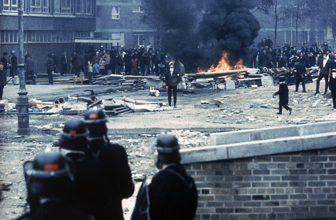
On August 14, 1969, in response to the escalating violence in Derry, County Londonderry, Irish nationalists hold protests across Northern Ireland, marking a turning point in the region’s political and sectarian conflict. The unrest begins on August 12 with the Battle of the Bogside in … Continue reading →
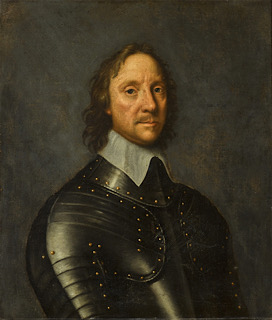
Oliver Cromwell, English statesman, farmer and soldier, sets sail from Milford Haven, Pembrokeshire, Wales, on August 13, 1649, with a fleet of about 35 ships, accompanied by a second and third flotilla that arrives days later. The invasion marks the … Continue reading →
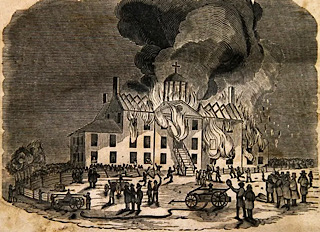
Shortly after midnight on August 12, 1834, a Protestant mob attacks and burns the Ursuline Convent School in Charlestown, Massachusetts (now part of Somerville), an act that becomes a flashpoint in the region’s anti-Catholic tensions. The Ursuline Convent, founded in … Continue reading →
On August 11, 1922, Liam Lynch, Chief of Staff of the Anti-Treaty Irish Republican Army (IRA), abandons Fermoy — the last major republican-held town in County Cork — as the Free State forces advance. This marks a significant turning point … Continue reading →