
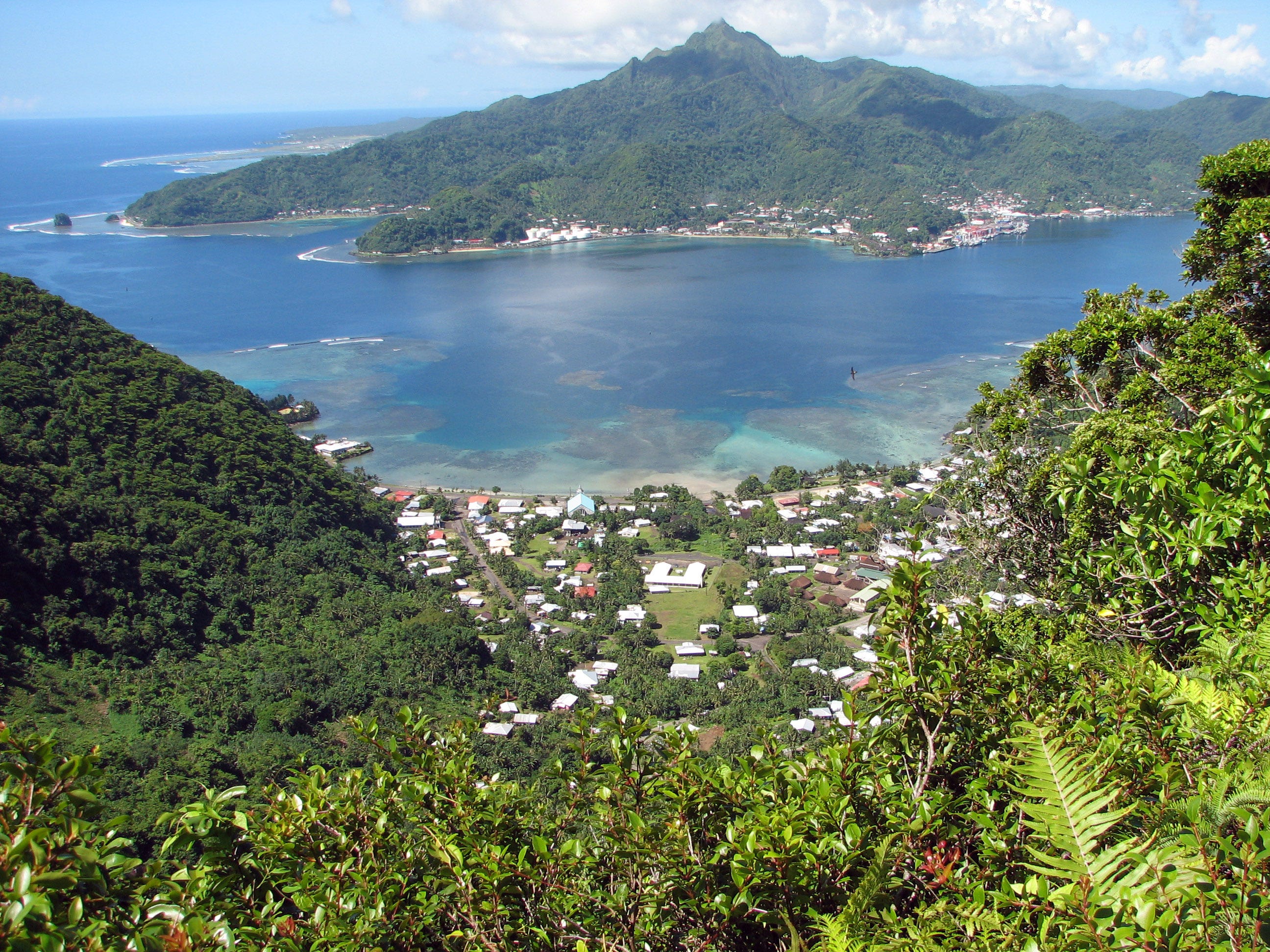
The Trump administration’s push to open federal waters for deep-sea mining is starting in American Samoa. Public comment is currently open on a proposed lease area east of territory.
At least one company, Impossible Metals, has been eyeing those waters for years and will surely vie for a mineral lease. The region bumps up against the Cook Islands’ Exclusive Economic Zone (EEZ), which is known to contain a whole lot of polymetallic nodules.
Mining in American Samoa’s EEZ would take place much closer to communities than mining in, say, the remote Clarion Clipperton Zone. So impacts on the local economy and environment could be more direct.
We’ll get a fuller picture of the fault lines in this debate after the public comment period in July – but most comments so far oppose the mining proposal. So do territorial leaders.
Let’s dig into the arguments.
‘A new industrial base’
First, the pro-mining camp, led by John Wasko. Originally from Gary, Indiana, Wasko spent decades working in American Samoa’s utility industry. Now in semi-retirement, Wasko founded the American Samoa Economic Development Council. The NGO’s primary goal seems to be promoting deep-sea mining as a once-in-a-generation opportunity for the territory.
“There are very few times in our life that we have something everybody else wants,” Wasko told the Spotlight. “We have an abundance of critical minerals here. We can develop a new industrial base here in American Samoa.”
Wasko envisions an entire mineral supply chain popping up in the territory, from extraction to onshore processing – which is generally the more valuable step of mineral production.
He believes that’s all possible thanks to a key geographic feature of the territory’s capital, Pago Pago.
“The harbor in American Samoa has always been our greatest asset,” said Wasko. “We can bring almost any size ship into the harbor and go right up to the dock.”
That deepwater harbor has already enabled a thriving tuna canning industry to spring up in the port. And Wasko thinks mineral production can be next, complete with shoreside refineries.
But his vision faces opposition, from the grassroots all the way to the governor’s office.
‘THIS IS SUS!’
My favorite part of reading the public comments is how much they vary in tone, ranging from cordial (“Thank you for your attention to this matter”) to emphatic (“THIS IS SUS!”).
Their content, though, isn’t quite as varied. A large majority of the comments so far oppose the mining proposal on environmental grounds.
Casidhe Mahuka, who works in invasive species management for American Samoa’s Department of Marine and Wildlife Resources, spoke to the Spotlight about her opposition.
“We don’t need mining. We need to protect our ocean ecosystems,” she said. Mahuka is concerned that a rush of new industrial ship activity could bring invasive species to American Samoa’s coastal waters, which conservation groups have thus far done a good job of protecting.
The territory’s top government officials agree. This week Governor Pulaali’i Nikolao Pula, along with legislative leaders, released a statement affirming their “unified opposition” to the proposed mining lease.
The statement came as something of a surprise, barely a month after the Republican governor expressed support for the proposal, calling it “an opportunity that should not be missed.”
But Pula completed his 180 on the matter by confirming that a moratorium on deep-sea mining in American Samoa’s territorial waters, initiated by his Democratic predecessor, remains in effect. (The moratorium is largely symbolic in this case, since the proposed mining would occur in federally controlled waters further offshore.)
It’s not clear how much local opposition to deep-sea mining will influence federal permitting of projects in the region. But it could certainly make life harder for companies looking to operate there.
The public comment period runs through July 16.
No posts
Comments
Nothing yet. Say the first thing.
Sign in to join the conversation.