
This essay is part of our Moms-Who-Write series! We love publishing essays and poetry by moms about any topic. Have an essay or poem you’d like to submit? Send your submission to hello@scribentematernum.com.
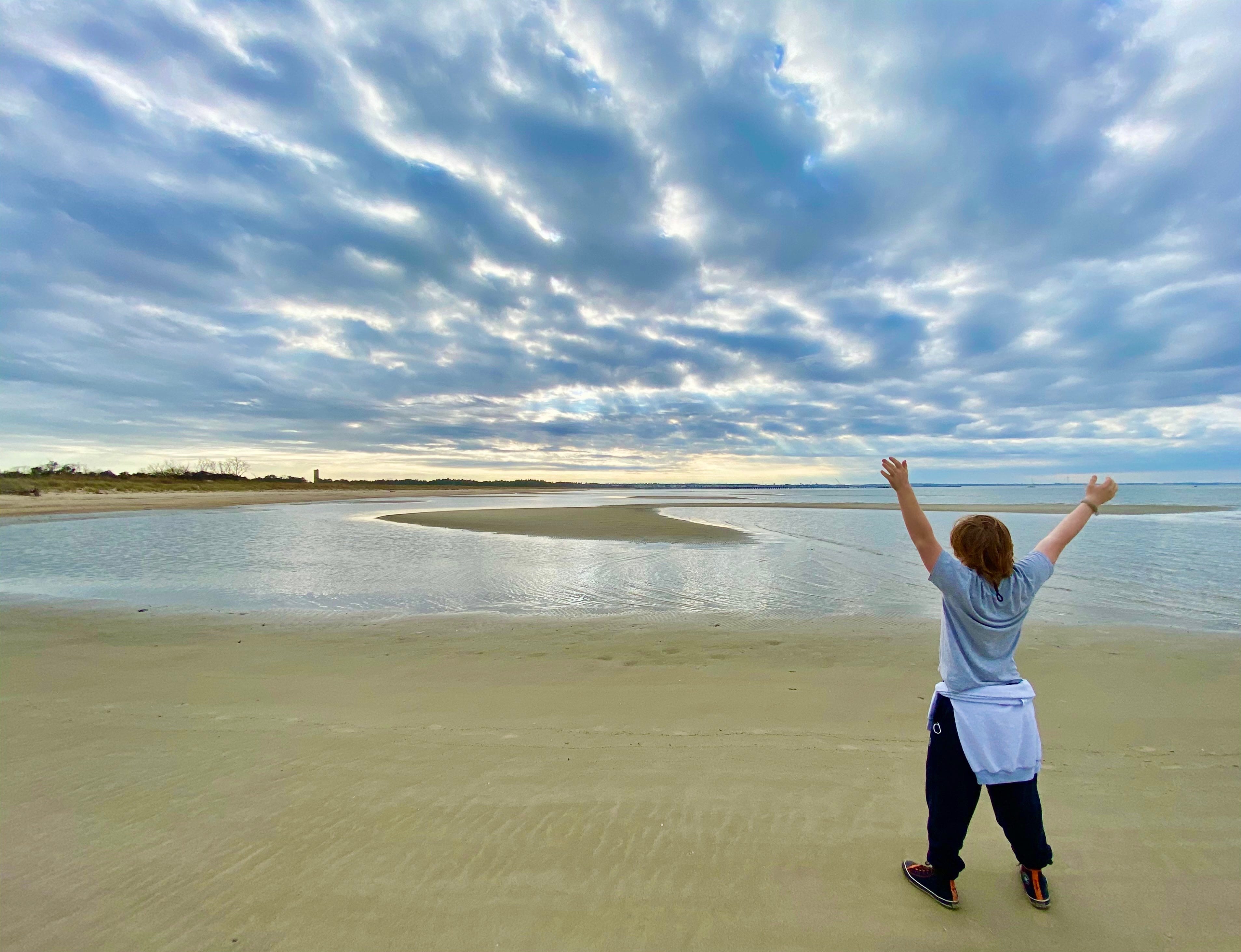
With Dad sleeping late on his work-from-home schedule, and Sister out of their pod since early in lockdown, the mornings of Carson’s virtual sophomore year belong to him and Mom.
Daily, at 7AM, he stumbles out of his room and into her space, announcing, “Time to check.”
Pretending to sigh, Mom puts aside her dream journal. The two stand pandemic-junk-food-belly to pandemic-junk-food-belly, Carson sweeping his hand from the top of Mom’s head to right beneath his nose. Re-confirmed! In their pod of three, Carson stands second tallest.
Stepping onto Mom’s toes, he gloats. “Your baby’s all grown up!” Even with eyes closed against her son’s too-closeness, Mom can feel his grin’s vibration. “Baby’s going to college. Better hug him while you can! Tighter, like you’ll never let him go!”
Arms wrapped around her son’s back, Mom remembers doing martial arts in her thirties, how her muscles and instincts then were honed. She hugs Carson “super hard,” willing that strength back until he yelps. Momentarily, her heart aches as if she is still a young-enough mother, recent Black Belt, and he’s still her baby-boy.
Breaking away, he tells her, “Cry! Imagine I’m already gone. At college!”
On rushed school days, Mom cries on command, “My baby’s all grown up, awoo!” Then onto breakfast. On lazy weekends, though, she tests them both, nodding at his college plans, sipping her coffee like there’s no tomorrow.
Undaunted, Carson sets down her mug for her before cupping his plump hands around her heart. Into his hand-speaker he croons, “college,” repeatedly—a targeted, intimate, drumbeat—calling for Mom to cry in advance of his leaving, as she has so often cried in the wake of his sister’s. Loss is the key to her heart. He wants it.
She falls to the floor, sobbing: Mom with Broken Heart. Carson laughs, exultantly.
Mom could change the lock, only what if someone gets locked out? Or in?
While Mom starts breakfast, Carson dresses in his man cave—really his sister’s old room, with her unwanted clothes still in the closets; but he is almost a man, and he is in it.
At 15, Carson is taller than his 18-year-old “little” sister. They are nothing alike. She drank, vaped, and snuck out the window when she was his age until their parents sent her to a wilderness school. That year Mom cried endlessly, and painted Sister’s room. When Sister returned, she’d transformed into a good kid with a therapist, a pink room, and no friends. This sister said she was going to live at home “at least” through college, but when the pandemic started, she quit her senior year of virtual high school; she broke things, cursing. She decided to move out.
Now she lives ten minutes away with a friend who is no one Carson and his parents know. When Sister visits, the whole family sits masked around a fire pit. Other times, Carson hears his parents fighting with her on the phone. Once he heard Mom say, “Please, please come home.”
None of this matters. Whether his sister is in or out of their family, Carson is the second-tallest, nearly grown.
Of course, Mom doesn’t really want Carson home with them forever. She supports his emerging independence; makes him study for SOLs (Standard of Learning tests). It’s just that, while it lasts, she does like caring for him. Unlike most people she loves, Carson’s always happy when she gives him what he says he wants.
Carson has mosaic Down syndrome, which means half his cells are typical. His academic skills are scattered—seeds in a meadow, but his Emotional Intelligence blooms bold and off the charts. Any college will be lucky to have him. On this, both parents agree.
But first there’s high school to get through. Making Carson’s eggs, Mom practices her Al-Anon mottos. Pause! Think!
“Here, just for today, I am scrambling eggs for my son before work.”
In the past, Mom slathered empathy on her daughter like sunscreen, not thinking to model her own accomplished, hard-boiled, hard-working self.
As Carson buses his dirty dish, pride courses through Mom’s heart. Her son, at least, is thriving. Only when Carson is logged into homeroom, and she sits alone at her desk, does Mom notice she’s shaken, like she was when his sister left.
“Our daughter thinks you’re an ass,” her husband judges. “How can you mourn her moving out?”
“How can you not?”
Their daughter’s leaving meant she’d rather be itinerant than live in their “controlling” pod. Or it meant she needed to see friends less immunocompromised than her family members, “nothing personal.” Or it meant the unsayable: she was leaving to live with drugs.
Having a sister like Carson’s or a daughter like Mom’s is like having many sisters/daughters. One of them gets mad when the family makes weekend trips to a remote beach without her.
“Selfish,” that one texts the family chat, although another version of her says she’d “rather die” than go.
But, “Y’all have fun,” yet another version says. She sends them heart emojis.
“Aww,” Carson and Mom text back. “Ly.” Dad sends memes of Norm from Cheers holding his chubby cheeks.
One morning, Sister shows up masked on their doorstep, bearing Starbucks for Mom. A Snickers for Carson.
“It’s my life,” she reminds Mom.
“It is your life,” Mom echoes.
“Bitch,” deems Sister.
Focus on the moment, say Mom’s 12-Step Sisters.
“Focus on me,” her husband says—high school sweetheart, brown-eyed-boy turned compartmentalized, anxious man. “How can you let her dominate your thoughts?”
“How can you not?” This game, they’ve perfected over decades.
“Your boy going to college is like your boy entering the Bermuda Triangle,” Carson schools Mom.
Just that week on a fill-in-the-blank “similes” assignment, he’d written, “This hot sauce is as spicy as…” He named a certain pop star’s butt, only changing his fill-in to “ghost pepper,” when Mom cried “inappropriate”.
How Carson knew about “hot butts” or “ghost peppers,” Mom doesn’t know, but supposes this is how the leaving happens.
Carson going to college is like his sister’s leaving mid-pandemic is like both Mom’s children disappearing into the Bermuda Triangle. Whether it results from oceanic farting (the siblings love this theory) or storms, many who fly over the Triangle land safely, their sunglasses in place.
Others have vanished, though. Contradictory things are true at once, so experts tell Mom. Someday, not long into the future, their son will leave, and her husband will say to her drawn face—a few years older than it is now—how can you cry about college?
Still, all is not lost. Mom believes that when her daughter knows what she can and cannot do for herself, and Mom knows too, they will talk again more easily. Then, Mom will send her girl the news she’s been collecting in a file.
“My aunt is in the hospital.” “X quit drinking.” She’ll send pictures of Carson from years ago when his sister dressed him up as Baby Grace.
“LMFAO,” Carson’s sister will respond.
In Mom’s imagined future, she and her daughter remember only the good times, the thrift store shopping, the yogaville retreat, them watching Gossip Girls—and not the painful parts, when they couldn’t detach gracefully, so they broke cruelly.
Day after pandemic day, in her tiny home office, “I’ve got my own life,” Mom reassures herself.
For weeks, she plucked vape cartridges that sprouted like resentments from her daughter’s bedroom carpet until Mom realized who the dumb-ass was who’d packed for the girl, even bought her a microwave, letting her leave behind this mess.
She hears her son in his clean-enough room, lying to his gym teacher—“Ran three miles last week.” Three blocks, maybe. Mom says nothing, stays in her own lane, meeting deadlines.
Here is Mom’s desk with her cooling coffee, her self-doubt, and her tentative optimism. Above her laptop, a self-affirming postcard, Begin Today.
When her son, like his sister, leaves, she’ll live—she’ll live well, even. She has both inner and outer resources.
The only thing is, who will laugh with her as their daughter used to? Who, if not her boy, will speak directly to her heart? When she cries, she’ll cry for real, like an adult does; silently, alone. In the bathroom, in the dark.
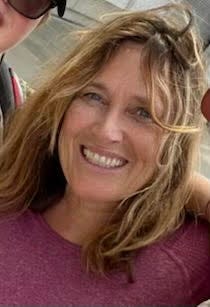
A recent regular contributor to Psych Central and Healthline, Karen Sosnoski has had featured essays in The New York Times; The Sunlight Press; Eat, Darling Eat and elsewhere. While finishing a memoir about life beyond her addiction to her daughter's addiction, Karen co-facilitates a weekly mindfulness group. Once a loner, Karen plans to make Advocacy her late life's work, sharing the courage she has found in community with families pummeled by addiction. This year she spoke at the Department of Behavioral Health’s Recovery Pathways Conference and the Faces & Voices of Recovery’s gala. She shares daily jokes and life lessons with her daughter, four years into recovery from opioid addiction and cheers as her son bushwhacks his path to independence as an actor/self advocate. "Begin Today" is the family motto.
No posts
Comments
Nothing yet. Say the first thing.
Sign in to join the conversation.