
As some of you know, I spent about a decade in the TV recap trenches of The AV Club, hanging on through several regime changes until G/O Media took over and forced the staff to move from Chicago to L.A. or lose their jobs, at which point a bunch of us freelancers quit in solidarity. (The AV Club is, by most accounts, in better hands now with Paste Media.) But in truth, I had burnt out on writing about television long before my final piece (a review of the first season of Reacher) ran.
But it’s been over three years now, and my poor moribund newsletter is crying out for content, so maybe it’s time for me to dip my toe back into TV talk on occasion. (And yes, “Prime Time Crime” isn’t exactly an apt description of television in the age of streaming, but work with me here.) As a crime fiction writer, it’s gratifying to see the genre doing well on the small screen (and hopefully good for my wallet at some point soon), but there are pitfalls, most notably the need to keep the story going in hopes of securing an order for future seasons.
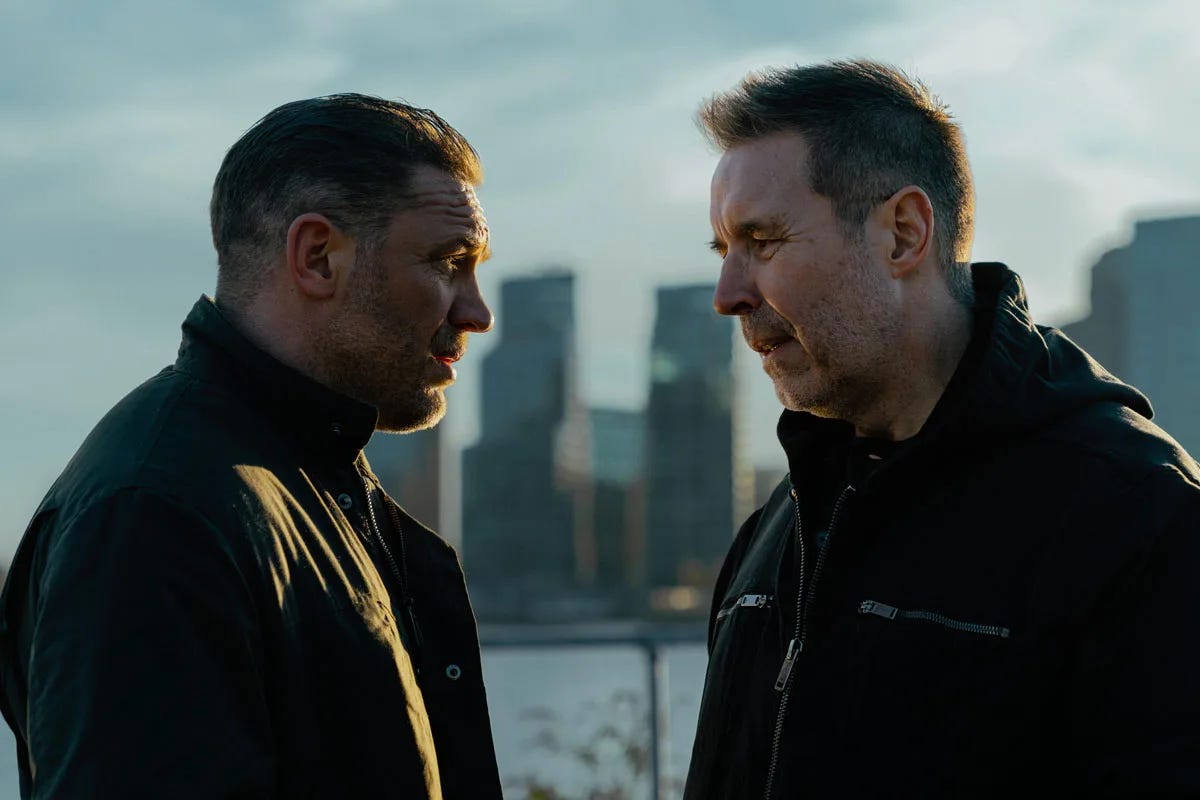
Which brings us to MobLand, Paramount Plus’s recent foray into the gangster drama. Created by Ronan Bennett and written entirely by Bennett and Jez Butterworth, it concerns the Harrigans, a crime family with Irish origins now operating in London. It’s got a killer cast headlined by Tom Hardy as the family’s reliable fixer Harry and featuring deliciously hammy turns by Pierce Brosnan and Helen Mirren as patriarch Conrad and his wife Maeve, who may be the true power behind the Harrigans. With their blarney accents (Brosnan is actually Irish, but he’s serving up big bowls of Lucky Charms here) and relish for threatening monologues, they nicely offset Hardy’s stoic, somewhat impenetrable turn.
The story concerns a long-simmering feud with the rival Stevenson family that boils over when budding sociopath Eddie Harrigan cuts his buddy Tommy Stevenson to pieces. What follows is not the most original tit-for-tat exchange of violent retribution, but it’s entertaining enough. It would probably be even better had MobLand been conceived as a limited series, but despite the high body count, the finale finds most of the major players ready to return for more. Though the show has not yet been renewed, it’s set up that way, and my suspicion is that—while there might be enough juice for one or two more seasons—it will be a case of diminishing returns.
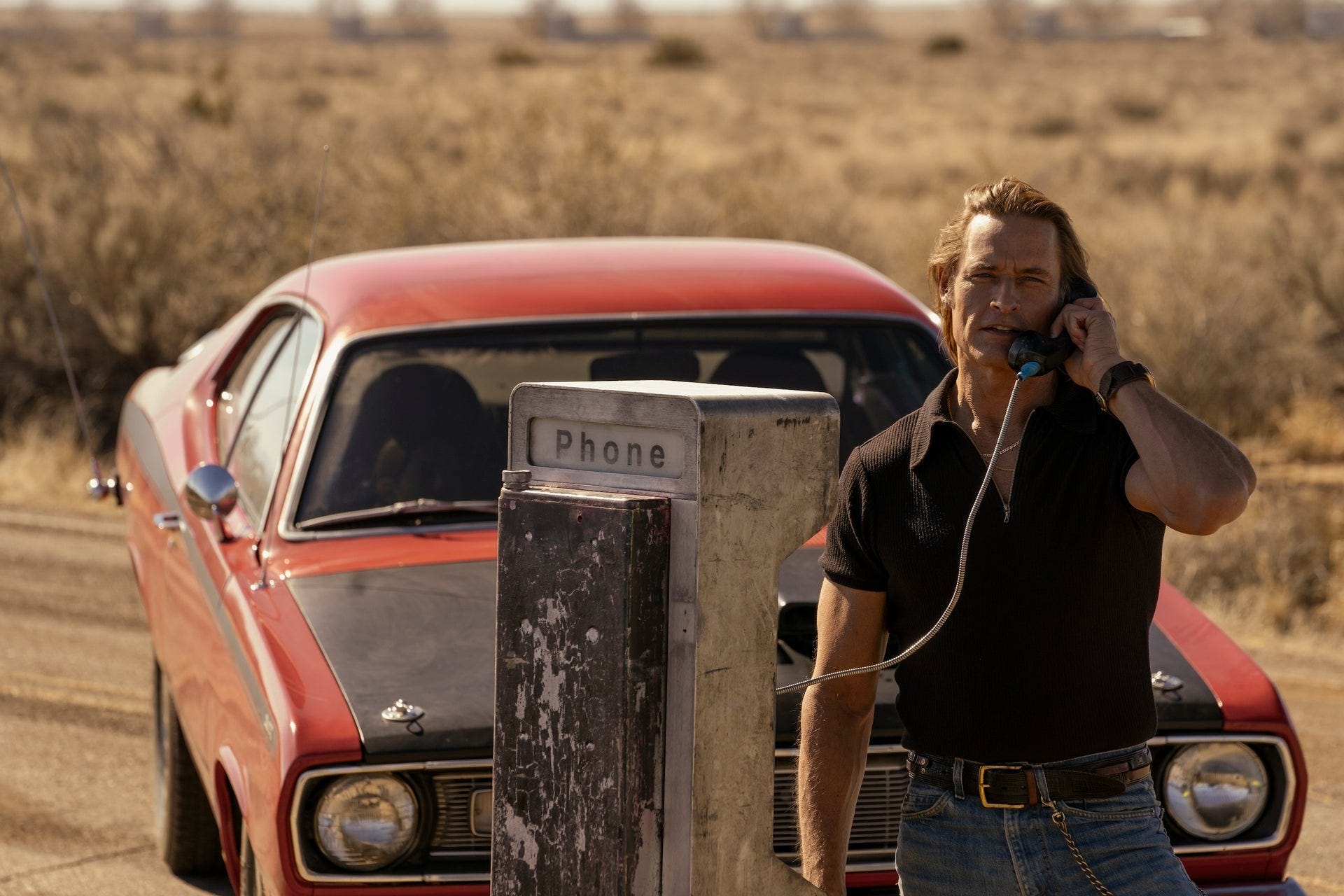
On Max, or HBO Max, or whatever they’re calling it this week, we find a new show relevant to my interests called Duster. It’s a mishmash of elements (fast cars, the 70s, hixploitation, blaxploitation) that I myself mished and mashed in my Edgar and Anthony Award-nominated novel Lowdown Road. (What, you haven’t read it yet? Make it your summer beach read today!) That being the case, I’m hoping it’s a success and shows that there’s an appetite for this stuff. Three episodes in, it’s a mixed bag. The good ol’ boy antihero is a role Josh Holloway was born to play (though it would have been better if he’d played it ten years ago), Rachel Hilson makes a strong foil as the Black female FBI agent forced to fight for every ounce of respect, and the supporting cast features reliable stalwarts like Keith David and Corbin Bernsen.
The standout episode so far is the second one, in which Holloway’s Jim Ellis must track down Elvis Presley’s personal pair of blue suede shoes from his Palm Springs home in order to convince guest star Patrick Warburton to blackmail a troublesome deputy. It’s mostly self-contained fun, as opposed to the following episode, which devotes too much scaffolding to the overarching story elements like Jim’s grim quest for justice for his murdered brother. Spending too much time on the serialized aspect will likely cause Duster to run out of gas sooner than later.

Across the Atlantic, compact crime series are more the norm, often with a limited run of six to eight episodes. But the problems that plague their American counterparts do arise on occasion. I recently finished watching the complete run of Love/Hate, a five-season Irish gangland show that aired over a decade ago. Set in the most squalid parts of Dublin, it’s one of the grittier efforts out there, for better and for worse. Initially concerned with hotheaded gang leader John Boy (Aiden Gillen of The Wire and Game of Thrones) and his lieutenants, squirrely Nidge and conscience-stricken Darren, the show focuses mainly on low-level hoods just scraping by and spending what money they do earn on booze, drugs, and sex workers. Explosions of violence are frequent, and the main cast is not immune.
Love/Hate peaks in its third season, with the gang finding themselves in over their heads with the IRA, but it tails off dramatically after that, mainly because the most compelling characters have been whacked, leaving Nidge surrounded by a crew of increasingly interchangeable dim goons. The final episode does provide closure, including the fate of the show’s Adriana La Cerva equivalent, Siobhan (Charlie Murphy), but by that point there are precious few characters left to care about. There has lately been talk of a revival, but there’s not much left to revive. When it comes to crime TV, less is very often more.
No posts
Comments
Nothing yet. Say the first thing.
Sign in to join the conversation.