
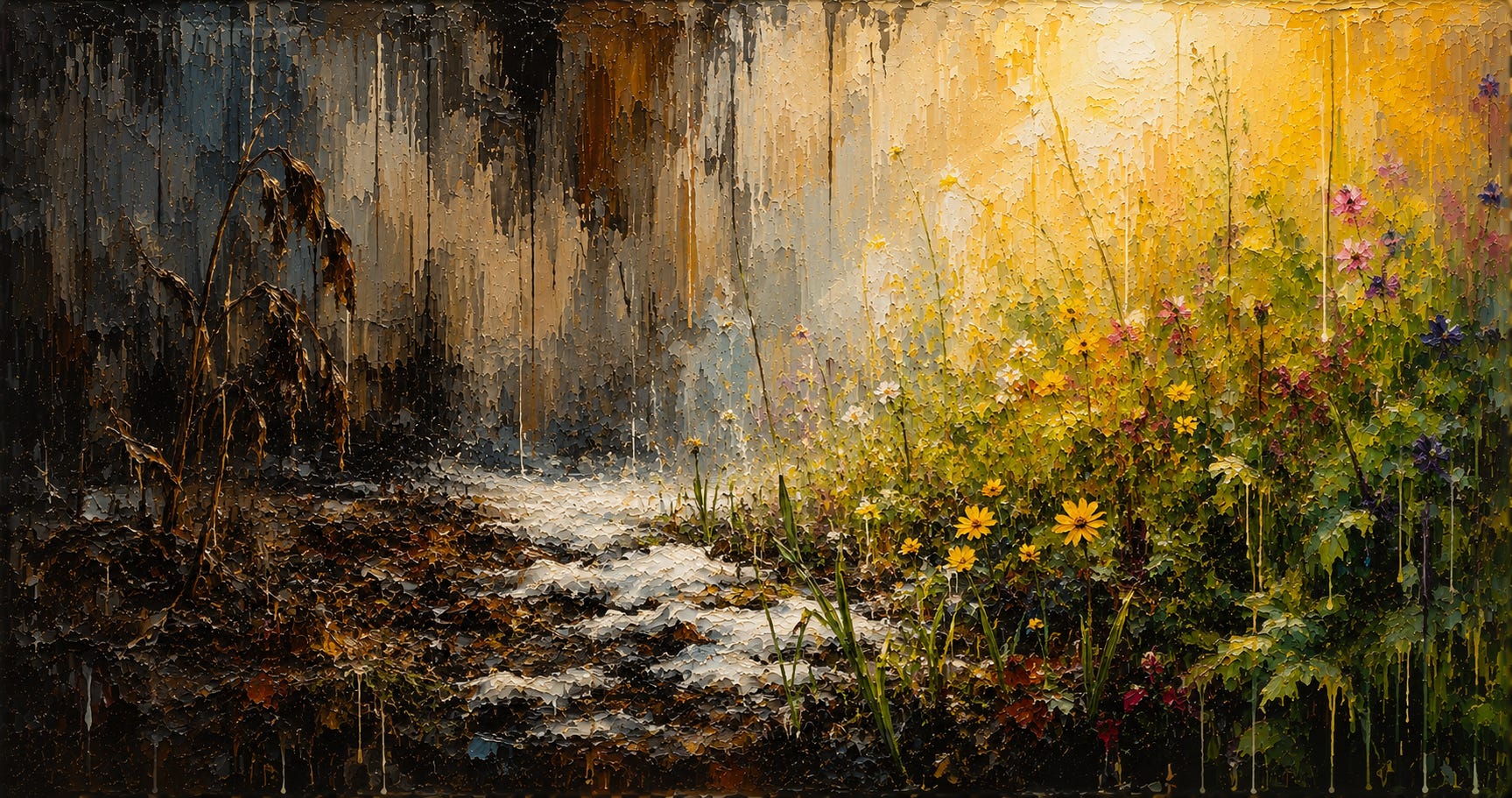
The garden bed was full before anything had been planted. It sat along the side of the house, boxed in by old boards, with dark soil under a mess of green. From a few steps back, it looked alive. The leaves had come in thick. Small stems leaned toward the light. A few yellow flowers had opened near the edge, bright enough to make the whole thing look almost intentional.
But it was not a garden. Not yet, anyway.
It was a place where things had been allowed to grow without being asked what they were becoming. There were weeds with strong roots. Grass had slipped in from the lawn. A tomato cage from the year before lay on its side, half-buried and useless. In the corner, a packet of seeds had gone soft from rain, the ink running across the paper like a promise that had been left outside too long.
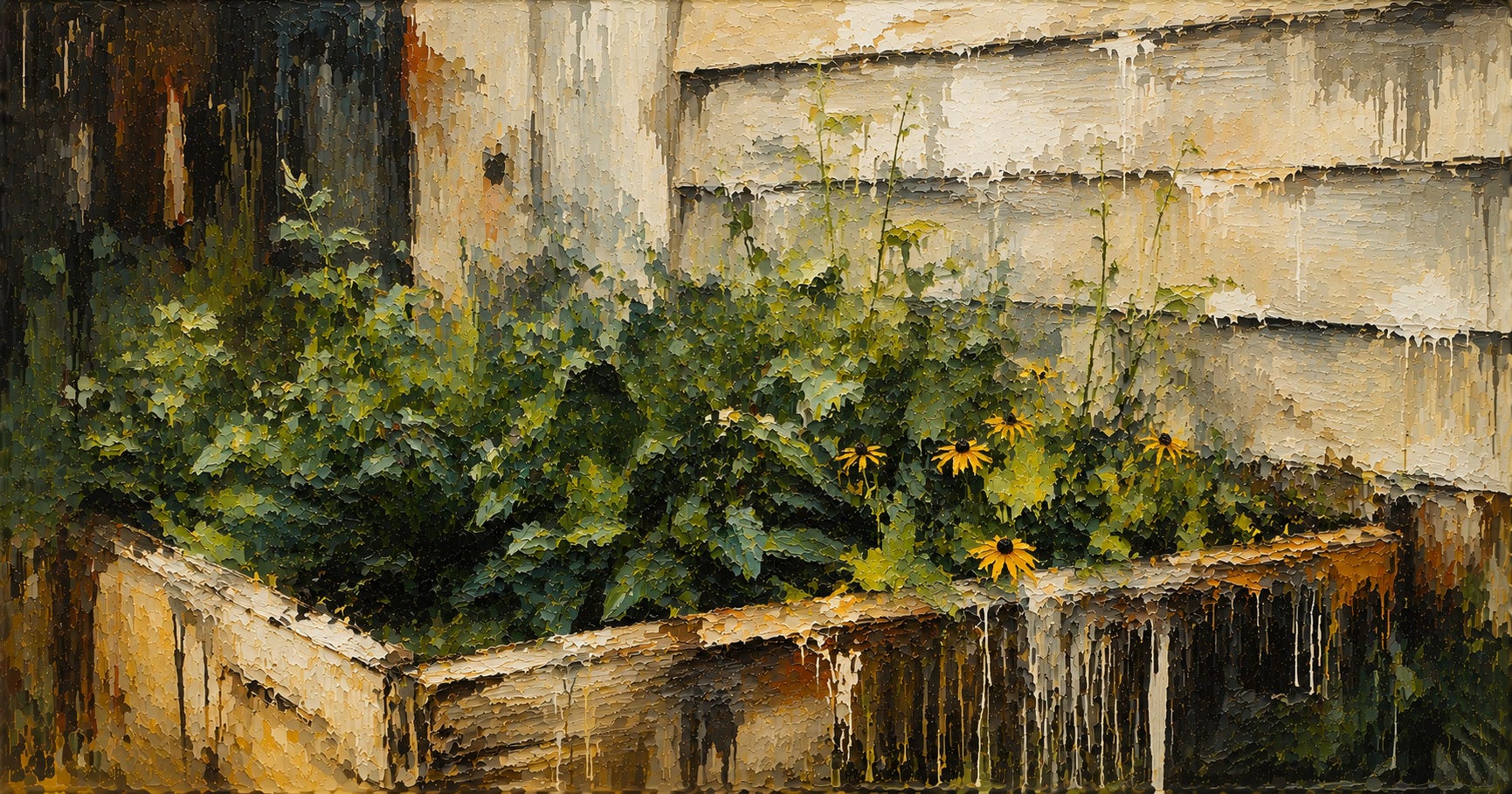
From a distance, the bed looked natural.
Up close, it looked neglected.
That is a distinction we should be careful with in ourselves.
There is a kind of growth that happens because we are alive. We get older, collect experiences, form preferences, and repeat certain reactions until they begin to feel like identity. We learn how to defend ourselves, make excuses, and how to leave before something asks too much of us.
Then one day we call all of it “who I am.”
This is where the advice to “be yourself” becomes dangerous.
It sounds kind, and in some cases it is. There are people who have spent their lives becoming acceptable to others while slowly disappearing from themselves. They need permission to stop performing. They need to recover the voice they buried to stay loved. For them, “be yourself” may be a small rescue.
But there is another version of the self that does not need rescuing.
It needs gardening.
The self that avoids every hard conversation does not need a throne. The self that quits when discomfort arrives does not need a motivational quote embroidered on a pillow. The self that mistakes resistance for danger does not need to be obeyed like a prophet.
It needs to be questioned.
There is a difference between your nature and your neglect.
The garden made that clear and simple.
A weed does not look evil. That is part of the problem. It looks green. It looks alive. It may even flower. If you do not know what you planted, you may begin to admire what is choking the roots below it. You may call the mess abundant because abundance sounds better than avoidance.
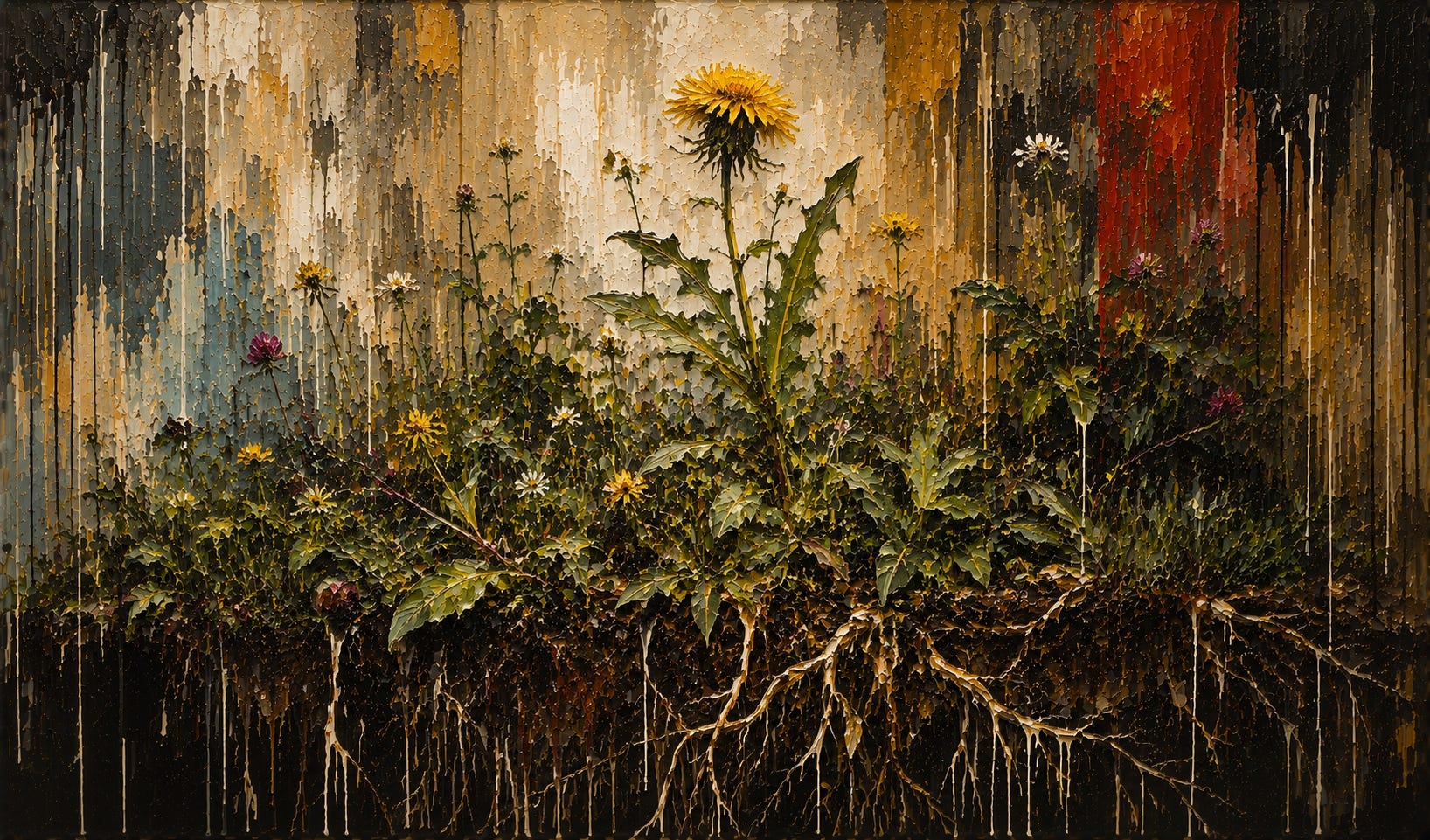
People do this all the time.
A person says they are just laid-back when they are afraid to commit. They say they are independent when they have trained themselves not to need anyone. They say they are spontaneous when they cannot keep a promise to themselves for more than four days. They say they are protecting their peace when they are really protecting their comfort.
The language gets polished.
The pattern stays the same.
This is not a call to hate yourself. That would only create another weed. Most of what we call weakness started as an attempt to survive something. Avoidance often began as protection. Indiscipline often grew in a place where no one taught order without shame. The habit of retreating may have once kept you from breaking under a weight you could not name.
That deserves compassion.
But compassion is not the same as permission.
A garden does not become a garden because every living thing inside it gets to stay. Some things have to be pulled. Some things have to be cut back. Some things have to be moved to another place because they are growing in the wrong direction. The work looks harsh only if you forget what you are trying to grow.
A good gardener is not cruel to the soil.
They are loyal to the fruit.
That is the part many people miss. They think discipline is a rejection of the self. It can be, when it comes from vanity or self-contempt. But the deeper kind of discipline is an act of protection. It protects the life you keep saying you want from the habits that keep stealing it before it has a chance to take root.
Discipline says, “This matters enough to be tended.”
That is a different voice than punishment.
Punishment wants you to suffer so you can feel worthy later. Discipline wants you to become steady enough to hold what you claim to desire. Punishment speaks with disgust. Discipline speaks with a firm hand and clear eyes. It does not need drama. It needs repetition.
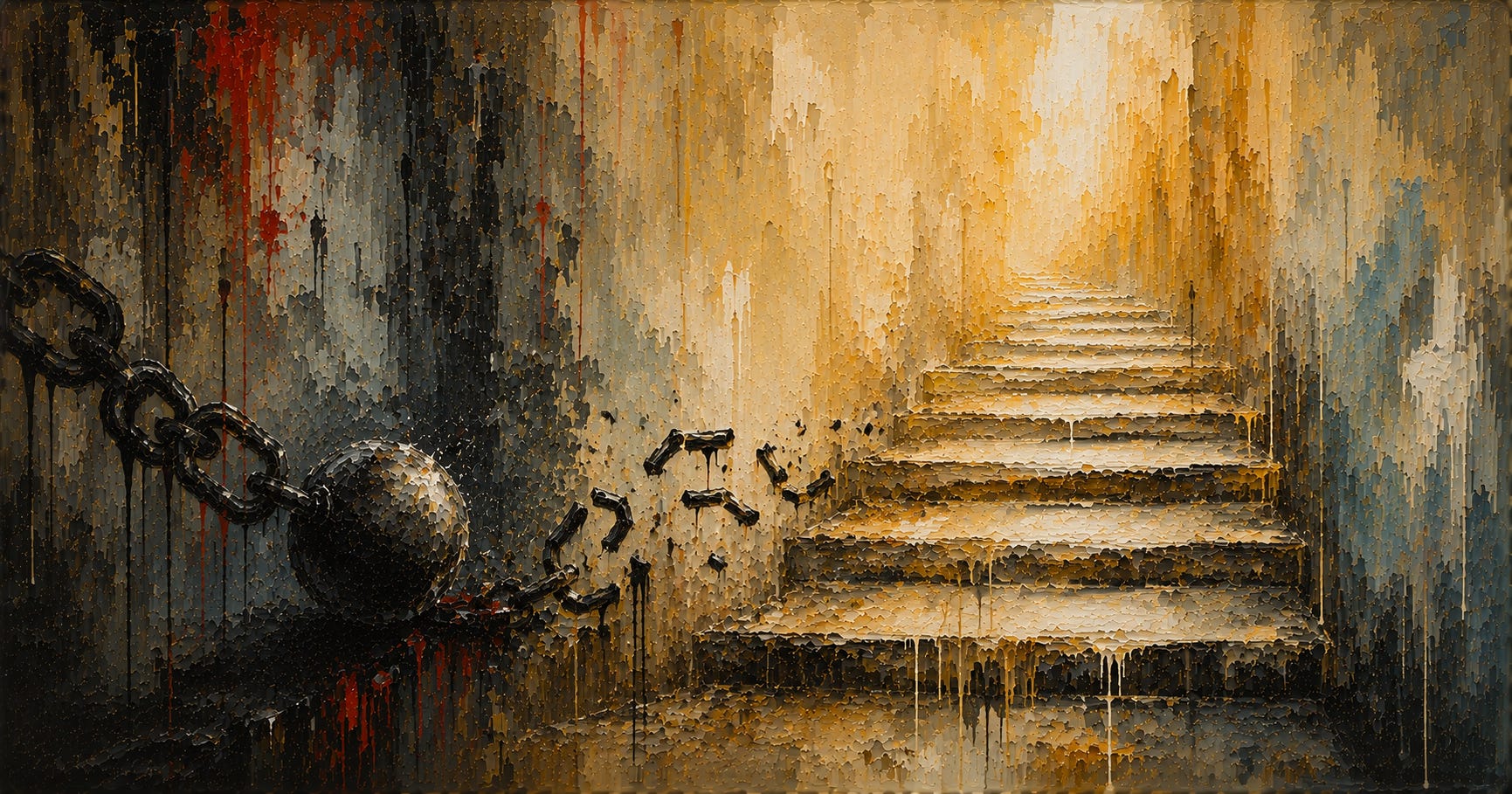
The garden bed did not need a speech.
It needed someone to kneel down and start pulling.
That is where most of us lose our elegance. We like transformation when it can be discussed from a clean chair. We like the idea of becoming better when it stays in the realm of insight. We enjoy naming our patterns because naming them gives the brief satisfaction of progress without the inconvenience of change.
But the ground does not care what you understand.
It only changes when touched.
You can read about patience while still snapping at everyone close to you. You can know the importance of discipline while letting your mornings rot in your hand. You can speak beautifully about love while avoiding the vulnerability that love requires. You can understand your wounds and still let them make your decisions.
This is the humiliation.
Not that you are flawed. Everyone is.
The humiliation is realizing your habits have been more honest than your intentions.
That sentence lands hard because it removes the romance from wanting. Wanting a better life is easy to respect. It gives you a noble shape in your own mind. But life does not build itself from what you meant to become. It builds itself from what you repeat.
The garden had proof everywhere.
The weeds were not there because someone believed in weeds. They were there because no one interrupted them. The fallen tomato cage was not useless because it lacked purpose. It was useless because it had not been placed upright. The seed packet had not failed because seeds are weak. It had failed because intention had been left in the rain.
There is a subtle cruelty in that kind of truth.
There is also freedom.
Because once you stop treating your current self as sacred, you can begin to work with it. You can stop defending every impulse as authenticity. You can stop treating discomfort as a verdict. You can stop making a religion out of your first reaction.
A first reaction is not always wisdom.
Often, it is just the oldest part of you reaching for the familiar tool.
If you have avoided conflict for years, honesty will feel wrong at first. If you have lived without structure, order may feel like a cage. If you have treated discomfort as danger, effort will feel like betrayal. That does not mean you are on the wrong path. It may mean the old pattern has finally met resistance.
That resistance is useful.
Friction is where becoming begins to show itself.
A seed does not become a plant because the soil is soft forever. It has to split. It has to push. It has to move through darkness before it reaches anything warm. From the outside, that process looks small. Underneath, something old is being broken so something alive can rise.
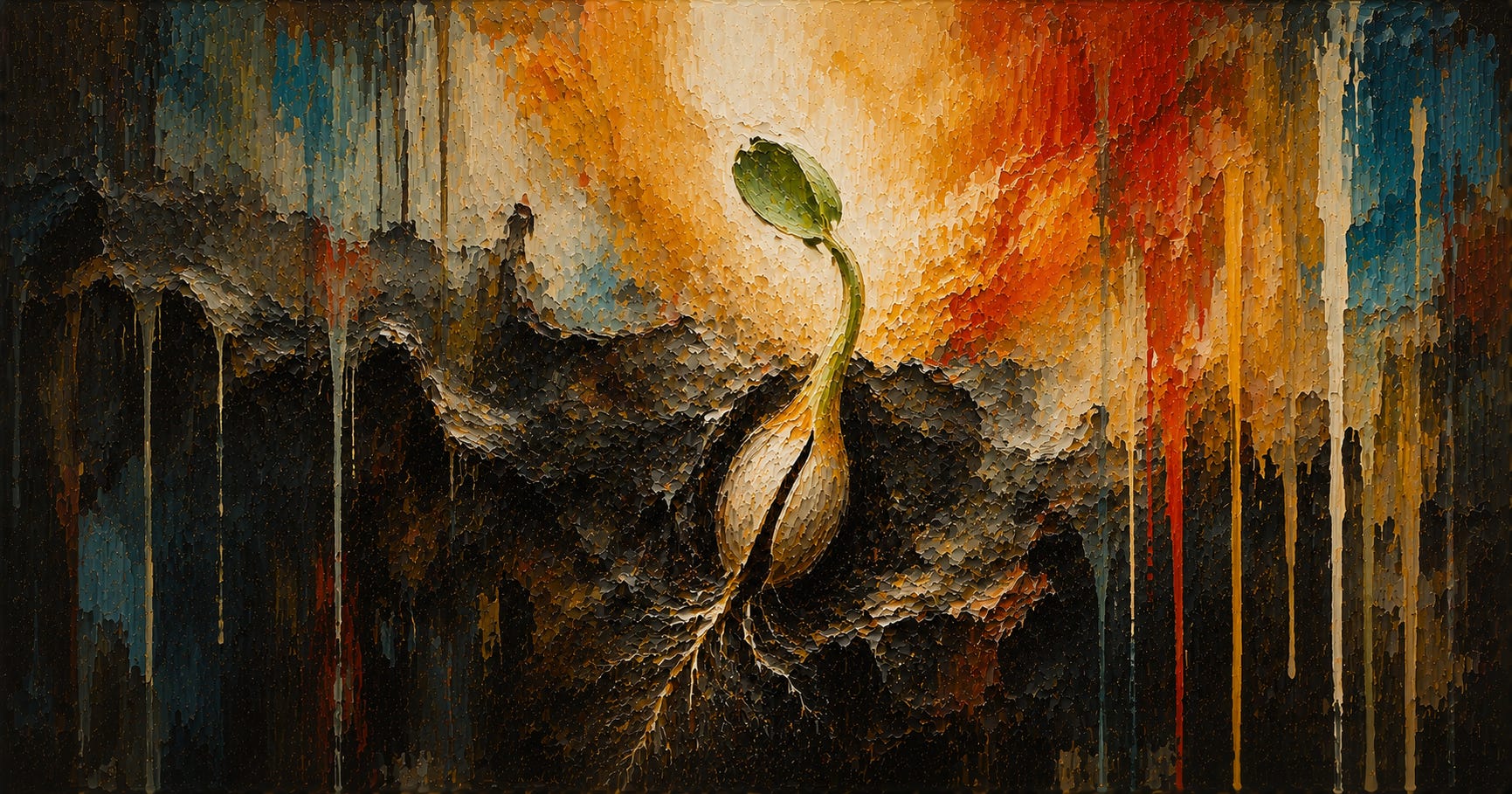
We understand this in the garden.
Yet we forget it in ourselves.
The moment becoming asks for discomfort, many people retreat and call the retreat self-care. They say the thing feels heavy, so it must not be right. They say the conversation makes them anxious, so it must be avoided. They say the work feels hard, so perhaps it is not aligned.
This is how a life gets overgrown.
Not through one dramatic failure….through a thousand small exits.
The unread message. The workout skipped again. The boundary never spoken. The apology delayed until it becomes ridiculous to send. The page left blank. The decision postponed under the noble costume of needing more clarity. These things look small in isolation. So do weeds when they first appear.
Give them a season.
They take the bed.
There is no need to turn this into a moral emergency. That only makes people perform change instead of practice it. The better move is quieter. Look at one place in your life where the evidence is embarrassing the story you tell about yourself.
Only one.
Do not choose your whole life. That is how people build a fog machine and call it introspection. Choose one square foot of the garden. The part you keep stepping around. The part you keep explaining. The part where your intention has been sitting in the rain while something else grows in its place.
Then do the plain thing.
Pull one weed.
Clean the room you keep pretending does not affect your mind.
Put your phone away long enough to remember that your attention still belongs to you.
One act will not make you new.
That is good. New is often too big to be useful. You are not trying to become a different species by dinner. You are trying to become trustworthy in one small place. Trust is built by evidence. So give yourself some.
There is a kind of dignity in doing a small thing without announcing it.
No grand transformation. No public vow. No dramatic farewell to your former self. Just one honest action that makes your life slightly less governed by the part of you that always wants to retreat.
That is how agency returns.
You begin to learn that discomfort is not always a sign to leave. Sometimes it is the feeling of an old pattern losing authority. Sometimes it is the ache of a muscle being used after years of decoration. Sometimes it is your life asking whether you actually want what you keep saying you want.
That question is not cruel.
It is clarifying.
The garden does not ask whether you feel ready. Spring comes anyway. The light changes. The soil warms. Things begin to grow, whether you have chosen them or not. That is how life works. Your attention is always feeding something. Your habits are always planting something. Your avoidance is never neutral.
This is why becoming yourself is harder than being yourself.
Being yourself can mean staying loyal to whatever has grown by accident.
Becoming yourself means taking responsibility for what stays.
It means admitting that some parts of you are true, some parts are wounded, and some parts are just well-practiced. It means learning to tell the difference before you build a whole identity around a reaction that has been lying to you for years.
That is not glamorous work.
Most honest work is not.
But that is where a life turns.
The turn is small enough to miss.
That does not make it small.
The garden bed stayed in my mind because it did not look hopeless. That mattered. Neglect had not killed it. The soil was still good. The light still reached it. The boards still held. Even the weeds proved something useful: the ground had the strength to grow. It only needed direction.
I think people are like that more often than they know.
They are not broken beyond use. They are overgrown. They are crowded with old protections, borrowed fears, soft excuses, and habits that have mistaken themselves for identity. Underneath all of that, there is still ground. There is still something capable of receiving better seed.
But it will not happen by being left alone.
That is the lie hidden inside the weakest version of “be yourself.” It suggests the self is already finished. It treats growth as a matter of expression rather than formation. It forgets that the self is shaped by what it practices, what it permits, what it avoids, and what it is willing to endure for the sake of something better.
You do not find your life by obeying every impulse.
You reclaim it by choosing which impulses deserve your loyalty.
The garden bed was full before anything had been planted.
That was true.
But fullness is not the same as fruit.
So kneel down. Start small. Pull what is choking the life you claim to want. Plant one thing on purpose. Water it even when the old mess would be easier.
Then come back tomorrow.
The garden will tell you who you are becoming.
With love,
Scott
🔁 RESTACK if this resonated with you or if you feel someone you know needs this today.
More like this:
⚠️ DISCLAIMER: The content shared on this page is intended for educational, inspirational, and thought-provoking purposes only. It is not, and should not be construed as, professional, legal, medical, financial, or personal advice. Nothing posted here is prescriptive or intended to guide specific actions. Where factual claims are made outside of these domains, sources are researched and fact-checked, to the best of my ability, with references provided where applicable. Readers are encouraged to exercise independent judgment and consult qualified professionals before taking any action based on the content here. By engaging with this page, you acknowledge that the information provided is for personal enrichment and reflection only, and that no liability is assumed for decisions or actions taken based on the content. This content may have been reviewed or edited with AI assistance to improve clarity and style. All original ideas, insights, and creative expression remain the author’s own work.
No posts
Comments
Nothing yet. Say the first thing.
Sign in to join the conversation.