
This year, while I’m working on Book Three of Table Titans Club, I’m going to start pulling back the curtain and talking openly about the process of making a traditionally published graphic novel for young readers.
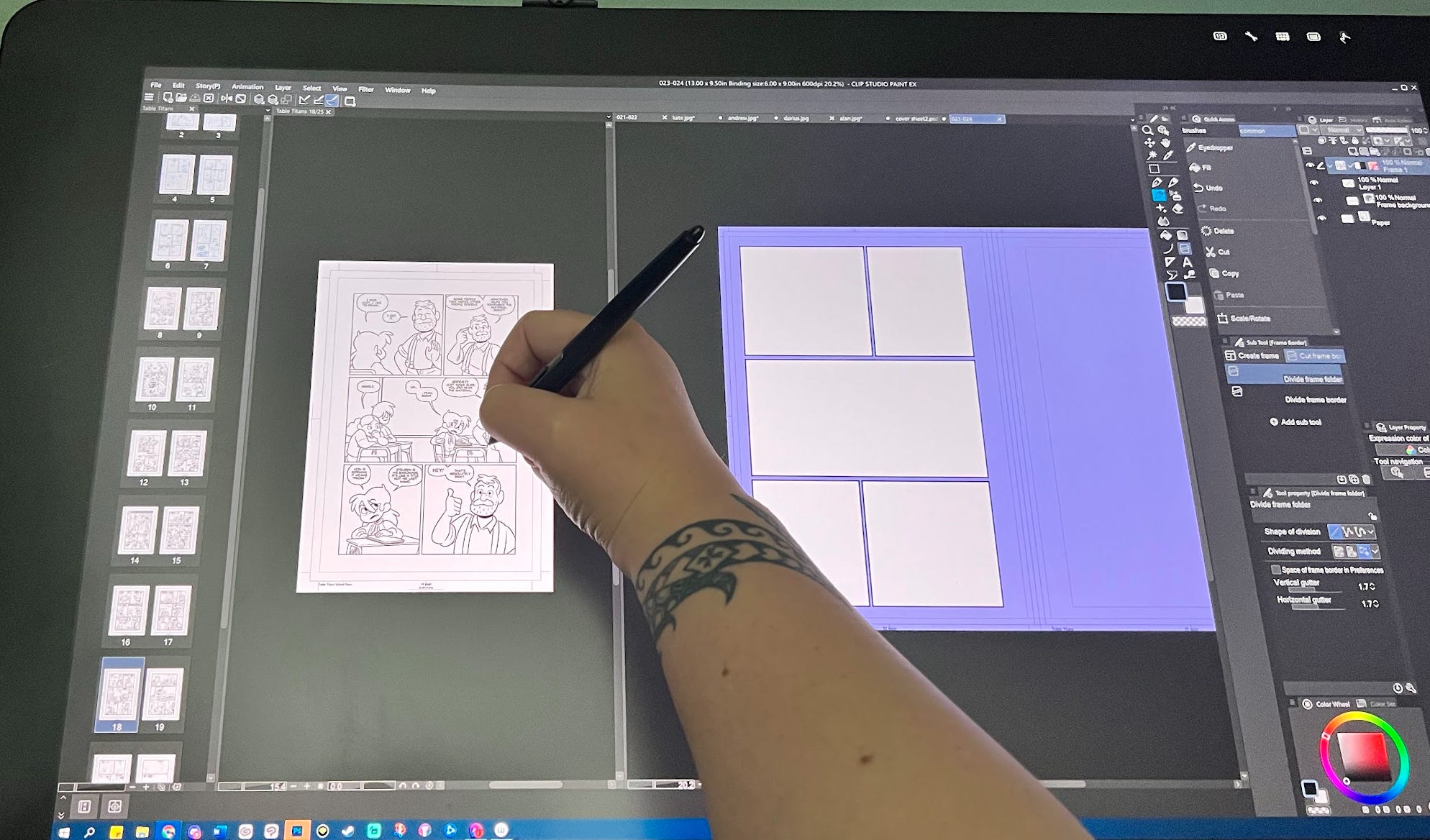
I want to do this for two reasons: to educate and to inspire.
There’s still a lot of mystery around how books get made—how you get an agent, how you get a deal, how you get paid, and how long all of that actually takes. And I think it’s important for people to understand just how much work goes into these books long before a single page hits a printer… and how much of that work comes with absolutely no guarantee of return.
We do it anyway because stories matter—literacy matters. And now more than ever, young readers deserve books that respect their intelligence and meet them where they are.
So let’s start at the actual beginning.
Every book starts with the same thing: the desire to tell a story that matters to you.
Not a story you think will sell.
Not a story based on what’s currently hot.
Not “the next Dog Man.”
Chasing trends is a losing game. Publishing moves slowly. By the time your book is written, drawn, edited, printed, and released, whatever trend you were chasing will already be long gone. The only thing that survives that timeline is a story you care enough about to live with for years.
Your book should reflect you: your sense of humor, your anxieties, your obsessions, your values. Readers can feel the difference between a book written with conviction and one written with calculation.
Here’s something that surprises a lot of people: you don’t need to write and draw the entire graphic novel to get a deal. You just need a pitch.
A graphic novel pitch usually includes:
A clear summary of the story from beginning to end
Introductions to the main characters and how they change
The intended age range and tone
A handful of finished sample pages
Sometimes a short script sample
The goal isn’t polish—it’s clarity. You’re showing that you understand your story, that it has a shape, and that you can execute it.
Once you have a pitch, it’s time to find a literary agent. This takes research. You’re looking for agents who:
Represent graphic novels
Work in children’s or middle-grade publishing
Are actively seeking projects like yours
There are plenty of reputable online resources that list agents, what they’re looking for, and how to submit to them. Submitting to multiple agents at the same time is normal.
One important rule: agents never charge up front.
They work on commission—usually 10–15% of whatever they earn for you. If someone asks for money before selling your book, that’s your cue to walk away.
If an agent offers to represent you, great—but that’s not the finish line.
Your agent will work with you to refine your pitch and then send it out to editors at publishing houses. This phase is called going on submission.
It can take months. Sometimes years. You might get multiple offers, you might get none. And this is important: rejection is not a verdict on quality.
Publishers pass for all kinds of reasons:
They already bought something similar
It doesn’t fit their current list
The timing is wrong
An editor loves it, but can’t get internal approval
None of those means your book is bad.
If a publisher makes an offer, your agent steps in to negotiate:
The advance
Royalty rates
Deadlines
Contract terms
This is where having an experienced agent really matters. They know what’s standard, what’s flexible, and when to push back.
Once the contract is signed, deadlines are set—and it’s time to actually make the book.
Most traditional publishing advances are paid in installments. A common structure looks like this:
Upon signing the contract
Upon delivery of the final script
Upon delivery of the completed book
Upon publication
That advance is an advance against royalties. It’s not a bonus. It’s the publisher paying you early for future sales.
After publication, you’ll receive royalty statements—usually twice a year.
These reports show:
How many copies sold (of all versions of your book)
What your royalty percentage is
How much you earned during that period
Once your total royalties exceed your advance, you’ve officially earned out. From that point on, additional sales generate additional royalty payments.
This is the process. It’s slow. It’s uncertain. It’s not glamorous.
And it’s absolutely worth it.
Over the coming months, I’ll be sharing more as I work through Book Three—the scripting, the art, the deadlines, the doubts, and the small victories.
If you’ve ever wondered how these books actually come into the world, I hope this series helps demystify the process and maybe encourages you to start telling the story only you can tell.
No posts
Comments
Nothing yet. Say the first thing.
Sign in to join the conversation.