
When I was a kid, summer meant I was free to do more chores around the house and one of the ones I hated the most was mowing. So, as of course I would, I turned mowing into flying imaginary X-Wings around the yard. Every tree was an asteroid or turbolaser tower, the old rusty trailer with a canoe on top was a the Imperial base, and our riding mower was a perfect stand-in for an X-Wing because that’s how spaceships fly, right? In straight lines, mimicing the combat of the Spitfire over the skies of London… right?
By now, we’re all well and truly aware that it’s not, and George Lucas (and really most of Science Fiction) simply mimic the world we know. But, in space, there’s no air to push against. With no lift, there’s no banking turns. If you want to change direction, you fire thrusters. If you want to stop, you have to burn your engines in the opposite direction. Newton has the final say.
Most science fiction ignores that because dogfights are fun. But every now and then, a creator decides to ask, “What would this actually look like?” So today, we’re going to look at my five favorite examples.
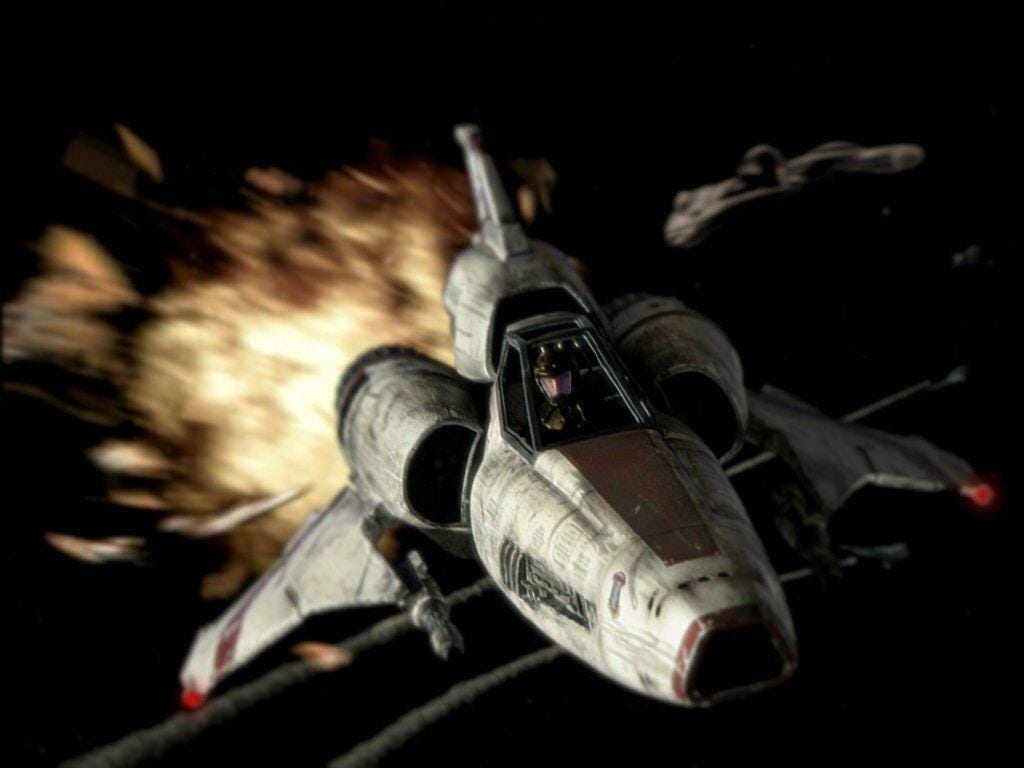
Don’t misunderstand me, I love the Viper. But the Viper cheats.
It still banks dramatically when it gets into close-range dogfights. The Viper uses maneuvering thrusters constantly, and it makes sure to show the RCS firing, they show pilots spining, tumble, and fire while drifting in directions they aren’t facing — but in the end, they’re still treating the dogfight like the classic World War Two dogfight turning into the spin.
I think this is because the 2004 series didn’t go full hard science. They muffled sounds, but didn’t eliminate them, they added RCS, but still flew in vectors. This makes the 2004 BSG one of the best compromises between cinematic action and believable physics.

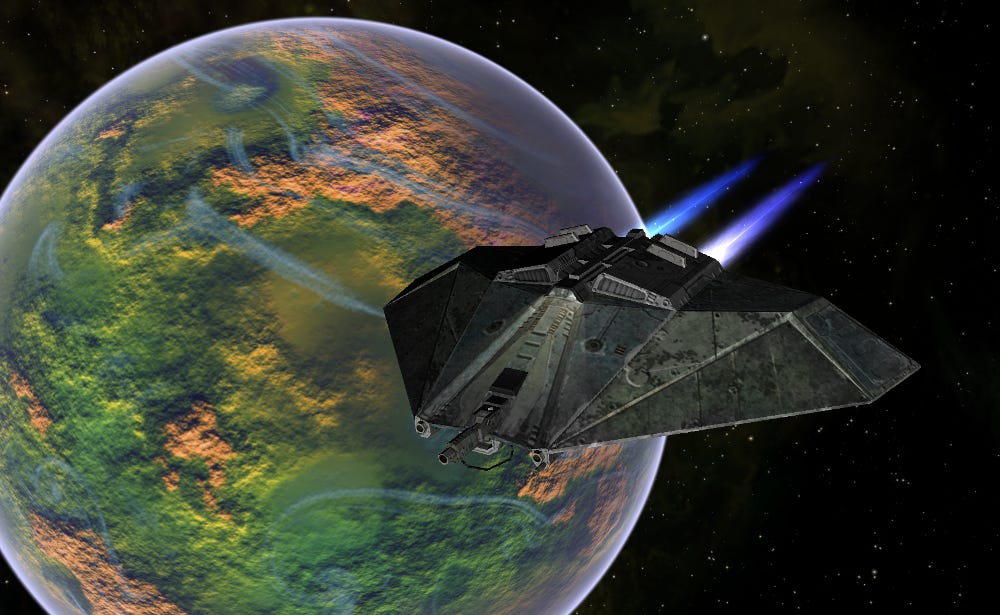
If you’ve never turned Flight Assist off in Elite Dangerous, you owe it to yourself. Suddenly your ship refuses to behave like an airplane. You can drift one direction while aiming another, rotate independently of your travel vector, and pull off maneuvers that would make a modern fighter pilot black out. It’s difficult and unintuitive, but it’s also wonderfully satisfying once it clicks. Another nod in Elite is the rhombus station, it spins and you have to match its rotation to dock. It’s difficult, you’ll crash your ship, but it’s fun. When my wife and I watched Interstellar, when Matthew McConnehey had to dock with the Endurance and it was spinning, I told her, “I can do that, I’ve had to dock in Oolite before.”
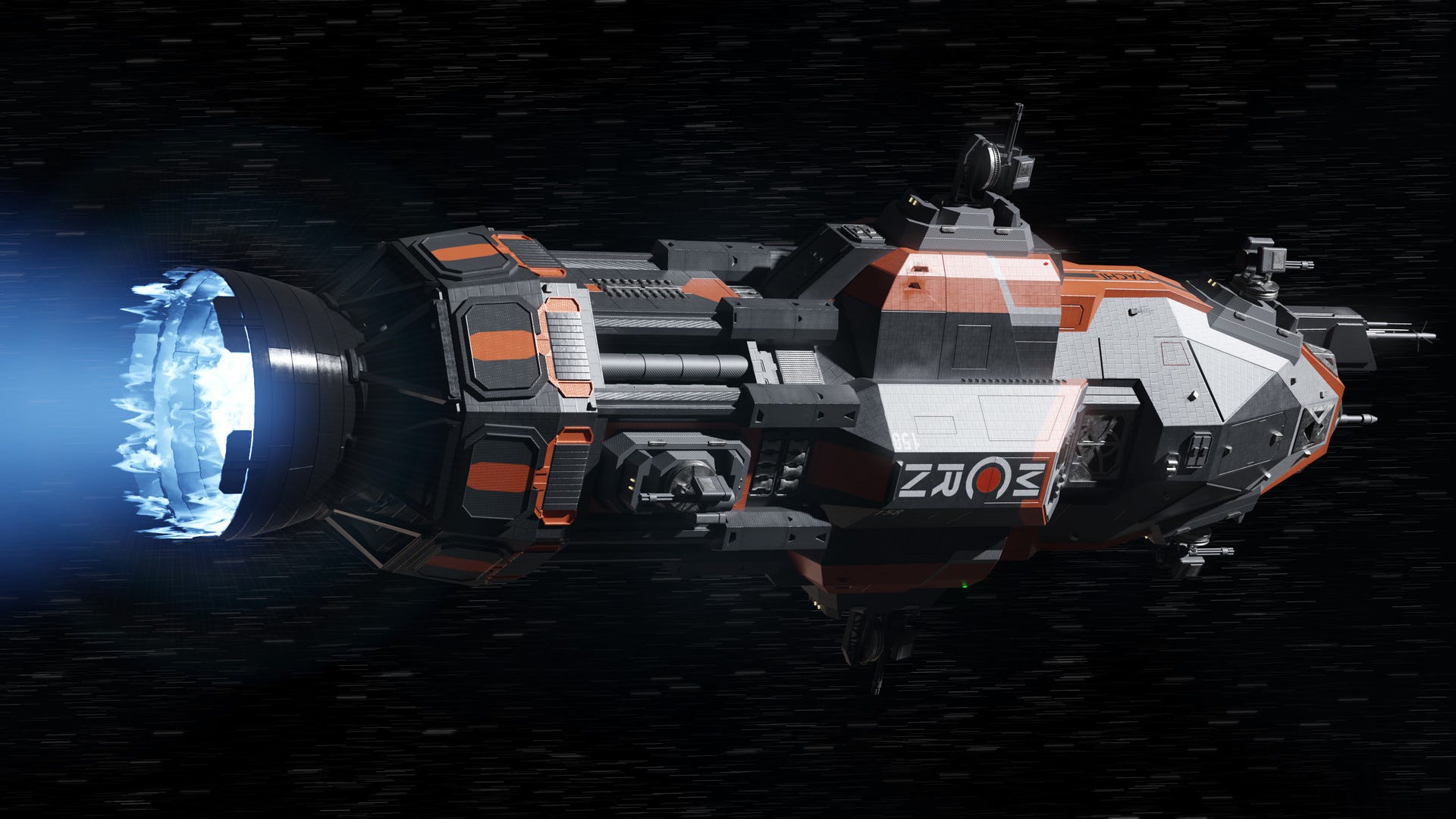
The funny thing about The Expanse is that it doesn’t really have fighters, really because it doesn’t need them. Every ship obeys Newtonian physics, whether it’s a racing yacht or a gunship. Battles become contests of thrust, acceleration, timing, and crew endurance instead of turning circles.
Watching the Rocinante flip end-for-end so it can fire its engines to slow down has probably taught more people orbital mechanics than a semester of high school physics.
This game asks a interesting question: “What if we stopped pretending?”
There are _no_ movie physics here. Heat and fuel matter. Material composition has a direct physics based effect on your ship, combat, and its endurance. Add to that their 1:1 modeling of the solar system (including planets, moons, etc), where you’re plotting your path in the solar system using the same tools NASA does. Your tiny interceptor isn’t making heroic trench runs using the force, it’s executing carefully planned burns measured in meters per second of delta-v. This isn’t your Daddy’s Microsoft Flight Simulator, this is “what if NASA went to war.” Or, I guess, now, it’s a US Space Force combat simulator.
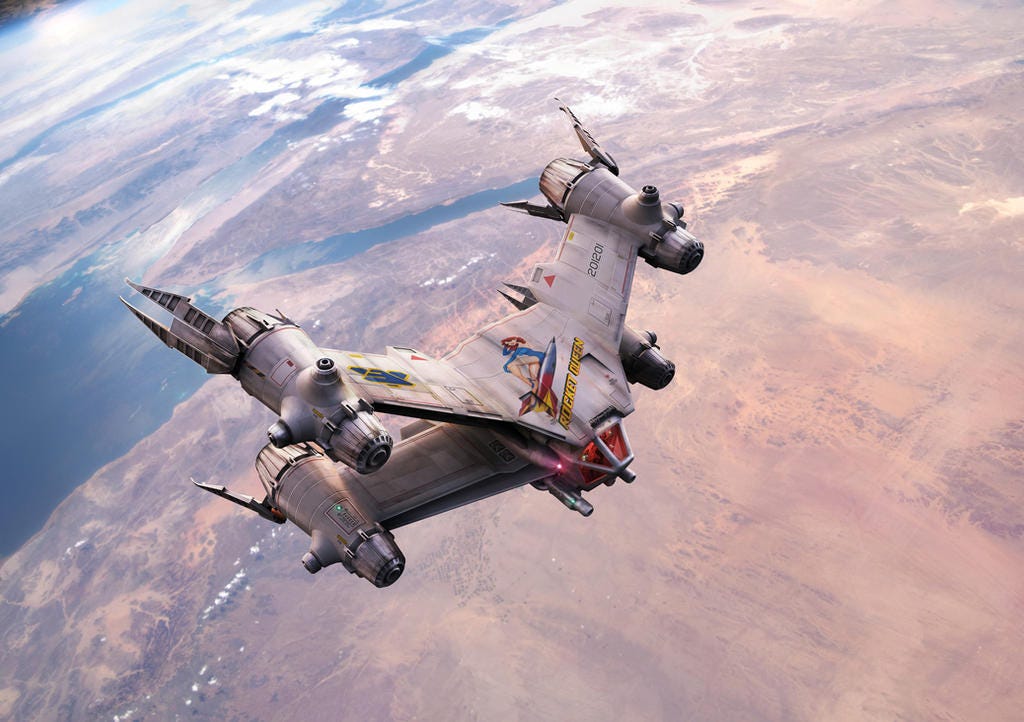
Could there have been any other for number 1?
There’s a reason aerospace engineers still talk about the Starfury. It was designed by Ron Thornton in the early 1990s, the Starfury looks exactly like someone sat down and asked, “How would you actually build a space fighter?”
The engines sit on long outriggers with thrusters pointing in multiple directions. The pilot sits at the center of mass so the ship can rotate independently of its flight path and still give them orientation. The Starfury can strafe and spin and stop on a dime.
Nearly thirty years later, it still feels futuristic because it wasn’t designed to look cool, it was designed to make sense, which is kinda a rare thing in science fiction. And honestly? It still looks incredibly cool.
The funny thing is, none of these designs ruined my childhood. I still love an X-wing screaming through the Death Star trench, and I’ll happily watch Vipers, X-302’s or any other starfighter making banking turns because sometimes Rule of Cool is exactly what the story needs.
But there’s something magical about watching a creator trust the audience enough to let space be... well, space. Physics doesn’t have to make science fiction less exciting, and sometimes it makes it even more imaginative.
When you were a kid, did your imaginary spaceship fly like an airplane, or did you ever stop to wonder what flying in space would actually look like?
And while we’re at it: what’s your favorite “realistic” spacecraft in science fiction? Did I miss one that deserves a place in the Top Five? Did you ever notice the LEGO fighters from Classic Space had RCS thrusters… because I did :-P
Comments
Nothing yet. Say the first thing.
Sign in to join the conversation.