
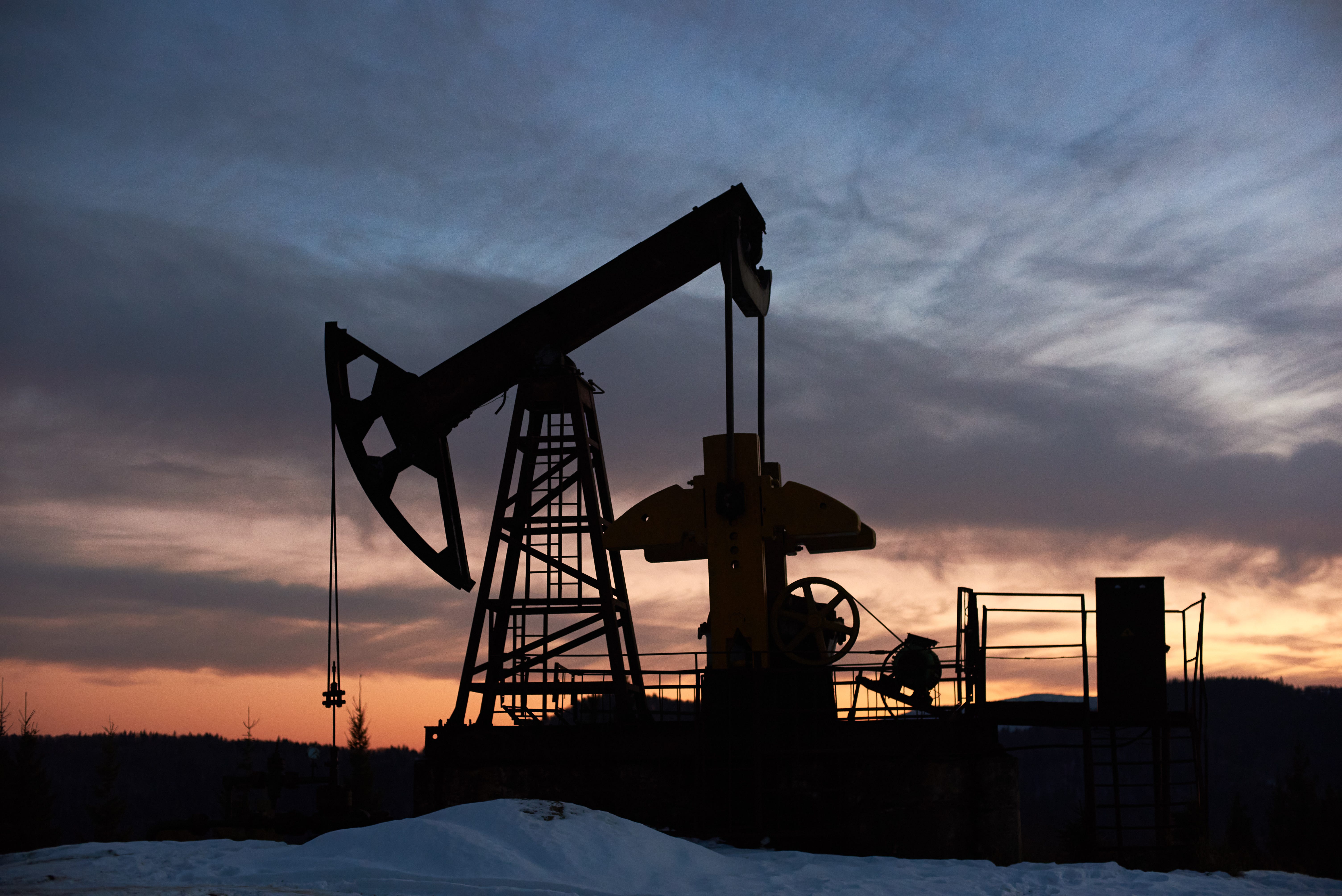
Vladimir Putin’s former dissertation supervisor, whose name is also Vladimir, is convinced that oil fields can refill themselves. Now Russia is drilling a hole 8 kilometres into the ground to prove it. If he is right, Russia has a good chance to become the global superpower it always wanted to be. If he is wrong, Russia will have an extremely expensive hole. Let’s have a look.
The man behind this is Vladimir Litvinenko, rector of Saint Petersburg Mining University. He supervised Vladimir Putin’s economics dissertation in the 1990s and later ran Putin’s presidential campaigns in Saint Petersburg. Litvinenko is also a billionaire with close ties to Russia’s mineral industry. And for years he has argued that oil does not have to come from fossils.
The usual explanation is that oil and gas formed from ancient biological material buried in sediment, heated and transformed over millions of years. Litvinenko instead supports what is called the abiogenic hypothesis. According to this idea, hydrocarbons form from inorganic material much deeper inside Earth, basically due to high pressure, and then they rise through cracks. The important thing is that this geologically produced, abiogenic oil can replenish itself, in contrast to fossil fuels.
We have talked about the abiogenic oil hypothesis previously because it’s popular among climate change deniers. The reason is probably that it gives them a reason to question the need for renewable energy. Now let me be clear, we know that the oil that we currently use is of organic origin. This is because it contains residues from whatever the fossil was that has rotted away and that can be used to identify the origin of the oil.
That said, it is also true that methane as well as oil can be produced by geological processes, deep underground, if you have enough pressure. In fact, some of the methane bubbles underneath the ocean floors seem to have come about in this way. So abiogenic oil does almost certainly exist. I don’t think any scientist questions this. The relevant question is how much and where.
Litvinenko is very bullish on the idea. He thinks there is a lot of abiogenic oil and he thinks there is good evidence. At a conference in 2023, he claimed that some oil reservoirs should have been exhausted long ago, but production continues, quote, “precisely because the reserves are being replenished.”
Since I am already quoting the guy, he’s got an entire conspiracy theory about how his pet theory has been suppressed. In an opinion piece from last year, he wrote:
“By the end of the 20th century, the theory of the abiogenic origin of hydrocarbons was unreasonably marginalized. The situation was reminiscent of the persecution of geneticists in the Soviet Union from the 1930s to the 1960s. Reasoned scientific debate gave way to dogmatism. It’s possible that the Club of Rome itself needed an apocalyptic forecast for energy resources to justify its policy of global population reduction.”
He has also said in an interview that “pseudo-ecologists who swear by “green energy”…and hysterical voices who proclaim that there’s only 20-30 years’ worth of oil left, claim that Russia is on the brink of collapse.” And that also explains “what’s happening in German industry”.
To make a long story short, he wants to assure Russia its rightful status as world leader by finding infinite oil.
Now Litvinenko is getting the chance to test it. Saint Petersburg Mining University says it is drilling an 8 kilometres deep well in Komi, that’s a remote oil-producing region west of the Ural Mountains. Normal fossil fuel is usually not found that deep underground. It’s not unheard of, for example in China there are some super deep oil reservoirs, but it’s somewhat unusual. You’d then have to test the oil for organic traces. And most importantly, I guess, you’d want to check whether the reservoir replenishes on timescales less than a few billion years.
Oil that never runs out would certainly be useful to Russia. It would also be useful to oil companies. Which is why oil companies have been looking for the great abiogenic oil fields for decades. So far, they haven’t found any.
Don’t get me wrong, I am not against the Russians drilling holes. Indeed for what I am concerned, I wouldn’t mind if they spent more time drilling holes and less time threatening their neighbour countries with assimilation. But to me the entire idea of abiogenic oil looks like a bad case of wishful thinking.
Still, an 8 km hole has its uses. If the results arrive, Russia can bury the theory there.
Comments
Nothing yet. Say the first thing.
Sign in to join the conversation.