
In contemporary public discourse, it’s clear that many people have not been taught how to argue effectively. Name-calling, groundless accusations, guilt by association, and other logical fallacies are sprinkled throughout the news, social media, and conversations. This is a skill that everyone thinks they are good at but few really can do well.
When I was in the classroom, one of the units I taught in our curriculum was on rhetoric, the traditional name for the art of argumentation. Each semester, I thought of this unit as my small attempt to address this broader problem by at least introducing the students in my class to a better way.
The core of the unit was the pairing of two seminal rhetorical texts: “Letter to Viceroy, Lord Irwin” by Mohandas Gandhi and “Letter from a Birmingham Jail” by Dr. Martin Luther King, Jr.
In an earlier article, I talked about the general literacy routine I use with nonfiction texts, describing some elements of how I taught these two letters.
Here in this post, I want you to see this routine in action, with a particular focus on how I taught students about rhetorical devices and provided opportunities for them to practice using evidence in their own argumentative writing.
I would begin the unit with Gandhi’s letter, since it preceded King and served as an inspiration for his nonviolent direct action during the Civil Rights Movement. After guiding my students through a close reading of the text and developing a summary paragraph, I would direct their attention to the rhetorical devices for a second look at the text using a jigsaw activity.
Given a rhetorical analysis chart listing six devices (see below), they would work independently to identify at least two examples of rhetorical devices in the letter.
Next, I would have students collaborate with a group, share what they found in the text, and work together to complete the entire chart.
Following this, I would call on members from each group to share an example of each rhetorical device, and I would restate and clarify the way each example demonstrated an effective use of rhetoric.
Lastly, after our whole class discussion, students would complete a SOAPSTone analysis chart and paragraph to synthesize their thinking about Gandhi’s message and his use of rhetoric. This task required students to utilize evidence from the text and practice making a basic argument about their interpretation of certain textual elements, such as the author’s claim or tone.
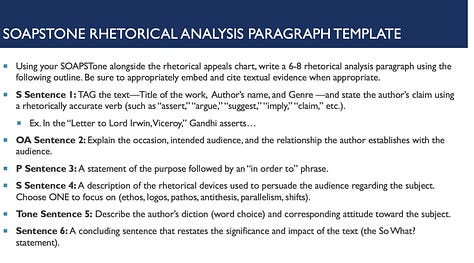
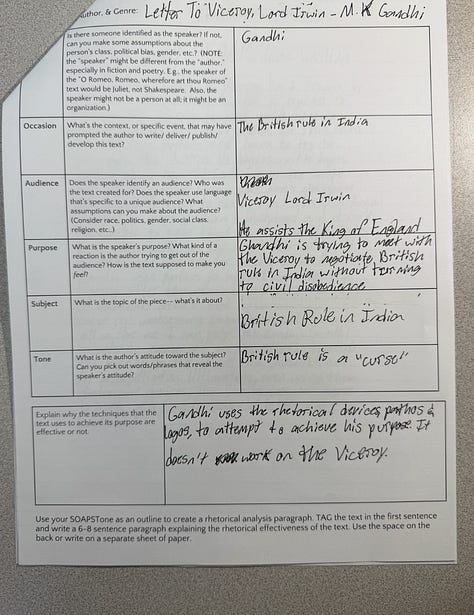
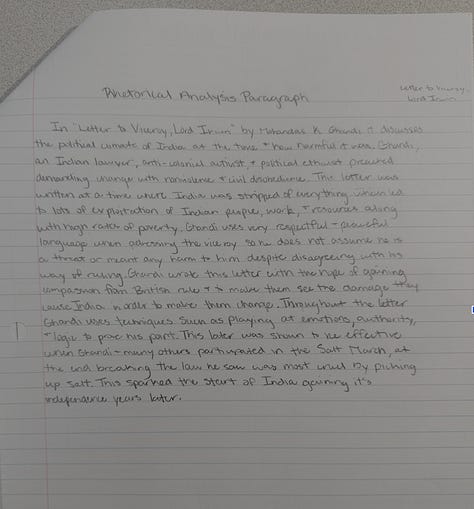
In a subsequent lesson, we would turn our attention to King’s “Letter from a Birmingham Jail,” building on our rhetorical knowledge gained from engaging with Gandhi.
First, given the length of the letter, I would strategically scaffold the reading of the text. To start, I would set our expectations and direct students to look for and annotate certain elements in King’s prose.
Next, we would read the first eleven paragraphs aloud, and I would model thinking, ask questions, and guide our discussion along the way.
After reading a few paragraphs aloud myself, I would also invite students to read and share their reactions, insights, and annotations.
Finally, I would have students write a gist or summary statement for the first eleven paragraphs. This prepares students to engage in a similar routine that they will complete in groups as we jigsawed the remaining paragraphs of the letter.
On the subsequent days, as I mentioned in the video, students would compose an analytical summary of the entire text and complete another rhetorical analysis chart and SOAPSTone using the same routine as with Gandhi.
The careful, recursive examination of King’s argument and style enabled students to build confidence with a lengthy nonfiction text, activate background knowledge about the history of the period, and see multiple, strong examples of rhetoric in action.
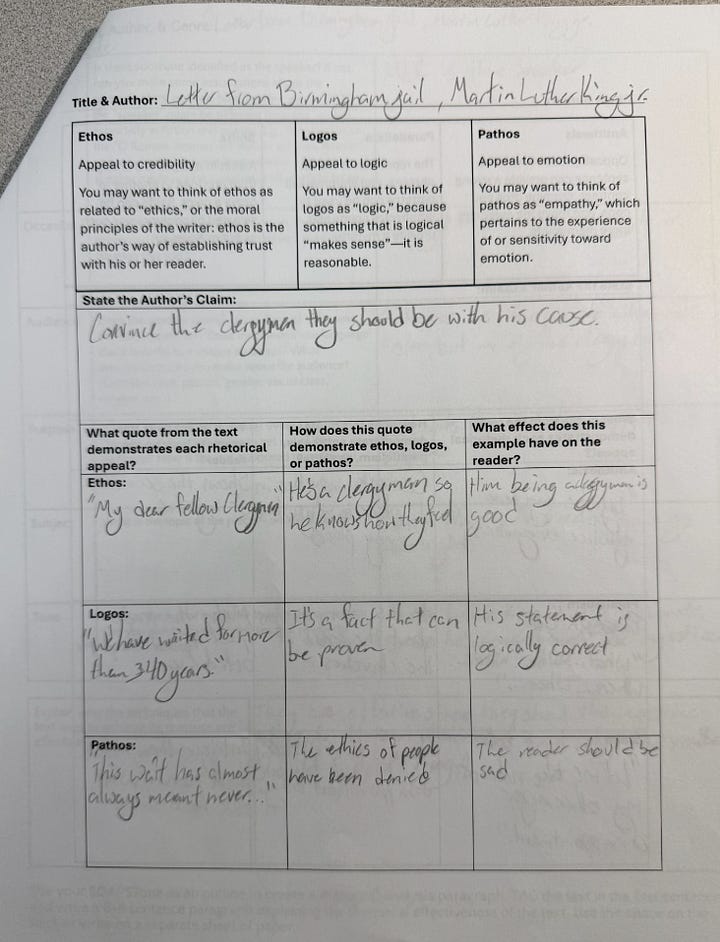
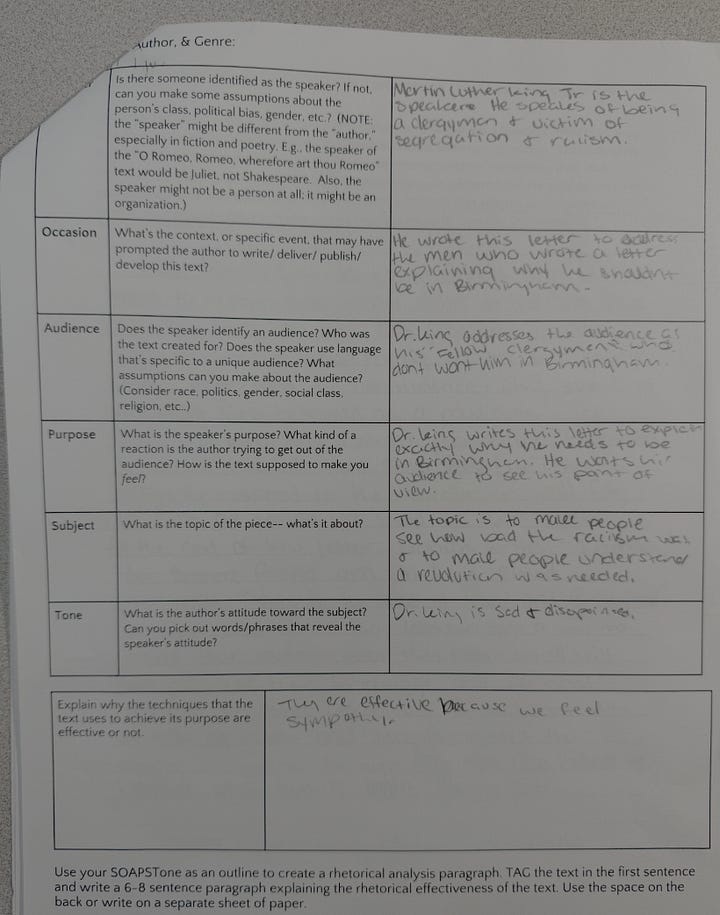
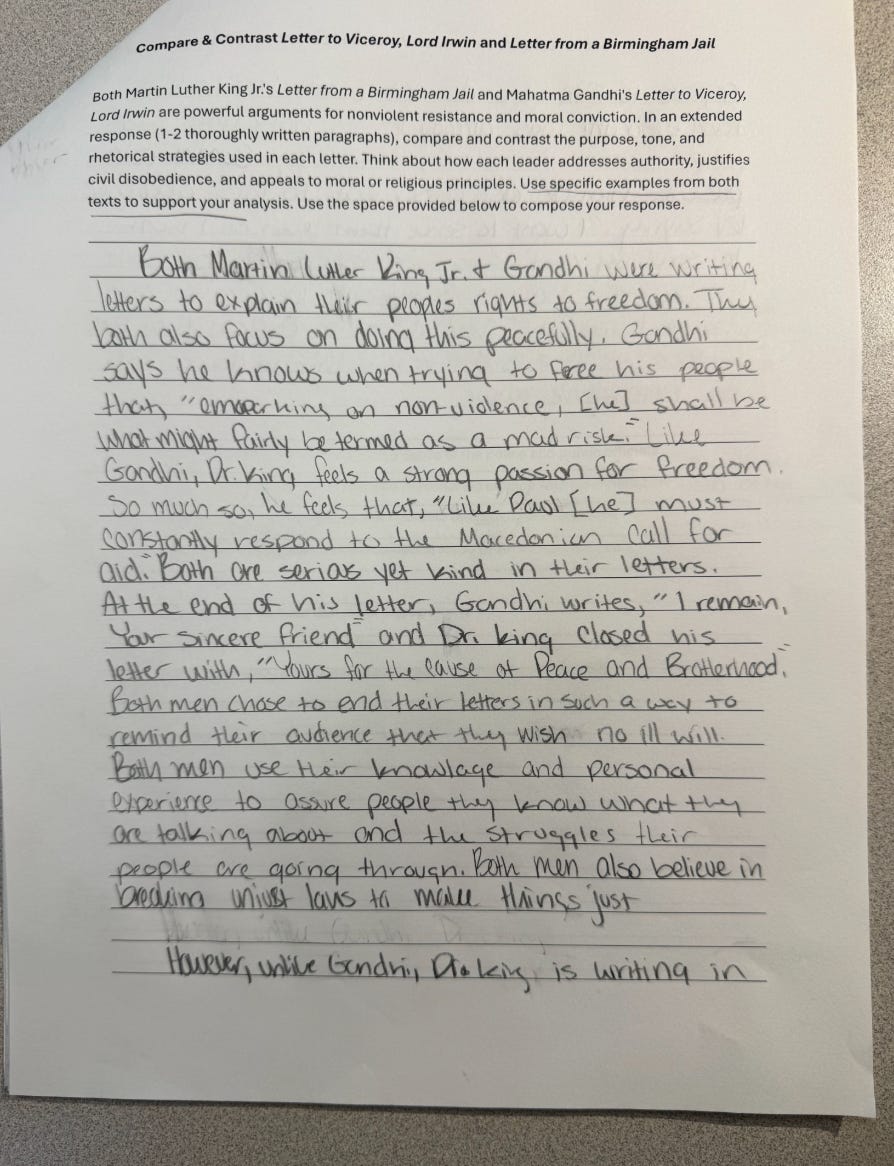
Lastly, one element of their assessment over this unit was a written comparison of the use of rhetoric in the two texts. This assignment helps students demonstrate their analysis and argumentation skills, their ability to cite and interpret text evidence, and practice synthesizing information from two separate sources.
As one can see, this rhetoric unit provided opportunities for students to engage deeply with these two critically important rhetorical texts, practice a wide range of literacy skills, build background knowledge, and be introduced to effective argumentation. Through this, I hope my students were better equipped to make solid arguments and contribute more effectively to contemporary discourse as they eventually graduate and enter higher education or the workforce.
No posts
Comments
Nothing yet. Say the first thing.
Sign in to join the conversation.