
When scientists first reported finding microscopic particles of plastic inside human brain tissue, the public immediately jumped to the final, most urgent question: Is this going to make us sick?
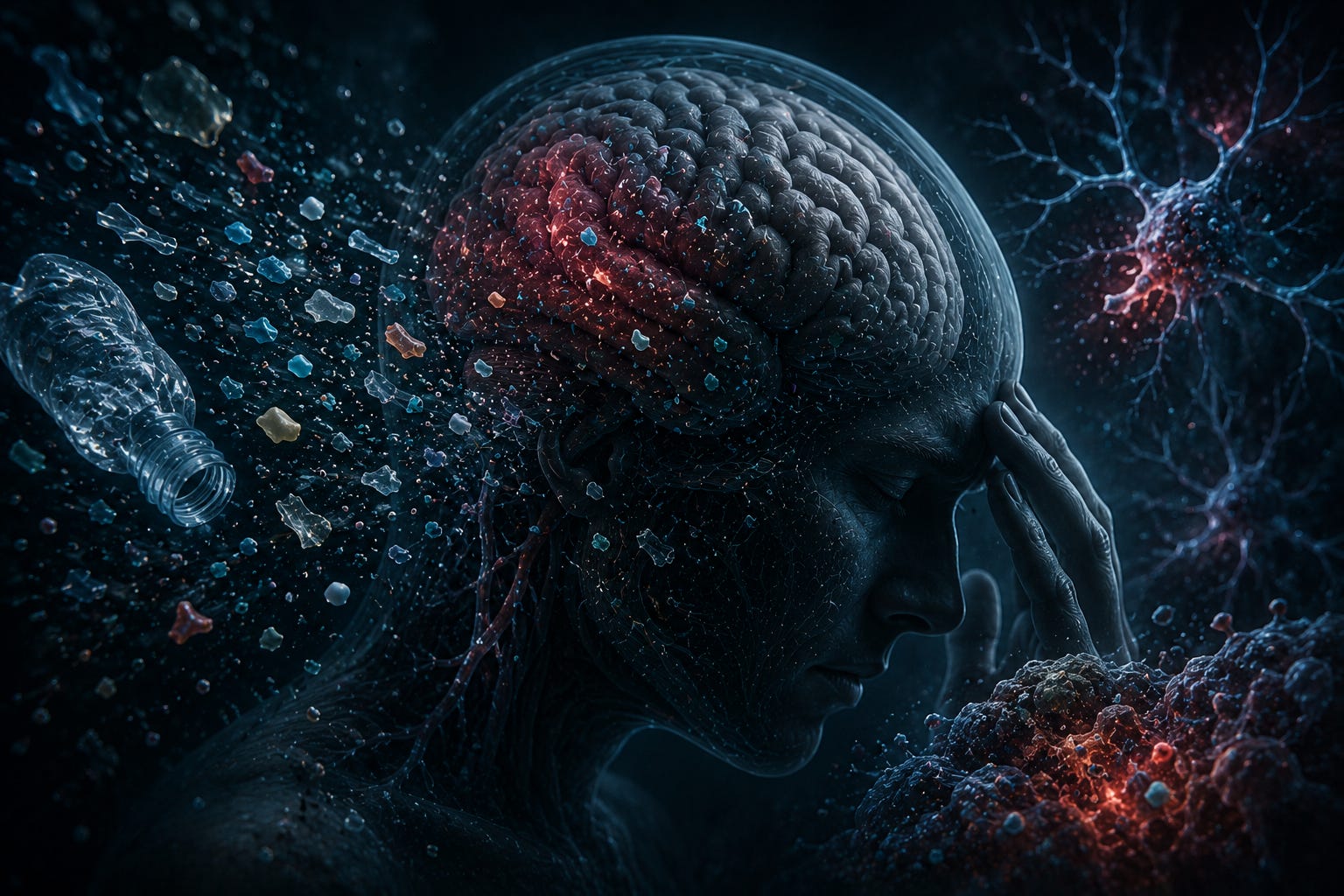
Scientists, however, began by asking a different one.
How could plastic survive the journey to the brain in the first place?
That question turns out to unlock almost everything else. It forces us to move past the immediate shock of the headlines and look closely at the complex, elegant, and highly protective biology of the human body.
In Monday’s article, we explored how deeply woven plastics have become into modern life, and how sophisticated new laboratory instruments have allowed us to detect these tiny fragments—microplastics and even smaller nanoplastics—in organs throughout the body, including the brain. But simply detecting something is not the same as proving it is doing damage. Our bodies host many foreign substances that they tolerate, ignore, or successfully clear away every day.
So, does plastic actually damage human brain cells, or is it merely an inert passenger?
The answer is far less straightforward than the alarming headlines suggest. It sits at the intersection of cutting-edge neuroscience, complex chemistry, and the frustrating limits of modern toxicology.
To understand the real risks, we have to look at how these tiny particles attempt to breach the brain’s defenses, what happens to the tissue if they succeed, and why proving direct harm in living, breathing humans is one of the hardest puzzles science has ever tried to solve.
Comments
Nothing yet. Say the first thing.
Sign in to join the conversation.