
On April 26, 1952, peat diggers working at a bog near Grauballe village in Jutland, Denmark, pulled a dead man out of the earth. He still had a full head of hair and a pained expression on his face, his body so well preserved that the workers assumed he had died recently, just a few years ago.
They called the police, the doctor, and a local amateur archaeologist named Ulrik Balslev first. People thought this was probably Red Christian, a local drunk who had gone missing in 1887, believed to have fallen into the bog, and drowned. But the body was naked, visibly distressed, and something felt off. The locals contacted the Aarhus Museum of Prehistory.
The next morning, Professor Peter Glob arrived and oversaw peat cutters carefully extract a large block of peat around the body to keep it intact, before transporting the whole thing to the museum for proper examination. Radiocarbon dating later revealed the man had died sometime between 321 and 261 BC, making him as old as 2,300 years. He became known as Grauballe Man, after the village where he was found.
The reason why he looked so fresh comes down to where he was buried. Peat bogs are highly acidic and have very low oxygen levels, conditions that prevent organic matter from decaying in the normal way. The cold, waterlogged, anaerobic environment essentially acts as a natural preservative, tanning skin like leather, halting bacterial activity, and locking soft tissue in place for millennia.
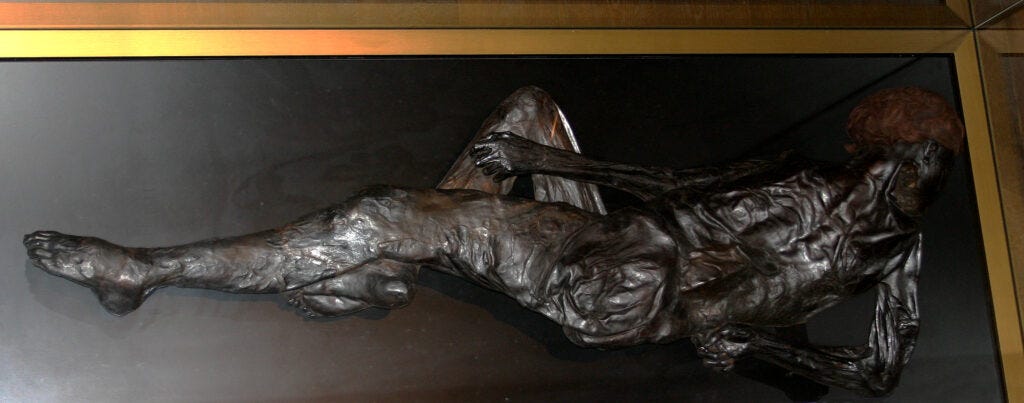
Grauballe Man’s death was caused by a single wide cut from ear to ear, severing his trachea and esophagus, a wound that could not have been self-inflicted. Specialists believe he was killed and deposited in the bog as part of a ritual act, likely human sacrifice, a practice also suspected in similar Danish bog bodies like Tollund Man and the Elling Woman.
His hands were smooth, showing no signs of hard labor like farming, suggesting he wasn’t a common laborer. His teeth and jaws indicated periods of starvation or poor health during early childhood, and his spine showed early-stage spondylosis, a degenerative aging condition. His hair, well-preserved, is now reddish due to bog chemistry; it was originally dark.
Analysis of his digestive tract revealed his final meal: a dense, grain-based mash containing over sixty botanical components, cereal grains, wild grasses, and seeds from foraged plants. The sheer variety has led archaeologists to wonder whether the dish was practical, ceremonial, or both.
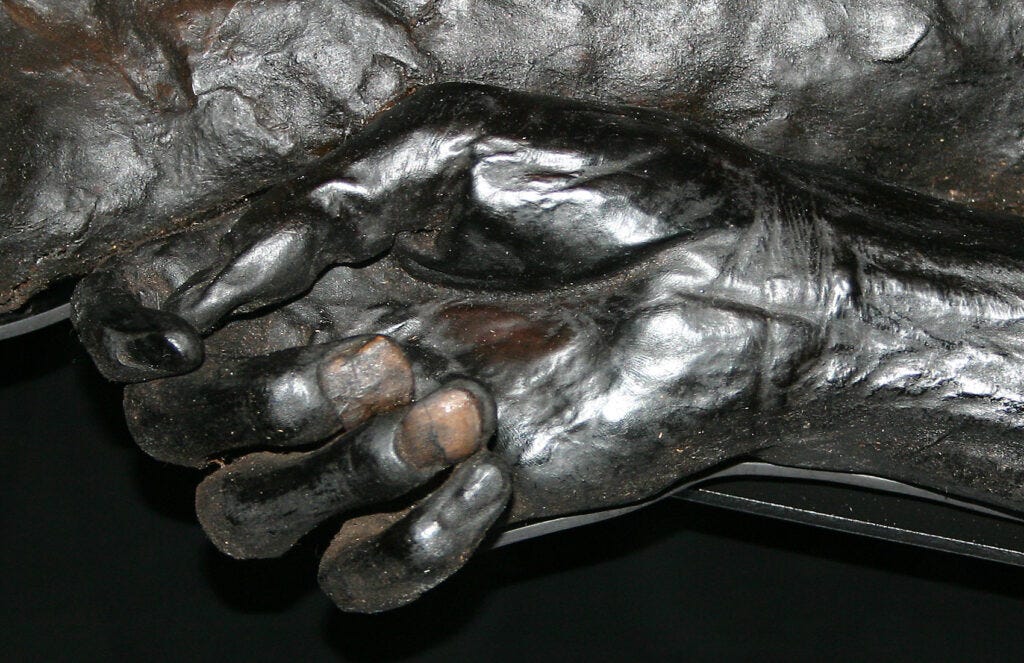
The preservation was exceptional enough that fingerprints were successfully taken from his hands and feet. Today, the body is on display at the Moesgaard Museum near Aarhus, where it has been since 1955, still recognizably human, still carrying the tension of his final moments on his face.
Sources: All That’s Interesting, Wikipedia, Moesgaard, Grokipedia
I first published it on my site ScienceClock.com
No posts
Comments
Nothing yet. Say the first thing.
Sign in to join the conversation.