
The night before I was scheduled to speak at Columbia University about People-Based Learning, I went looking for inspiration.
This is not always a sensible thing to do. The sensible thing would probably have been to stay home to review my plan, pack and go to bed early enough to catch a 7:00 a.m. train to New York without resenting every person who has ever scheduled anything before noon.
Instead, on a hot June evening, I walked to the Free Library of Philadelphia and then climbed to the fourth floor Skyline Room that overlooks the city. The event was described as, “A conversation on the human need for connection. Dr. Vivek Murthy, U.S. Surgeon General, and UPenn professor Angela Duckworth discuss what it means to truly belong in today's world.” It felt more like a conversation between two super successful friends.
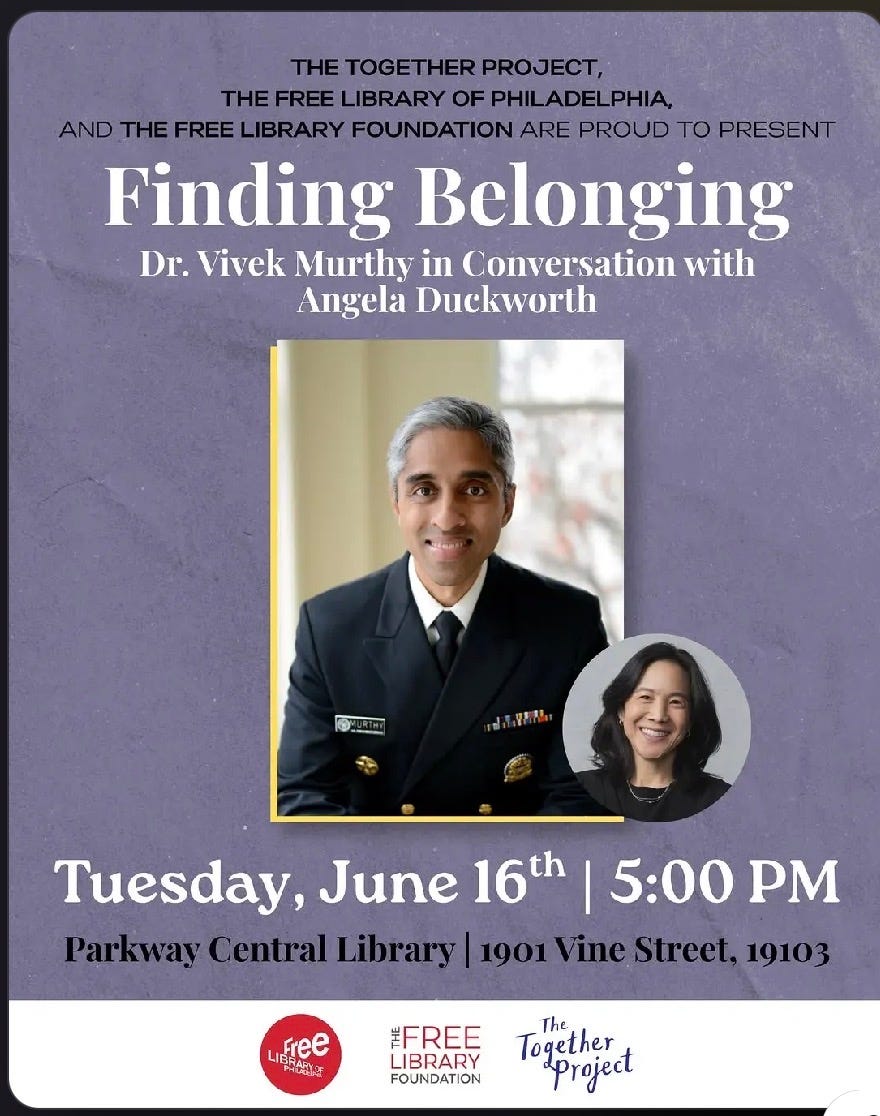
Murthy had come to Philadelphia as part of the Together Project, an effort to understand what is helping people build connection and community across the country. He had spent the day visiting local projects, including a community garden where neighbors grow food, share the harvest, and look after the space even when the gardeners themselves are not there.
The conversation covered a lot of ground: the mental health of young people, social media, phones in schools, political dehumanization, AI, trust, parenting, and the forces that seem to be steadily eroding our capacity to be human with one another.
There is plenty to feel alarmed about.
Young adults are reporting historically low levels of happiness. 1 Some teenagers are feeling the anxiety associated with spending hours each day on social media. Parents report being more lonely than the past, with fewer opportunities for connection with communities. Our technologies amplify comparison, outrage, and passive observation while crowding out sleep and face-to-face interaction. Lawmakers privately admit that technology companies may be too powerful to regulate effectively.2
It was not exactly a bedtime story.
When they opened the room for questions, a man in the audience stood up and described his work helping Philadelphians find clubs, groups, and communities. He told us about a 29-year-old woman who said she wanted more connection in her life. But as he talked with her, a strange thing became clear to me.
She had roommates, intergenerational friendships. She played ping-pong at a recreation center and hosted parties where everyone brought someone new. She was already doing many of the things we are constantly told lonely people no longer do. His story revealed that she was participating in community, while simultaneously believing herself to be “part of a generation that had lost it.”
Then he asked something close to this (I didn’t get the exact wording): Could all our talk about a loneliness epidemic be making people feel lonelier?
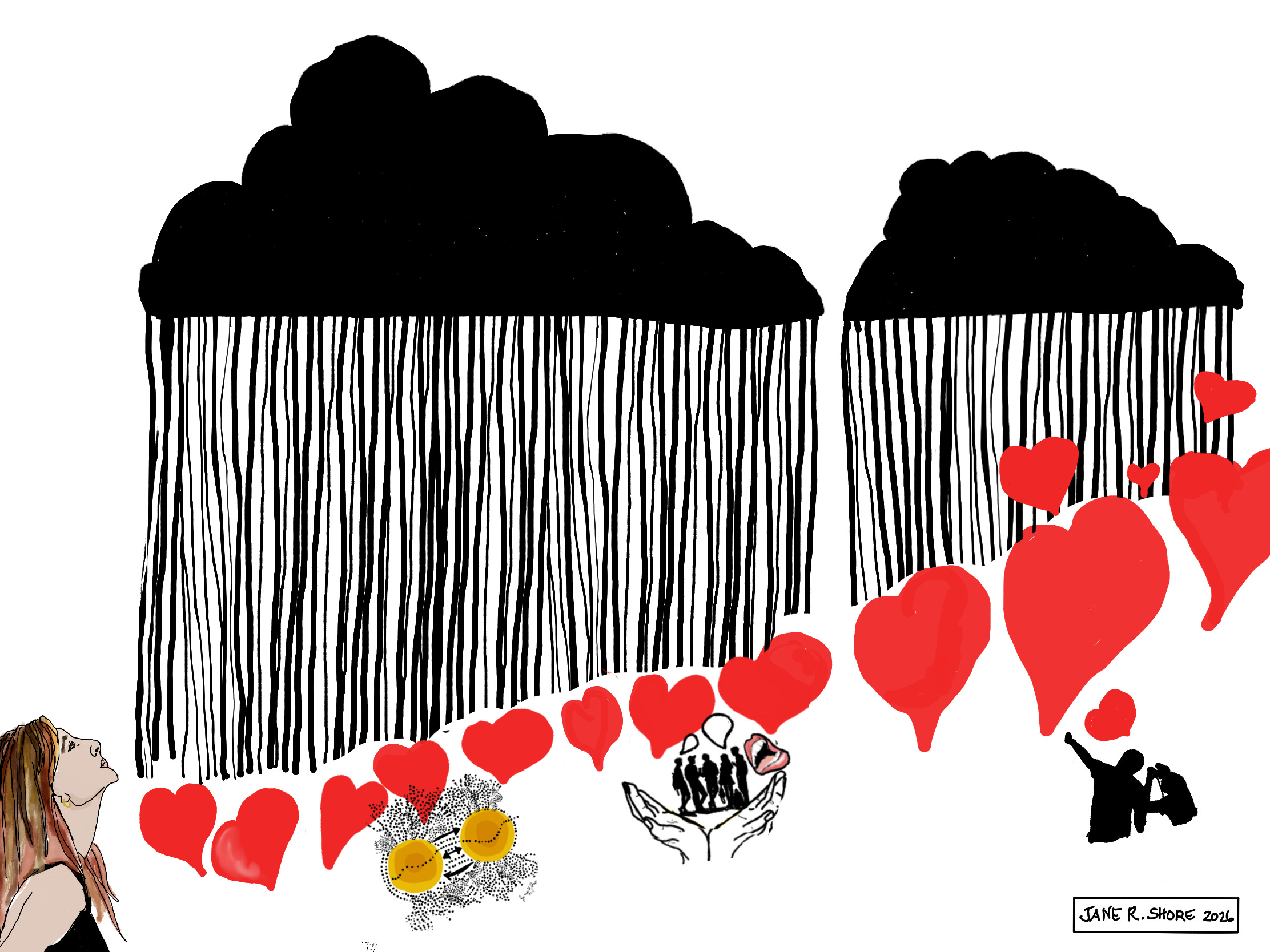
What if the most meaningful professional learning you experienced this year happened in a small circle of people thinking together?
Join author and professional counselor Maria Munro-Schuster and I for an experience experiment. Just Show Up,3 is a virtual gathering. We will introduce a People-Based Learning practice and offer many ways to participate.
Date: Friday, August 28
Time: 1:00–2:00 p.m. ET
Location: Link provided to those registered
Click here for details and registration. This is open to all and will be intentionally small at first. Show up with a question. Show up with an idea. Or just show up.
Comments
Nothing yet. Say the first thing.
Sign in to join the conversation.