
❤️ Thank you for being here.
One of the unexpected gifts of writing People-Based Learning has been the conversations it has opened. And a question I’ve gotten just recently sparked an idea.
What does People-Based Learning actually look like in the world?
The more I thought about it, the more I realized I don’t want to answer that question alone. People-Based Learning isn’t a model to introduce, it’s not even really new. PeBL is more an orientation to design that recognizes experiences where people aren’t incidental to learning, but essential to it.
If that’s true, then no single school or organization should define it. So instead of answering the question, I want to collect stories that make it come to life.
Today, I’m excited to introduce People-Based Learning in the World, a new School of Thought series featuring reflections from learning communities (schools, museums, workplaces) around the world who are intentionally designing for identity, belonging, participation, and human connection.
I’m honored that Elizabeth Dean’s reflection on The Village School is the first contribution. Hers sets just the right tone, a thoughtful community asking meaningful questions about co-creation, about identity, how we learn with and through one another.
My hope is that, together, we create a library of stories that helps us recognize People-Based Learning wherever it appears. If your school, library, museum, workplace or other learning community is exploring these ideas in authentic ways, I’d love to hear from you.
By Dr. Elizabeth Dean, The Village School
Whenever I’m trying to ground myself in really understanding something I get up and take a walk. When I’m at work, that walk takes me around school, where I pose whatever question is on my mind to anyone willing to talk. Most recently, I found myself walking through the learning studios at The Village School asking learners their thoughts around People Based Learning:
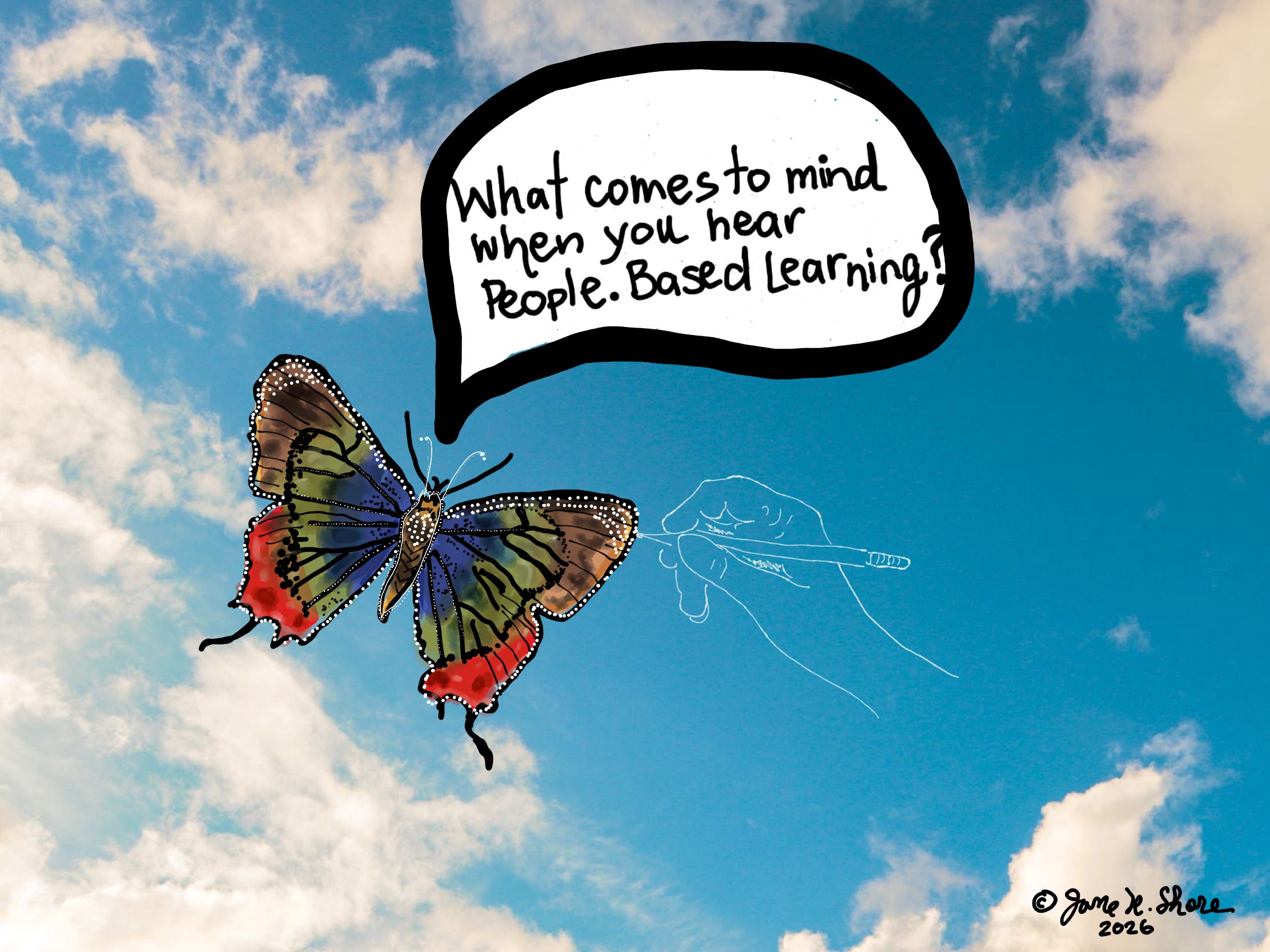
I think it sounds kind of funky. — age 12
Getting out into the world and finding other people to learn with and from. — age 14
When we went to Capitol Hill and advocated for children’s rights. — age 11
It makes me think of TVS because we have so much freedom and opportunity to explore what we’re passionate about that most people don’t have. — age 14
Learning about real life and what people do. — age 11
It makes me think about understanding, like really understanding something. — age 13
Learning about how people learn. — age 6
Learning about each other. — age 7
Learning about how to do the right thing. - age 10
It’s the kind of learning that is all about me. - age 8
None of these young people have met Jane Shore. But somehow, unprompted, they named exactly what she spent years researching and articulating in her new book: People Based Learning: The Future of Learning is Human
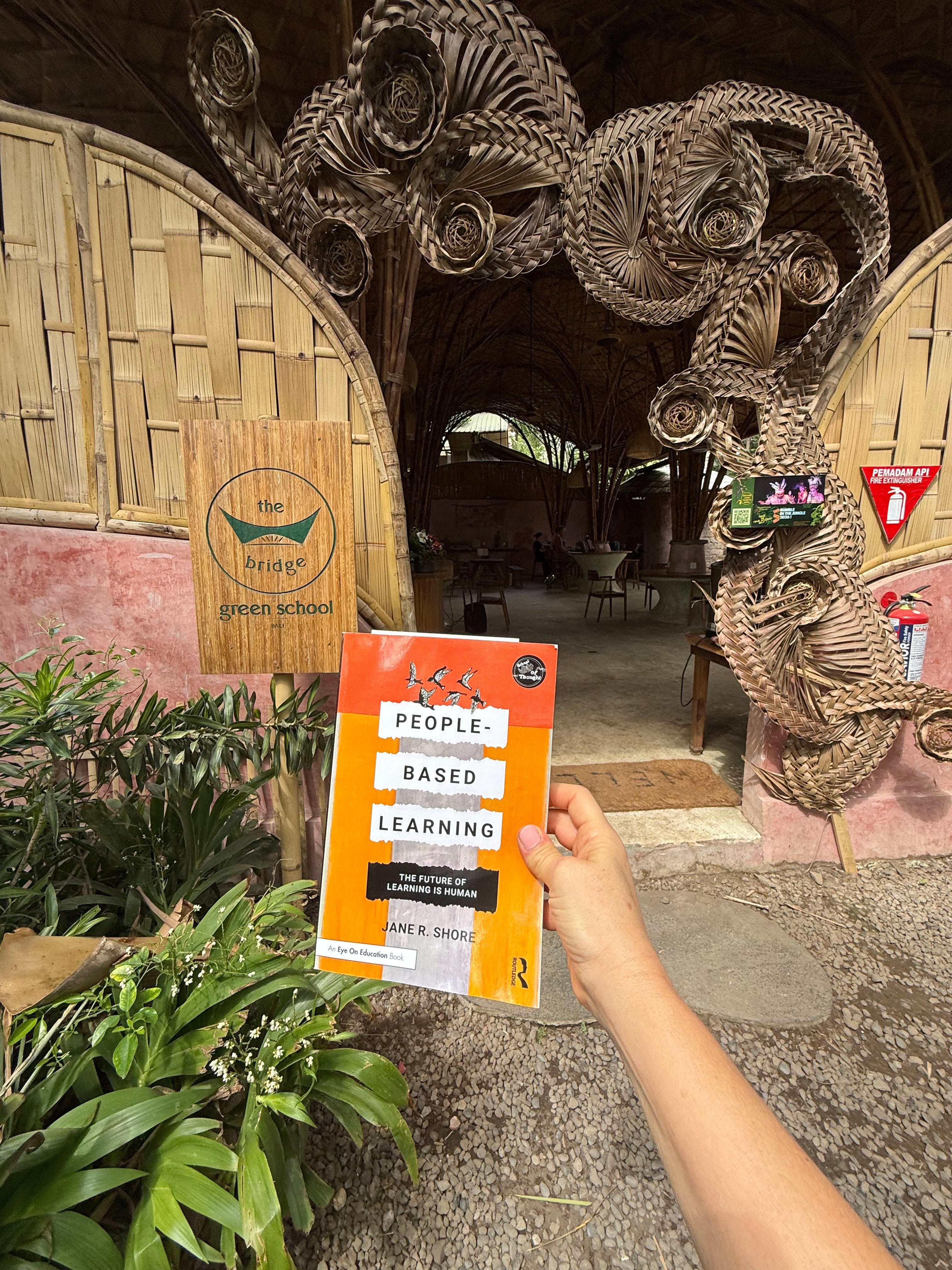
In a time where so much of the talk in education revolves around Artificial Intelligence, Jane’s book is a timely reminder of what is most important when it comes to teaching and learning: people. AI might serve as a replacement for mundane tasks or assist with efficiency, but it won’t ever replace the real - not artificial - human experience. If ever there was a time when the world needed people based learning, it’s now.
Learners at the Village School were able to articulate so much of Jane’s vision because as she says, “People-Based is a return to what comes so naturally”, and The Village School is designed to honor the way children are naturally wired to learn.
People Based Learning is not a model, but a lens through which to distinguish learning experiences. Jane’s book provides multiple criteria to help us capture the heart of a people based experience.
Of all the distinguishers, one cuts the deepest: Identity is integrated, not incidental.
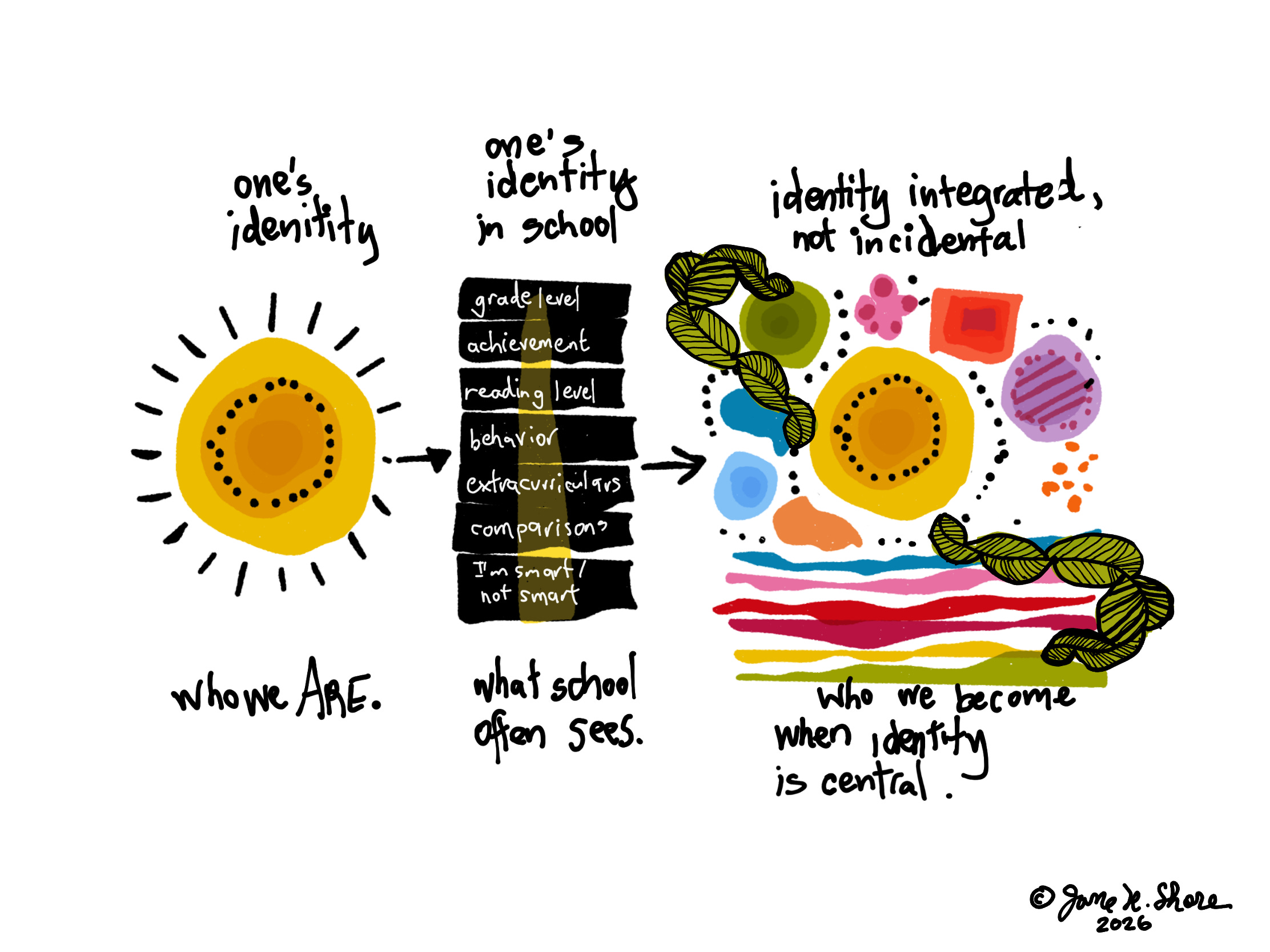
Identity is an essential part of all learning experiences.
Schools are uniquely positioned to shape identity, as much of childhood is spent within school communities. However, most mainstream conversations about school overlook identity and focus on grade levels, achievements, expected content - like a science fair or reading Shakespeare, and extracurriculars. These surface level questions promote a false sense of identity to so many young people: I’m in advanced classes; I’m smart. I’m in regular classes; I’m not smart. The questions we ask about school indicate our values; People Based learning is a call to action for us to refocus our lens on identities.
At The Village School, we often say we care more about who a young person is more than what they know. Knowing yourself is a measured, intentional outcome of our learning design.
Consider the learner who showed up at our school a few years ago timid, unsure, and a little lost. He spent most of his time during morning work in the library reading the same book or pacing the hallways with no real direction. When a guide would ask him a question, he would shrug, mumble a barely there response, and retreat to a quiet corner. When our school counselor met with him, he would only point to pictures to engage, instead of a verbal response. As a guide team we noticed his disengagement with the rest of the group. We noticed his lack of confidence when it came to his abilities. We noticed his mistrust of himself and us. Here is where the principles of People Based Learning come in - we didn’t force him to change anything about himself. We designed spaces and experiences where he could engage, build confidence, and learn to trust us - but most importantly himself. At the end of his first school year with us, he volunteered to MC our end of year ceremony. He showed up on the last day of school with a collared shirt, a suit jacket, and sunglasses. He held the mic - and his own. Like he was born for this moment. And he was.
Identity is most tangible during our middle schoolers’ end of the year presentations which take the form of a defense of learning. Each learner gives a formal presentation on their growth throughout the year, and their reflections say it all:
I used to think I didn’t have the power to change the world, but now I know that I do.
I used to think that I had to get everything perfect all the time and now I know that I don’t – even though I still want to.
I used to think that I wasn’t a leader, but now I think that I am.
I used to think I was the kind of person who didn’t care about school work, and now I think I am the kind of person who cares and I feel really good about it.
I used to think that creativity was only for little kids, and now I know you’re never too old to be creative.
Not one reflection mentioned facts and figures or even what they learned. Every reflection was about who they became.
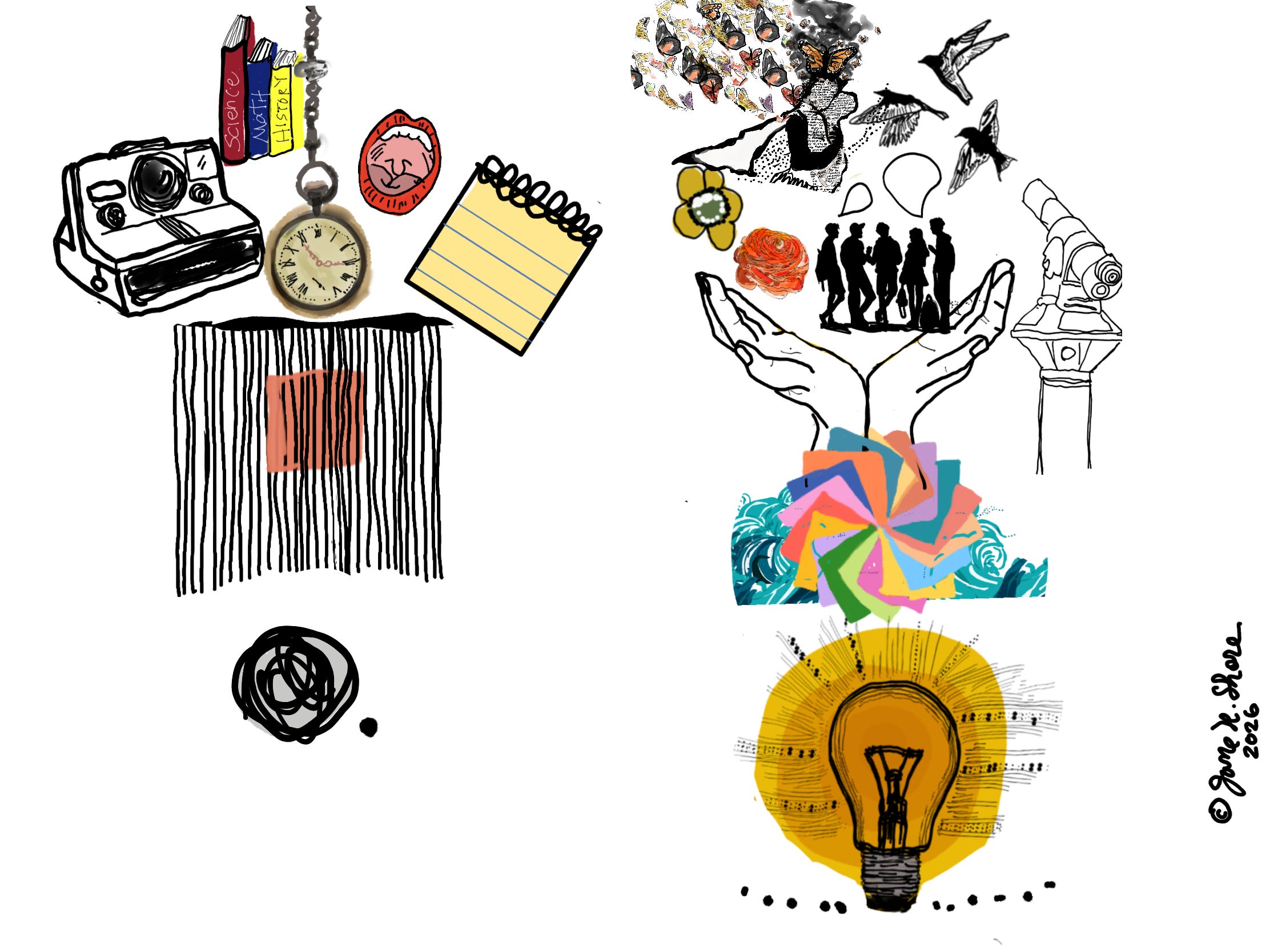
Jane’s book weaves together compelling research, storytelling, and art — a reminder for all educators “that human connection is the method, medium, and meaning of learning.” Often, I find myself in a position to explain how The Village School learning design is different from the status quo. The most tangible differentiators are the easiest to share: mixed aged groupings, extended free-time for all ages, and no grades. After reading Jane’s book, I can say that what sets The Village School apart is its People-Based Learning approach.
In the age of AI, when technology is ubiquitous, The Village School learning design hinges on all things human.
As our Head of School, Maria, says, “What’s innovative right now is what’s human.”
For more inspiration from the incredible Village School, check out the post below.
If you’re a school leader or educator who wants to think more carefully about designing for People-Based Learning as a part of your culture, as a model for community co-creation or to capture more humanity in the design of your measurement, this is work I do. Through keynotes, workshops, consulting, and the framework I call People-Based Learning, I help schools build structures that make connection possible.
If that’s a conversation worth having, I’d love to hear from you.
Details and contact information here at PeopleBasedLearning.com
Comments
Nothing yet. Say the first thing.
Sign in to join the conversation.