
Text within this block will maintain its original spacing when published
For those of you who prefer to read off paper rather than the screen, we have converted the post into an easily printable pdf file here.
Reading is an act of resistance in a landscape of distraction.
David L. Ulin
“I did it!” our 17-year-old son announces, hurtling down the stairs teenage-style with a beaming smile. “I read three thousand five hundred and forty-forty pages in two weeks!”
We knew he had been devouring a series of novels —we hardly saw his face apart from a book for a fortnight — and knew he was a fast reader, but this fast? He explained that he had been reading during every free moment, during meals, between university classes, and pretty much every available nook of time in the day.
Just before Lent our son had decided that he wanted to radically, radically reduce his laptop use.1 This wasn’t something we pushed; he had just come to realize that the laptop and constant access to the internet had created an irresistible, insatiable whirlpool of distraction. He placed his laptop in the upstairs hallway to physically remove temptation, and after an initial hump of boredom, discovered a gripping novel series on our shelves that he had never read before. Suddenly the literary fire in his belly caught, and two weeks later he had burned through 3500 plus pages, and promptly started on another novel series, burning through hundreds more pages in a matter of days.
Within just two weeks, our son had reclaimed his “reading brain”—no small feat for his age cohort, of which a mere 16% read a book daily2, and just 14% of 13-year-olds read for fun. Even among adults, the number of readers who pick up a book are in a steep, continuous yearly decline.
As we emphasized in our Guide to surviving the age of post-literacy, reading underpins the development of human civilization.3 As trenchantly put by one historian: “Without books, history is silent, literature dumb, science crippled. Without books, the development of civilization would have been impossible.”
Fingers have been pointed at various culprits (screens, changing needs, shifting values, educational methods, recession, etc.), but little has been offered in the way of a solution. We do not subscribe to the “inevitablity narrative”, nor do we support inane arguments that maybe people really don’t need to be able to read books anymore.
So how can we respond?
In 2004, researchers Anthony J. and Mary Dekonty Applegate found that teachers who were not enthusiastic readers themselves were unable to pass on a love of reading to their students. They dubbed this “The Peter Effect”, after a line in the Bible where Peter responds to a beggar: “Silver or gold I do not have, but what I do have I give you.”4 Revisiting this effect a decade later, one study found that nearly 50% of future teachers felt lackluster about reading themselves.5
What happens when a love for books has grown cold not just for teachers, but an entire society?
Or rather, what could happen if each person contributed to reviving an enthusiasm for what James Marriott refers to as “a precious golden thread of knowledge running through human history linking reader to reader through time”? What if, just like the desire to have children is supported by seeing other people having children, so too the desire for reading could be ignited by seeing parents, teachers, friends, strangers in cafés reading books? What might happen if instead of pursuing the fractured, distracted, speed-reading fostered by the Internet, we recovered the “capacity for concentration and contemplation”?6
These are the core aims of this year’s Reading Rebellion: to retrain “cognitive patience” and in the process reignite a love of sustained, deep reading, and to spark that same literary fire in others.
Restoring reading brain circuits
Join the Reading Rebellion - take the poll!
Get thee to a snuggery (where to read)
Booklists for everyone:
Books under 400 pages categorized into four different time periods: 1800 to 1899; 1900 to 1949; 1950 to 1999; and 2000 to present.
Classic long reads over 400 pages
Be sure to share your book recommendations to be added to The Reading Rebellion Masterlist!
I (Ruth) will be publishing a mini booklet (4”x 6”) containing a Reading Rebellion Masterlist of book recommendations. This portable notebook will list each book in an alphabetized bullet format to be checked off, perfect for taking along to thrift stores when searching for treasures, or simply to keep track of your reading. Stay tuned…
Note: The masterlist will also include recommendations for teenagers and young readers!
If you’d like your recommendation to be included, be sure to add your suggestions in the comment section!
I will suggest that the future of the human species can best sustain and pass on the highest forms of our collective intelligence, compassion, and wisdom by nurturing and protecting the contemplative dimension of the reading brain.
Marianne Wolf
Our university-aged daughter commented how many of her classmates consider reading a book simply too much of a “commitment”. It requires effort and sustained attention, both of which they are unwilling (or increasingly unable) to give.
But it is not only youth raised in the digital age who share this experience. When Marianne Wolf, who studied literature before beginning her work in cognitive neuroscience, embarked on a self-experiment to see if her reading brain had changed, she was stunned:
When I began to read Magister Ludi, I experienced the literary equivalent of a punch to the cortex. I could not read it…It was as if someone had poured thick molasses over my brain…To compensate, first I consciously tried to read the text less quickly, to no avail. The rapid speed to which I had become accustomed while reading my daily gigabytes of material did not allow me to slow down enough to grasp whatever Hesse was conveying.
No matter how well-read we are, our inherently malleable brain circuitry will adapt to the mode of reading we most use. So, if we spend most of our days skimming text and jumping between tabs, our eyes will also begin to speed over the well-crafted sentences of our favorite authors.
We develop an unconscious set toward reading based on how we read during most of our digital-based hours. If most of those hours involve reading on the distraction-saturated Internet, where sequential thinking is less important and less used, we begin to read that way even when we turn off the screen and pick up a book or newspaper…There is a worrisome and potentially more lasting aspect to this “bleeding over” effect…:the more we read digitally, the more our underlying brain circuitry reflects the characteristics of that medium.
Our digital dilettantism is reshaping our reading circuitry and the associated attention span so much so that the average memory span of many adults has dropped by more than 50 percent over the last decade.7
Yet the hopeful news is that this drastic change need not be permanent. Because of our brain’s neuroplasticity, our atrophied deep reading circuits have the potential to be restored. Wolf relates her experience as follows:
It took two weeks…only when I forced myself to enter the book did I experience, first, slowing down; second, becoming immersed in the other world in the book; and third, being lifted out of my own. During the process, my world slowed down —just a little—as I recovered my lost way of reading.
If our goal is to convert our hyper attention into deep attention, then reading physical books is one of the most helpful first steps. In Reading as Counter Practice, L. M. Sacasas discusses Wolf’s research on the importance of reading tangible books. This includes the way in which a book provides cues to the embodied mind:
….visual placement on a page or the shifting weight of one side of the book against the other as we make our way through it - which subtly scaffold our comprehension and retention. And, of course, the book is not also the gateway to countless other forms of media the way a smartphone, tablet, or even internet-connected e-reader might be. In these ways, the affordances of the books might be uniquely suited to sustaining deep reading.
Researcher Andrew Piper further argues that “the sensory dimension of print reading adds an important redundancy to information —a kind of ‘geometry’ to words —which contributes to our overall understanding of what we read.”8
Also, the feel, beauty, and history of tangible books is simply irresistible.
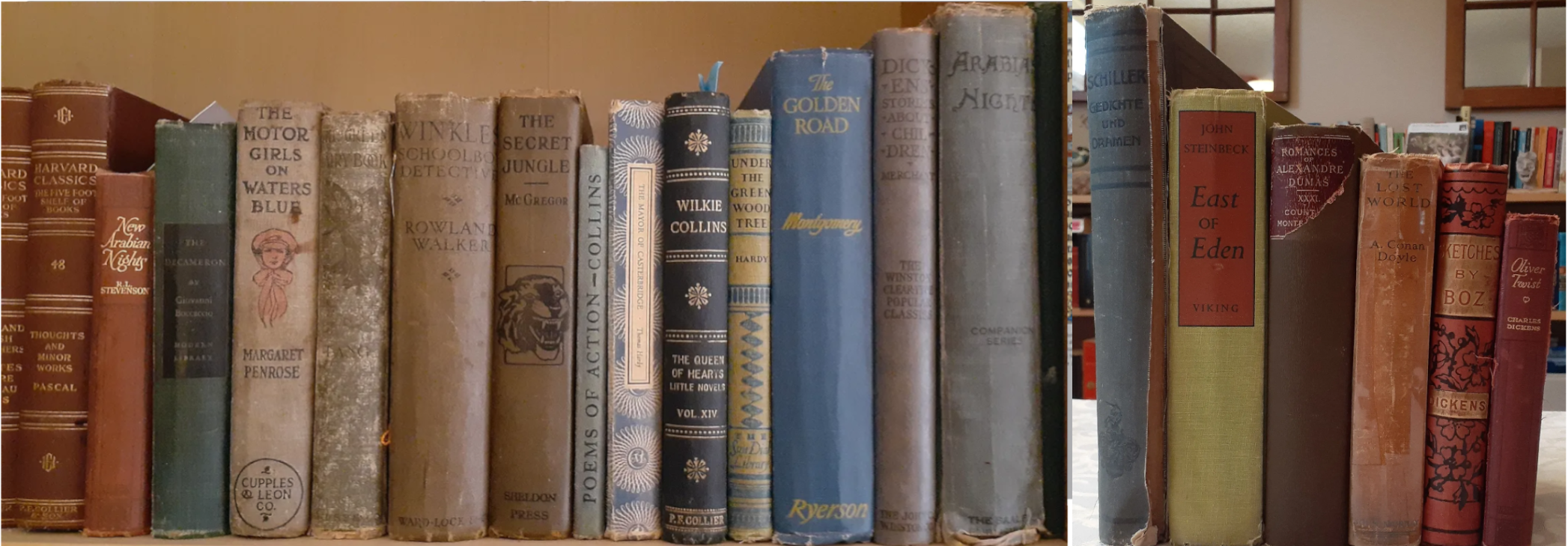
If our goal is to restore deep reading circuits and rediscover the joy, insight, and myriad of associated benefits of reading fiction, we must begin simply by committing to regularly reading tangible books.
The average reader will take 10-13 hours to finish a 400 page book. There are few of us who are used to devoting “orca-sized time blocks” to reading books, such as Ted Gioia9 or Tommy Dixon10. However, given that the average person spends 7 to 16 hours a day on devices, we know that we actually do have the time to read.
Even reading just 30 min a day will allow the average reader to finish a shorter novel in under two weeks. If you spend an hour a day, you can complete a 400 page book in a fortnight.
Decide when in your day you will carve out 30 min to devoted reading time. Start with 15 minutes, if that feels more doable.11
It may be challenging at first to return to the printed page, but with daily persistence and patience, your can recover your “quiet eye”.
The Reading Rebellion thus sets the following challenge:
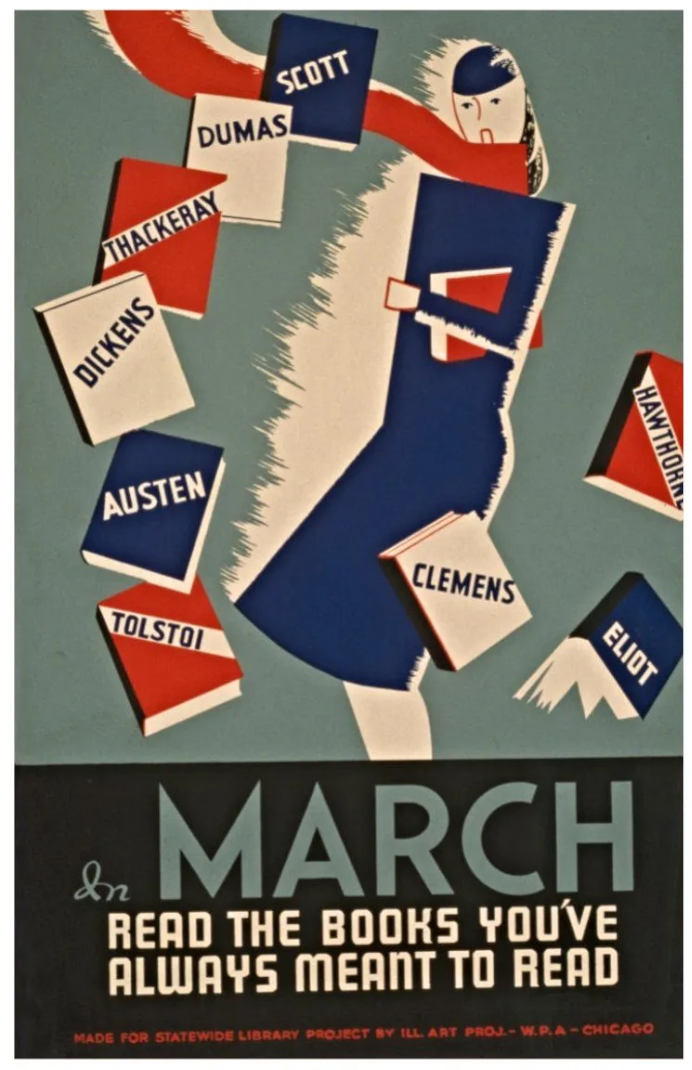
A snuggery12 is a 19th century term that deserves revival: a cozy comfortable place, either a small room or den, or even a snug corner in a public place. An overwhelming majority of readers (94%) read in their own homes, so start your reading rebellion by arranging a pleasant reading nook. Here are some favorite reading spots to get you inspired: (from the top left, clockwise) Patrick B. Whalen, Hollis Brown, Bretigne, Denise Trull (her chair was part of a Hamlet production!), Louisa Chase, Gabrielle Hanley ("Lily"), Maureen E Davis, Ted Gioia, lindsay, Whitney Hargraves, and Linda Stoll (center, giving Edward Hopper vibes).

On rocking chair by a wood stove (Brennan Wierzba); crowded on the sofa with grandchildren ( Denise Olivieri Yagel); on the train ( Rosie Whinray); walking on a treadmill ( Griffin Gooch); on the front porch ( Cheryl Winstead), in a hammock (Lindsey Stelzig) and:
You can even find a favorite reading spot at the south pole!
To help get you started and offer practical inspiration, we invited Substack writers and readers to share their top five book recommendations and created a reading list of fiction from a variety of genres in the range of 200-400 pages. We specified this length so that they are easily readable within two weeks.
A tremendous THANK YOU to all the writers and readers who contributed! Joel J Miller, Matthew Long, Jeremy Anderberg, Catherine Oliver, Henry Oliver, Kerri Christopher, Griffin Gooch, Andrew Campbell, Patrick B. Whalen, Samuél Lopez-Barrantes, Christy Isinger, 1000GoodBooksProject, & many more.
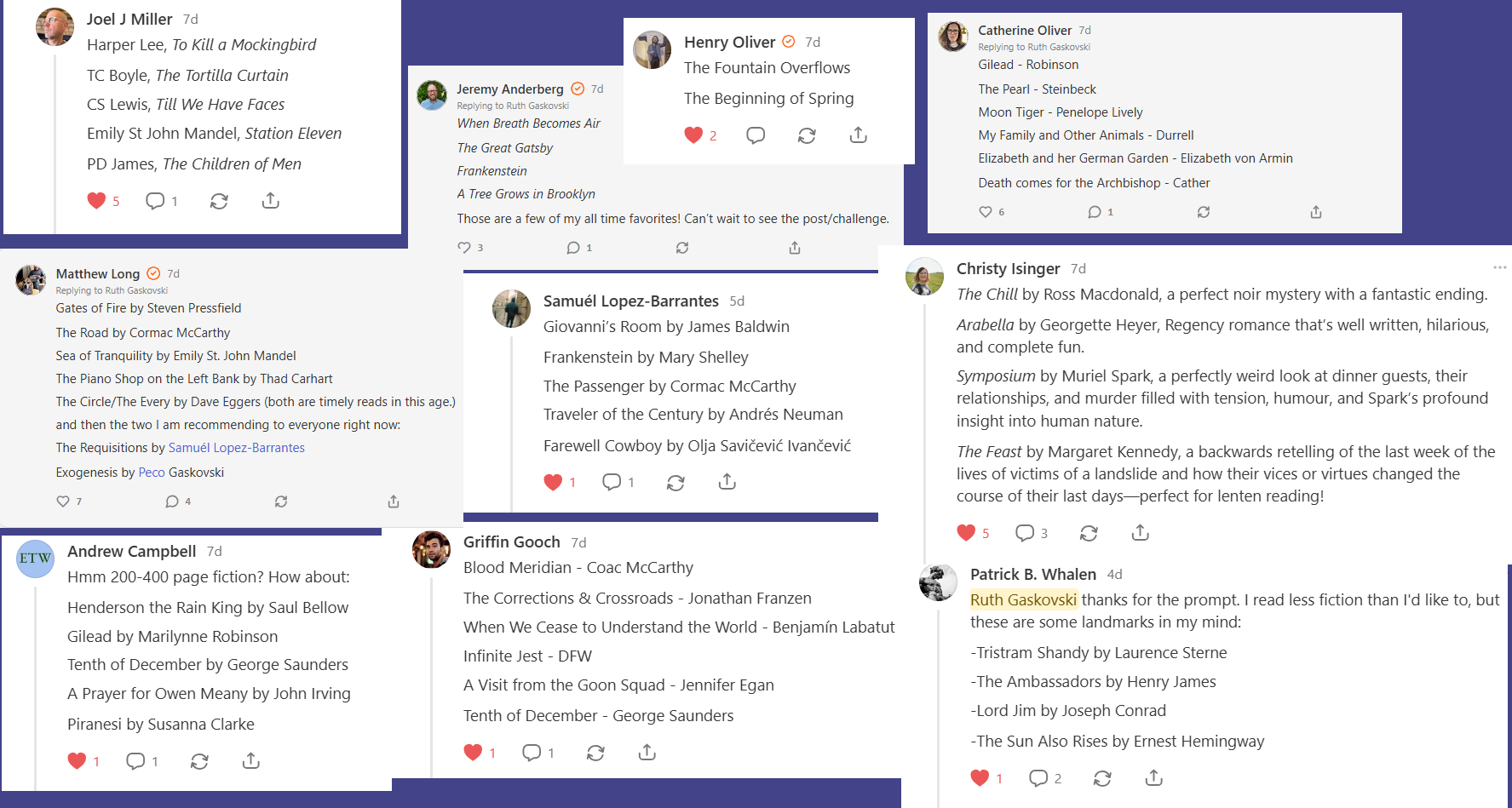
Overall Peco and I received over 200 book recommendations which we have categorized below into four different time periods: 1800 to 1899; 1900 to 1949; 1950 to 1999; and 2000 to present. This year, we have also added a “Classic Long Reads” section!
Please note that, although Peco and I have read many books on this list, we are not familiar with all of them and don’t vouch for their content in any way. Check out the Goodreads links for more information.
These lists are not exhaustive, but are recommendations by fellow School of the Unconformed readers. You can add yours too in the comment section!
A Christmas Carol by Charles Dickens (1843)
Adam Bede by George Eliot (1859)
Elizabeth and her German Garden by Elizabeth von Armin (1898)
Ennui by Maria Edgeworth (1809)
Frankenstein by Mary Shelley (1818)
Heart of Darkness by Joseph Conrad (1899)
Joan of Arc by Mark Twain (1896)
Lilith by George MacDonald (1895)
Little Men by Louisa May Alcott (1871)
Little Women by Louisa May Alcott (1868)
Pride and Prejudice by Jane Austen (1813)
Rob Roy by Sir Walter Scott (1817)
Sense and Sensibility by Jane Austen (1811)
The Betrothed by Alessandro Manzoni (1827)
The Mayor of Casterbridge by Thomas Hardy (1886)
The Moonstone by Wilke Collins (1868)
The Picture of Dorian Gray by Oscar Wilde (1890)
The Pioneers by James Fennimore Cooper (1823)
The Princess and Curdie by George MacDonald (1883)
The Tenant of Wildfell Hall by Anne Brontë (1848)
All Hallow's Eve by Charles Williams (1945)
Arabella by Georgette Heyer (1949)
Arsene Lupin: Gentleman-Thief by Maurice Leblanc (1907)
Blandings Castle / Jeeves books by PG Wodehouse (1935 /1919)
Brave New World by Aldous Huxley (1932)
Brideshead Revisited by Evelyn Waugh (1945)
Death Comes for the Archbishop by Willa Cather (1927)
Delta Wedding by Eudora Welty (1946)
Ficciones by Jorge Luis Borges (1944)
For Whom the Bell Tolls by Ernest Hemingway (1940)
Green Dolphin Country by Elizabeth Goudge (1944)
Howard’s End by E.M. Forster (1910)
Kristin Lavransdatter (contains 3 books) by Sigrid Undset (1920)
My Ántonia by Willa Cather (1918)
N or M? by Agatha Christie (1941)
Never No More by Maura Laverty (1942)
O Pioneers! by Willa Cather (1913)
Steppenwolf by Hermann Hesse (1927)
The Age of Innocence by Edith Wharton (1920)
That Hideous Strength by C.S. Lewis (1945)
The Blue Castle by L.M. Montgomery (1926)
The Feast by Margaret Kennedy (1949)
The Fortnight in September by R.C. Sherriff (1931)
The Good Soldier by Ford Madox Ford (1915)
The Great Gatsby by F. Scott Fitzgerald (1925)
The Pearl by John Steinbeck (1947)
The Sun Also Rises by Ernest Hemingway (1926)
They Were Sisters by Dorothy Whipple (1944)
84 Charing Cross Road / Q’s Legacy by Helene Hanff (1970/ 1985)
A Grain of Wheat by Ngugi wa Thiong’o (1967)
A Month in the Country by J.L. Carr (1980)
A Prayer for Owen Meany by John Irving (1989)
An Episode of Sparrows by Rumer Godden (1955)
Blindness by Jose Saramago (1995)
Blood Meridian by Cormac McCarthy (1985)
East of Eden by John Steinbeck (1952)
Fahrenheit 451 by Ray Bradbury (1953)
Franny and Zooey by J.D. Salinger (1957)
Friends of Eddie Coyle by George Higgens (1971)
Gates of Fire by Steven Pressfield (1998)
Gaudy Night by Dorothy Sayers (1935)
Giovanni’s Room by James Baldwin (1956)
Go Tell It On The Mountain by James Baldwin (1953)
He Leadeth Me by Walter Ciszek (1973)
Henderson the Rain King by Saul Bellow (1959)
Heroes Die by Matthew Woodring Stover (1998)
Hyperion by Dan Simmons (1989)
I Capture the Castle by Dodie Smith (1948)
I Heard the Owl Call My Name by Margaret Craven (1967)
Immortality by Milan Kundera (1990)
In This House of Brede by Rumer Godden (1969)
Left Hand of Darkness by Ursula Le Guin (1969)
Lonesome Dove / Comanche Moon by Larry McMurtry (1985 / 1997)
Lord of the Flies by William Golding (1954)
Moon Tiger by Penelope Lively (1987)
My Family and Other Animals by Gerald Durrell (1956)
Symposium by Muriel Spark (1990)
The Beginning of Spring by Penelope Fitzgerald (1988)
The Children of Men by P.D. James (1992)
The Chill by Ross Macdonald (1964)
The Dogs of Riga by Henning Mankell (1992)
The End of the Affair by Graham Greene (1951)
The Fountain Overflows by Rebecca West (1956)
The Last Gentleman by Walker Percy (1966)
The Long Ships by Frans G. Bengtsson (1941)
The Master and the Margarita by Mikhail Bulgakov (1967)
The Monkey’s Wrench by Primo Levi (1978)
The Moviegoer by Walker Percy (1961)
The Red Lion: The Elixir of Eternal Life by Maria Szepes (1946)
The Remains of the Day by Kazuo Ishiguro (1989)
The Sicilian by Mario Puzo (1984)
The Stone Angel by Margaret Laurence (1964)
The Tortilla Curtain by T.C. Boyle (1995)
The Ugly American by William Lederer and Eugene Burdick (1958)
The World My Wilderness by Rose Macaulay (1950)
Things Fall Apart by Chinua Achebe (1958)
Till We Have Faces by C.S. Lewis (1956)
To Kill a Mockingbird by Harper Lee (1960)
True Grit by Charles Portis (1968)
A Psalm for the Wild Built by Becky Chambers (2021)
A Visit from the Goon Squad by Jennifer Egan (2010)
Alexandria by Paul Kingsnorth (2020)
All the Living by C.E. Morgan (2009)
Ancillary Justice by Ann Leckie (2013)
Eleanor Oliphant is Completely Fine by Gail Honeyman (2017)
Exogenesis by Peco Gaskovski (2023)
Farewell Cowboy by Olja Savičević Ivančević (2010)
Gilead by Marilynne Robinson (2004)
Half of a Yellow Sun by Chimamanda Ngozi Adichie (2006)
Hannah Coulter by Wendell Berry (2004)
Kafka on the Shore by Haruki Murakami (2002)
Laurus by Eugene Vodolazkin (2012)
Legion: The Many Lives of Steven Leeds by Brandon Sanderson (2012)
Mistborn by Brandon Sanderson (2006)
Ordinary Grace by William Kent Kruger (2013)
Orphan X by Greg Hurwitz (2016)
Piranesi by Susanna Clark (2020)
Sadie / The Project by Courtney Summers (2018)
Sea of Tranquility by Emily St. John Mandel (2022)
Senlin Ascends by Josiah Bancroft (2013)
Silverview by John le Carre (2021)
Skyward by Brandon Sanderson (2018)
Sleeping Giants by Rene Denfeld (2024)
Station Eleven by Emily St John Mandel (2014)
Tenth of December by George Saunders (2013)
The Circle/The Every by Dave Eggers (2018 / 2021)
The Corrections & Crossroads by Jonathan Franzen (2001/2021)
The Future by Naomi Alderman (2023)
The Good Death of Kate Montclair by DANIEL McINERNY (2023)
The Lighthouse / Strangers and Sojourners by Michael D. O’Brien (2020/1997)
The Long Way to a Small, Angry Planet by Becky Chambers (2014)
The Noticer by Andy Andrews (2009)
The Oceans and the Stars by Mark Helprin (2023)
The Paper Garden by Molly Peacock (2010)
The Passenger by Cormac McCarthy (2022)
The Piano Shop on the Left Bank by Thad Carhart (2000)
The Requisitions by Samuél Lopez-Barrantes (2024)
The Road by Cormac McCarthy (2006)
The Secret Life of Bees by Sue Monk Kidd (2001)
This is Happiness by Niall Williams (2019)
Traveler of the Century by Andrés Neuman (2009)
Virgil Wander by Leif Enger (2018)
What You Are Looking For Is in the Library by Michiko Aoyam (2020)
When Breath Becomes Air by Paul Kalanithi (2016)
When Christmas Comes by Andrew Klavan (2021)
When We Cease to Understand the World by Benjamín Labatut (2020)
Wilder Girls by Rory Power (2019)
“…if he must read only the new or only the old, I would advise him to read the old. And I would give him this advice precisely because he is an amateur and therefore much less protected than the expert against the dangers of an exclusive contemporary diet. A new book is still on its trial and the amateur is not in a position to judge it…If you join at eleven o’clock a conversation which began at eight you will often not see the real bearing of what is said.”
from the God in the Dock collection of essays by C.S. Lewis
By popular request, we have added a list of recommendations for classic long reads this year:
A Tree Grows in Brooklyn by Betty Smith (1943)
Angel Pavement by J.B. Priestley (1930)
Anna Karenina by Leo Tolstoy (1878)
Ben-Hur by Lew Wallace (1890)
Bleak House by Charles Dickens (1853)
Crime and Punishment by Fyodor Dostoevsky (1866)
Daniel Deronda by George Eliot (1876)
David Copperfield by Charles Dickens (1850)
Doctor Zhivago by Boris Pasternak (1957)
Don Quixote by Miguel de Cervantes Saavedra (1615)
East of Eden by John Steinbeck (1952)
Emma by Jane Austen (1815)
Gone with the Wind by Margaret Mitchell (1936)
Grapes of Wrath by John Steinbeck (1939)
Great Expectations by Charles Dickens (1861)
How Green Was My Valley by Richard Llewellyn (1939)
Kristin Lavranstadder by Sigrid Undset (1920)
Le Morte d’Arthur: King Arthur and the Legends of the Round Table by Thomas Malory (1485)
Les Misérables by Victor Hugo (1862)
Middlemarch by George Eliot (1872)
Moby-Dick by Herman Melville (1851)
North and South by Elizabeth Gaskell (1855)
Portrait of a Lady by Henry James (1881)
Return of the Native by Thomas Hardy (1878)
Shirley by Charlotte Brontë (1848)
The Count of Monte Cristo by Alexandre Dumas (1844)
The Forsyte Saga by John Galsworthy (1921)
The History of Tom Jones by Henry Fielding (1749)
The Lord of the Rings (entire trilogy) by J.R.R. Tolkien (1959)
The Magic Mountain by Thomas Mann (1924)
The Moonstone by Wilkie Collins (1868)
The Odyssey by Homer (approx. 800 BC)
The Tenant of Wildfell Hall by Anne Brontë (1848)
The Woman in White by Wilkie Collins (1859)
Tristram Shandy by Laurence Stern (1767)
Uncle Tom’s Cabin by Harriet Beecher Stowe (1852)
Vanity Fair William Makepeace Thackeray (1847)
Vilette by Charlotte Brontë (1853)
War and Peace by Leo Tolstoy (1869)
Wives and Daughters by Elizabeth Gaskell (1866)
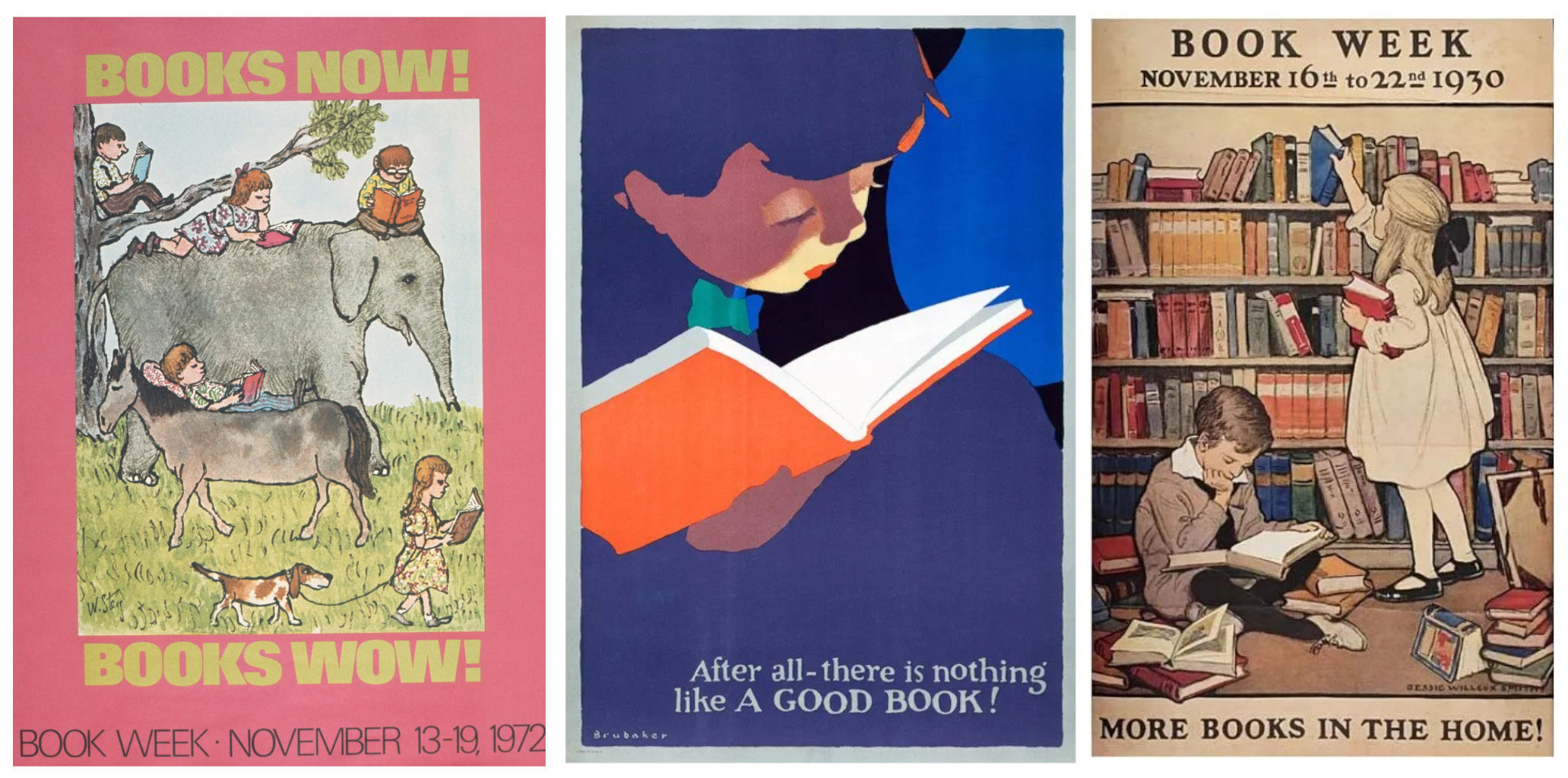
We are compiling recommendations for teenagers and young readers to be included in our upcoming Reading Rebellion Masterlist. Please let us know about your favorites in the comment section!
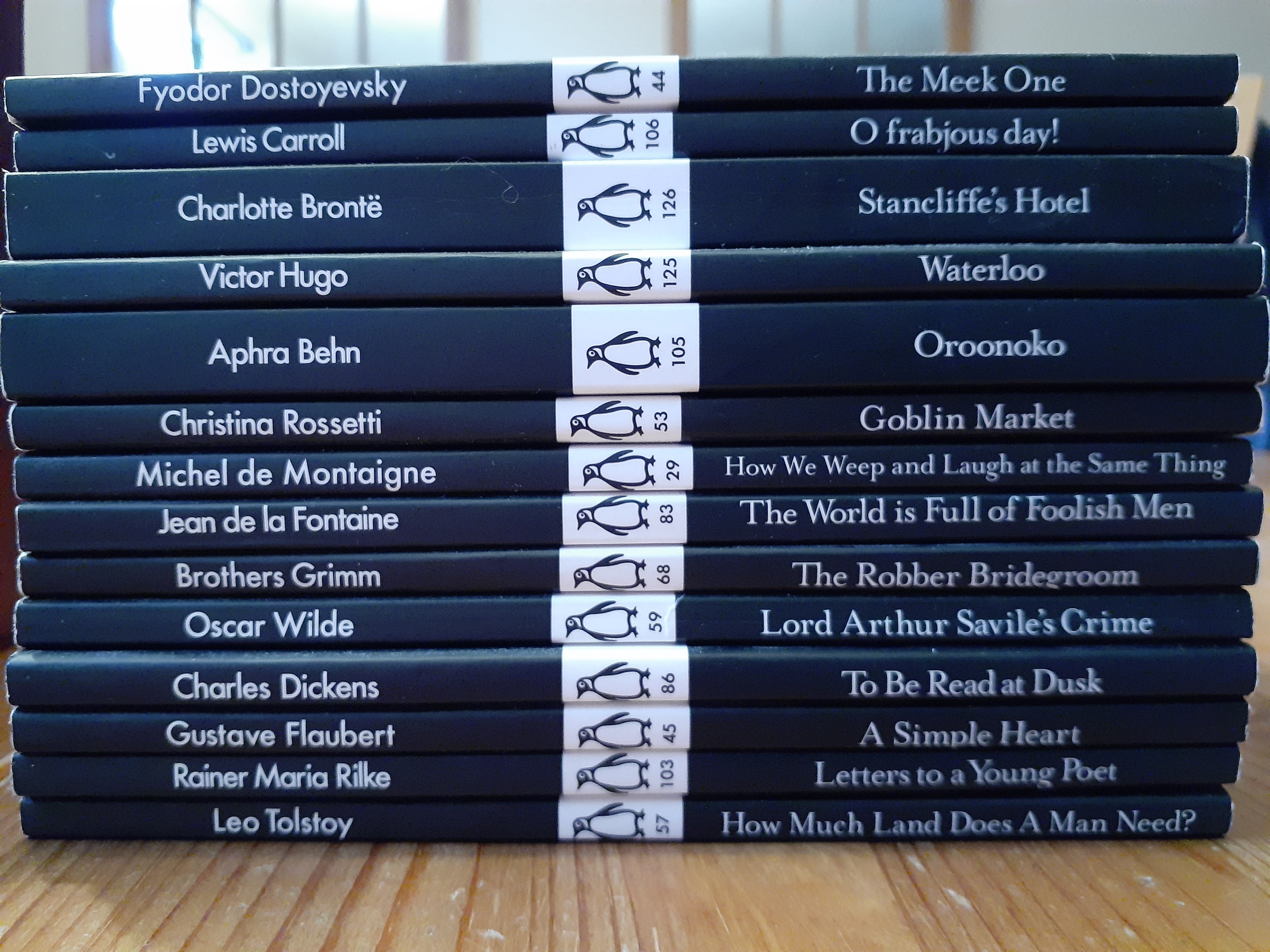
The Penguin “little black classics” are coincidentally about the size of a smartphone — an excellent replacement if you are looking to free yourself from mindless scrolling.
See our book lists featured in A Guide to Booklegging and A Guide to Surviving the Age of Post-Literacy:
Join Simon Haisell’s superb “slow read” of War and Peace (a chapter a day)
Read the Classics with Henry Eliot (He’s leading a free read along of Dostoevsky’s Brothers Karamazov!)
How to get started reading English literature by Henry Oliver
Also see Matthew Long’s Deep Reads Book Club
If you would like to start your kids on reading classics, check out the audiobooks on the 1000GoodBooksProject!
So find a good book and begin The Reading Rebellion. Get yourself a snuggery, take books along with you wherever you go. Try to read daily, for sustained intervals, or even for just short ones. Read alone. Read with friends. Read among strangers. Read to your children.
The future of reading depends on you.
If you found this post helpful (or hopeful), please consider supporting our work by becoming a paid subscriber, or simply show your appreciation with a like, restack, or share.
Will you join The Reading Rebellion?
What book are you planning to read?
What are your top five fiction book recommendations?
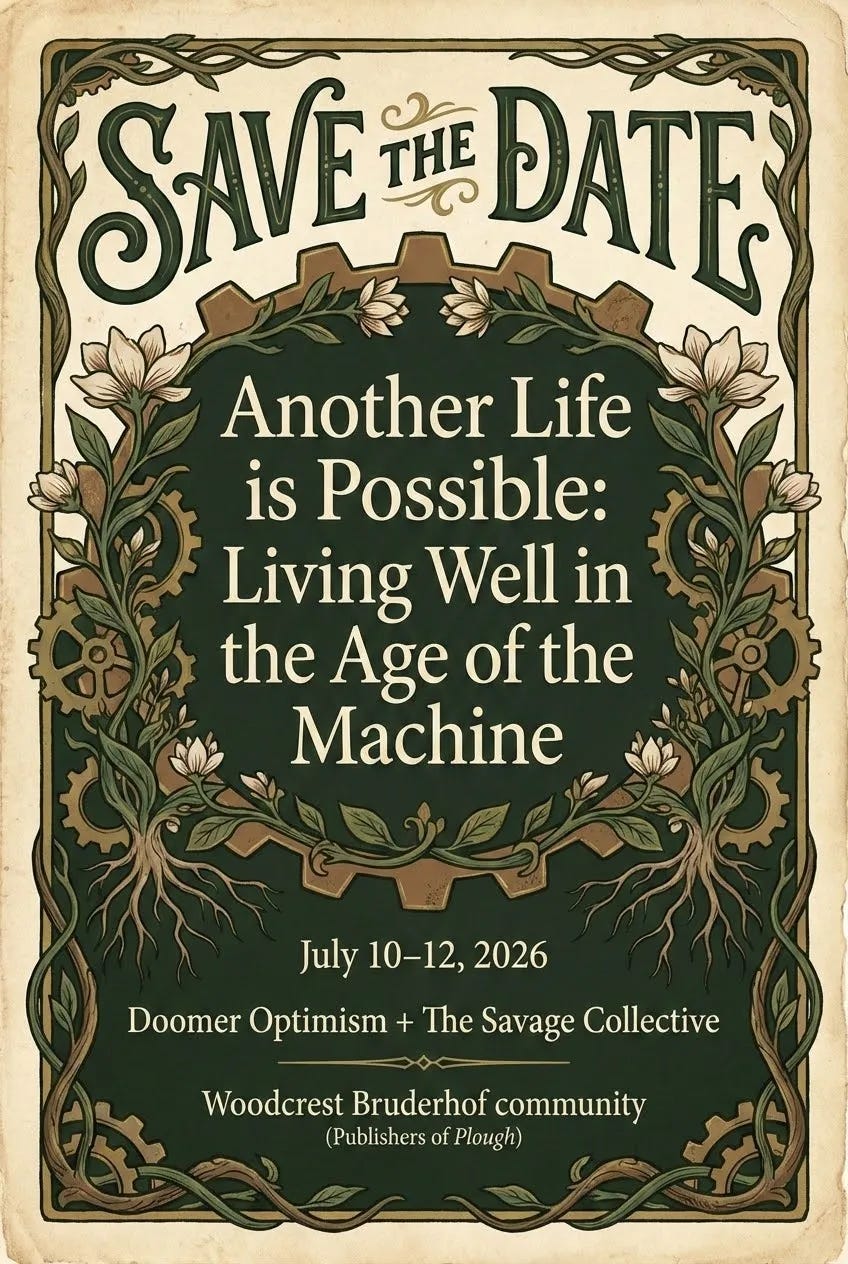
“Another Life is Possible”—Join Peco and me at the next Doomer Optimism Gathering from July 10-12th at the Woodcrest Bruderhof in Rifton, NY! Other speakers will include Bill Kauffman, Chris Arnade, A.M. Hickman, Charles Carman, Tessa Carman, Grant Martsolf, Brandon Daily, and Nicholas Kotar. These gathering are truly inspiring and include not just fantastic presentations and panel discussions, but potluck meals, lively debates, sing-alongs, dance, and conversations that will stay with you for months to come! See here for details.
He had long ago decided that he did not want a smartphone and chooses to use a flip phone instead.
One professor who has bucked this trend is Walter Hunter, who instead of capitulating to the “narratives about the “end of reading”, transmitted his passion for literature to his students, had them dive into Faulkner and Thoreau rather than serving up snippets, “Why did they do this? Because I asked them to, and told them it was worth it.” Read his inspiring essay in The Atlantic: Stop Meeting Students Where They Are
Wolf makes the following observation about youth raised in the digital age: “many of them say that when they read on a screen, they are 90 percent likely to be multitasking and only 1 percent likely to multitask when reading on print media.”
For those of you who find app blockers helpful, fellow School of the Unconformed reader Blake Vonder Haar developed an app that prompts you to complete an analog behaviour (such as reading a book) before unlocking your phone. Note: I am in no way affiliated with this app, and have not tried it (since I don’t own a smartphone), but thought some of you might like to try this. See DistractionFree.
Comments
Nothing yet. Say the first thing.
Sign in to join the conversation.