
BIG news first:
Peco’s new novel, The Last Upheaval, is set for release this October. Stay tuned for cover reveal and pre-order details next week!
The grid is failing.
Civilization is unraveling.
And something demonic is waiting in the shadows.
Text within this block will maintain its original spacing when published
For those of you who prefer to read off paper rather than the screen we have converted the post into an easily printable pdf below :)
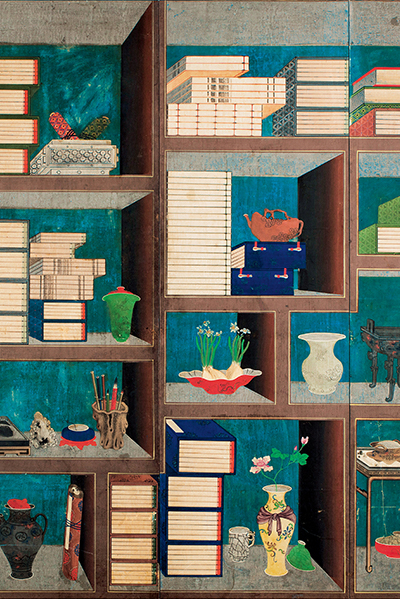
All civilization comes through literature now, especially in our own country. A Greek got his civilization by talking and looking, and in some measure a Parisian may still do it. But we, who live remotely from history and monuments, we must read or we must barbarise.
from The Rise of Silas Lapham by William Dean Howells, 1885
Friday night, circa 1980-something, and I (Peco) am hurtling down the highway in an apple red manual-shift Volkswagen Rabbit. I loved that car, which my father would later crash during a wicked storm my mother warned him about. But he never listened, and they got t-boned in an intersection with my baby niece in the backseat. Miraculously they got off with only slight injuries, but the Rabbit ended up like a karate-chopped Coke can.
Weeks. That’s how long it took me to learn stick in that car, repeatedly stalling it on the circular gravel driveway of the timber-walled country home where we lived. When I did finally master it, I relished the sense of being an extension of the vehicle, right hand on stick, left hand on wheel, feet dancing between gas, brake and clutch. I was part of a machine, but rather than making me less human when I drove it, it made me somehow more.
So it’s Friday night, and I’m speeding into the city, a glowing beacon in the distance that soon surrounds me in a glitter of lights. I park at Robarts Library at the University of Toronto. If you’ve never seen Robarts, it was built to resemble a bird, I goose I once heard, though others have said a peacock or a turkey. But it doesn’t look like a bird at all. It’s a brutalist piece of architecture, fourteen stories high. My first time inside I got disoriented. I’d walk through the book stacks, make a turn, and then another, and then another, thinking I’d complete a perfect square and end up where I started. But I didn’t. Robarts labyrinthine design is partly what inspired the library in Umberto Eco’s medieval novel, The Name Of The Rose.
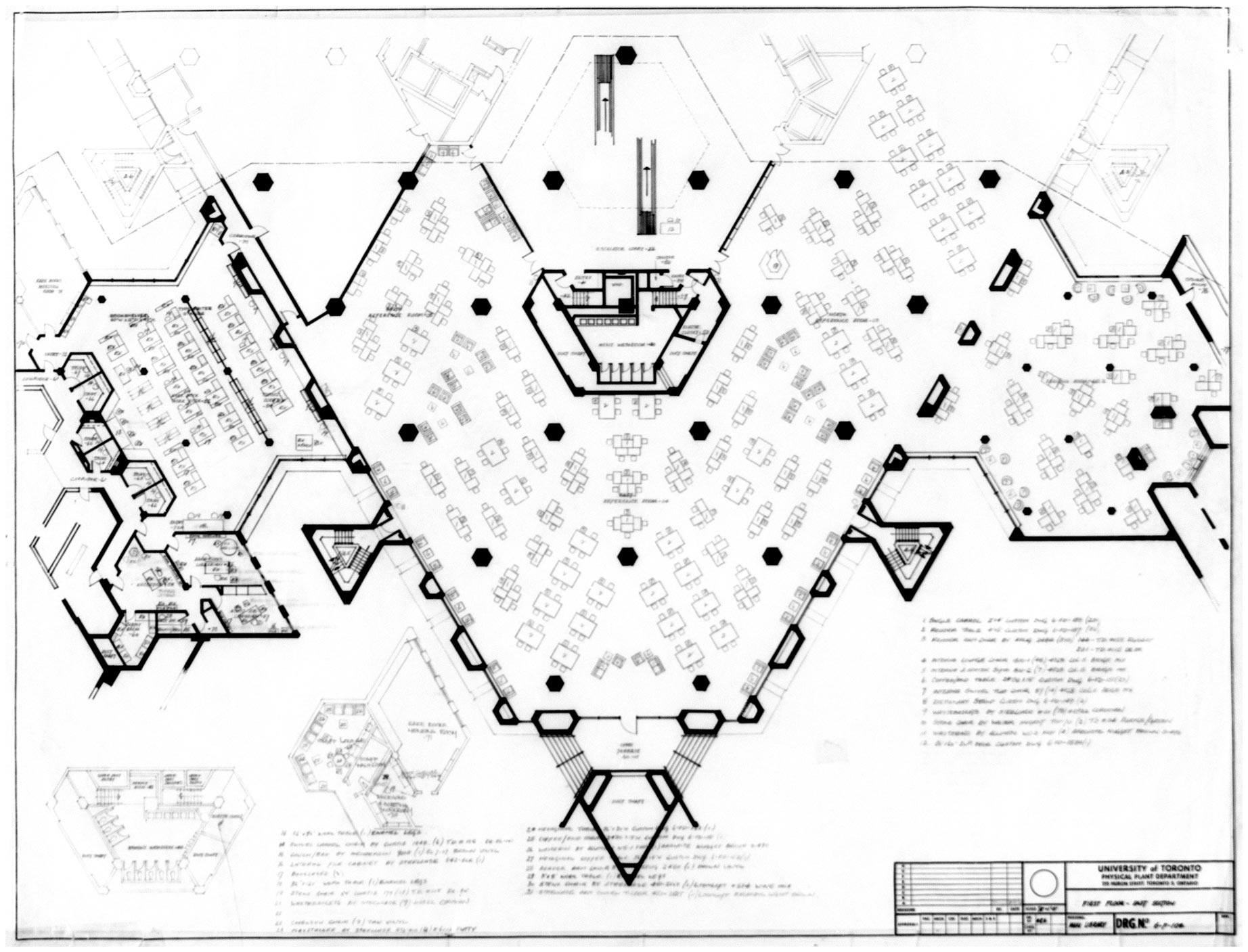
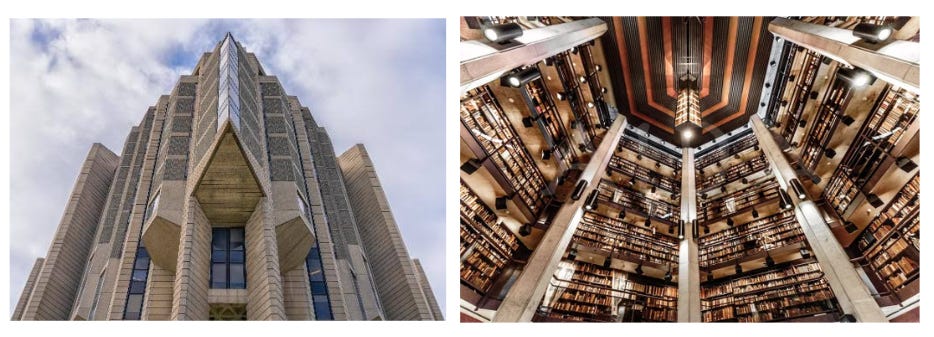
“The library is a great labyrinth,” says one of the characters in the novel. “A sign of the labyrinth of the world. You enter and you do not know whether you will come out.”
Why am I, a young man, here on a Friday night? The rational reason is, I was doing historical research on a novel I was writing at the time. The internet was still years away, so the only place I could find the kind of information I was looking for was in a research library.
The other reason was the feeling of labyrinth. The sense, when I walked those stacks, that I had entered not a library but a universal mind, the mind of God, intricate and endless, paved with four-and-a-half-million books and billions of pages, each of them pulsing with knowledge and mystery.
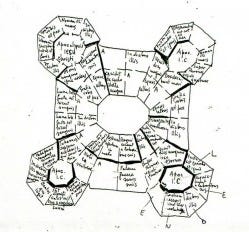
Four-and-a-half million is only a fraction of the number of unique books in existence which, according to latest estimates, is 158,464,880. Robarts is fourteen stories high, so if we extended its height to include all the unique books in existence, we’d have to add 479 more stories, making it 493 stories in total—or about 1.3 miles high, which is more than twice as high as the Burj Khalifa in the United Arab Emirates, the current tallest building in the world.
I say we build it. A whole tower of books.
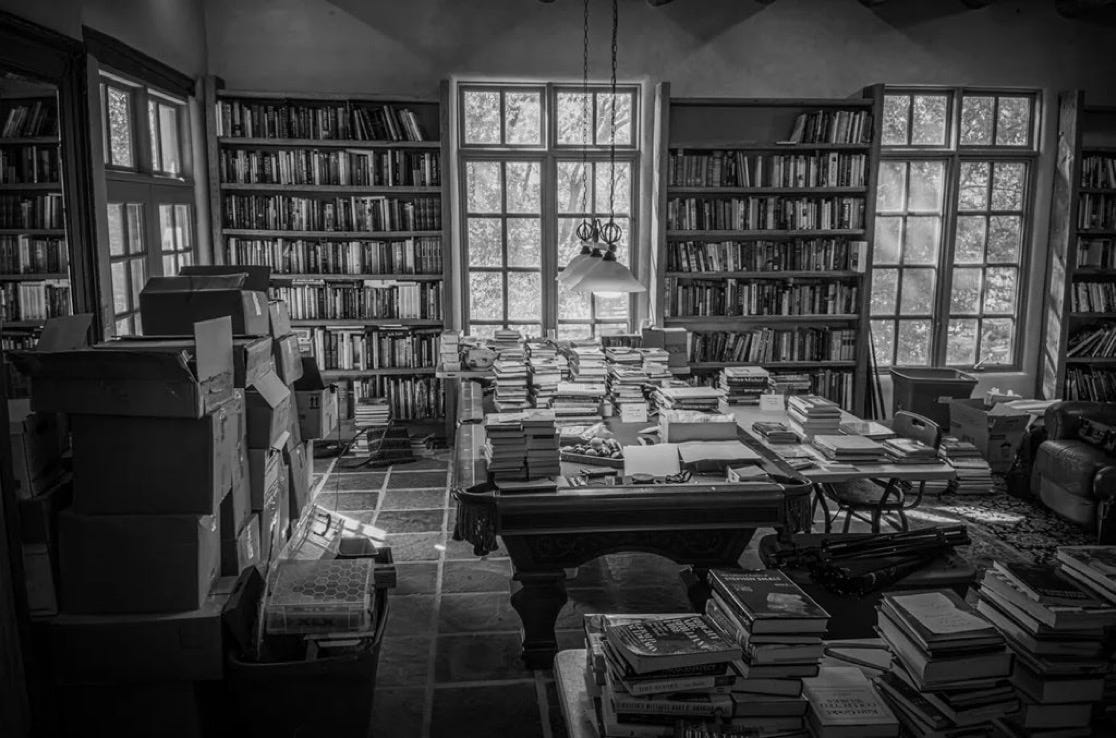
Well, if not a tower, then at least homes filled to the brim, like Cormac McCarthy’s 20,000 volume personal library:
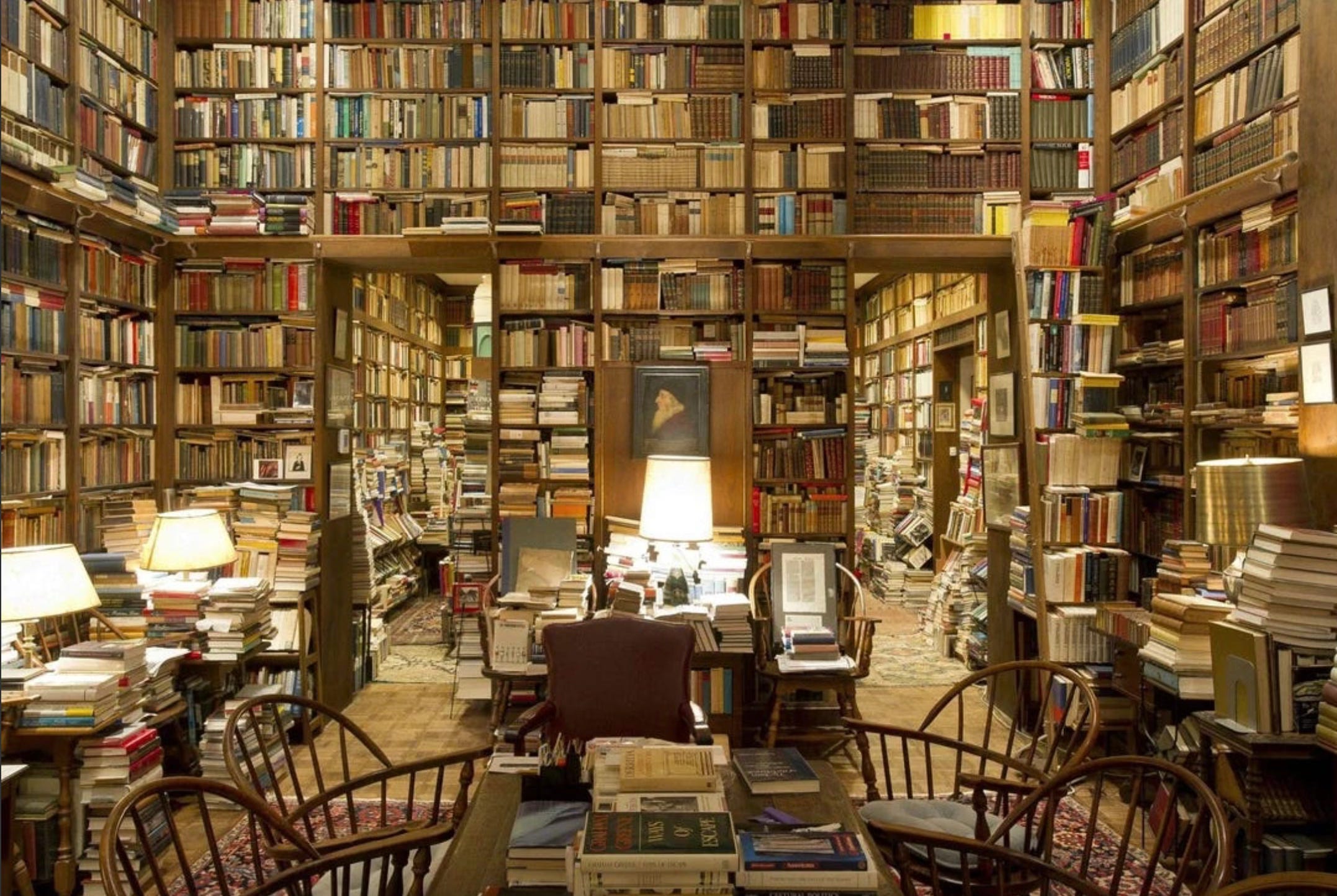
Or Umberto Eco’s 30,000 volume “antilibrary”, a collection of books that we have not yet read, keeping us humble by reminding us of what we do not know.
Do we need all those physical books? And more are being written, though most won’t have more than a handful of readers. Most will fade into obscurity minutes after they’re finished. I know. I’ve published a few. Others I wrote never saw the light of day—like that historical novel, whose pages are moldering somewhere in Rubbermaid trunks of memorabilia. And though I would later go on to publish books that people actually read, I would probably keep writing even if it never amounted to anything.
Yes, I would write uselessly.
My brother-in-law works in a back room surrounded by old monitors and laptops, repairing some, reselling others. I doubt he’s voluntarily read a novel in his life, and he doesn’t write, other than maybe HTML. But he recently bought a fountain pen, a gorgeous handcrafted instrument, and even he took pleasure in stroking its tip across a page, working it like a stick-shift, steering words down the straightaway of the page and veering around, skidding to a halt with a black flourish.
Writing and reading are unnatural. While our brains have specialized regions for language, which become naturally active and more developed as children grow up around language speakers, children do not naturally learn to print or write or read. They have to work at it.
As Joel J. Miller explains in The Idea Machine, writing began when our ancestors made scratches on clay tablets, the ancient priests to record their myths, the Assyrian merchants to coordinate their smuggling runs. Books, and the precursors of books, are all forms of technology, although there is something surprising about them: they build up more of our humanity than they take away.
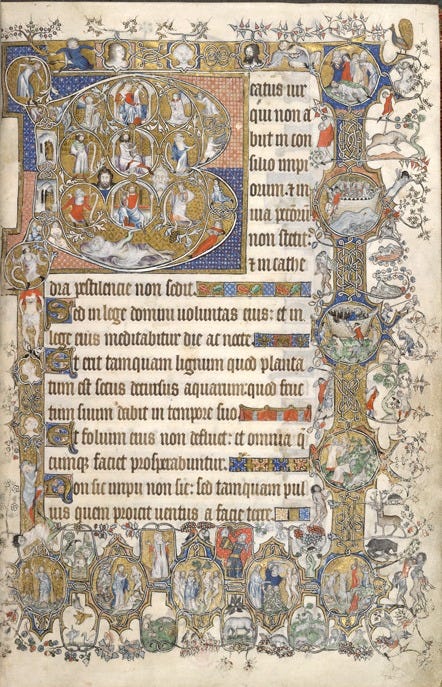
Socrates worried the arrival of the written word would weaken our memory. But as it turns out, there was a tradeoff. While the technologies of writing allowed us to offload certain memory tasks, they increased other mental demands. Writing, as well as reading, strengthen our attention, language, empathy, deeper thought processes. How often does a smartphone, the internet, or AI, do any of these things—and how often do they do the opposite, taking over a task so thoroughly that there’s little for us to do?
I cannot think of many new technologies that build up our innate mental skills more than they diminish us. For this reason alone, I believe books won’t go away. But that doesn’t mean they might not try to take them away.
Who is “they”?
We are in the midst of an industrial revolution. A century ago, “industrial revolution” might have meant tearing up regional train tracks to make way for the automobile. Today it means tearing up physical books. A recent piece in Forbes reported that,
court documents unsealed during the Anthropic case revealed the company planned to scan between 500,000 to 2 million books over a single six-month vendor contract. Internal documents said it planned to “destructively scan all the books in the world.”
Old books are particularly desirable for AI training, as they are written in the kind of long, complex text that we don’t see much anymore. They’re trying to make AI smarter.
Recently I meandered through a used bookstore which offered hardbound editions of classic books, beautifully bound and illustrated, many of them collected works, just the kind of authors that AI would love to emulate. If we want to protect old books, then we should buy them. Buy them and read them fervently, mercilessly.
A random Amazon reader of my novel Exogenesis commented the story was so hard to put down that “I even have food stains on pages as I was reading while I ate”. I’m very flattered (and mildly disgusted), but it’s hardly the first time this sort of thing has happened. Around 1345, Richard De Bury wrote The Philobiblon (The Love of Books), where he complains of the youthful reader who lets his snotty nose “bedew the book before him with ugly moisture”. Worse,
He does not fear to eat fruit or cheese over an open book, or carelessly to carry a cup to and from his mouth; and because he has no wallet at hand he drops into books the fragments that are left.
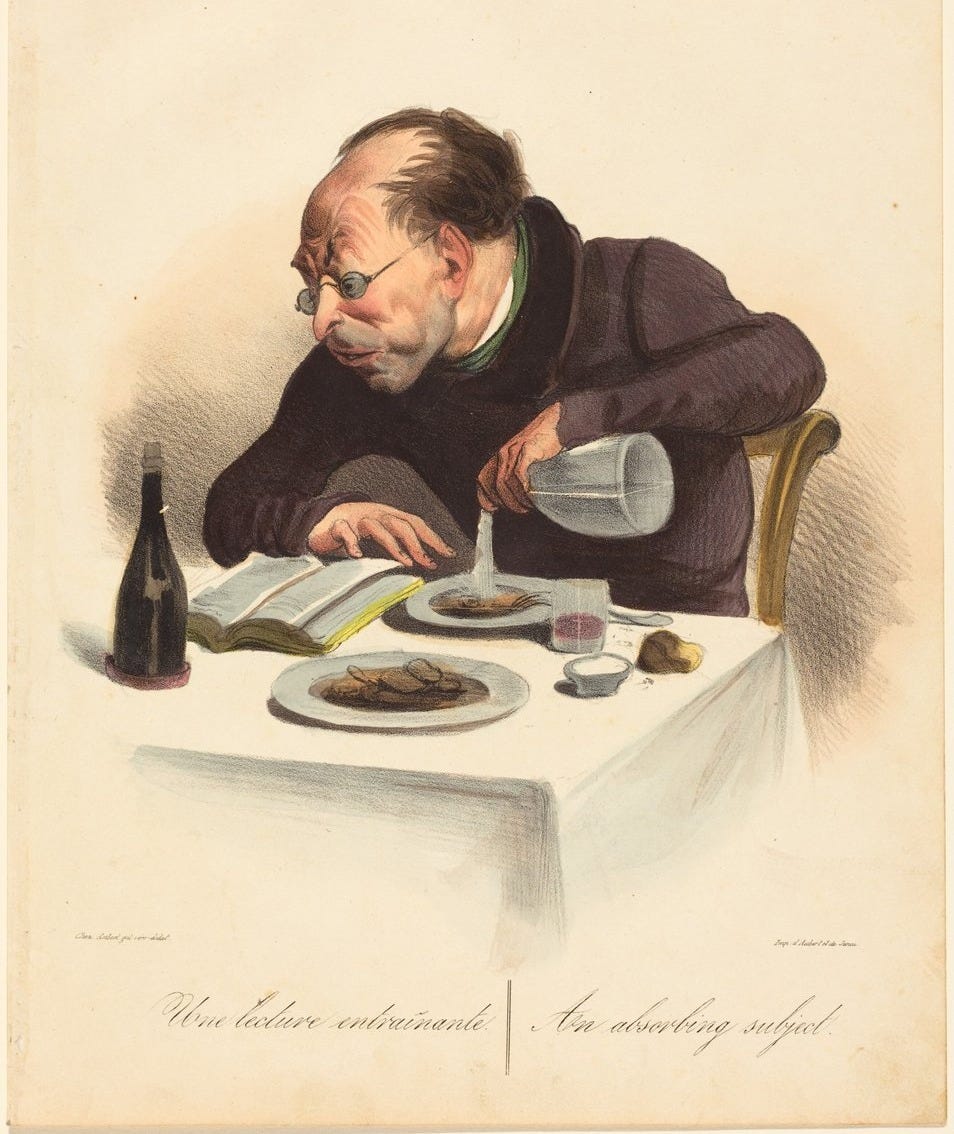
And that shameless youthful reader sputters his spittle over his book, naps on it, gets dust in it, touches it with his sweaty hands and their filth-blackened fingernails, and if that weren’t enough, like some influencer wannabe he writes in the margins of the book, spouting his frivolous opinions.
Well, I’m sorry Richard De Bury, but I’m grateful for those shameless readers, then and now, who make a mess of their books. The worst that could happen isn’t that Anthropic buys up all the books. It’s that we let them sit on our shelves like symbols of the past, a kind of kitsch, like literary fridge magnets and bumper stickers, virtue-signaling how much we care about them, when we don’t care much at all.
I say, open your book on the kitchen table. Let your crumbs fall upon it. And if you don’t like what the corporations are doing, then buy some of those old books, especially the classics, and actually read them, accustom yourself to the slower pace, the harder words, the older sensibilities. Learn literary stick-shift. Lose yourself in the labyrinth. You’ll come out more human, not less.
When I have a little money, I buy books; and if I have any left, I buy food and clothes.
—Desiderius Erasmus
Just as you would stock your kitchen pantry with certain staples used for most basic dishes, there are literary staples that build a solid foundation for your collection. We concur with Susan Wise Bauer that “List making is a dangerous occupation”, as no list is authoritative, nor complete, nor unbiased, as each reflects the values of those who curated it. Thus, take the suggestions shared here as a starting point and build or amend to your liking.
We have found the following collections helpful:
The Great Books6 - History as Literature by Susan Wise Bauer
The Harvard Classics first complied by Dr. Charles W. Eliot in 1909
1001 Books You Must Read Before You Die edited by Peter Boxall, and written by over 100 hundred international critics.
Top 100 Works in World Literature - The editors of the Norwegian Book Clubs, with the Norwegian Nobel Institute, polled a panel of 100 authors from 54 countries on what they considered the “best and most central works in world literature.”
The Top 10: The Greatest Books of All Time - Contains 103 Books; Top 10 books chosen by 125 top writers from the book “The Top 10” edited by J. Peder Zane.
The Mensa reading list for grades 9-12 is also an excellent, extensive source to get started for adults.
The Thousand Good Books - Great Books of the Western World
The Greatest Books site is an excellent resource with 251 lists including Greatest Books of All Time Written by Women, Africa’s 100 Best Books, Favorite Books of Spanish Authors, Best Foreign Works Chosen by Francophone Writers , 100 Books to Read from Eastern Europe to Central Asia
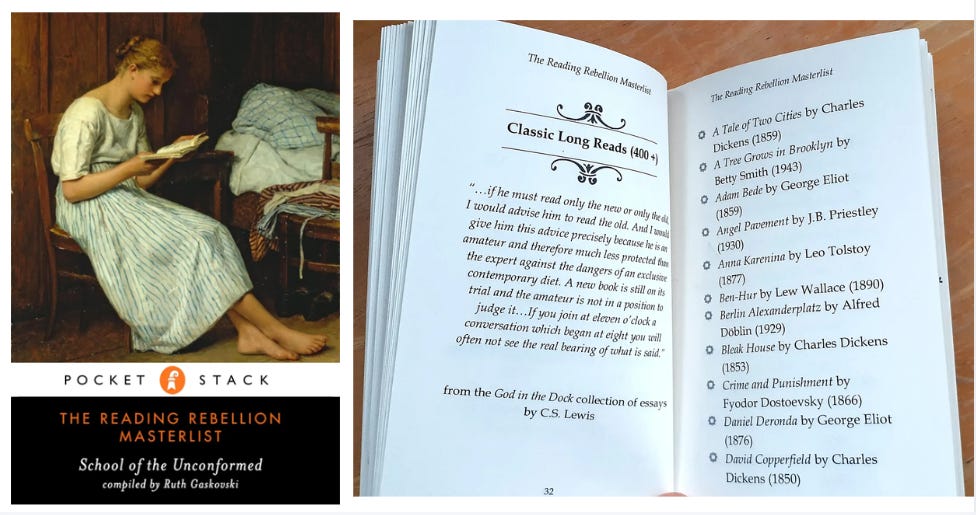
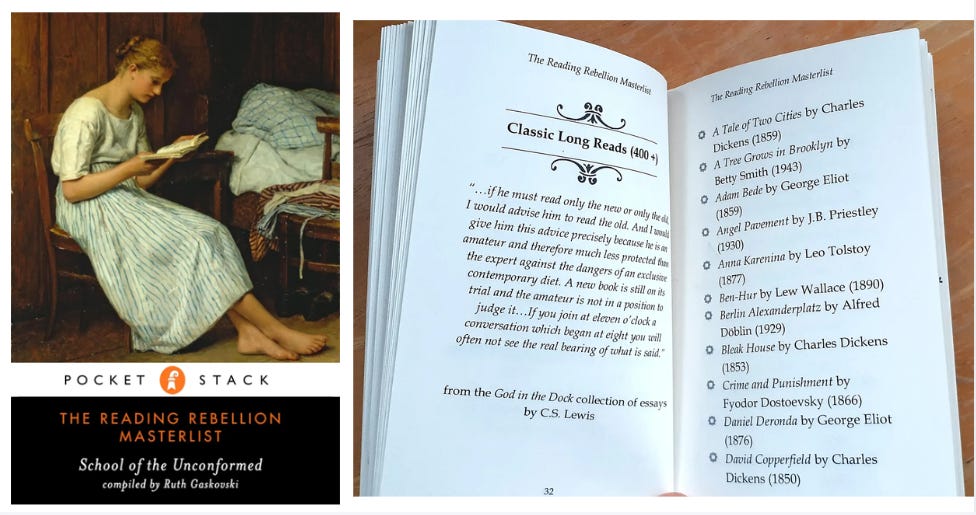
The Reading Rebellion Masterlist Pocket Stack (a portable 4x6 voume) includes several lists of fiction recommendations from a variety of genres from our personal collection, as well as a great many titles selected by our readers including 230 “short” fiction recommendations (100 to 400 pages in length), 60 classic long reads (400 + pages in length), and 160 fiction books for young readers.
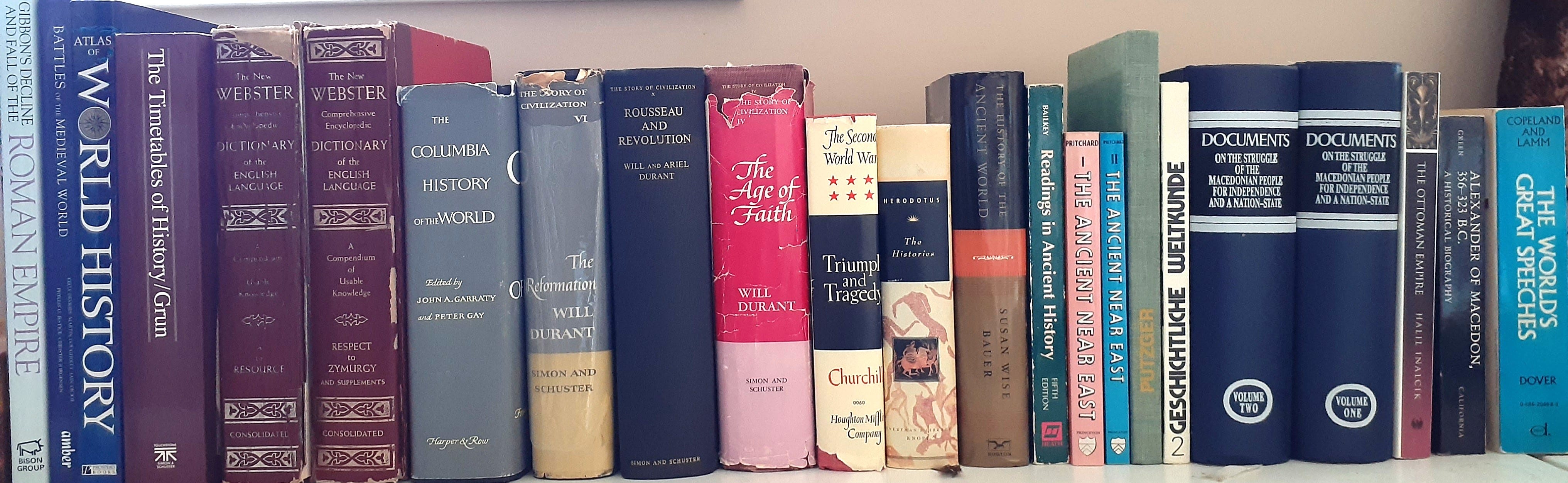
Booklegging for history: we invited Substack writers and readers to contribute their recommendations for trustworthy books that tell the history of the West and the world more generally. You can view the complete list in the post below (including a downloadable pdf).
If you are interested specifically in books that highlight the negative impact of technology on what it means to be a person, the importance of digital minimalism, or something that metaphorically expresses the dangers of technology as one of its primary themes, have a look at the list we curated based on our reading and on recommendations from Mary Harrington, Tessa Carman, and many motivated readers:
For an agrarian/rural/creation stewardship curated list of books, see Hadden Turner’s collection here: A Curated Agrarian Reading List.
To stock up on art books see our recommendations here: Art is in the “I” of the Creator: Why (and how) to commune with real art.
Earlier this year I (Ruth) curated “An Inventory of Books to Shape Young Minds”. The complete list includes over 160 books, presented alphabetically (not ranked). The recommendations are based on the volumes on our own shelves (including some lesser-known European stories), curated from lists such as the Mensa for Kids Reading Program, Susan Wise Bauer’s The Well-Trained Mind, Michael D. O’Brien’s Landscape of Dragons, Memoria Press, The Classical Learning Resource Centre, as well as readers of School of the Unconformed.
Books for the Young and Young-at-Heart: 160+book recommendations to shape minds
·
Apr 30
What is our defense against this sort of language—this language-as-weapon? There is only one. We must know a better language. We must speak, and teach our children to speak, a language precise and articulate and lively enough to tell the truth about the world as we know it. And to do this we must know somethin…
Read Aloud Revival Book Lists - These lists include some classics but also contemporary book choices. Here is a selection (there are still more groups on the site): Books Boys Love; Books Girls Love; Books for Ancient History; Books for Middle Ages & Renaissance
The Thousand Good Books - from nursery and gradeschool, to adolescent and young adult
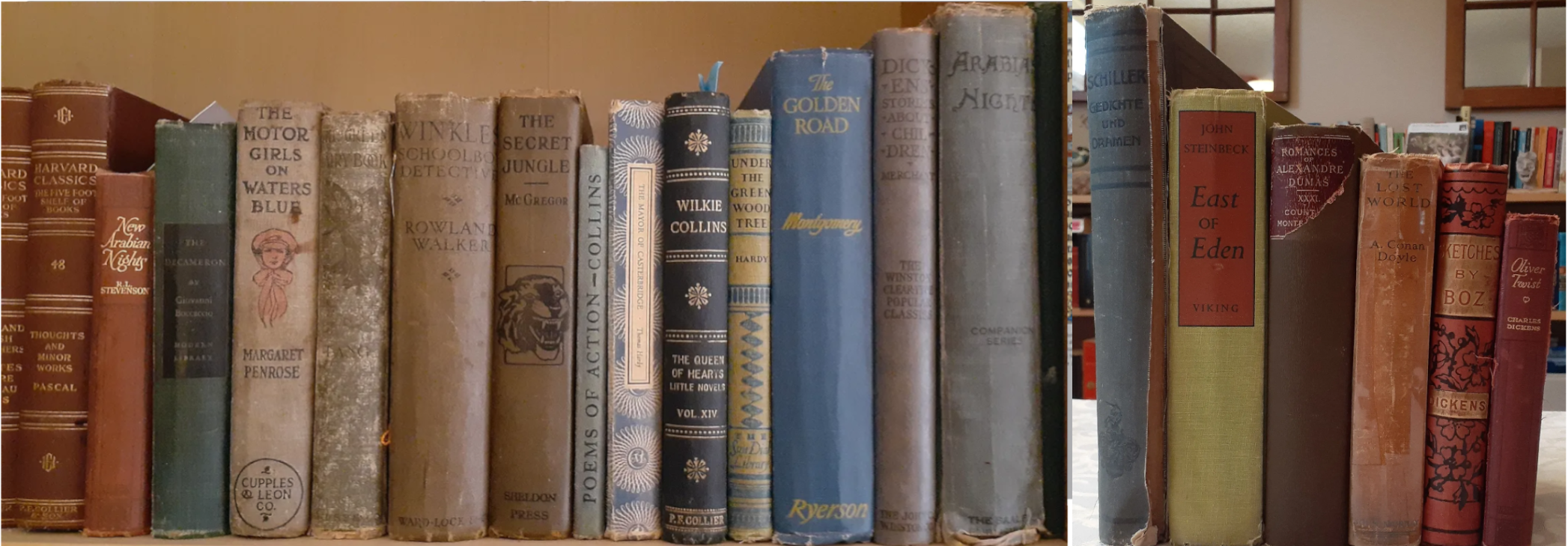
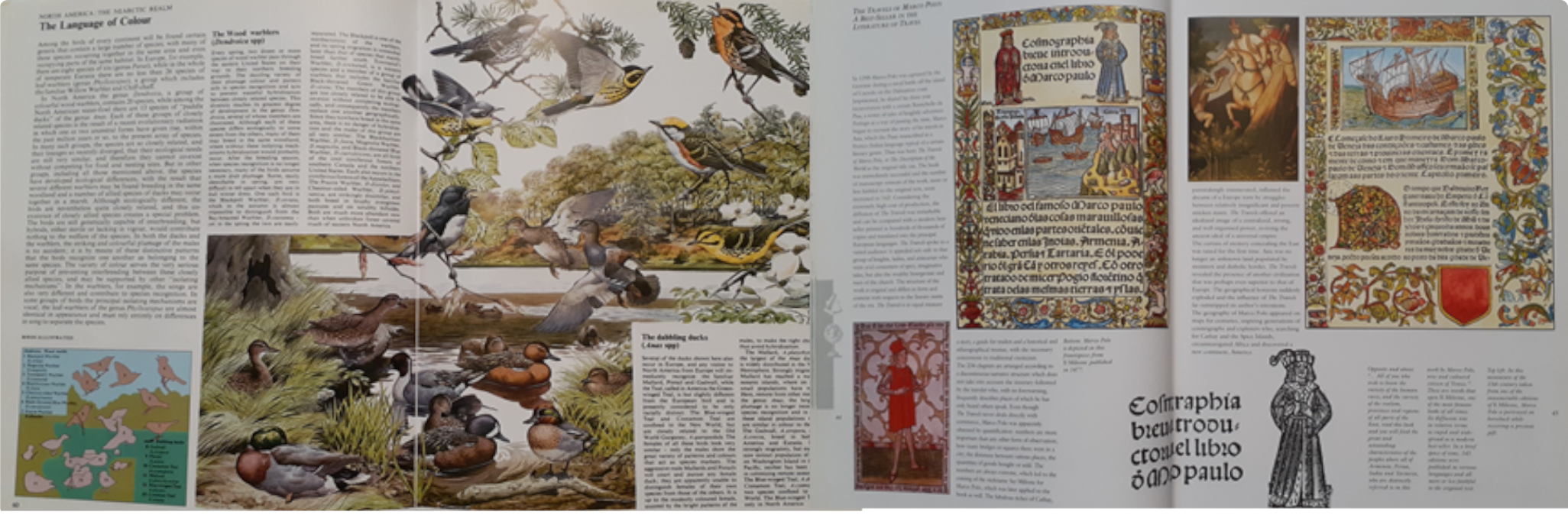
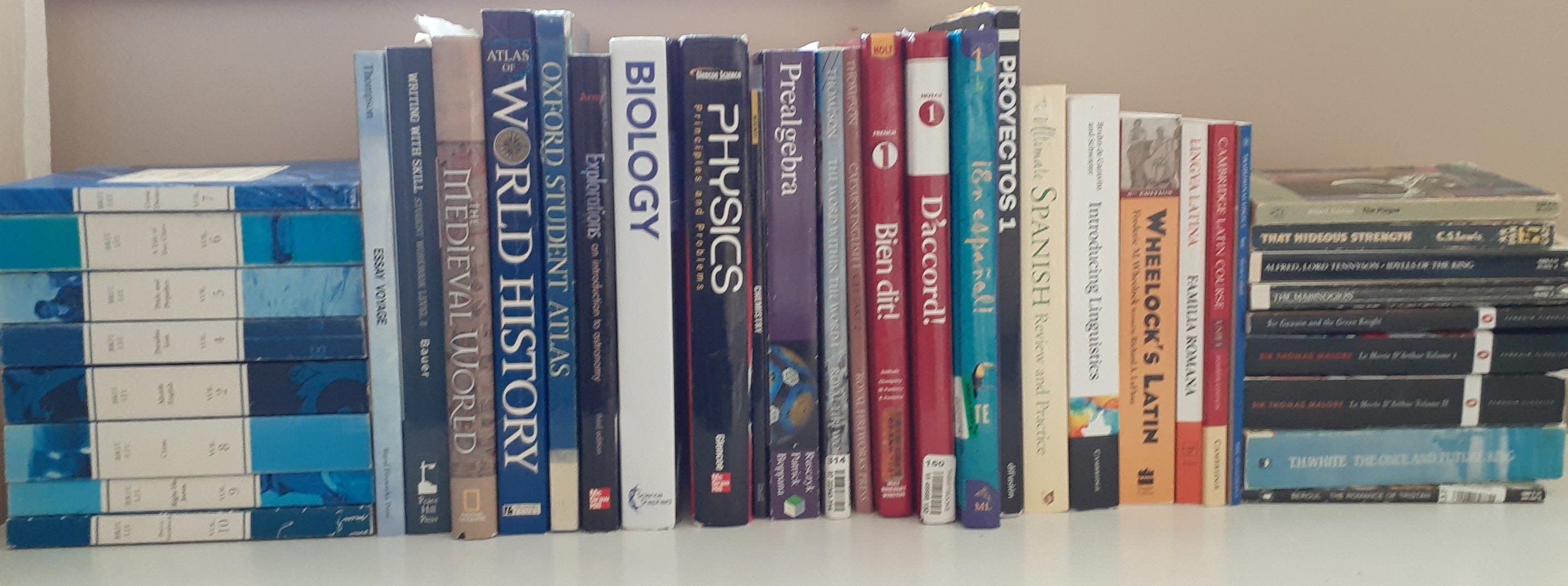
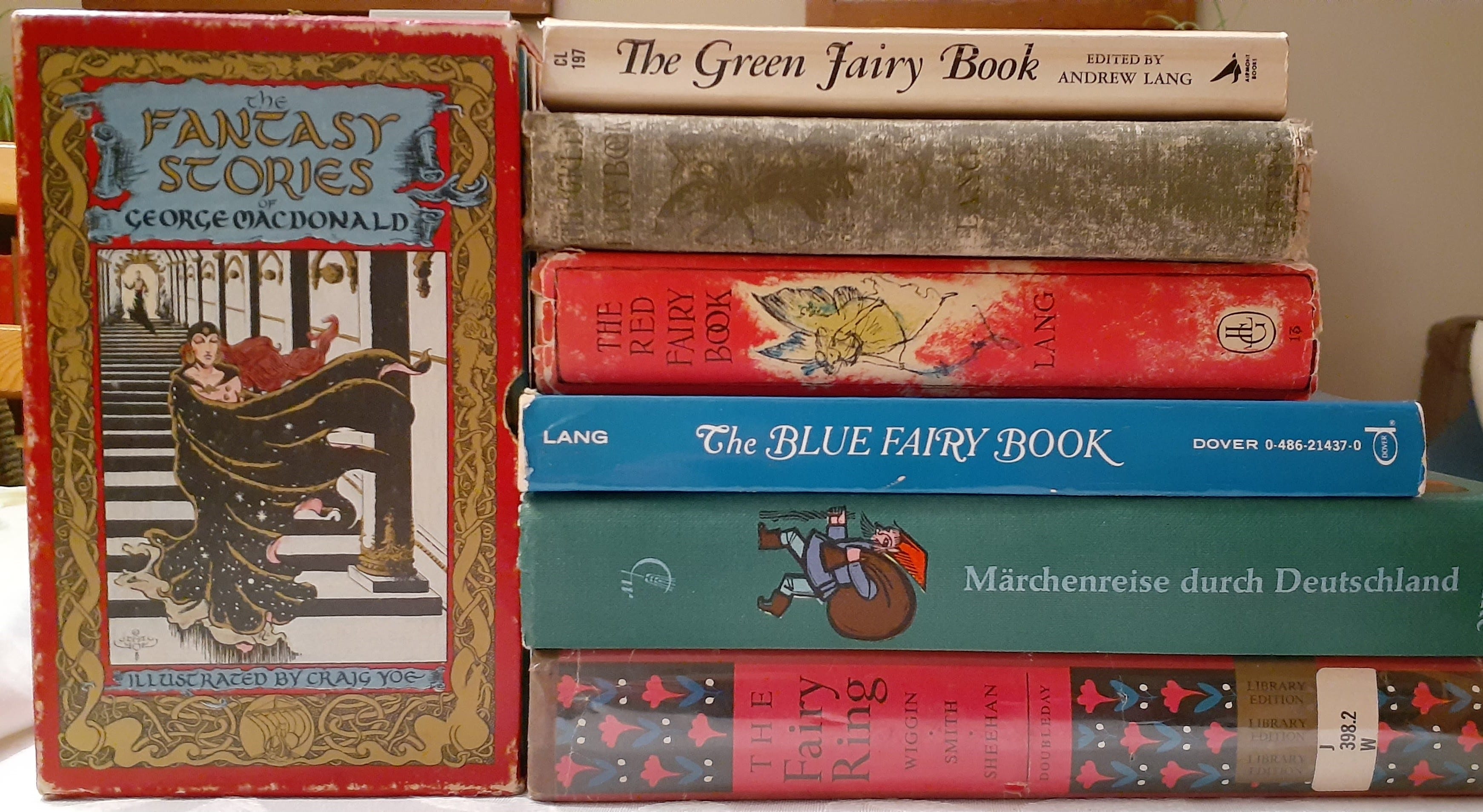
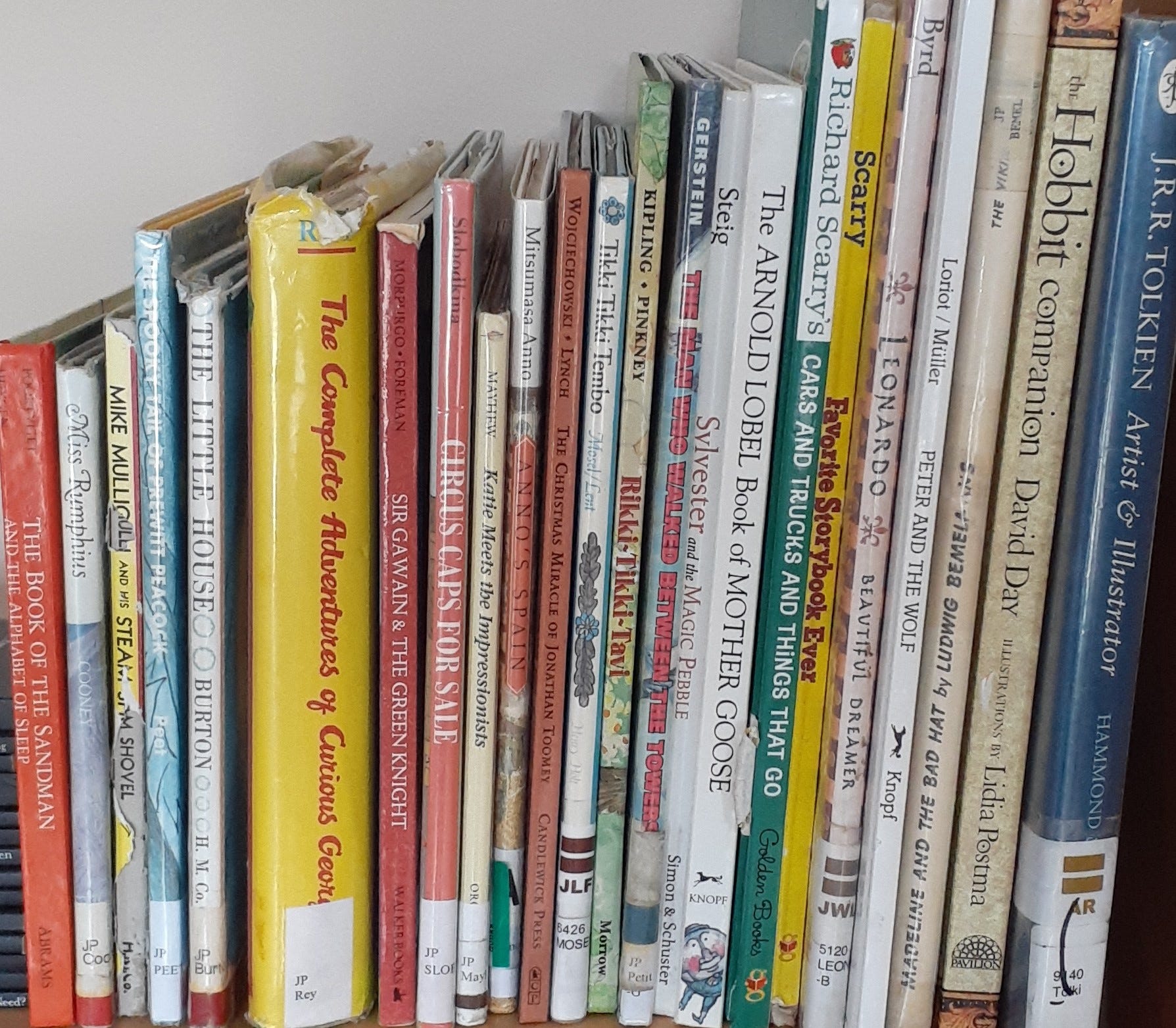
Collecting books does not have to be expensive. We rarely buy new books and obtained the majority of our 3000+ volumes from thrift stores, recycling depots, library sales, community book sales, garage sales, or from friends who moved. They can also be ordered inexpensively from online used booksellers such as betterworldbooks, biblio, alibris, or thriftbooks.
We hope this post will inspire you to join the ranks of bookleggers, stocking your own labyrinthine library, and creating a refuge where you can commune with great minds and that can be passed on to the coming generations.
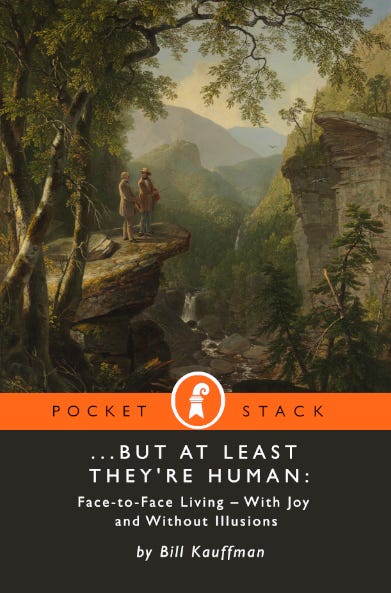
I am delighted to publish Bill Kauffman’s work for the next Pocket Stack volume!
Kauffman is the author of twelve books, among them Dispatches from the Muckdog Gazette (Henry Holt), Ain’t My America (Metropolitan), Look Homeward, America (ISI), and, most recently, Upstaters (SUNY Press). He is a columnist for The American Conservative and The Spectator World. He is a founding editor of Front Porch Republic and has served as an editor for various magazines and publishers. Here’s Bill, from his upcoming book:
Why are we here if not to love the unlovable, the damaged, the marred, each other? And how can we love each other unless we know each other, and how can we know each other unless we live in small communities—and these can exist in big cities, too—in a face-to-face existence? Otherwise we’re just passin’ through.
It is our responsibility, our ennobling duty, to those who have gone before and those who will come after, to say their names, to tell the stories that attach to those names, to embroider those stories, to make myth of the quotidian, to make poetry of the prosaic.
Writing in the Front Porch Republic, Tessa Carman compares Peco’s novel Exogenesis with Paul Kingsnorth ’s Buccmaster Trilogy (with some Ivan Illich, to boot). “Reading this,” wrote one commentator of her essay, “has been the most thrilling mental workout I’ve done in years.” Agreed!
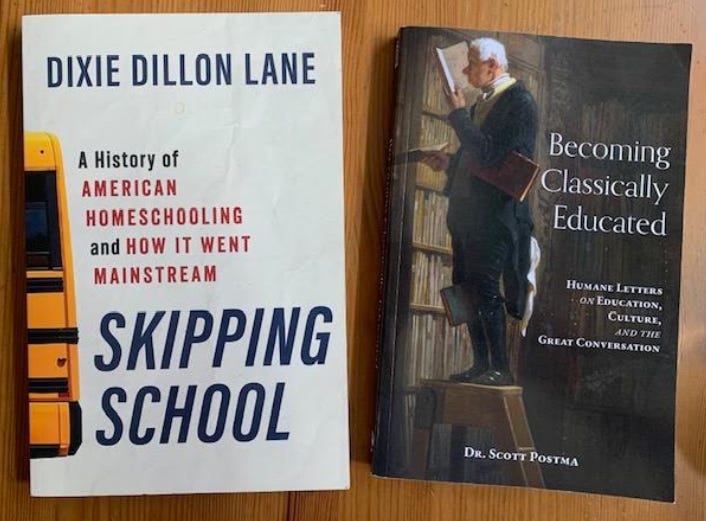
Dixie Dillon Lane ’s Skipping School, positively reviewed in no less than the Wall Street Journal and Christianity Today, is a thoroughly researched and fascinating history on how homeschooling went from a few fringe families to millions of mainstream students. Cooper Cobbs hit the mark when he noted, “This is the highest kind of history: true to the facts and challenging to our biases.”
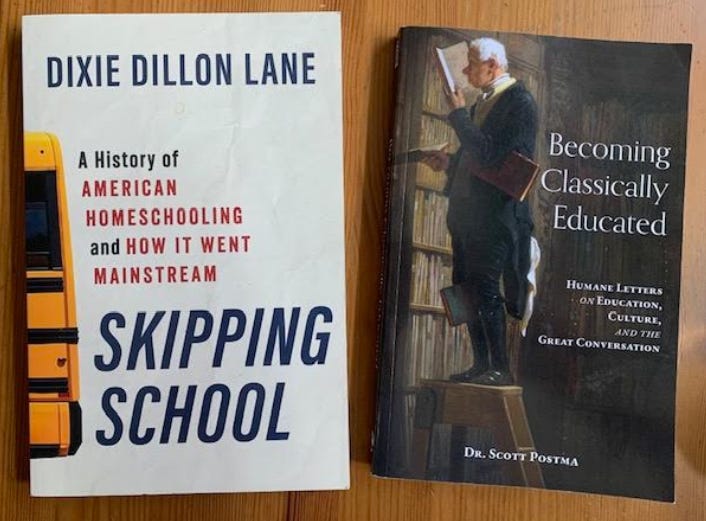
Scott Postma’s Becoming Classically Educated is a lucid literary deep-dive into classical education, including what it is—and isn’t. As Postma wittily puts it: “In William Goldman’s, The Princess Bride, Vizzini gets into the habit of saying ‘Inconceivable!’ To which Inigo Montoya eventually objects, saying, ‘You keep using that word. I do not think it means what you think it means.’ In modernity, such is the case with the expression, ‘liberal arts education’. It doesn’t mean what most people think it means.”
If you’d like to support our work, please share & restack this post! :)
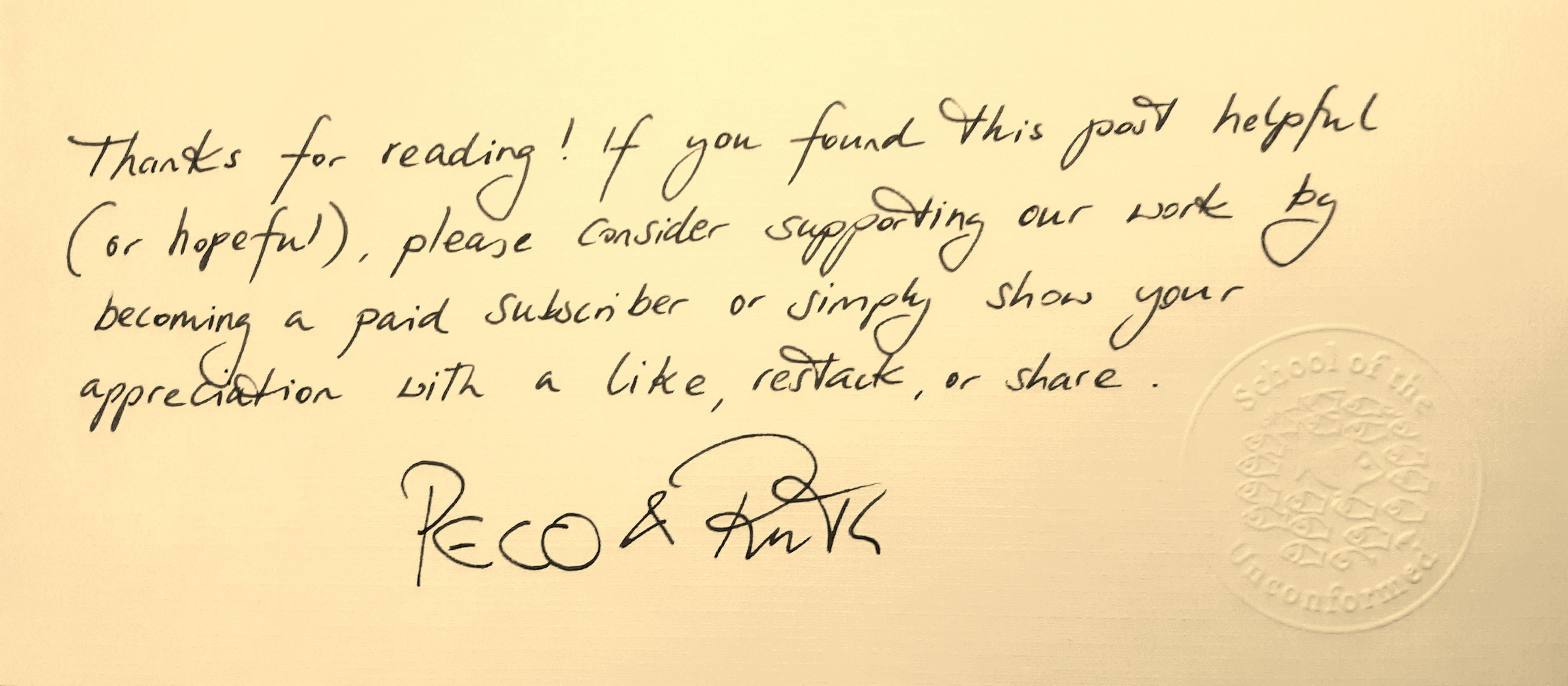
Note to paying subscribers: School of the Unconformed goes beyond the “human-certified badge” to establish reader-writer trust: Write me (Ruth) a letter! I will respond with a handwritten full-page letter, embossed with the School of the Unconformed logo. Contact me via direct message for my mailing address.
Comments
Nothing yet. Say the first thing.
Sign in to join the conversation.