
In a world filled with crises, there are always people helping. Look for the Helpers is here to shine a light on the countless ways people are protecting, restoring, and reimagining a more just and life-sustaining world.
We believe every act of care—whether through activism, community-building, or everyday kindness—matters. No one can do it all, but together, we are creating change. This is not only a space to find inspiration but also an invitation to join in your own way. Let’s be inspired by each other and take action, knowing that we’re not alone.
Some folks are helping protect other people, species, or places through actions like legal battles and boycotts. Some are building new and remembered ways of doing things - like regenerative agriculture, water management, restorative justice systems, and mutual aid. Some are focused on things like education and therapeutic care, so we can sustain these changes for the long haul.
We’re saying “yes” to all of it.
To the thousand caring faces. The thousands of ways we show every day that we give a damn about what happens to each other.
We believe no one can or needs to do it all, and all these ways of helping are essential to each other. Our movements and actions intersect.
Look for the helpers.
An interview with Leilani Navar, host of Turning Season Podcast, and Lydia Violet Harutoonian, founder of School for The Great Turning, where we offer online and in-person education that fosters personal empowerment and planetary care. In this interview, Lydia talks about what inspired the “Look For The Helpers” initiative, rooted in practical inspiration and guidance for these times.
0:00
-24:29
TRANSCRIPT:
Leilani Navar: Hi Lydia.
Lydia Violet Harutoonian: Hi Leilani.
Leilani Navar: Let's talk about looking for the helpers.
Lydia Violet Harutoonian: Oh good.
Leilani Navar: Tell us about what that means to you and why it matters to you so much right now.
Lydia Violet Harutoonian: So I wanted to launch this Look for the Helpers initiative, obviously based off of the Mr. Rogers quote, which he actually said his mother told him, you know, whenever there's a crisis or if there's a problem, look for the helpers, you will always find people helping.
And being a student of Joanna Macy's work, I very much believe in building our capacity to be with suffering without turning away, right? I think that it's important to be able to be present to the crises that are facing us without completely falling into panic or paralysis, that that's actually a skill set that we can learn: not to repress the emotions, but to honor them, and actually, what if they are kind of dignity that wants to come back into our human system, to our world, that says, “Oh, that oppression over there or that hardship over there, I do struggle with it. That is an ill of our world that deserves attention deserves kindness, deserves solidarity.”
And so while I believe that it's important for us to learn how to be with our world, right alongside it, I experience that it's very important to be able to also make visible to ourselves and to each other, all of the people, so many people, who do care. The millions of people who are attempting to restore or repair or sustain life in our world, which Joanna Macy refers to that as “the great turning.” I think you can use a lot of different words to describe all of the people who are in collaboration on behalf of life.
And so Look for the Helpers felt in this time - in the United States, for instance, one of the ploys of this current administration is to sow chaos, right? Is to sow an overwhelming amount of, “wow, we don't know which direction it's going to come,” whether it's in deportations, whether it's in vilifying the queer community, whether vilifying DEI, taking rights and services away from everyday people. In order to kind of have a response that feels supported, we need to be able to know and see that there are millions of people who do care. And so I want to highlight that and I want to try and help bring in a kind of balance of, yes, we are in crisis. And yes, there is also a response.
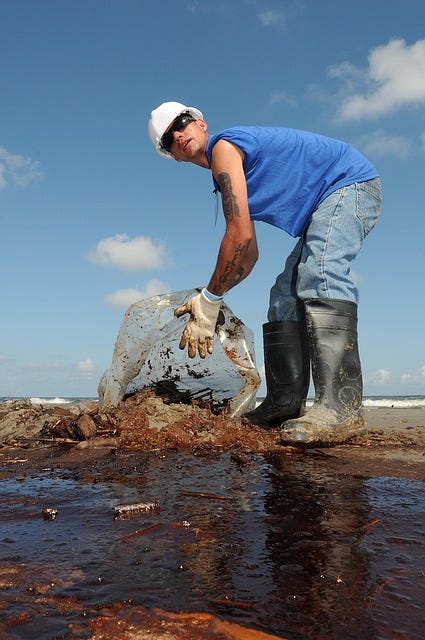
Because my whole life is is in relationship to those people. So I have a little bit of a different daily experience than a lot of people because all I do is interact with do-gooders. All I do is interact with activists. All I do is interact with community members who are doing something, whether it's making soup for elders, or it's vigilantly putting their bodies, in front of ICE employees and making sure that people's due rights are being given and protecting them systemically in that way, that all of these actions being taken are actually working together. They're all connected in some way, and I think that that is very important to keep in our field of vision, as people who really do care about what happens to people.
Leilani Navar: Yeah, this is amazing what you're saying about how your daily experience is so full of these reminders and this encouragement that comes from seeing how much people care. Because we don't see that in a regular news feed, right? And if that ratio of negativity bias, if we need to see seven positive things, it's five or seven positive things for every one negative thing, because we remember the negative so much better.
What if we could have five Look for the Helpers stories for every one chaotic, cruel news story, and what would that do to our state of mind and state of being and feeling of capacity for - you said some really big and beautiful things earlier there to about the capacity to be with suffering without turning away, and that that's something we can build.
So, I'm wondering if I'm hearing a little bit of what Joanna Macy gave us in the Work that Reconnects, where you have to root in gratitude before you can really go into honoring your pain for the world, which you named like a kind of dignity coming into the system, our pain for the world, and us feeling like, “Yeah, I do care about that,” that we can really turn there when we've rooted in gratitude first. So I'm wondering if Look for the Helpers is kind of that.
Lydia Violet Harutoonian: Yeah, and I wouldn't even say we can only honor our pain once we've rooted in gratitude, because I think that there are plenty of people where pain is the first thing they’re confronting that day when they wake up. And so they're already confronting their empathic pain or their immediate suffering in some way.
And just like you're saying, what I think Joanna Macy teaches us is, what is it that roots us and expands our capacity and vigilance so that we can, as she says, become unafraid of our pain for the world? So in one hand, I feel my rage on behalf of decimation of values or, society or the earth, or I feel my grief and right there in the other hand, right immediately alongside it, is my love of this world
Because you become unafraid of your pain for the world. So you can walk with it. But what are you walking towards? You're walking towards the other people with their hands outstretched, who do want to imagine and commit on behalf of life, who are organizing around values that you are grateful exist in the world. You are grateful the flowers are still blooming. You are grateful seeds we plant can still bloom. You are grateful there are people who are still wrestling with, how can we protect our youth? Right?
And so some kind of balance is very helpful, especially so that denial isn't the only coping strategy. Or even nihilism, you know. Not that I don't understand nihilism, I do. And I respect that it exists in the world because it's like, Jesus, what's the point of all this? Why is there all this suffering? And it's like, cool. And right alongside that, here's all this life that's still happening. And it is very helpful to, you know - you've heard me say a lot of times, the majority of the people you are in collaboration with on behalf of life, you will never meet, but they're there.
Can we make each other visible? We don't want to invisiblize each other's work. We want to make it more visible. So I think Look for the Helpers is exactly that. It's trying to make it visible. Keep it within sight as we also go, “Yes, I see that there is harm that is happening in our world.”
Leilani Navar: Yes, seeing the harm, but also seeing how people are responding to it in a nurturing and healing and reparative and protective way. Because for me at least, then I feel more inspired, more capable, more like it's possible. Like that image you just gave that I'm reaching my hand toward all these other outstretched hands. Well, is there any other inspiration behind Look for the Helpers?
Lydia Violet Harutoonian: Yeah, this one's a little bit more vulnerable to say out loud, but it is how I feel, so I want to be able to say it.
I think that something that's also inside of this response that is the Look for the Helpers initiative is an attempt to help repair some things that I and others in movement have maybe noticed accelerated in the last few years. A sense of over-fracturing in our communities. And I think it accelerated for due cause, like there's a lot going on that needs to be repaired and there's a certain precision that we want to have, but unfortunately, the shadow side, which I think many of us have seen, is that we can sometimes punish each other.
That there has been a way that we have - I mean, essentially the pains of oppressions are within all of us and we carry them and they impact the way that we move in the world, often widening our scope of empathy and vigilance about what is important. And alongside that, there can be a tip into punitive interpersonal dynamics. And that they stem from a very understandable suffering, but that they might not be what we actually mean to do to bring about collective liberation, especially if we're abolitionist. If I'm abolitionist in value, it means that I believe in the eradication of the punitive justice system. Which doesn't mean that I don't believe in boundaries. I very much do. But it does mean I believe in the human capacity for rehabilitation and for restoration.
And so there's something in Look for the Helpers that's also - I want to cheer people on in the movement, and there's some instinct in me that says “yes” to having a strong backbone, and try and heal some of this fracturing. Try to repair some of it.
I will admit I also, you know, often I'm coming from a place of critique. And again, I'm not saying don't critique, but I feel as if I've witnessed - I mean, if you look on social media, it’s a damn mess. It’s a mess. Right? It's like it's just over-critique central. And I'm like, cool, is there a way that we evolve, while also cheering each other on and appreciating your part of the movement, and your part of the movement, and the way you're repairing life?
You know, we can critique each other to the point of like, “get out of here,” or just kind of not valuing, you know, if someone is passionate about saving the whales, they might not understand advocacy for queer rights, or they might not have an analysis that's able to integrate in, not making it normal for there to be violence in the Middle East, right? But they still are holding it down in their corner.
So I guess my question is, can we have conversations that do help to bring more awareness online, while cheering each other on in the particular element in the healing of the world that you hold it down for? So you specialize, you know about saving this specific endangered species. And then this person over here knows how to stand up to police brutality. And this person over here - and it's not that we don't need to keep building solidarity. Well, in fact, that's what I'm saying. I'm saying to keep building solidarity among movements.
Is there a further appreciation that we can offer for the part in the ecosystem that we each hold down? And can that help with the sense of fracturing that I've felt and observed in movement spaces, generally on the left, but I don't want to say only on the left, because I think that there are people in a lot of different positions of society that are part of this movement towards repairing life.
Leilani Navar: This is so exciting because the vision you're describing is like shedding perfectionism in a way, and just uplifting what you said in the beginning: that so many people are looking at, oh, there's a lot of illness in our world that needs kindness, that needs repair, that needs attention, and just noticing that that's what's showing up, in however somebody shows that they care.
Like you said, whether they're making soup for somebody or putting their body on the line to protect someone or whatever they're doing, it's that caring that's showing up. And that's so exciting. And I think it is a repair that we need. It's not only a repair, it's like an enhancement. Can we grow all these movements and even help each other be more powerful?
Lydia Violet Harutoonian: Yeah. It's not easy to know the ills of the world and then have a response. It's what is being asked of us, but we're all learning how to do it. And so like there can still be a great desire for everyone to evolve the way that they see and understand each other in the world. But I think there might be an extra dose of appreciation that all of us could use right now.
And I don't even mean just blanket appreciation. I mean really seeing, just like you said. There's no perfection. And also, nobody has the whole thing down. That's not how systems work. Every being, every creature in the forest, every leaf has its own function. It's good at certain things. It's not that good at other things. Can we see and appreciate the strength or the skills or whatever it is in this human, even if they have some awkwardnesses, or some missing pieces of knowledge or whatever it is? And can we actually just get placed well within the ecosystems of healing that want to happen?
I'm not saying there is not going to be conflict. Thank goodness for the visions of generative conflict, you know, put forth by adrienne maree brown and Prentis Hemphill. But I do think that, you know, like I said, just look at social media. Look at the way we're trying to organize. Sometimes it feels like it's going well, and there's a lot of ways that we kind of just critique each other down to nothing to stand on. And I'm questioning that as a tactic for liberation.
Leilani Navar: Yes, and I'll just name, I think, something you and I have both seen, which is people who care a lot shrinking and being really discouraged in the face of that kind of critique, and we actually want them as empowered and encouraged as they possibly can be, with the possibility for growth and, you know, maybe difficult conversations.
Lydia Violet Harutoonian: Absolutely. I've found myself saying a lot, I've been asking myself a lot lately, and kind of saying to my students, don't lose your backbone. You know, it's really important to have a backbone right now. And what I mean by that is it's really important to, in the face of the chaos, do you have some moral clarity?
Some clarity of like, standing up, being like, yeah, I know that empathy is invaluable to me. I know that caring about marginalized communities and the variations of suffering is important to me. I know that listening and learning, I know that courage is important to me. Okay. That's my backbone. And then with that, this concept of the boundless heart, of if you find your way to be able to be with suffering without collapsing and being able to walk in the world and kind of empathic attunement, your heart is boundless. I mean, boundless. You just keep expanding. And then now on top of that, you love? You know?
And the things that are easy to love, like the trees and the people, do it. It's just easy to cheer people on. What if it was easier to cheer each other on, and kind of form this collective that we're always talking about, right? This community, this collective response that we're talking about. What are the threads? What is the quality of relationship that leads to that collective response?
So Look for the Helpers for me, it's exciting because you know, I just want to celebrate. I want to uplift. I want to help keep in balanced visual alongside the unraveling, you know, that which is repairing life, and all the different, you know, whether it's figuring out how to heal contaminants in various ecosystems, whether it's being able to put injunctions legally in court to slow down some of these executive orders that are happening, whether it's being able to facilitate dialogues across party to value systems that are in support of humanity, actually, all those things are happening all the time, and so, you know, I want to know even more about them.
Leilani Navar: Well, is there any particular leaf in the ecosystem of repair that you want to highlight today? Anything that was exciting to you recently?
Lydia Violet Harutoonian: Well, I've been following the Alt National Parks. It's called like Alt National Parks Service. And it's a coalition that came of federal employees, I think just within the parks system at first. And now it's gone beyond that. And it was formed in the last presidency of Donald Trump. Well, they've very much revived, right?
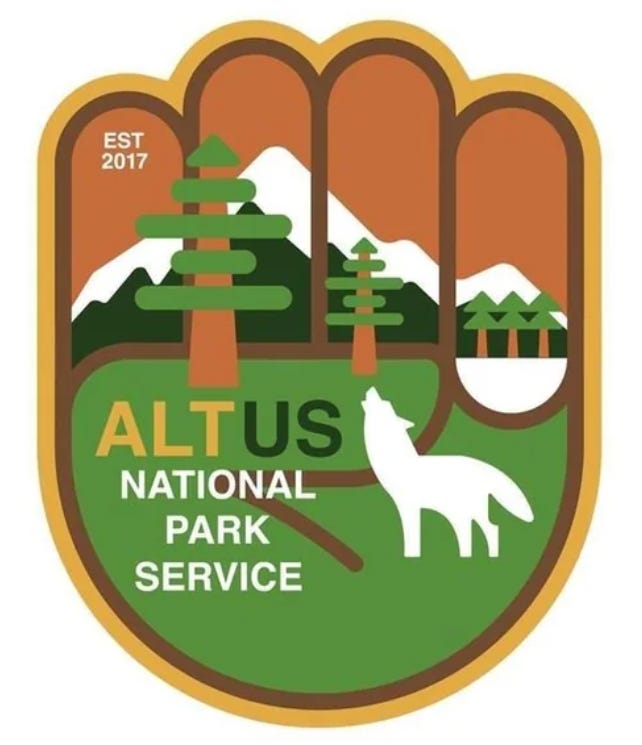
And I've watched them be extremely active since Trump became president. And now last I looked, it was like 90,000 members that are federal employees. And there might be more now. That was last week. These are people who are banding together to protect us. They're working on our behalf and to protect the land.
They are being courageous because I imagine that if you get found out who - apparently they've done a good job staying anonymous - but I imagine you're putting yourself and your family in some potential harms way. And, you know, this is tens of thousands, and I would guess a smaller group of people that are in leadership and closer circles in that, amidst the chaos that is the legal social onslaught of Trump's government, they are from the inside saying, what can we do? What can we build? This is what we're doing today. The public is not going to understand this coded message, but we know what it means. They're thinking and planning strategically on a daily basis with what comes of how to protect us as citizens, how to protect each other as federal workers, and how to protect the land.
I've found them quite inspiring lately and that's just, again, it's just one. That's just one outlet. Not to diminish the onslaught, but it's like, there they are. They're trying. So the trope of quote, “nobody cares,” “nobody's doing anything” - you know, people can say quite easily. And every time I hear it, I'm like, wow, it's so not true. It is not true that, quote, “nobody cares.” I actually see a lot of people caring.
I do think there's still a lot of people in the “what do I do” question, trying to find that, and that's a whole - Yes. Like yes, find a response, try not to paralyze, see what your skill sets apply to, see what your relationships lend you to, try something. It might work, it might not work out. Then you pivot, you know. And I know that that's there. That's also people caring. They're just not sure where to plug in yet. Can we create communities where we can go, “Oh yeah, over here. Come on in!” You know, and then we kind of plug it in and then they - cause they want to be helpers, right? They want to be the helpers that you find when you look for the helpers. Perfect.
And the other thing is like, I always say, put the measuring tape down. We live, especially as Americans, we have this American exceptionalism thing. We think what we do needs to be big and that it's only valuable if it's big. I don't think that community response or organizing works like that. I think you got to put the measuring tape down and you just start with one thing. And then you do something else the next day you do something else and you can't be attached, you know, in a way. You can want to have a big impact, but you can't be attached to the final scope of impact. You just do it because it is something that you do on behalf of your values, that day, to try and bring some one half a percent more repair in the world.
Leilani Navar: Absolutely. And we have no idea what tips the scales when and where, and what inspires your neighbor, or what revives someone from despair when they found out that you cared enough to do that one small thing, you know?
Lydia Violet Harutoonian: 100%. I always tell people, you know, also, so let's say we knew it was all gonna go tomorrow. Are we just gonna be mean to each other today? No, you'd probably try and care for your neighbor even more if it was all going to go down tomorrow. Now, it doesn't mean that you don't have grief over that. It's hard to live in a time like that and to know that that might be coming.
But the cool thing right now is we don't have certainty. We don't know it's going to come tomorrow. We don't know we're going to make it out, we're not going to make it out. But living amongst that uncertainty, you have to go, okay, what do I want to do anyway? What do I want to give anyway? What has value to me anyway, no matter what happens?
Beauty has value to me. Empathy has value to me. Courage has value to me. Protecting so and so has value to me. Okay, go for it. It has value to me too. As one human being over here, I can say it has value to me too. What you are moving with today. On behalf of life.
Leilani Navar: It matters to me, too, and it matters to so many people. I'm so excited about Look for the Helpers and this chance, really, to just keep uplifting and inviting people to look for the helpers, and be inspired by the helpers, and be helpers, and help the helpers.
Lydia Violet Harutoonian: You’re one of them too. You're a helper too.
Leilani Navar: We're just trying to help.
Lydia Violet Harutoonian: Yeah.
Leilani Navar: Just trying to help. Okay. Thank you, Lydia. Thanks for this fun conversation and all the help you're giving this hurting world.
Lydia Violet Harutoonian: Thanks to all the helpers.
No posts
Comments
Nothing yet. Say the first thing.
Sign in to join the conversation.