
Hi, friends. It’s an exciting time for the Petrilli family, as I discuss below. SCHOOLED will be off next week, returning on August 25, probably with a super-sized edition.
But first, we dig into the college-for-all debate; hear from Richard Culatta and Penny Schwinn on testing reform, Naomi Schaefer Riley on the demise of the school founded by Mark Zuckerberg and Priscilla Chan, Andy Rotherham on the likely demise of Plyler, Marguerite Roza and Maggie Cicco on the Federal Scholarship Tax Credit, Checker Finn on the DOGEing of Head Start, and Sara Mead and Adam Ezring on early math; plus celebrate Ohio’s overhaul of its career credentials system. Let’s get to it!

This week I’ve got college on my mind. Mostly for personal reasons: We’re dropping off my first-born at college on Friday. While I am of course excited for him, I’m going to miss him tremendously, too, so for any of those of you who have been through this, and have advice about an emptier nest, please do share!
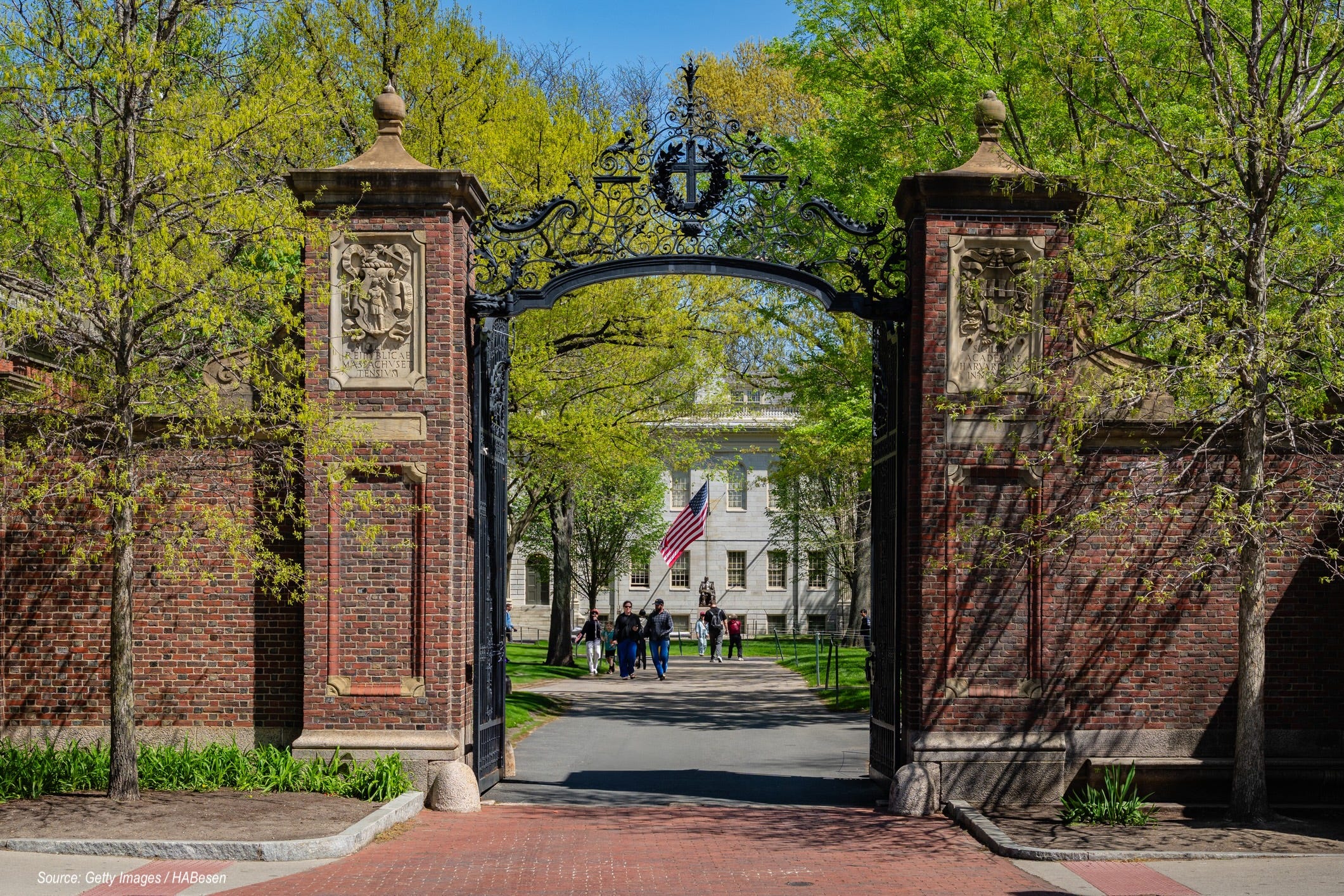
But college is also on my mind because of two recent tidbits. First, Alabama submitted its official Ed-Flex waiver request to the feds, including a plan to use the WorkKeys assessment as part of its high school accountability system, in part to balance the scales for students who are not planning to go to college—and the schools that serve them.
And second, Matt Barnum published a thoughtful rebuttal to my claim, made here in SCHOOLED, that we should discourage students with low grades and/or test scores from giving college a try because of the low probability that they will complete a degree or credential, and therefore will be worse off than if they had gone straight into the workforce.
What all this brings to mind is our ongoing debate about whether we education reformers overreached back during the Bush-Obama years by focusing too much on sending everyone to college, and now whether we have perhaps overcorrected by going too far in the other direction.
I know what some of you are thinking: Nobody ever actually said that everyone should go to college. Perhaps. But if you go back and look at the rhetoric from those years, it sure sounded like the message we were sending to kids was: College is the path to opportunity and you should take it. That’s when we started naming classrooms after teachers’ alma maters, especially in high-performing charter schools; when school reform organizations set their targets on dramatically increasing the number of students who made it to and through four-year universities; and when we determined that state academic standards, in the form of the Common Core, should aim for college readiness (and allowed career readiness to be an afterthought).
And at the same time, we let the old Vo-Tech system atrophy. That was for good reason, as it had racist and classist elements and often led to dead-end jobs—if it led to jobs at all.
But where we erred was in (mostly) seeking to end rather than mend vocational education. I had my conversion experience about this around 2014, when I was working on a book about education for upward mobility and kept running into social scientists, often outside the field of education, who would point to career academies as one of the most impactful interventions in all of American domestic policy. It turned out that these career academies were super effective at boosting students’ earnings—especially boys’—and even decreased their rates of incarceration and increased their rates of marriage. This was also one of the key arguments of an influential report by William Symonds, Robert Schwartz, and Ronald Ferguson, Pathways to Prosperity.
My enthusiasm-of-a-convert is clear when I go back and read my cringeworthy Slate article from back then. But I still stand by the basic thesis: College is a great path to upward mobility for students who are academically and otherwise prepared to complete a degree, but it’s a waste of time and money for those who are not. And thankfully, there are other pathways to upward mobility for students for whom academic learning is not their thing.
Now, I understand that this line of reasoning creates significant risk. Fellow reformers often worry that this will lead to a lowering of expectations, especially if we decide too early who is and who is not “college material.” And especially if we make those decisions based on race, ZIP Code, or other group characteristics.
I agree 100 percent. As I wrote a few weeks ago, we have to be worried about students who could have succeeded in college but were discouraged from attending just as much as we’re worried about those students who are nudged to give college a try when their chances of success are extraordinarily low.
So it’s a balancing act. I am comfortable with where Maryland landed with its Blueprint, calling for all students to master a high level of knowledge and skills through the end of the 10th grade—as determined by end-of-course exams—before giving them choices among traditional college prep courses of study and high-quality career pathways, including significant work-based learning.
That’s way better than making everybody sleepwalk through the same traditional curriculum all the way to the end of 12th grade. Which is mostly what we are doing today.
But last week’s developments add some complications. The Alabama plan, for example, is for all 11th graders to take the WorkKeys assessment in the fall and the ACT in the spring, and deem some students “proficient” even if they don’t hit the cut score on the ACT as long as they do well enough on WorkKeys. The problem is that, even though the state raised its original cut score for the WorkKeys exam, that standard is still set at a very low level, much lower than the college-ready standard for the ACT. Are we OK with that?
And as Matt Barnum showed, some high-quality studies indicate that students with surprisingly low test scores and grades can still benefit from attending selective four-year universities. That’s almost surely because some of them do end up completing a degree, even though the odds were stacked against them. It’s also possible that leaving with just a few course credits is helpful in boosting earnings.
The implication is that some students whom I might steer into workforce training rather than traditional college because of their modest academic readiness might have been able to make it to and through a four-year degree—and gained all the benefits that the college wage premium has to offer.
Still, the bulk of the evidence indicates that students with low test scores and grades really do have the odds stacked against them because their chances of completing a degree are so low. (That’s especially the case if they matriculate to community colleges, which tend to have fewer resources and dismal completion rates.) We shouldn’t ignore those odds when designing policies or advising students.
But I’m sure some of you see it differently and believe that the risks of lost potential from not sending kids to college are so high that we should continue to be willing to have a whole bunch of young people go to college and drop or stop out—40 percent of the total today—if need be.
But that’s the question. Are we moving to an appropriate balance, supporting multiple high-quality pathways to success, not just the college-for-all approach? Or have we overcorrected and, as a result, discouraged too many students from going to college who might actually find success there?
Let me know what you think by responding to this newsletter, emailing me at SCHOOLED@FordhamInstitute.org, or leaving a comment.

Let’s start our sampling of the week’s education-opinion buffet with Richard Culatta and Penny Schwinn, arguing that “the feds opened the door to testing reform. States should walk through it.” Not satisfied with three-times-a-year “through course” exams, they want states to go even bolder:
The technological barriers that once made continuous, adaptive assessment impractical are largely gone. Device and connectivity gaps have closed. AI and advances in psychometrics have transformed what assessment tools can do: measuring learning in real time, adapting to each student’s responses, capturing early literacy development in young children, and aggregating into the kind of longitudinal data accountability systems require—without the disruption and cost of a single annual exam.
To which I say: Maybe? As we’ve discussed here before, Montana in particular is edging toward this vision with its modular assessment system. But the techlash might make this conversation moot. It’s not just that parents with pitchforks want the screens out of schools, which would make digital assessments vulnerable, too. It’s also a problem, as Dale Chu noted recently, that some leaders are saying they need to keep kids (including young ones) spending lots of time on devices to make sure they do well on those digital exams. I’m not sure if a technocratic solution that combines screens and high-stakes tests can survive this populist moment.
You know what else might not survive much longer? The Constitutional right for undocumented students to attend public schools. A few weeks ago, Josh Dunn explained that the case rests on shaky legal grounds. And now Andy Rotherham pleads with us not to give Plyler the Roe v. Wade treatment:
So you have a precedent that is not on firm ground and a place where advocates should be building consensus. Sound familiar? It’s where we might learn from Roe and Dobbs. There you had another precedent, Roe v. Wade, that was not on strong legal footing but was a rough political consensus. Polling shows Americans overall are skeptical of late-term abortions, OK with first-trimester abortions, and split on the second trimester. Proponents of abortion rights had four decades to convince people that, at least insofar as early-term pregnancies are concerned, this was a matter best left to individuals to decide. Instead, they made it about legal standing, fetishized Roe v. Wade, the court, and the precedent, attacked anyone who questioned it, and didn’t do persuasion politics. It was a precedent even people like Ruth Bader Ginsburg said was on flimsy legal ground. In the end they failed with Dobbs, with real costs to people’s lives.
I agree. It’s a good analogy. Andy continues:
Let’s not make that mistake again. The arguments for the rough consensus Plyler represents are important to make, irrespective of any legal action. People who have their kids in school are, generally speaking, not problems in their communities. They are trying to build lives—the kind of Americans we want and need more of. Kids are better off in school in many ways. And kicking them out, even if you disagree with their parents’ decisions, is simply cruel. Also, given how public finance works, the idea that this is a simple cost is inaccurate.
Those of us who support the notion that public schools should be open to all students who live in America, documented or not, need to make the case—not argue the legal niceties of the Plyler decision itself.
Another federal provision that’s under attack is Head Start. The Trump Administration can’t convince Congress to zero out the program, so it’s trying to deregulate it into oblivion instead. My colleague Checker Finn has no beef with cutting some of its red tape:
Over its six decades, rules and specifications have been affixed to every possible realm of program operations like barnacles encrusting the hull of an aging ship. The education bits are a tiny fraction of a vast rulebook. The rules specify, for example, that:
A center-based program must have at least 35 square feet of usable indoor space per child available for the care and use of children (exclusive of bathrooms, halls, kitchen, staff rooms, and storage places) and at least 75 square feet of usable outdoor play space per child.
Complying with all that stuff is expensive, too. Between 2007 and 2025, the Head Start appropriation rose from $6.9 to $12.3 billion even as enrollments fell from a million youngsters to about 715,000.
Unfortunately, the Trump team is also tossing aside NCLB-era reforms that pushed Head Start closer to becoming a real pre-K program:
Getting serious education targets, standards, and curricula into Head Start was a hard-won victory that wasn’t really sealed into law until 2007, when (as with NCLB) a bipartisan compromise between the Bush 43 team and Senator Ted Kennedy yielded a Head Start reauthorization that, for the first time, began to treat it as a pre-school endeavor as well as the “child development” program that it had always been. Getting to that point took more than 40 years because Head Start program operators and staff—many without college educations themselves—long fought such changes, as did some civil rights groups and a handful of early childhood “experts” and lobbyists. (That’s also why Head Start never became part of the Education Department.)
This amounts to throwing out the baby with the bathwater. Checker again:
Undoing the elements of Head Start (or any early-childhood program) that focus on cognition and school preparation in basic skills should strike any sentient being as folly.
Let’s keep the focus on little kids. Sara Mead recently interviewed Adam Ezring about his organization’s campaign to encourage pediatricians to provide guidance to parents (and other caregivers) about how they can support the early math success of their children. Adam explains the rationale:
I think it’s important to look at the contrast between expectations families have, and behaviors they engage children in, around math vs. literacy right now. Over the past few decades, we have really paid attention to literacy at a family level. Reading regularly to your child is a cultural norm. I don’t think we can say the same thing about math.
Furthermore, Adam says:
I want to be clear that we’re not asking parents to teach math. We want them to play games with their children—card games and board games. In that act of playing games, they are learning fundamental math skills without even realizing it. Now, parents can add to that learning by asking probing questions like: How many spaces did you move? How do you know who’s winning? Why did you make the move that you just made?
Then, at Sara’s prompting, Adam really swings for the fences:
If Taylor Swift’s next tour is handing out Monopoly and Uno and Battleship to students in the same way that Dolly Parton is handing out books, then I’d know that I’ve made a difference in my life.
Maybe giving math the Taylor treatment will help parents shake off their own math anxiety and launch a new numeracy era in our schools.
Speaking of dreaming big, Marguerite Roza and Maggie Cicco explain how the new Federal Scholarship Tax Credit could unlock tens of billions of dollars for public schools:
Our proposal: Districts set a fixed fee for access to a bundle of services. Imagine the district offers an $800 “K–12-plus plan” that provides access to stuff like field trips, tutoring, homework help, assemblies, clubs or other services not required in the state’s definition of required public education. Every student signs up, but none—save for the wealthiest families—actually pays. Instead, a state-approved scholarship-granting organization sends the money from the withheld taxes to the district in the form of scholarships awarded for all the kiddos.
To make this work at scale, employers are key. Major employers (think school districts, universities, hospitals, Walmart, Amazon) could invite employees to participate via a $1,700 payroll deduction to an SGO. Employees could pick their SGO and indicate which district would benefit, and since their contribution would immediately be offset by a corresponding dollar-for-dollar reduction in federal withholding, there would be no net change in their take-home pay.
It’s clever, though I’m not sure it’s really in the spirit of what the law was trying to do. Then again, if districts try this, would the feds move to stop them? Would anyone else have legal standing to sue? If the answer to those two questions is “probably not,” then expect to see this approach somewhere in America soon.
I hate to end on a down note, but Naomi Schaefer Riley wrote an obituary of The Primary School, the entity launched by Mark Zuckerberg and Priscilla Chan and showered with $125 million of their largesse, and it’s too on point to ignore.
Last year, Chan, a pediatrician by training, told The Wall Street Journal that student outcomes weren’t where “frankly, anyone would have wanted them to be.” It’s hard to know how bad they were, but frankly, the results are not surprising.
From the start, the school was not designed around academic outcomes. Instead, according to the Journal, it “aimed to support the ‘whole child’ through wraparound services, including free dental checkups, early-intervention screenings and wellness coaching for parents.”
And alas, when you don’t design for academic outcomes, you don’t get them. Naomi continues:
If you have hundreds of millions of dollars burning a hole in your pocket, there are some things you could do to improve the lives of underserved students. And providing them with on-site dental care is not the most important. There are scholarships to schools that work, for one thing. Organizations like the Children’s Scholarship Fund support students at private schools—including many Catholic schools—with long records of helping students succeed academically. There are charter school networks like Success Academies where students regularly outperform their wealthy suburban counterparts. Why not give their founder $100 million to further their work?
The explanation for the fiasco of The Primary School is willful blindness with a dash of hubris. To educate poor kids you don’t need to reinvent the wheel. But you do need to watch what makes one turn.

Other edu-opinions worth your time
Jeb Bush, “Building a parent-choice program took Florida years. Texas gets it right from the start.”
Chris Cerf, “Accountability Works. Outcomes-Based Contracting Makes It Work Better” (see also: Jill Barshay, “Paying vendors for student results”)
Danyela Souza Egorov and Jennifer Weber, “Mamdani Wants Savings? He Can Find Them in the Education Budget”
Jorge Elorza, “Note to Democrats: Supporting Unions Isn’t the Same as Supporting Education”
Allysia Finley, “Los Angeles Schools Run Out of Other People’s Money”
Vladimir Kogan, “Why Ohio’s third-grade retention law worked (until lawmakers killed it)”
Kerry McDonald, “Get the Feds Out of Curriculum Decisions” (on the READ Act)
Jed Wallace, “Forever Young: Reinvention, Elders, and the Next Generation – CharterFolk Chat with Caprice Young”
Matthew Yglesias, “A strange gifted education success story”

Ohio policymakers tightened their list of industry recognized credentials—meant to bolster workforce preparation but often used as graduation shortcuts. Fordham’s Aaron Churchill explains why and how: Without state quality-control measures, Ohio ballooned to over 700 credentials, with schools pushing kids toward the easiest ones to help them graduate and inflate their school’s ratings. After reviewing the list against labor-market needs and career outcomes, the state cut back to just 126 graduation-eligible credentials. The work isn’t over. Maintaining the new standards will require ongoing review and political will. Still, other states can learn from Ohio’s effort (and past mistakes) if they want to restore meaning to the high school diploma and build real work-based learning strategies.

A new research brief from NWEA shows that today’s middle schoolers—who experienced the pandemic’s disruption in their critical early years of schooling—continue to fall behind pre-pandemic cohorts, with declines driven by the lowest-performing students. Sarah Schwartz notes that while the science of reading movement is taking hold in the early grades, these students need support beyond what most middle school teachers are trained to provide.

Paying top teachers more money to switch to high-need schools sounds like a slam dunk, but as we discussed here at SCHOOLED last fall, the details matter a lot. Sarah Sparks looks at the Texas Teacher Incentive Allotment, reporting on a new analysis by Patrick Massey showing why merit pay is so difficult to get right. Dan Goldhaber explains how bonus pay might bring a teacher to a new school—if the pay increase is enough to offset moving costs. But even then, according to Patrick, many teachers use their status as “a public signal that says, ‘I’m a good teacher.’” Sarah spells it out:
To use merit pay for recruiting, Goldhaber and Massey agreed programs must both target highly effective teachers and use large-enough bonuses to overcome the perceived difficulties of teaching at higher-poverty schools, while also preventing existing high-quality teachers from leaving high-need schools.
For more on this latest analysis, Fordham’s Amber Northern breaks down the working paper in detail—and shares her own thoughts on the findings—on a recent Education Gadfly Show Podcast.
See you in two weeks, folks!
Mike
Sign up to receive this newsletter in your inbox, usually on Tuesday and Friday mornings. SCHOOLED is free, but a few linked articles may be paywalled by other publications.
Comments
Nothing yet. Say the first thing.
Sign in to join the conversation.