

Working as a brand designer for a civic tech nonprofit specializing in the voting infrastructure, I always feel stunted when it comes to creativity. I was recently tasked with creating merch for our booth at a progressive advocacy conference, and I struggled to make “eye-catching, creative merch that people would want to keep to learn about our mission.” It’s hard to make merch exciting within the nonprofit budget, so often, the expectation falls on the designer to “make it all the more captivating.”
When I turned to other organizations for inspiration, I was surprised and delighted to find a very unexpected product in merch design: tiny computers.
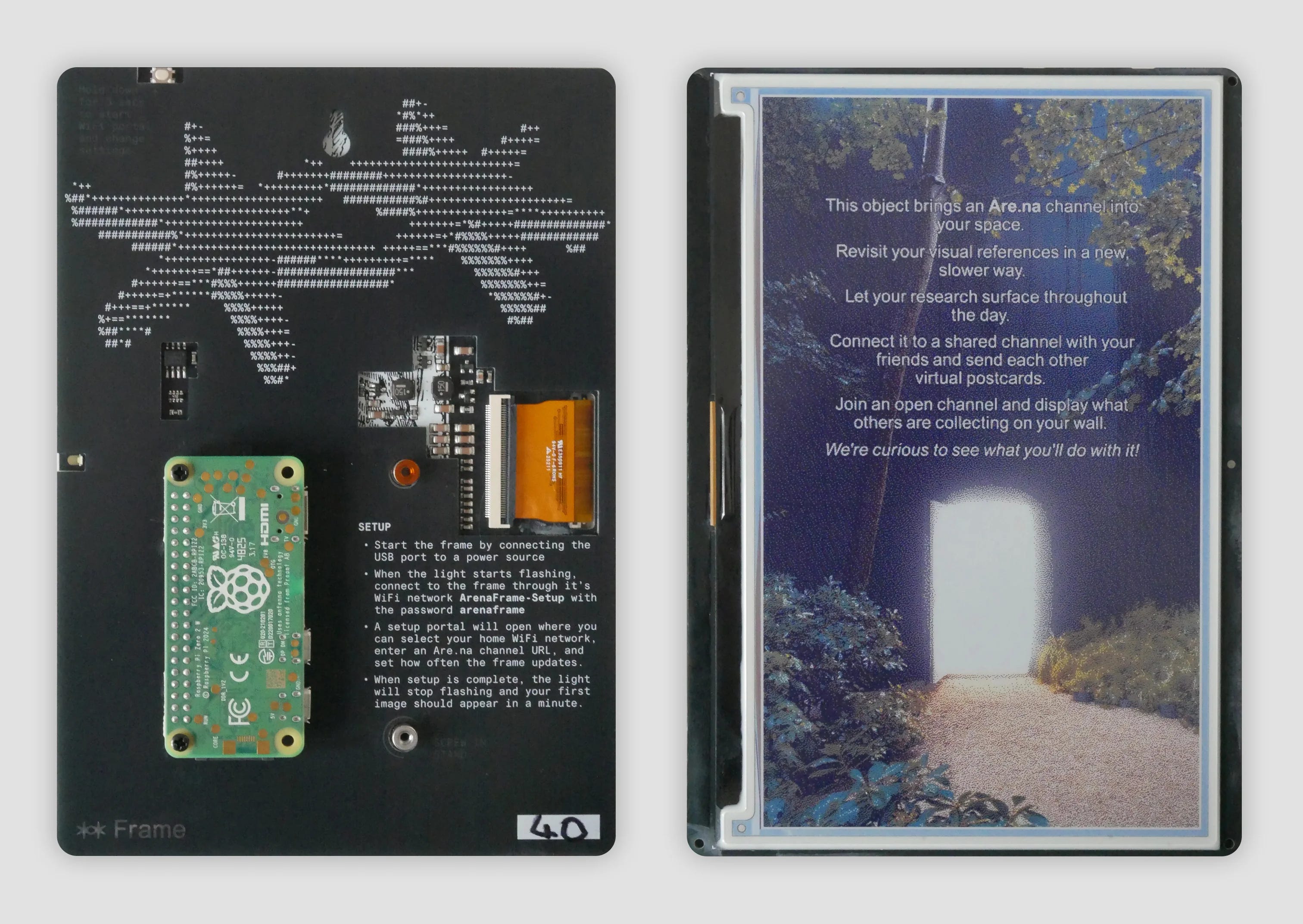
If you are a designer, a researcher, an archivist, an artist, or just an internet dweller and enthusiast, you are probably familiar with Are.na. In April, they released a very special merch called Are.na Frame, an open source e-ink device to link your archived channels into the physical world. I love how lightweight and seamless it looks, just like a piece of home decor next to other picture frames. I find archival work to be a form of research that can be laborious. I am moved by means of purging my ideas almost immediately. But after the purge, I rarely revisit the living archives on my computer until I am reminded to continue exploring this path of curiosity. Are.na Frame seems to bridge the gap between idea purging (archiving) and idea building (creating). By silently existing in the frame of a physical space, it serves to remind the author of all the wonderful discoveries living in the channels online. I urge you to read this conversation with Kiran Scott de Martinville, the creator behind Are.na Frame, who shares his inspiration and tutorial to make your very own! I may also take a crack at it sometime this summer.
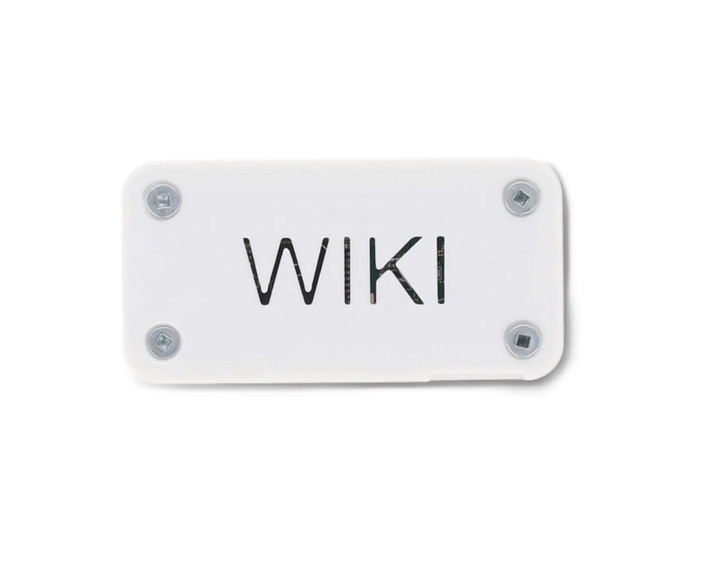
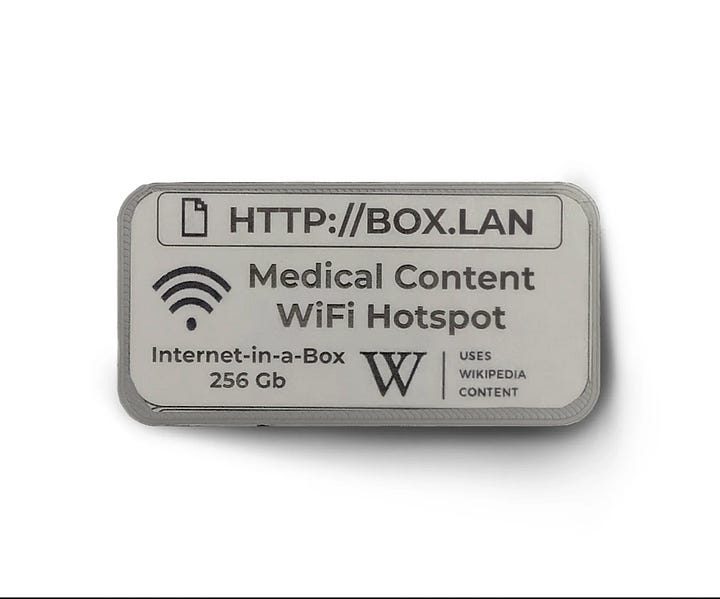
I find the name “internet-in-a-box” just so endearing. It seems to reinforce that this magical, often mystical innovation called the internet can really just exist in a small box the size of your palm. The website describes the object as a “miniature server” that holds an offline version of Wikipedia and MDWiki. This project was developed to educate communities with low or inaccessible internet connectivity. What I love about this merch is that it redefines how we think about and interact with internet-supported technologies. We think of shiny computers, sounds of whirring, cooling, and large batteries. The internet's infrastructure and the hardware that encases it will, more often than not, remain a mystery to the general public. With IIAB, perhaps its users will start to wonder, how can a small object like this be a server? What exactly is the internet? How can the entirety of Wikipedia fit in this little box?! IIAB is sold out on the Wikipedia Store, but you can order directly from their partner, Wiki Project Med Foundation.
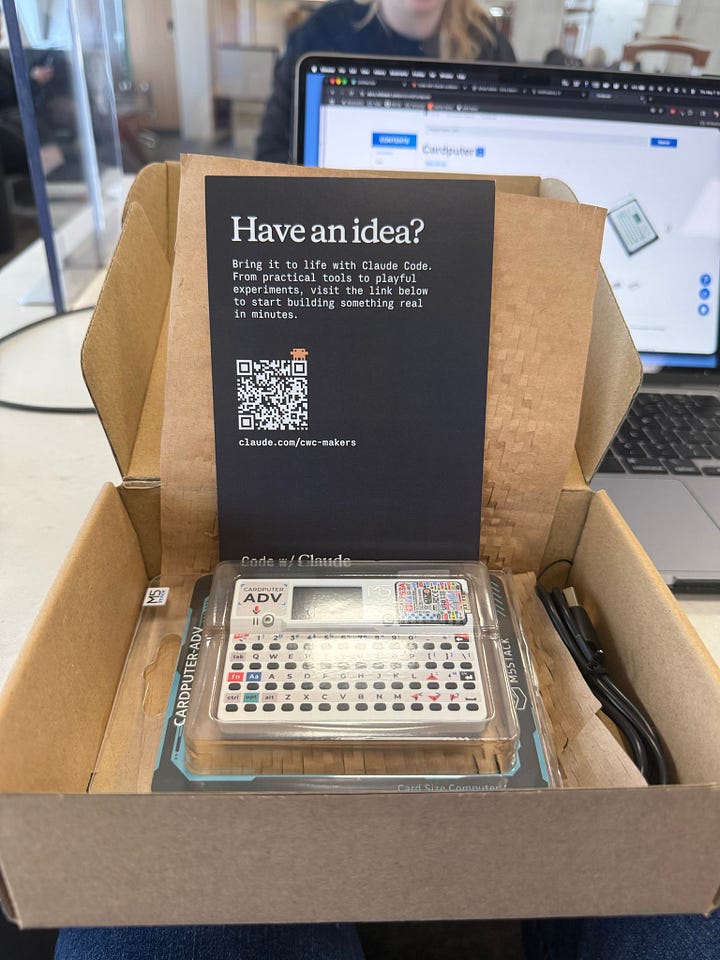
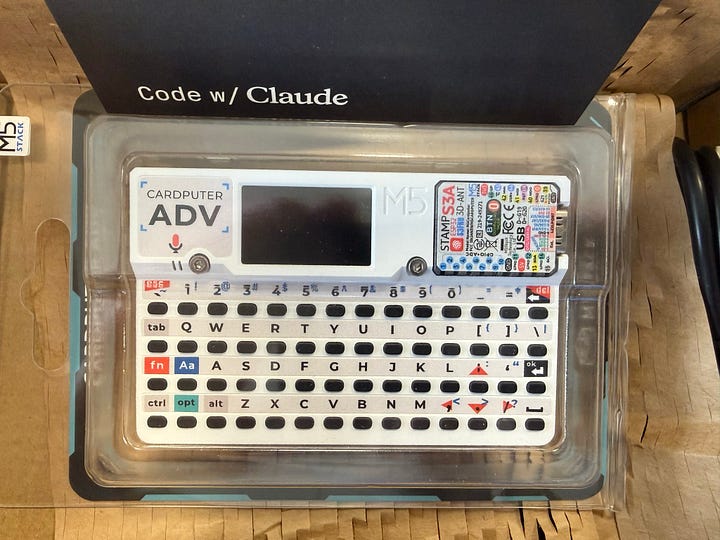
At Claude’s recent conference, Code with Claude, guests were found unboxing a mini handheld computer, the M5Stack Cardputer ADV. Attendees were invited to plug in the Cardputer — a programmable device with a tiny keyboard and screen — and use Claude Code to build custom tools on the spot. Already popular in the hardware and hacking community for building custom terminals, games, prototypes, and more, the small hardware sits in a similar lineage of cyberdecks. The portability of the cardputer helps users understand what exactly constitutes a “machine” or a “computer.” And this time, users can actively participate in the craft, where the user is also the builder, to create a highly specific and personalized tool in a self-contained device rather than relying on a pre-built app. The cardputer is available for purchase on the M5Stack Store so you can program whatever you desire!
⋆˙⊹ ࣪ ˖⭐︎⋆.˚⋆.˚⭒⋆
There were no tiny computers at our conference, but I did make stickers that said “Vote Ready with [our org]!” on a dithered map of the USA. Owning portable hardware as branded merchandise feels exclusive because technology is widely seen as both expensive and a serious commitment. But just how cool and accessible to have a precious metal machine block that fits in the size of your palm!! When our online interaction exists within the defined enclosures of device screens, it’s easy to dismiss the magic of the working hardware itself. But the physicality of it all serves as a gentle reminder: that the façade of the cloud and other abstract terminologies are actually grounded in very real things on earth. I like to imagine hardware as an extendable portal to the digital world.

The size and personalization of the small hardware dispel the notion that computers are complicated and difficult to fix when broken. Unfortunately, consumer electronics are rarely modular and repairable by design. They are built to fail and we fall for the allure of the new iPhone launching every year. The consumer and manufacturer relationship defines who can design, build, and distribute such electronics. The builders are thought to be experts of the field, engineers, hackers, MIT graduates. But the rise of customized cyberdecks online reveals that anyone can build a hardware of your own if you so desire. In fact, the cheapest small computer using Raspberry Pi, including all the small supplementary bits like the SD card, power supply, etc., cost roughly $35 to $50 (though there has been price hikes in RAM storages due to AI).
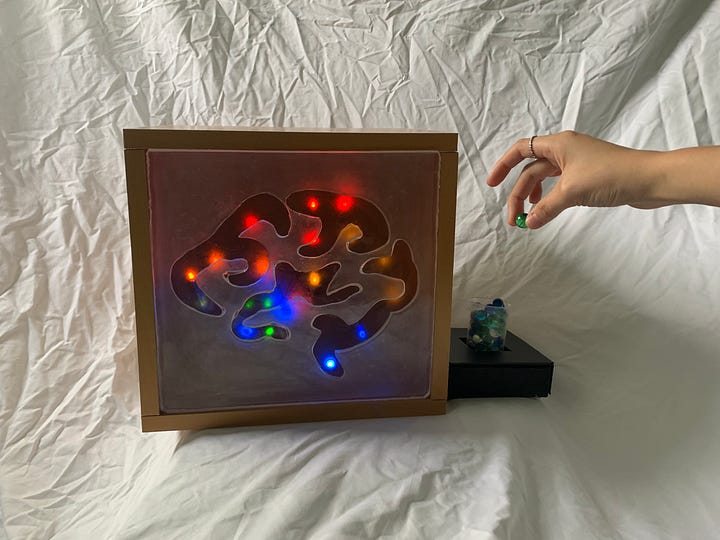
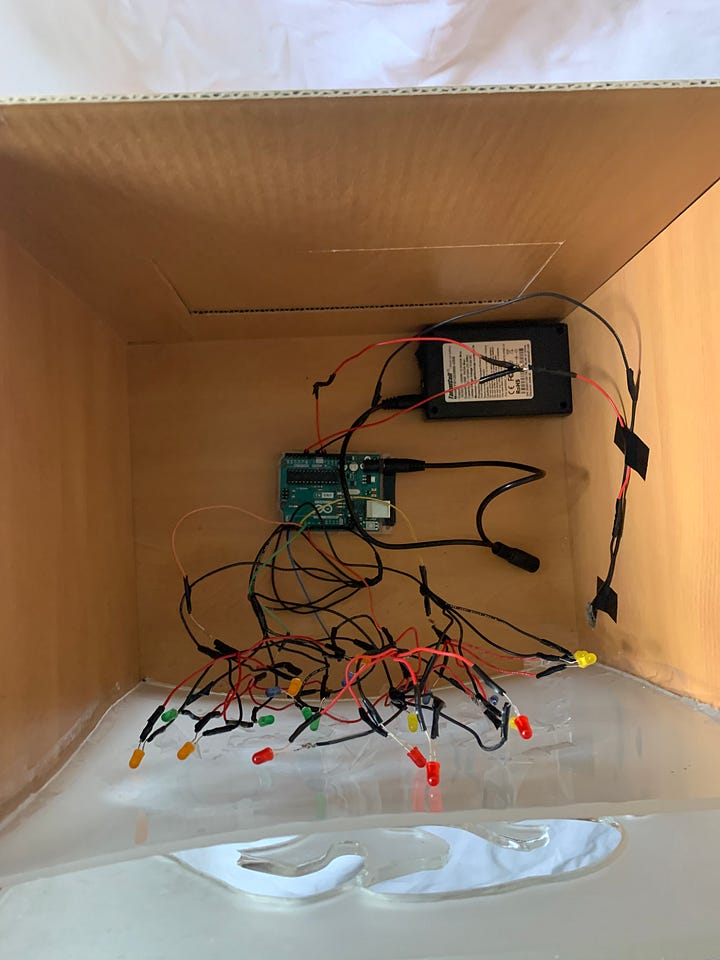
Like many chronic online users, I find my online fatigue thirsting for physical crafts: to touch, to cut, to bend, to sculpt, and carry outside. I was thinking about how I had never worked with hardware, but I remembered my thesis project. For my undergraduate neuroscience thesis, I worked with my brother to build a pressure-sensing sculpture using an Arduino Nano to represent the cognitive ‘working load’ of learning in the brain. It was honestly so scrappy, made with a resin mold to represent the brain and a cube organizer as the box. Parts of me felt like an imposter because all my classmates presented traditional neuroscience experiments, while I presented a video clip of my demo. Back then, I didn’t realize that I had worked with legitimate hardware. Nor did it cross my mind that I was already creating at the intersection of art and technology. It's really special to look back at my younger self pursuing something that called to my heart, even though I had no idea what I was doing.
Are you building with hardware? Do you have any tips for beginners? Looking forward to a summer of experiments!
With a tinkering mind,
— Eileen
Other notes & musings [hardware edition]:
🟨 Eva & Franco Mattes's Re: Re: Re: Net Art, made with a hand-assembled computer, 64 AI-generated webpages, custom software, and plexiglass.
🪟 Dabin Ahn’s The Four Seasons series incorporates single-board computers on oil paintings to showcase a video loop compilation.
🌺 Léa Collet works with Raspberry Pi, LCD/LED screens, steel, and other mediums to build sculptural and photographic pieces.
🪺 Diana Lynn VanderMeulen creates Cosmic Pebbles, showcasing loop videos embedded in casings of ground eggshell and alginate ceramic.
🪴 HTML Pollinator Garden is a small e-ink device with a QR code that exists as a little free library holding shareable files
Comments
Nothing yet. Say the first thing.
Sign in to join the conversation.