
This week we close out April’s “From Idea to Existence” series with the hardest step of all, putting your work into the world before you feel ready. In Community Notes, we are talking about something that is not a trend or a theory: old Hollywood is structurally over, and the new one is already being built around us. We break down what is actually changing, what has expired, and what that means for independent creatives right now. Plus fresh industry news, three open grants worth your attention, and a word from Barry Jenkins on what it means to build your own path.
Let’s get into it.
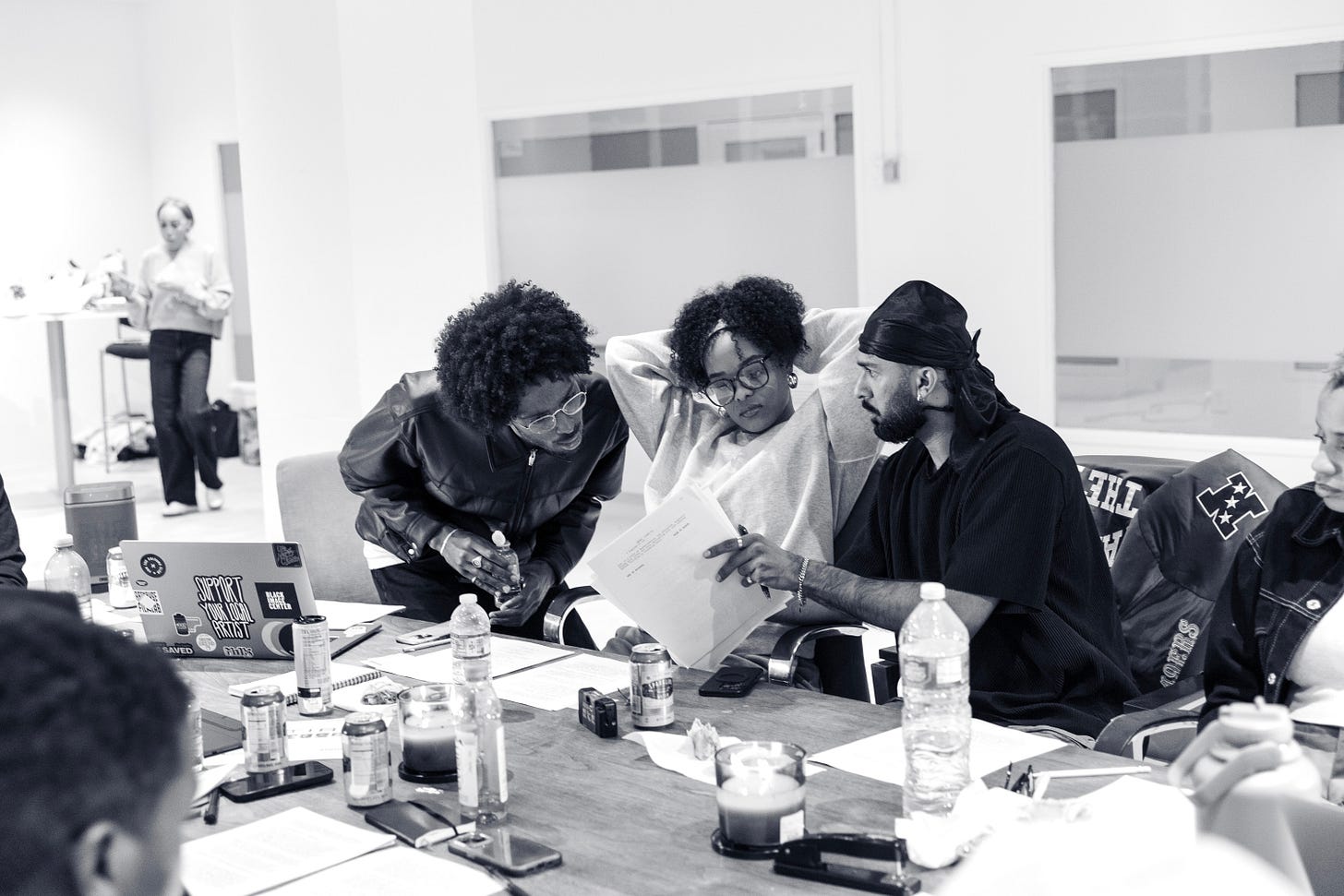
April’s series is “From Idea to Existence” , a four-week journey from scattered creative energy to something real in the world.
This is Week 4: Put It Out.
You named it. You framed it. You made something tangible. Now the hardest part: let it leave your hands.
Share it this week. One person. One platform. One room. It doesn’t need to be ready. It needs to be out.
Don’t wait for permission or perfection. Send the email. Post the clip. Read it aloud. Make it exist in someone else’s world, not just yours.
Notice what happens. Not the response, the act. How does it feel to put something real into the world? That feeling is the work.
The month is almost over. You have one week to complete the loop. Close it.
Old Hollywood isn’t dying. It died.
What’s replacing it isn’t some vague “the industry is changing” speech you hear at another industry panel. It’s a full business restructure happening in real time, with billion-dollar price tags attached.
Netflix tried to buy Warner Bros…Warner Bros. and Paramount are merging. Studios are no longer just studios, they’re tech companies, IP vaults, and AI training grounds with offices that have nice furniture.
The real asset is no longer just the filmmaker. It’s the library.
At the same time, vertical microdramas, those one-to-two-minute stories made for your phone screen, are becoming one of the fastest-growing parts of entertainment. TikTok launched its own microdrama app. ViX is winning with 90-second telenovelas.
Meanwhile, Warner Bros. created Clockwork, a label built for auteurs, paying Sean Baker $22 million for his follow-up to Anora before filming even started.
This is the new Hollywood:
billion-dollar mergers at the top, one-person productions at the bottom.
What’s disappearing is the middle, the mid-budget film, the old broadcast model, the traditional studio path.
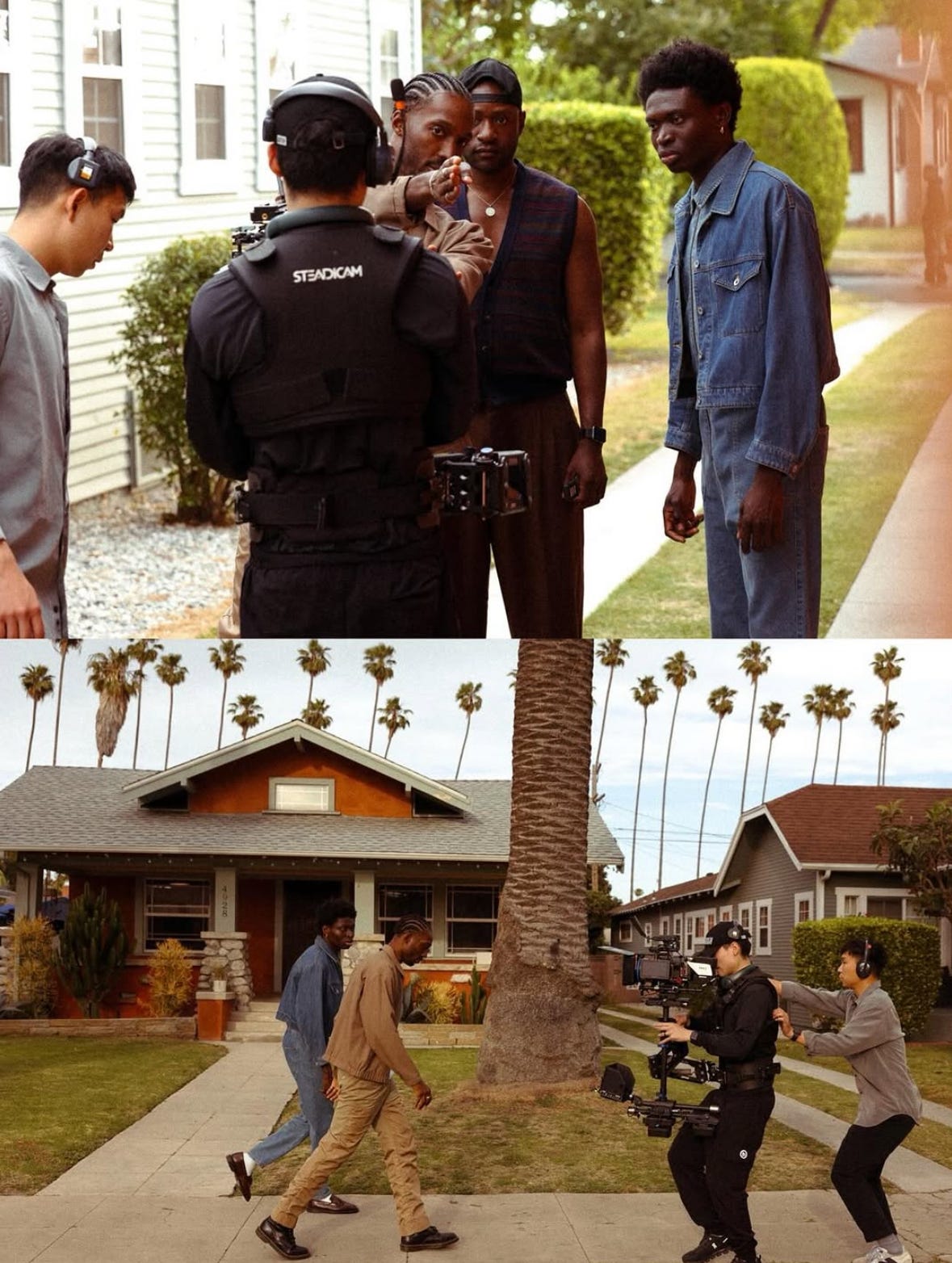
So now, we audit. We really study what was.
Franchises work.
IP works.
Vertical content works.
Distinctive auteur storytelling works.
Community-built audiences work. (cough, cough, Scene & Heard)
What doesn’t work?
Making something and hoping the industry finds it.
Waiting for the old system to come back.
Pitching the same way and expecting a different result.
That era is over.
Our job isn’t to mourn it.
It’s to adapt.
Figure out what still works, pick up those tools, and build something new.
The people who do that now will shape whatever Hollywood becomes next.
What’s moving in the industry this week.
Warner Bros. Confirms New Specialty Label Clockwork; Sean Baker’s ‘Ti Amo!’ Is First Pic , Announced at CinemaCon, Clockwork is Warner Bros.’ new home for singular independent filmmakers, and its first acquisition is Sean Baker’s follow-up to Anora at $22 million. A studio creating a dedicated label to court indie auteurs is a direct signal of where the market is moving. Deadline, April 2026
Hollywood and Tech Converge as Streaming Adopts TikTok Video and Social Apps Expand to TV , The lines between social platforms and studios are dissolving. Vertical content, short-form drama, and social-first storytelling are no longer adjacent to Hollywood. They are Hollywood. Axios, April 18, 2026
Vertical Micro-Dramas Are an $8 Billion Business. Hollywood Is Finally Paying Attention , The format has moved decisively from niche to sector. Microdramas are generating billions and attracting major platform investment. If you have not started thinking about what this format means for your work, now is the time. The Wrap
ABFF 30th Anniversary Adds Regina King as Festival Ambassador , Regina King returns to the American Black Film Festival for a Legacy Talk honoring her career as director, actress, and producer. ABFF’s 30th runs May 27-31 in Miami Beach and is shaping up to be one of the most important gatherings of Black film talent in a generation. IndieWire, April 2026
Currently open. Deadlines confirmed as of April 21, 2026.
The O’Shaughnessy Fellowship, Up to $100,000. Funding year-long projects in film, media, journalism and tech, aimed at individuals who are looking for support in putting a dent in the universe.The fellowship is open to adults worldwide, regardless of their background. Deadline: April 30, 2026.
Firelight Media Documentary Lab 2026, $25,000 grant plus a 12-month mentorship fellowship for filmmakers of color in the U.S. directing their first or second feature documentary. Projects must be in post-production. This one closes in two weeks. Deadline: May 4, 2026 at 11:59 PM ET. No late submissions.
AFS Grant for Feature Films 2026, Up to $20,000 in cash funding for Texas-based filmmakers at any stage of pre-production, production, or post-production. Open to narrative features and documentaries. Deadline: May 20, 2026 at 6 PM CT.
Black Film Space x Clive Rd. Proof of Concept Short Film Grant, Up to $8,000 for one short film script under 20 minutes/pages that aims to serve as a teaser/preview for a feature film with narratives that feature nature. Deadline: May 31, 2026 at 11:59PM ET.
National Endowment for Humanities, Up to $700,00. The Media Projects program supports the development, production, and distribution of radio programs, podcasts, documentary films, and documentary film series that engage general audiences with humanities ideas in creative and appealing ways. Deadline: June 25, 2026.
Roy W. Dean Grant, One of the longest-running independent film grants in the country. Open to documentaries, narrative features, shorts, web series, and multimedia projects that are unique and make a genuine contribution to society. No stage restriction. Deadline: June 30, 2026.
“I made the film I wanted to make. I didn’t wait for Hollywood to tell me it was okay.” , Barry Jenkins
Jenkins shot Medicine for Melancholy for $15,000. A decade later, Moonlight won Best Picture. The path was his own the entire time. That is still available to you.
Scene & Heard is a creative platform producing live film events, readings, and community programming. Founded by Michael Oloyede & ran in collaboration with Suzen Baraka (Program Director) & Jowaan Sullivan (Creative Director). Come through. Bring your people.sceneandheard.co | Reply to this email anytime.
No posts
Comments
Nothing yet. Say the first thing.
Sign in to join the conversation.