
"My experience with fear is much the same as anybody else's. It's just that I've done it a lot more." — Alex Honnold
This Week: Why the world's most fearless climber ate a family-sized tub of Nutella in terror, what I learned in a concrete room at Kripalu, and the courage that happens before the courage.
Dear Courageous Souls,
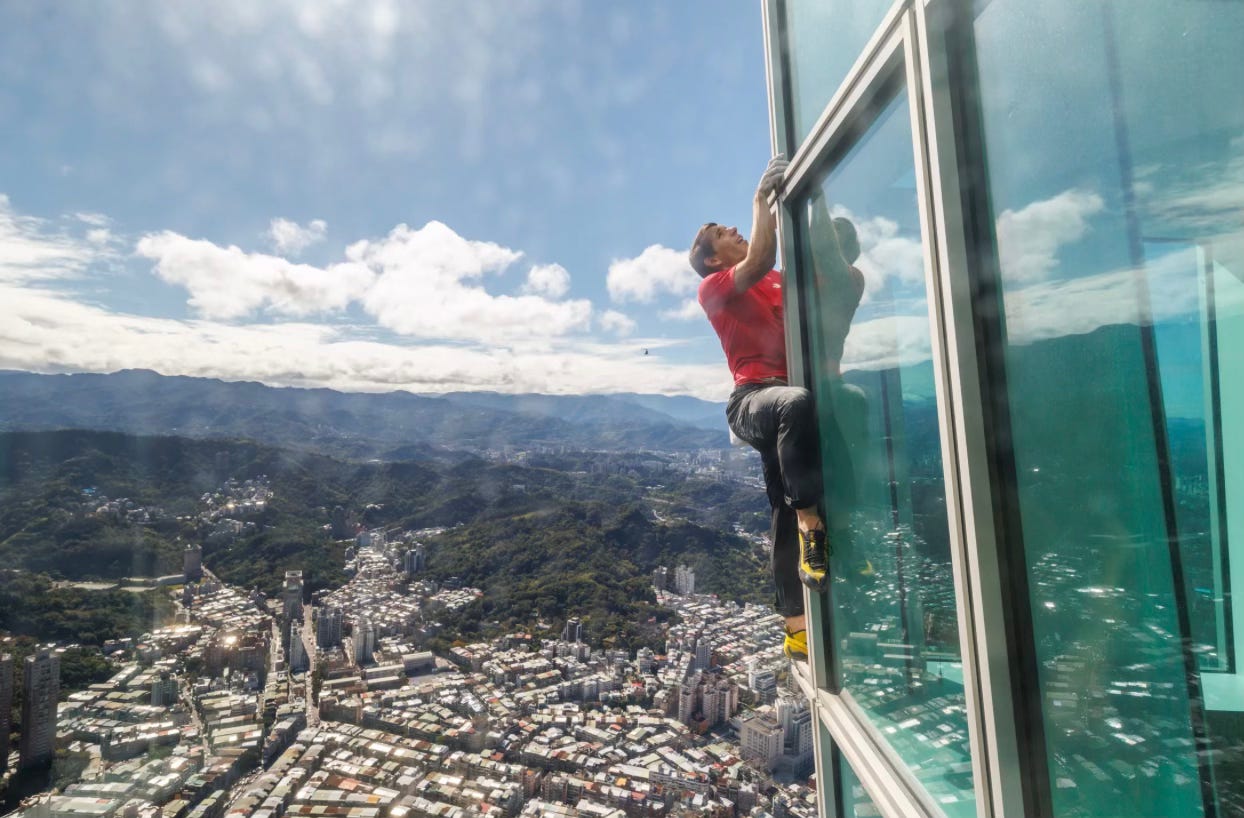
On January 25th, Alex Honnold summited Taipei 101 — a 101-story skyscraper in Taiwan — without a rope, harness, or safety equipment.
He finished in 91 minutes and celebrated with one word:
“Sick.”
But Alex Honnold is not fearless.
In a recent interview, he talked about an earlier expedition to Antarctica, climbing new routes on walls no one had ever touched. Beautiful.
But also terrifying.
He had to manage fear “basically every climbing day.”
And then he admitted something: on his rest days, he ate an entire family-sized tub of Nutella — just spooning it, shell-shocked in the cook tent, desperate for “anything to make me feel happiness.”
Alex Honnold. The man who free-soloed El Capitan.
Spooning Nutella. Trying to feel okay.
I read that and thought: I know that guy!
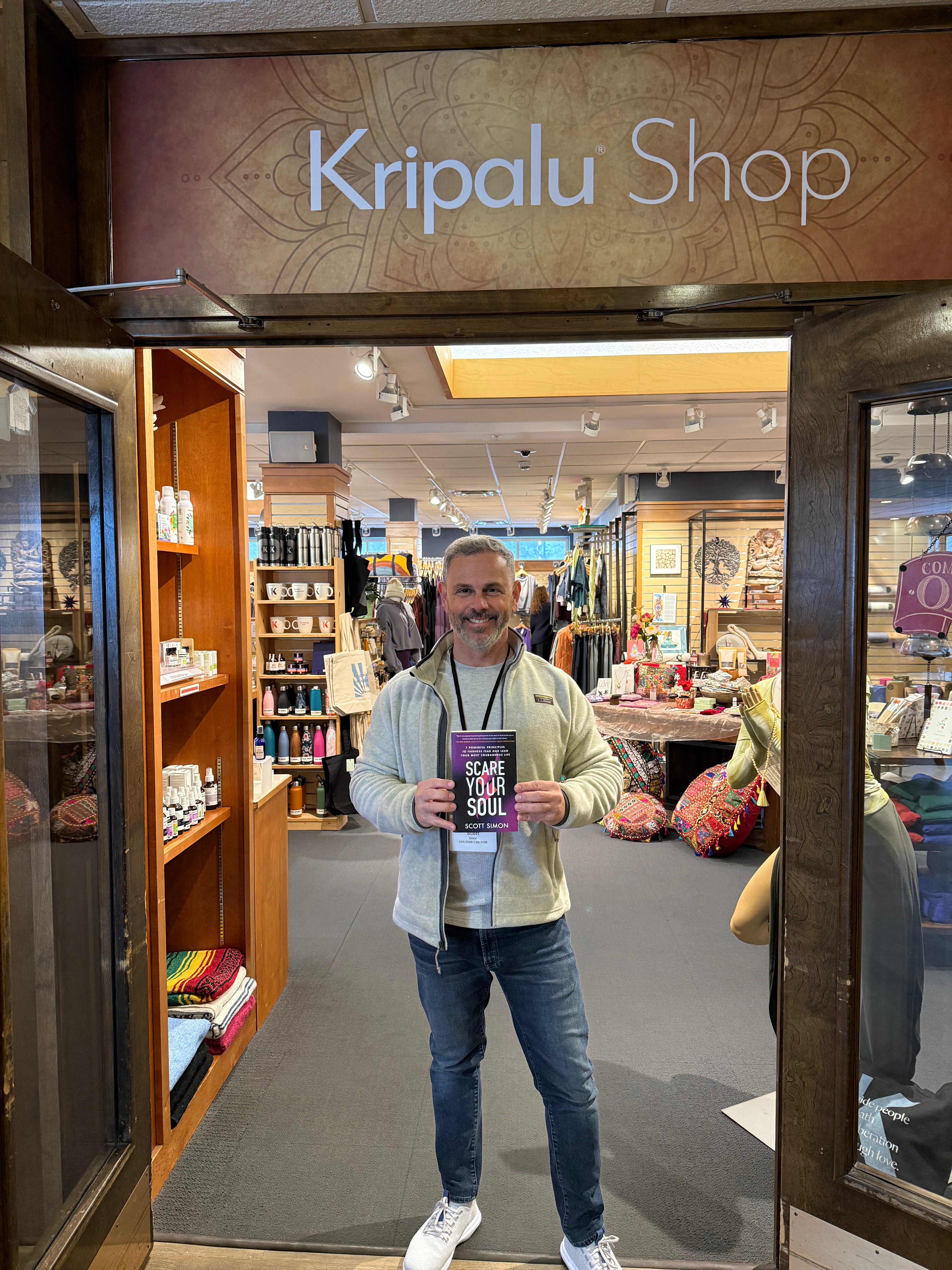
Last Thursday, I drove a couple hundred miles to Kripalu—a retreat center in the Berkshires—to co-lead my first workshop there with my dear friend and mentor, Maria Sirois.
I need to tell you what Kripalu means to me.
Fifteen years ago, I found the place by accident.
I was newly divorced and deeply sad.
I googled “yoga retreat” after taking my first beginner yoga class, and Kripalu came up. I went. And something in me cracked open.
My life split in two there—like the movie Sliding Doors.
BK / AK. Before Kripalu. After Kripalu.
And now, here I was.
As a teacher.
The management kindly put me in a room in the “annex.” Concrete floors. Concrete walls.
It was meant to be a perk, but I was so nervous about the workshop that it felt like a prison cell.
(Apparently the universe has a sense of humor: put the courage guy in a room that makes him want to hide under the bed.)
I sat there manically eating from a bag of Trader Joe’s pistachios, fiddling with my notes, furiously scribbling, redoing my slides for the twelfth time.
If anyone had walked in, they would have found a grown man surrounded by pistachio shells and crumpled Post-its, looking less like a courage expert and more like a man preparing for either a workshop or a hostage negotiation.
I was Honnold in the cook tent. Spooning my way through terror.
And my darkest thought wasn’t about logistics or slides.
It was this:
What if I don’t have the depth to hold whatever arises in this room? What if I don’t compare to the hundreds of brilliant teachers who have walked these hallways?
And underneath all of it: What if I'm not enough?
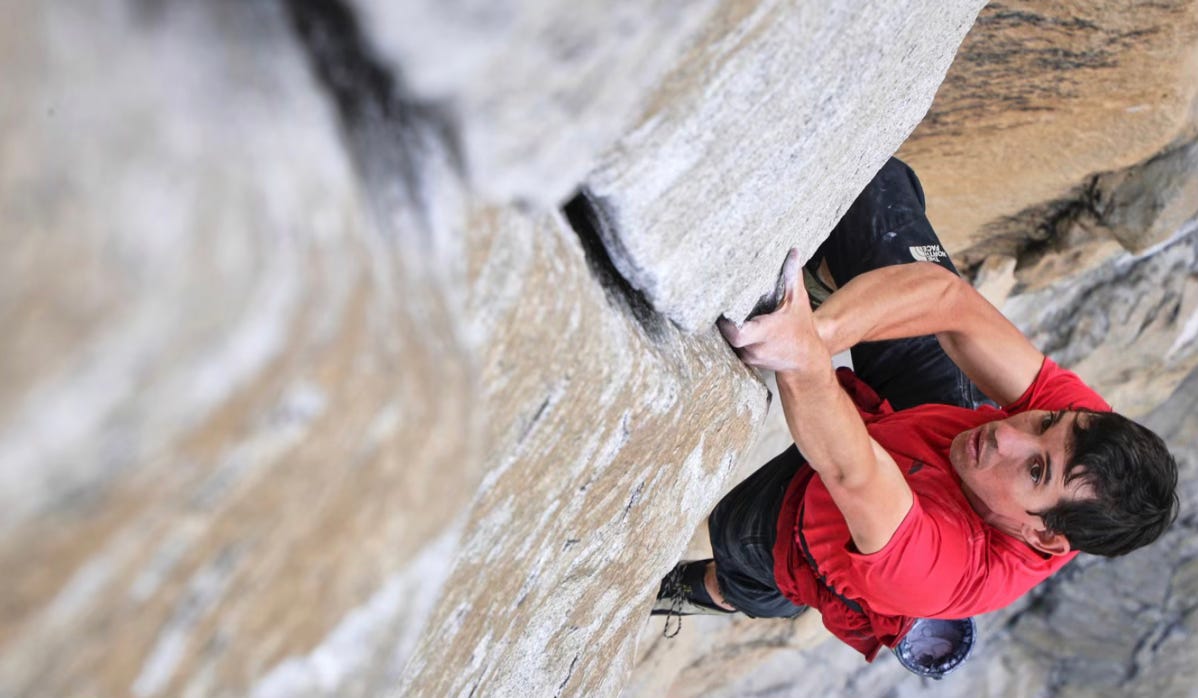
Here’s the thing: Honnold has spent decades thinking about fear.
Not conquering it. Understanding it.
Here are four insights from Honnold that can change the way any of us approaches the scary things in our lives.
1. Expand your comfort zone gradually—not all at once.
Honnold says the best strategy isn’t to manage fear in the moment—that’s hard for everyone. It’s to prepare ahead of time “so that you don’t reach that state of being very afraid.” How? Through “the gradual expansion of your comfort zone—exposing yourself to the things that are slightly scary but not too scary.”
Not a giant leap. A series of deliberate steps.
That's exactly what I'd been doing for fifteen years—from googling "yoga retreat" to attending workshops to leading them. I didn't arrive at Kripalu ready. I arrived because hundreds of smaller scary moments had brought me there.
2. Visualize to eliminate surprise — not to eliminate fear.
Honnold visualizes everything before a climb. His shoe ripping. A bird flying in his face. His body falling. But not to desensitize himself. “For me,” he says, “that kind of visualization has more to do with making sure that I’m never surprised by anything. An easy way to get really scared is for something unexpected to occur. Uncertainty opens the door. Doubts start to creep in. That’s when you really experience fear.”
That’s what I was doing with those twelve slide revisions. I wasn’t falling apart. I was walking the route in my mind, making sure nothing would catch me off guard.
3. Know the difference between rational and irrational fears.
Honnold says “a big part of managing fear is differentiating between the rational fears and the irrational fears.” Some fears in climbing are entirely appropriate—because you can die. But others, like being terrified to fall when you’re on a perfectly safe rope, are irrational. “Those are the types of fears that you need to learn how to just put aside and force past.”
My fear that I wasn’t enough? Maria had chosen me. Kripalu had invited me. Every piece of evidence said I belonged in that room.
The fear had lied.
4. Harness the people around you.
Even Honnold, the ultimate solo performer, credits external support. When preparing for his legendary free solo of El Capitan, he says “it helped for the process to have friends around that you could talk to about it and work on it with. Basically, harnessing external motivation is a useful way to achieve your own goals.”
Maria sitting beside me wasn’t just comforting. It was strategic. The community in that room wasn’t just an audience. They were part of the architecture of courage.
We don’t do scary things alone.
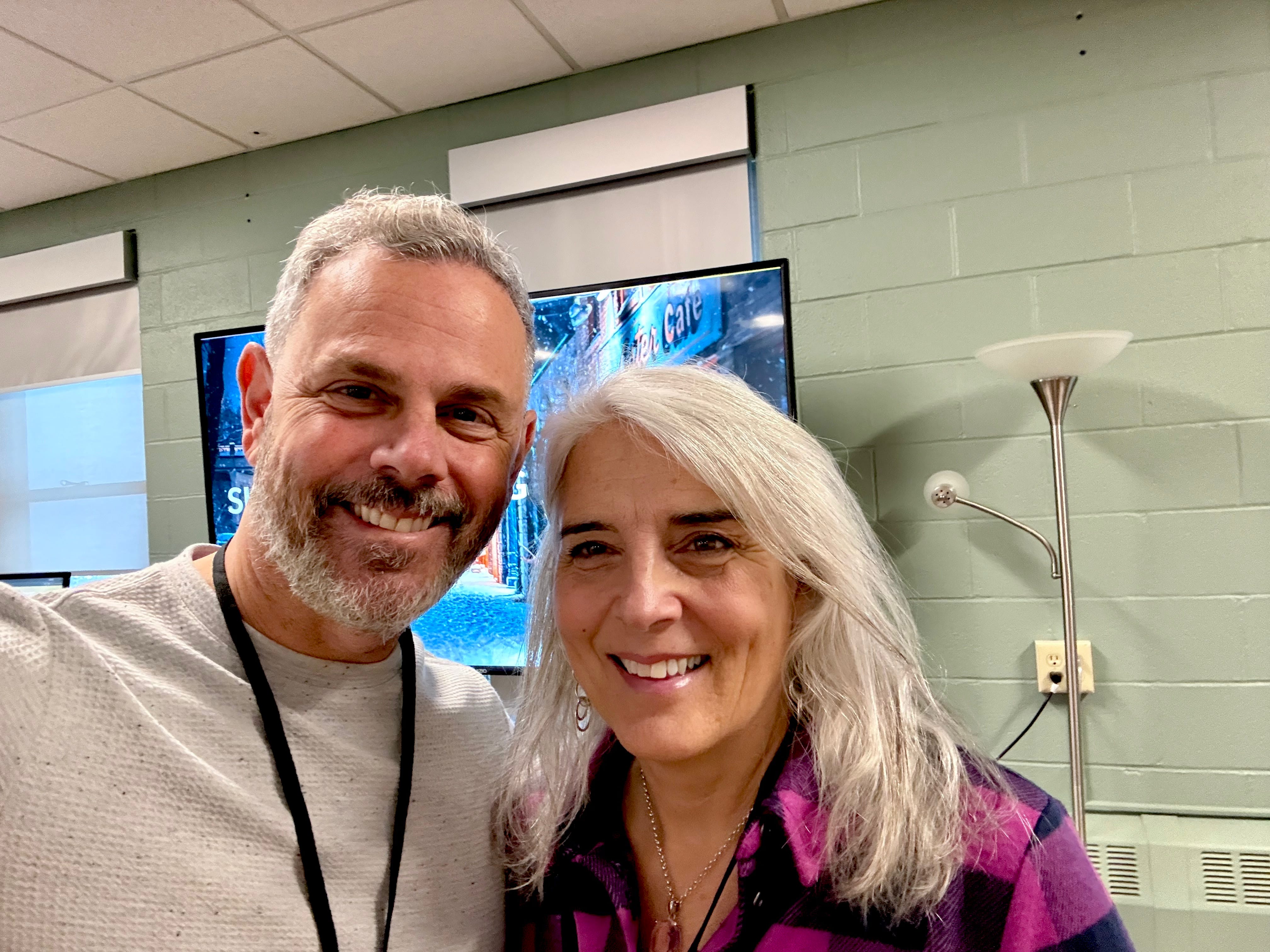
Here’s what happened at Kripalu:
Within the first minute of speaking, I looked out at the room. Smiling faces. Open hearts.
People who had traveled from all over to explore courage and beauty during a week when ICE raids in Minneapolis were on everyone’s minds.
And I knew—immediately, viscerally—that this, of all places in the world, was exactly where I needed to be.
Two and a half days later, about thirty minutes before the end of the weekend, Maria was sitting next to me, speaking to the group about the roots and wings that courage and beauty provide us.
I looked out the window. Small flakes of snow were falling against the green of an evergreen tree.
And I knew: stepping into fear—will I fail, will I serve, will I be enough—was worth it. What we helped uncover that weekend had infinite value.
But it took stepping into fear to make that a reality.
Not around it. Not over it. Through it.
With courage (and an empty pistachio bag),

Honnold doesn’t visualize to desensitize. He visualizes to eliminate surprise—not eliminate fear.
This week, try his method:
Identify the scary thing approaching. A conversation. A decision. A room you have to walk into.
Name every fear. Not to spiral—to see them. Go to the darkest thought. Write it down.
Walk the route in your mind. What will you do if the worst happens? How will you respond? How will you breathe?
Call in your people. Who’s your “Maria?” Tell one person what you’re about to do. Harnessing external motivation isn’t weakness — it’s strategy.
Notice what shifts. The fear may not disappear. But when it shows up, you’ll recognize it.
Oh. There you are. I’ve been expecting you.
P.S. What’s your pistachio moment? The thing you do to metabolize fear before you face it? Hit reply and tell me. I want to know I’m not the only one.
No posts
Comments
Nothing yet. Say the first thing.
Sign in to join the conversation.