
“Somehow, we’ll survive this.”
“Whenever I have a free week for the kids, I lose my mind.”
“I don’t have plans for two weeks of the summer. Wish me luck.”
Over the last three weeks, since my kids’ summer breaks started, I have heard these exclamations countless times. Everyone is still exhausted from the insanity that was the end-of-school season, overtired, and beyond. Both parents and kids are in desperate need of a total reset.
Personally, I was so frazzled in June that I swore: if I saw one more email or reel about how moms need to model emotional regulation for their children, how we must carefully choose our words and our moments to help our children through behavior that's going totally sideways, all while showcasing inhuman patience and understanding—it was going straight into the trash. “I'm sorry, but I don't have that in me right now.” Send it to dad.
Moms need a break.
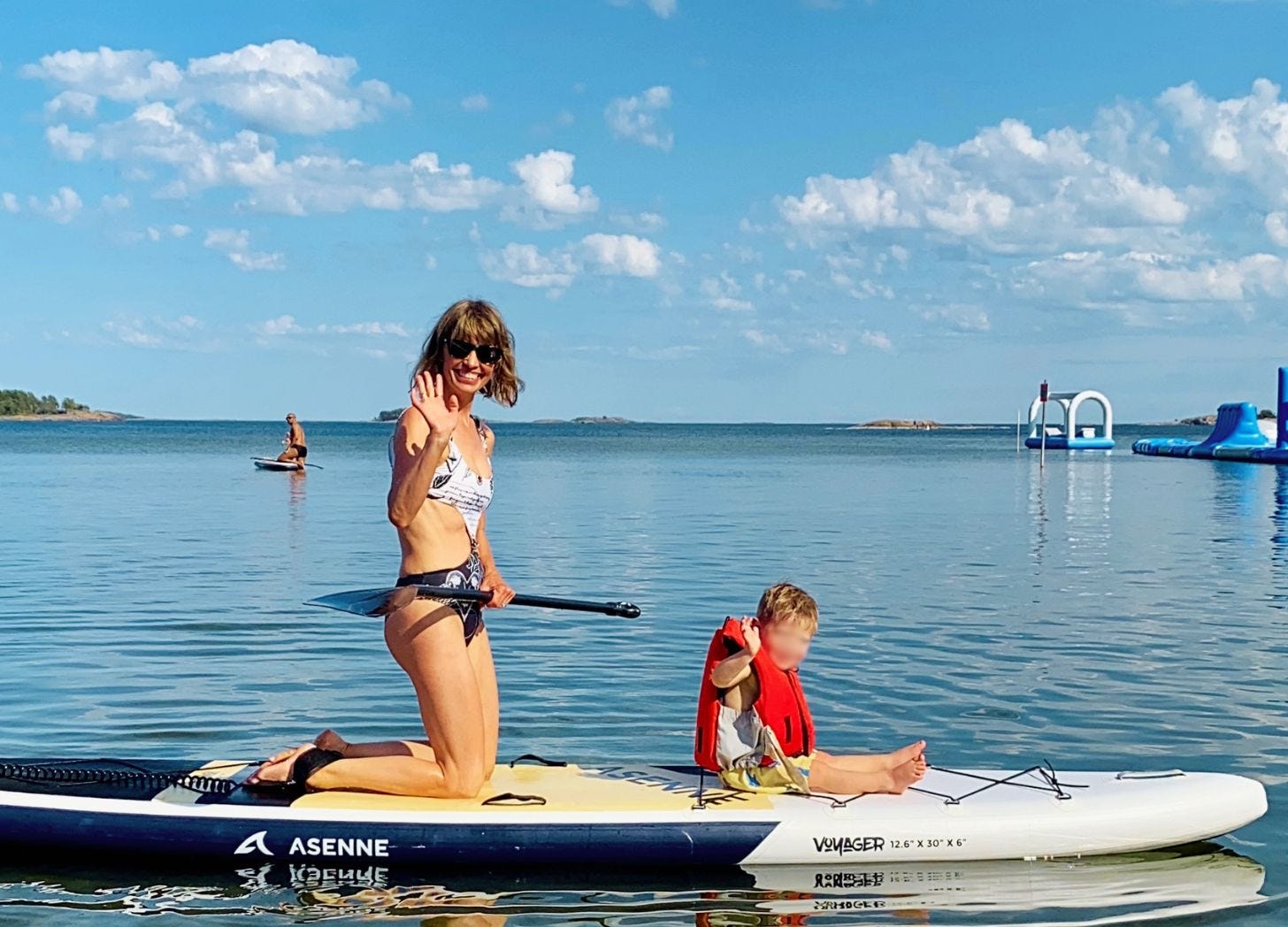
I knew I needed to find a way to emotionally regulate myself before I could truly start summer and actually enjoy it. And then I accidentally ended up on a Finnish-style vacation in Vermont, and I transformed in front of my own eyes.
This five-day trip completely changed the way I look at summer.
In the US and in other intensive-parenting cultures, we either send our kids away for the summer to sleep-away camps—even at very young ages—or organize a rotation of day camps for the entire summer. Then we add after-camp activities and sports, and spend any free weeks traveling.
When I suggested a get-together, two moms told me in early June that they don’t have one free weekend all summer: every single one was fully booked. Summer has somehow become more hectic than the school year, when we at least hold onto some kind of routine.
Coaxed by my friends in Connecticut when we moved here, I tried this type of nonstop summer, too. The promise was that I’d finally have free time—for my work and for myself. Instead, I spent countless hours filling out medical forms and camp releases, printing daily packing lists that changed from camp to camp, arranging drop-offs and pickups at different times in different places, and giving up my Sundays to schedule and set up the week ahead. I also made the grave mistake of signing one of my sons up for an after-camp sport. Now my summer weeknights were spoken for, too. It was the worst summer ever.
What had I been thinking?
I clearly hadn’t. So, what would a Finnish mom do differently?
After Midsummer, it’s basically illegal for Finnish parents to add any logistics or admin to their plates. Their job, exactly like the kids’, is to recharge and to experience as much freedom with their time as they possibly can. It sounds utopian. But my week with two of my boys in Vermont showed me it could actually be done—and it inspired me to build my own adaptation of the Finnish Mom Way at home in Westport.
So, what you are about to get here, at Scandi Class, is not another Guide on how to manufacture a perfect summer or how to perfect parenthood or my biggest pet peeve: “how to make memories”—you are getting something completely unique.
Something that I’m willing to bet is one of the biggest reasons Finland keeps topping the list of the happiest countries in the world, and why Finns love summer so passionately.
We can’t replicate exactly what the Finnish parents and kids do, or hand our children the same type of freedom. But you and I can use this as inspiration and create systematic change to how we do summer.
Welcome to the best summer of your life:
100 Ways to Do Nothing This Summer aka Moms’ Summer Survival Guide
You can do less, and with that, achieve so much more.
A Finnish preschool teacher told me that one ordinary day, her group went in and out of the building through the window instead of the door. No reason. Just to see. And the strangest thing happened: the dawdling stopped. The kids couldn’t get to the next thing fast enough, because the ordinary thing had been made new, for the cost of nothing at all.
That’s the whole guide, really. We can do less, and get so much more back.
So, whether you have tots or teens, this is what I collected for you. A hundred small permissions to do less — pulled from real Finnish mothers who answered my questions on Instagram, plus a daycare manager who plans outdoor play for a living, plus a fifteen-year-old who told me the truest line in the whole guide (you’ll find her near the end).
Here is everything you get inside 100 Ways to Do Nothing This Summer:
All 100 ways, grouped so you can find what fits today — the backyard, the kitchen, the neighborhood, the bored Tuesday, the hottest day of the year.
Sorted across every age, from a one-year-old with a bucket of water to a bored teenager — including the in-between years nobody writes guides for.
Reported, not invented — straight from Finnish mothers and one daycare professional. Then adapted so each one is doable even where kids and parents don’t have the freedom the Nordics take for granted.
A printable one-pager to pin to the fridge — so you can read it once, close the laptop, and easily pick from “the nothing” options.
The reframe itself, which is the real product: permission to stop performing summer, and truly, fully enjoy it!
Who is this Guide for?
If you’ve ever filled out a camp form at 11pm, scrambled to pack new things for a new camp every Monday morning, stressed over pickups, and wondered whose life this is — this one is for you.
If you feel like summer is supposed to be so enjoyable, but you just can’t feel it (yet).
If you can’t find any kindred spirits where you live, and want to see how someone else does it. (That someone is me — and I’ll be your kindred spirit.)
If there were ever a moment to join the Scandi Circle and the like-minded parents already inside it, it’s this one. You get this Guide and the printable, all the paid letters with my most personal stories and detailed how-tos, workshops with Nordic-inspired experts, and the full Scandi Circle Library (take a peek here).
Already a paid subscriber and part of the Scandi Circle? It's all below — and thank you for making this work possible. A huge hug!
Comments
Nothing yet. Say the first thing.
Sign in to join the conversation.