
Most people believe ceiling lights keep them awake. The effect runs the other way. Overhead light lands on your screen, lowers its contrast, and your eyes spend the day compensating. What you feel at 4pm isn’t the day catching up with you. It’s eye fatigue.
At my last office the ceiling lights were always on. I suggested turning them off, which turned out to be controversial. Around 80% of the team wanted them off (poll with 38 people). They stayed on anyway.
The reaction interested me more than the lighting. The case for keeping them on was specific: turning them off would make people tired. That’s a testable claim about physiology, and I think it’s exactly backwards.
I write about beliefs of that shape a lot: nutrition, economic victimhood. Widely held, rarely tested, and cheap to check. This one takes a light switch and a week.
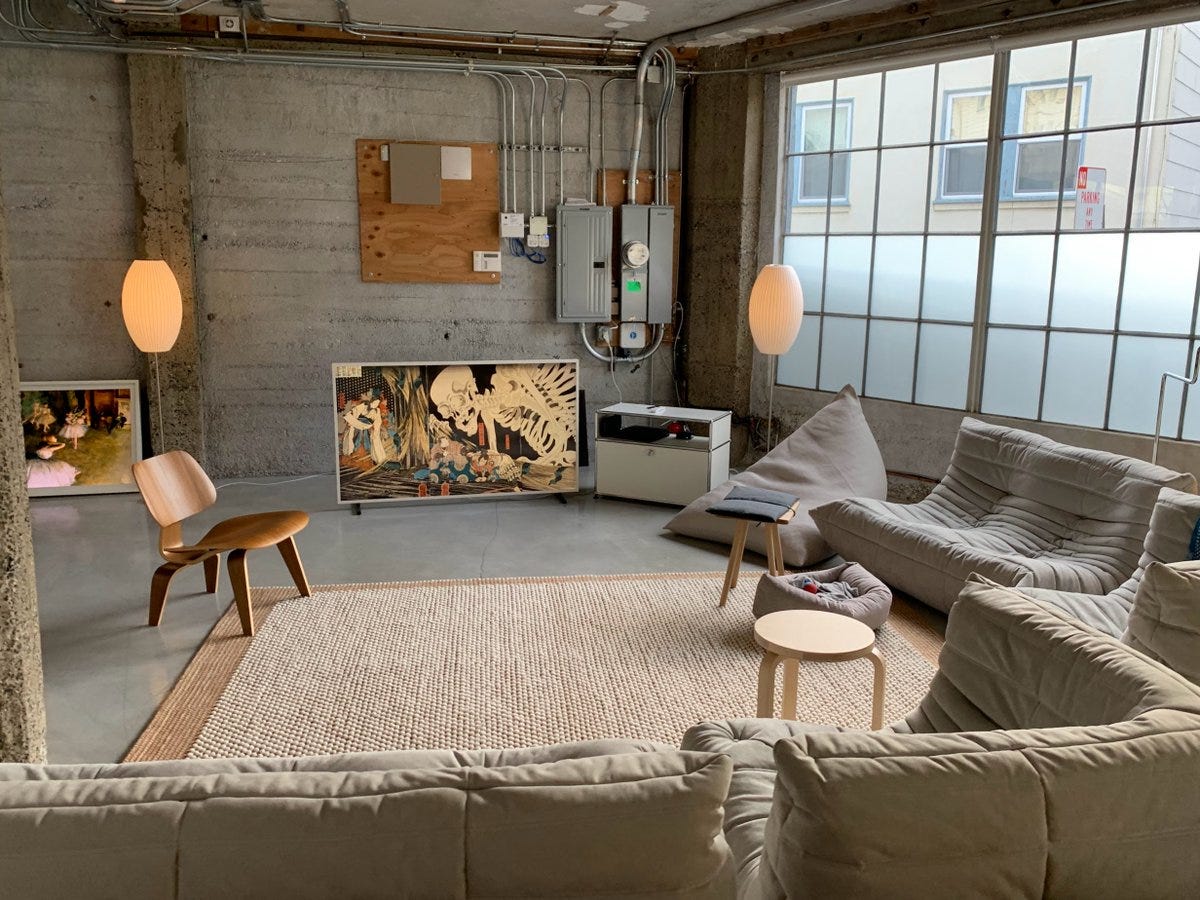
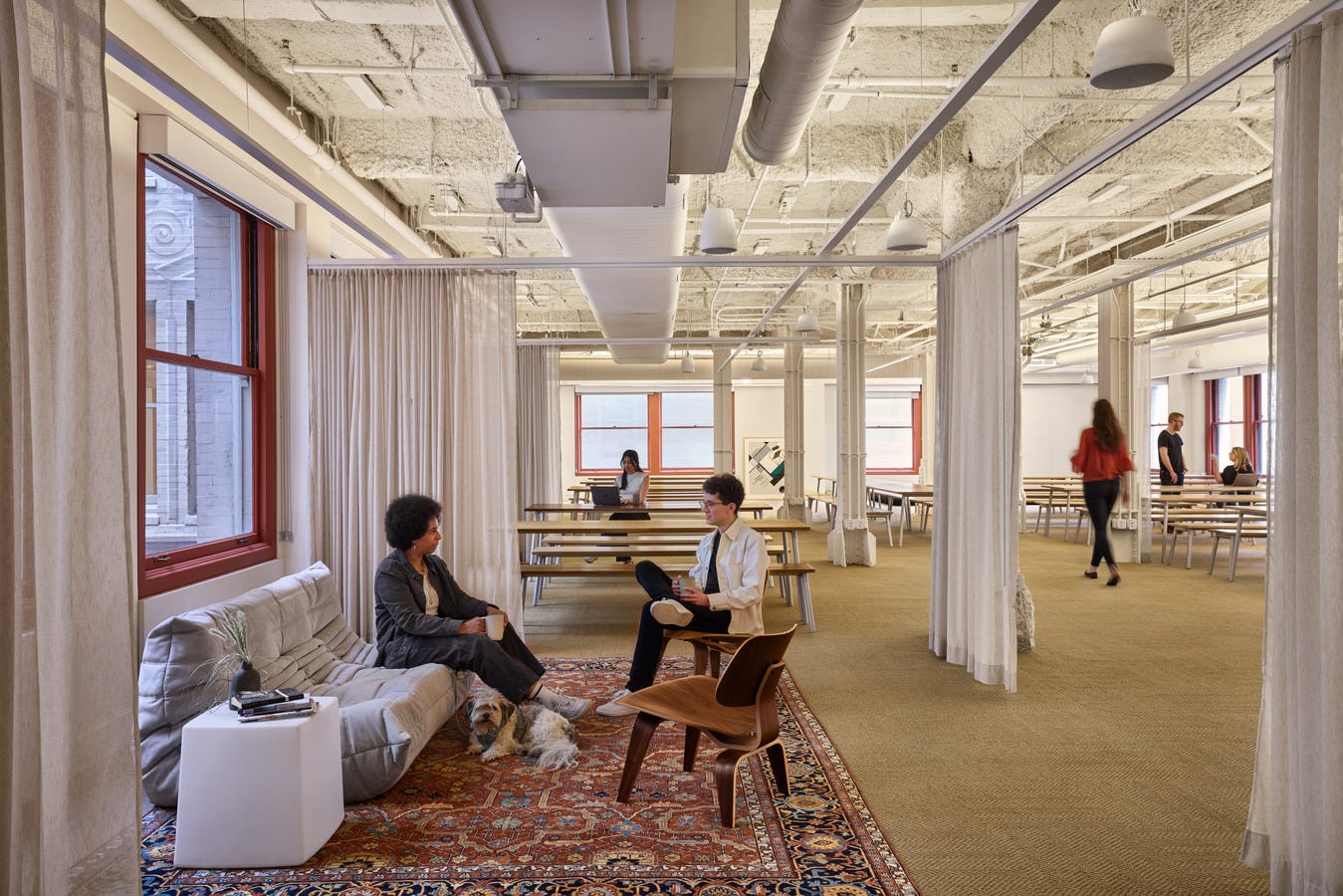
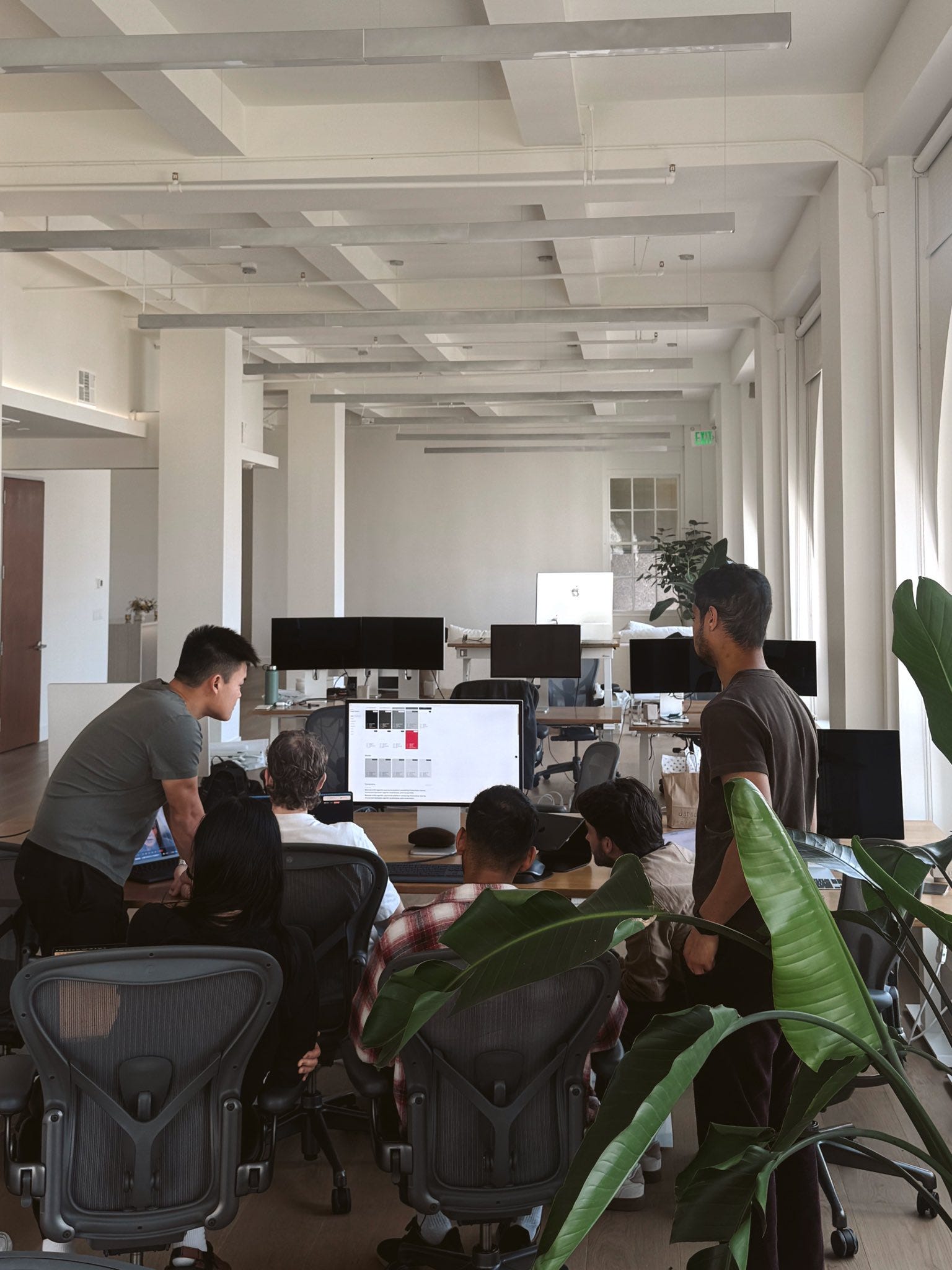
Nobody ever determined that light works best from above. A uniform ceiling grid is simply the only lighting you can specify before you know who sits where. It goes in before the desks, survives every reorg, and hits a code-mandated brightness level everywhere at once.
That was a fine trade when work happened on paper. Paper is horizontal and emits no light of its own, so a fixture above you landed light exactly where you were looking.
Then the work surface turned vertical and started emitting its own light. Your screen is now the brightest thing on your desk and it already points at your face. The ceiling kept doing what it always did: aiming light at your work surface. That surface is your screen.
Ambient light landing on your display raises its black level. Blacks turn grey, contrast drops, and text gets slightly mushier. This is veiling glare, it happens on matte screens too, and you almost never see it as a reflection.
Two consequences:
Your pupil gets an unsolvable problem. The fixture is bright, your text is dim. Constrict for the fixture and the text darkens. Dilate for the text and the fixture blows out. Your pupil settles on a compromise that is wrong for both.
Your focusing muscle never settles. Lower contrast means the muscle holding your lens in focus keeps making micro-adjustments to keep text sharp. Eight hours of that has a clinical name: asthenopia, or eye strain.
The rule isn’t “lamps good, ceiling bad.” Keep bright light out of two places: behind your screen, and behind your head.
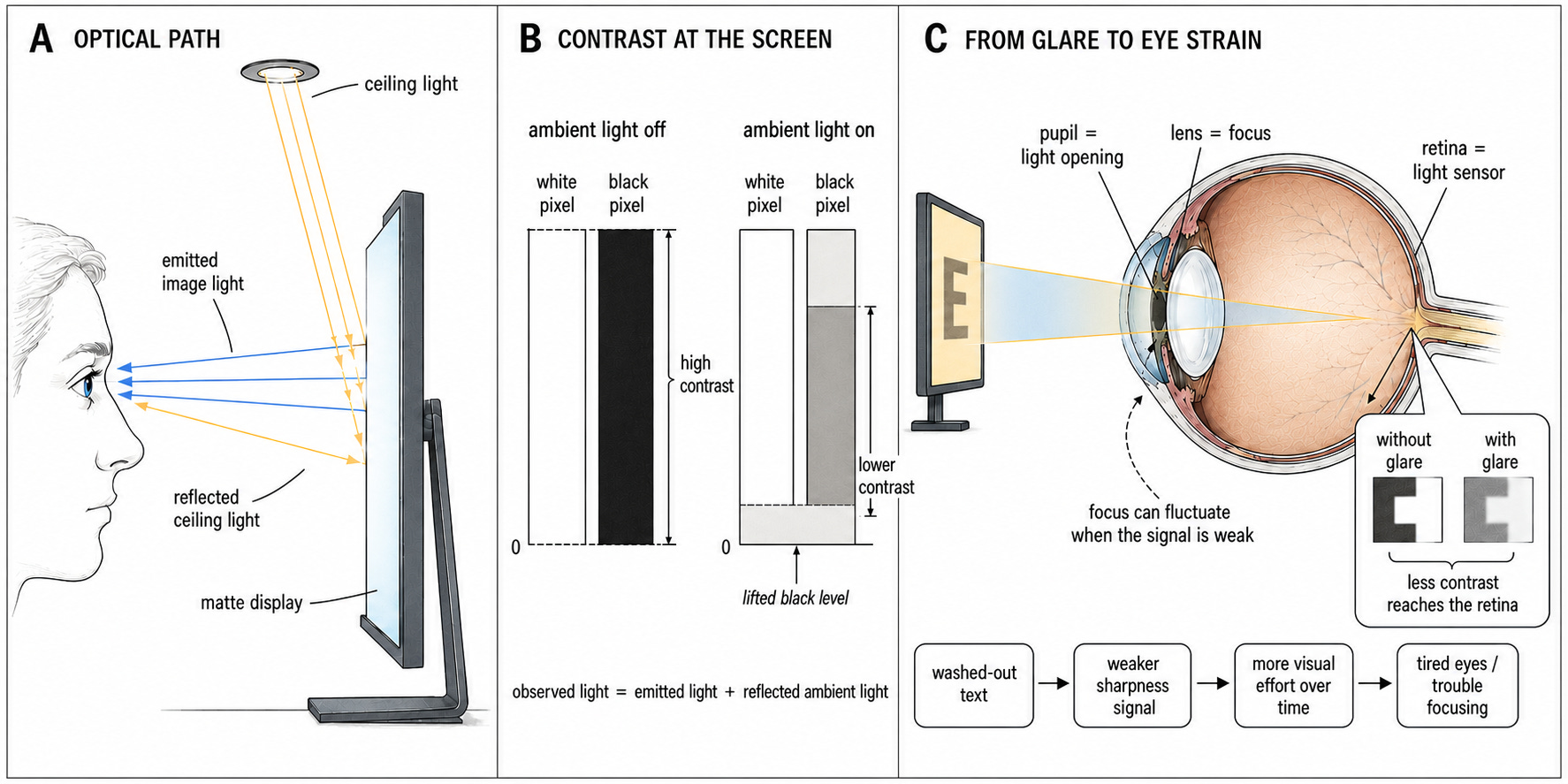
A window behind your monitor is the worst layout in the building. You stare into a 10,000 lux background while reading a 200 nit screen. A window directly behind you throws a reflection onto the glass. A window to your side is close to ideal. Lamps follow the same three rules.
Ceiling fixtures are the fourth case, and the reason for this post. They sit above every desk on the floor, at the same angle, permanently. You can rotate a desk, close a blind, or move a lamp. You cannot design around the ceiling.
Cornell’s Hedge et al. (1995) surveyed ~200 office workers under ceiling downlights versus indirect lighting. Under ceiling lights, 53% reported daily tired eyes against 24%, and 39% reported daily trouble focusing against 21%. Workers rated ceiling light as glaring, harsh and tense, and indirect light as soft, pleasant and relaxing.
The best number in that paper isn’t a rating. In 78% of the windowless offices, workers had disconnected the fixtures themselves to kill the glare. That is a revealed preference, executed with a ladder.
“But doesn’t dim light make me sleepy?”
Bright light wakes you up mostly by suppressing melatonin, and during the day, in a well-rested person, melatonin is already near zero. The lever is already pulled. Two 2018 studies tested this across a 100x brightness range and found no dose-response on any objective measure: reaction time, vigilance, working memory, heart rate (Lok, Smolders). Smolders did find a subjective effect worth about 1.3 points of self-reported sleepiness on a 9-point scale, so brightness buys a small feeling that never reaches your output.
The jolt when someone flips the switch is real. It’s a contrast effect from your adaptation state changing, and it fades in minutes. The fatigue doesn’t.
“Isn’t bright light good for your circadian rhythm?”
Yes, and that argues for going outside. Circadian anchoring runs on outdoor intensities: 10,000 lux under overcast sky, up to 100,000 in direct sun. A well-lit office desk is 300 to 500 lux. Ceiling fixtures aren’t a weaker version of daylight, they’re two orders of magnitude short of it. Ten minutes outside beats ten hours under a panel.
“Some studies show brighter light improves performance.”
They do. Viola et al. (2008) found blue-enriched light improved alertness and eye strain versus standard office white. It was funded by a lighting manufacturer, and it argues about the color of light, not its position. Grant et al. (2023) at Harvard found real cognitive gains from more light: faster reaction times, fewer attentional lapses. The gain came from adding a desk lamp, and ambient ceiling light alone didn’t produce it. The strongest pro-light study I know of is a pro-lamp study.
“I need more light to see.”
Then you need more than the ceiling gives you, aimed where you’re looking, at an intensity you pick. Overhead fixtures run the whole floor at one setting and give nobody control. Anyone reading paper, or with reduced eyesight, benefits most from a lamp of their own.
“This is your preference, imposed on everyone.”
It cuts both ways, because there is one switch for the whole floor. The asymmetry: off is reversible per person, on is not. With the big light off, anyone who wants more light plugs in a lamp. With it on, the person who wants less has no move except a ladder, which is what 78% of the Cornell workers ended up doing.
If your objection isn’t here, put it in the comments and I’ll answer it.
Turn the ceiling lights off during daylight hours. Free, and reversible in one second.
Buy lamps for anyone who wants one. A rounding error against salaries.
Put the window to your side, never behind the monitor or behind your head.
Wait a week before judging. The first hour feels dim because you’re adapted to the old level. Judge it by how you feel at 5pm.
Then see whether anyone asks to switch them back on. Nobody ever has.
The intuition behind the big light is half right, which is why it survives. Light does change how well you work. So stop delivering it from the one angle that lands on your screen.
Hedge et al. 1995, Cornell. ~200 workers, ceiling downlights vs lensed-indirect.
Lok et al. 2018, Groningen. 50 people, 24 to 2000 lux, no daytime alertness benefit.
Smolders et al. 2018, Eindhoven. 60 people, 20 to 2000 lux, no objective dose-response.
Peeters et al. 2021, Eindhoven. Field study: “adding more electric light never led to a positive response.”
Jamrozik et al. 2019, Mayo Clinic. 14-week crossover, daylight improved working memory and inhibition, reduced eyestrain.
Grant et al. 2023, Harvard. Task lamp improved alertness and cognition over ambient ceiling light alone.
Chang et al. 2013, Harvard. Alerting response depends on prior light exposure.
Viola et al. 2008, Surrey. Blue-enriched light improved alertness and eye strain. Manufacturer-funded.
Blehm et al. 2005. Computer vision syndrome review.
Comments
Nothing yet. Say the first thing.
Sign in to join the conversation.