
Why investing in artists is as important as entrepreneurs, scientists and engineers in our communities. It’s not about the product they produce — it’s about the people.
After focusing the last few years growing Startup Edmonton, I’ve recently found myself re-engaged in the arts community as the returning co-chair for artsScene Edmonton. artsScene is a national initiative by Business for the Arts aimed at connecting young professionals with the arts. It was one of three community building initiatives we started in 2009 (that included Startup Edmonton and TEDxEdmonton). The arts landscape in Edmonton has evolved a lot since then, with a ton of great events now being organized by groups like Latitude 53, Art Gallery of Alberta, and Catch the Keys.
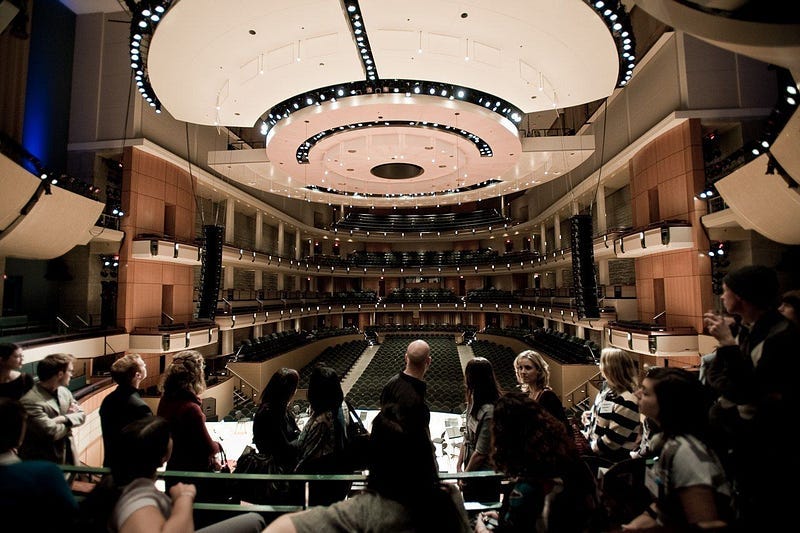
I’ve always been interested in the collisions of arts, technology and business. Two of my previous startup companies were in the digital and interactive media space. I’ve sat on a few arts boards and committees, to understand the business of the arts. I spent many years being a participant and faculty member at the Banff Centre, being exposed to a place where arts, tech and business leaders would randomly collide in the Canadian Rockies. I’ve also had the fortune to visit campuses like Pixar, Apple, Google, and see first hand how artists, scientists and engineers are supported to experiment and cook up new and incredible things.
All these conversations and encounters at the intersection of content creation, technology development and entrepreneurship have helped to shape my current mission building a thriving startup community in Edmonton.
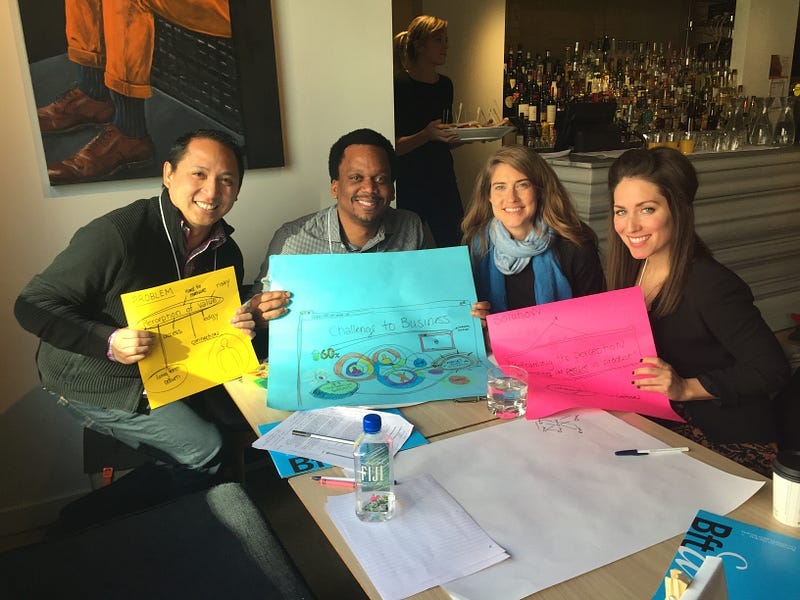
A few weeks ago, I was among a national gathering of young leaders, organized by Business for the Arts and RBC. We talked about the issues and barriers facing the continued growth of the arts in an era where government funding and corporate sponsorships are spread too thin, and how the arts often competes with social and environmental causes. We were challenged to explore new ways to connect business communities and arts communities, thinking about how to shift the perspective of “arts as charity” to “arts an investment” value proposition.
There were lots of really interesting ideas being kicked around, with a few projects that could be built tomorrow. (My group is totally going to build out our ‘corporate challenges for the arts platform’ concept, so stay tuned…).
There’s often a debate about the artistic and creative value of a for-profit arts company versus a non-profit arts company, especially when we argue about who needs funding more. Some think that if you’re an artist thinking like an entrepreneur, you’re somehow compromising your value as an artist. You’re selling out.
First off, this is a debate we spend far too much time on. Second, I think we need to change the perception that all entrepreneurs are in it solely for the money. I can always tell when an entrepreneur is in it for the money and glory of self-employment when their first answer is, “connect me with an investor and funding so I can quit my job” after I ask them how I can help. Entrepreneurs that answer “because I’m building something to solve a problem” are the ones I want to help and invest in.
“Artists and entrepreneurs run the fine line between brilliance and lunacy.”
Entrepreneurs do what we do to have an impact on others, to create value, to make a difference. Starting a company is really, really hard, and it’s not the glamorous world shows like The Social Network and Dragon’s Den portray. We often start with nothing but a computer and cupboard full of ramen noodles. To do this we have to continuously experiment, push boundaries, and never be afraid to take the first step when so much uncertainty exists. We’re driven by fierce passion more than rational calculation. The money that comes helps us to keep making more stuff, so we can go on the ride again and again.
For artists, thinking like an entrepreneur doesn’t simply mean business skills. I have an education degree — not a business or finance degree — and yet here I am having built three companies (for-profit and non-profit) and now lead entrepreneurship development in our city. That said, I totally stumbled (a lot) along the way. My solution was to surround myself with people and peers who I could mobilize to grow something from nothing. Community is key. Thinking like an entrepreneur means doing whatever it takes to move your idea forward. Don’t wait, start now.
What excites me today is meeting more artists in our community moving forward and thinking bigger about what they can create from here.
These artists are doing it regardless of government priorities, grant funding cycles, construction costs, and whatever other barrier makes taking the first step seem too far out of reach to even try. They’re not getting hung up on setting up a for-profit or a non-profit. They’re not worrying about trying to lobby whichever political leader is in office at the time (for the record, I think our provincial and federal governments have created this mindset, which I’ll leave for another day).
These artists are building community, moving faster, experimenting, and doing more with less. Artists used to have to deal with gatekeepers to reach audiences, but now thanks to technology, you can take what you make directly to the people anywhere, anytime. It’s absolutely the same mentality we take with startup entrepreneurs.
In the world of artists and entrepreneurs, if you don’t invest in your own talent, then who will?
Every city is hopping on the global entrepreneurial movement, vying to make their community the place of choice for entrepreneurs. Here in Edmonton, I use the phrase “hackers, artists and entrepreneurs” for a reason. Because I believe that artists are equally important in a community of smart creatives.
Edmonton has always been an entrepreneurial city, long before we started Startup Edmonton. Big companies have sprouted from our community. Jobs are plentiful. Our community is growing faster than any other place in the country. But we’re at a turning point. Do we invest our wealth as a city of buyers and consumers? Or will we continue to be a city of builders and creators? If it’s the latter, what do we invest in today to output wave after wave of smart creatives over the next 10–20 years?
This challenge led us to create Startup Edmonton to fight for community, talent, and experimentation when it came to entrepreneurship. I believe it’s the same for artists and creators in our community right now. In the arts, there’s been a lot of debate about ROI (return on investment). ROI is often tied to product and output in the arts, when it should be tied to talent and process.
Sometimes we play the big city arts game and throw cash at shiny new incubators and funds to grow and attract big shows and productions. True, there’s some value in this approach. But we also need to invest in smaller places and spaces for smart creatives to gather, mentor and experiment. These projects aren’t as sexy, but are absolutely critical to a community.
Investing in artists (like entrepreneurs and scientists) is about investing in a person’s ability to create, imagine, experiment, problem solve and build. The arts and artist mentality unlocks creativity, free thinking and innovation in our communities and companies. We can keep debating the value of art, even though art is something that is interpreted and experienced meaningfully by different people. That’s just how it works, so it’s not really a debate.
Or, we can talk about how value in the arts stems from process, method, and skill that grows each time an artist creates something that’s never been done before. Sometimes the result is fairly obscure and personal. And other times, that artist goes on to start an arts company that becomes the next Cirque du Soleil. Both should be equally valuable outcomes in our communities.
There’s an emerging leadership gap right now when it comes to business and the arts. A recent Business for the Arts survey reports that corporate contributions in Canada are up 49 per cent since 2008. However, 57% of all small and medium businesses in Canada don’t give to the arts because they had never been asked.
This is why we need more young entrepreneurial leaders to be engaged actively in the arts in our communities.
It’s not simply about being seen, dressing up, going to cool events and galas, or putting your name on a wall. It’s not about spending money on the arts, it’s about spending money and time to build the arts. Think about your entrepreneurial journey building something from nothing, and consider what you can do to help an artist in your community do the same. Heck, there may be an artist within your own company to support.
Some ideas:
Don’t wait for artists to contact you, find them (I say the same thing to investors: don’t wait for founders to pitch you, go to where they are).
Look for artists and creators who aren’t simply looking for funding — connect with someone already building something regardless.
Underwrite the development of a project, not just the final product.
Visit an artists’ studio and talk to them about their process.
Make your next team outing an arts outing.
Make some space available in your building for artists to create and experiment.
Commission an artist for a project in your space.
Join an arts board (not just the big ones) or find an “arts startup” to mentor and champion.
Don’t just sponsor a show for the marketing exposure, do it for the people who put it on behind the scenes.
Put your kids in an arts club (and a coding club while you’re at it).
I believe that the playbooks we use to build startup communities and develop talent can be applied and shared with our arts communities.
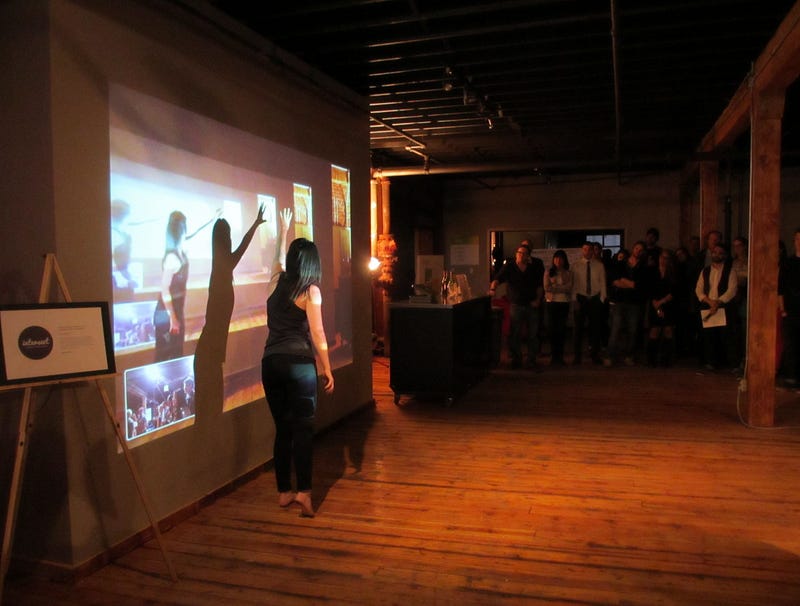
I’m experimenting with a few projects at Startup Edmonton with artsScene, Intersect (meetups to collide art + tech), Theatre Edmonton (meetups, mentorship) and The Hunt + Gather. Over the next year, I’d like to connect with fellow entrepreneurs and startup community leaders to share and brainstorm what we can do to collide with our local arts communities.
The act of bringing artists and entrepreneurs into the same space is already resulting in really interesting opportunities. Can’t wait to see what we can do together.
No posts
Comments
Nothing yet. Say the first thing.
Sign in to join the conversation.