
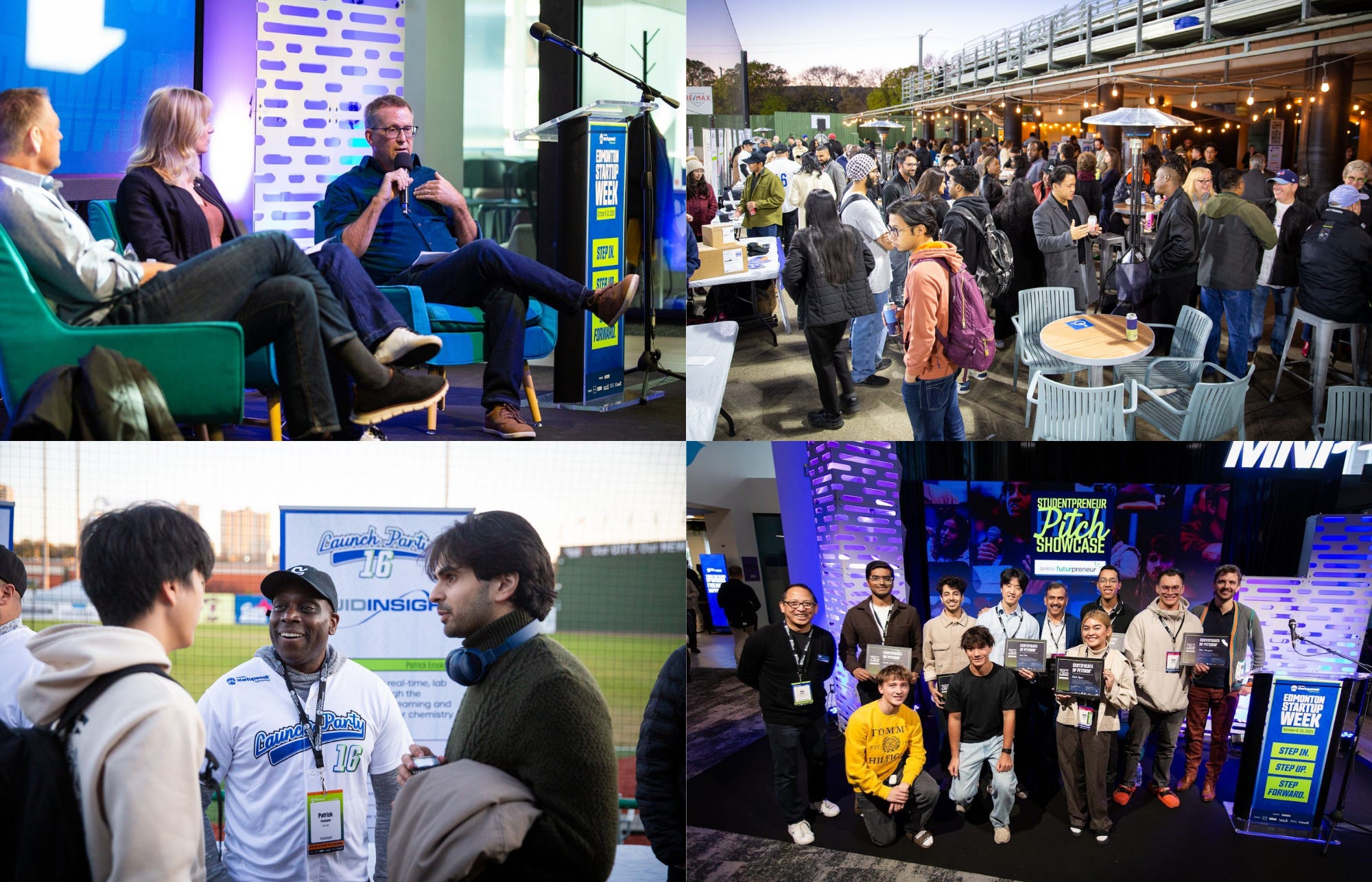
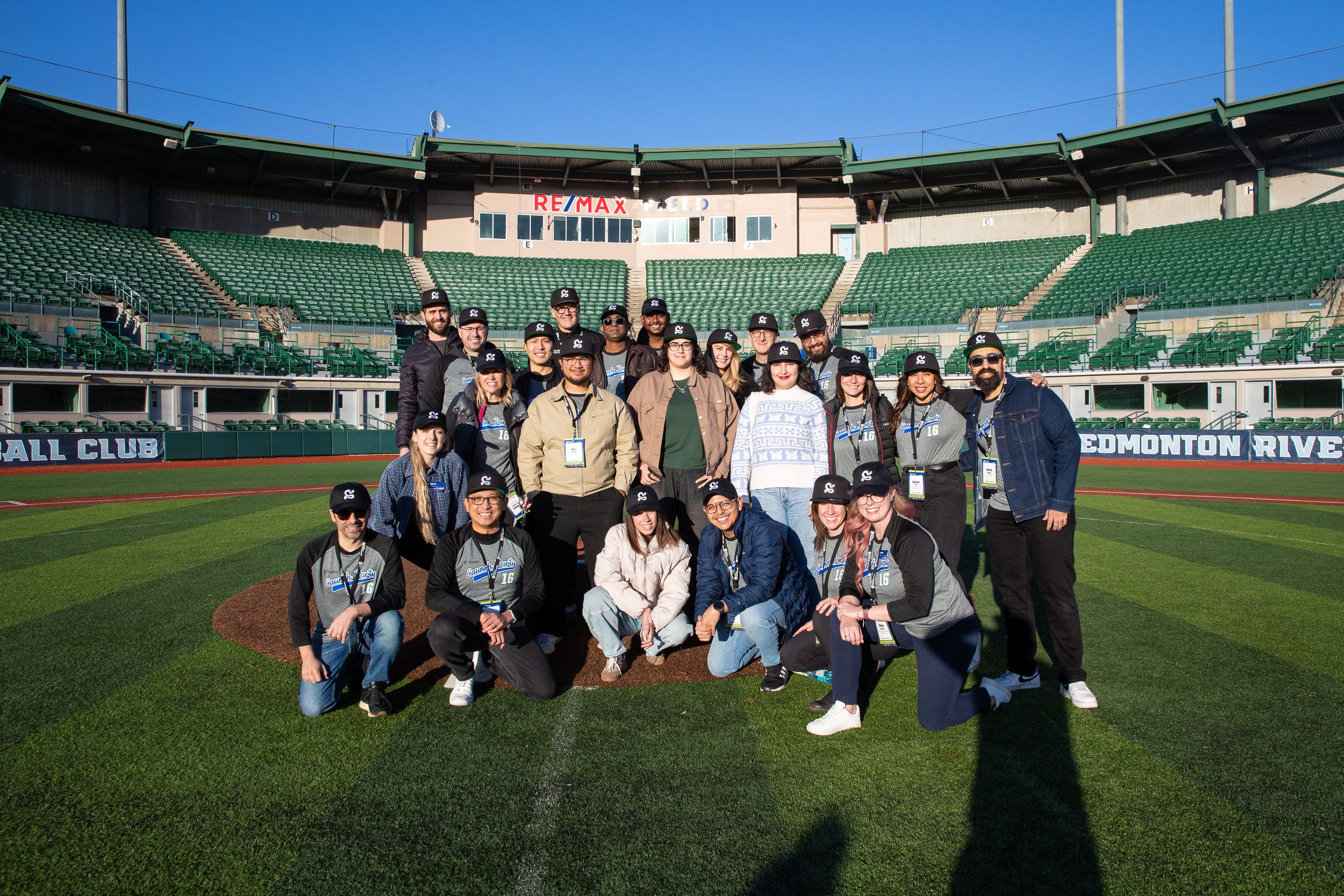
Last week, we wrapped up another Edmonton Startup Week - one of the biggest weeks yet, with over 70 community events. We showcased our hottest startups at a baseball stadium, discussed venture scale thinking at our Venture Summit, and connected hundreds across meetups and sessions hosted all over the city. What struck me most wasn’t the scale - it was seeing lots of new faces and first-time organizers building alongside ecosystem veterans, creating something bigger together.
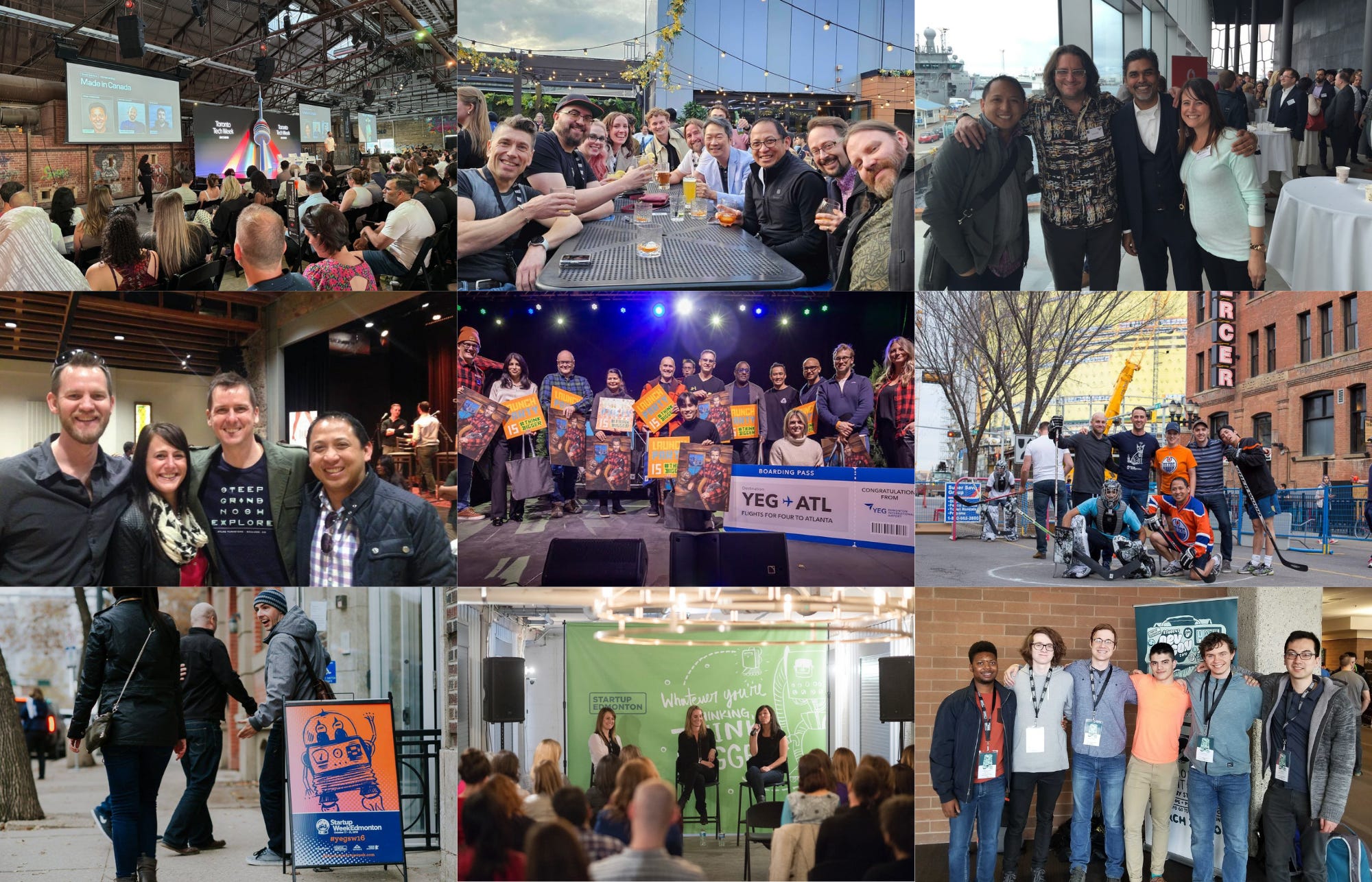
This follows a busy spring of personally participating in community-led tech celebrations - from Upper Bound in Edmonton to NY Tech Week and Toronto Tech Week, where Canada’s Most Ambitious companies reminded us all why we build. Last month, Life Sciences Week brought similar energy to Edmonton’s fast-growing life sciences community. Watching startup culture permeate into open celebration across different sectors reinforced something important: the strongest innovation ecosystems aren’t built through single programs or big initiatives. They emerge from thousands of small moves across a community that build up over generations.
What’s a tech week? Unlike massive global conferences where thousands of visitors descend on a city for a single event, tech weeks showcase the pulse of a community through lots of hosted events at innovation hubs, private offices, neighborhood bars, building rooftops, and city parks. These events build relationships, strengthen trust, and get others involved. The specific programming matters less than the collaborative spirit it reveals.
Since the first Startup Week launched in Boulder in 2010 (powered by Techstars), the format has spread to hundreds of cities worldwide - Seattle, Austin, Mexico City, Reykjavik, London, Barcelona, Tokyo, Denver, Lagos, Vancouver, and Bangkok. We hosted our first Edmonton Startup Week in 2014.
Whether they’re called Tech Week, Startup Week, or Innovation Week, these weeks reveal what the strongest communities are doing all year round. They make visible three patterns that define how healthy ecosystems operate:
Distributed Leadership: Tech weeks work because multiple people step up to host events, not just a central organizing committee. This mirrors how successful communities develop many capable local leaders year-round. Each person becomes both contributor and curator, creating resilience that survives economic shifts and political changes.
Permeable Boundaries: The diverse programming - from intimate dinners to public celebrations - shows how communities balance local identity with external openness. They’re local enough to build trust quickly, but connected enough to access global resources and markets.
Active Curation: The most memorable tech week moments aren’t random networking - they’re intentional introductions that create real value. This reflects how the most effective communities have multiple champions who understand what each member needs and can make strategic connections throughout the year.
Too often, ecosystems obsess over counting accelerator graduates, measuring funding rounds, and celebrating unicorn valuations. But we’re missing the fundamental infrastructure: the accumulated impact of thousands of relationship-building moments that compound over time.
Tech weeks demonstrate this through their distributed programming. Small dinners for intimate conversations. Technical sessions for skill building. Parties that break down barriers. Hackathons for hands-on collaboration. Roundtables for peer learning. Demo days for showcasing progress. Talent meetups for career connections. Each provides different entry points, whether you’re building, investing, learning, or just curious.
This diversity matters because people engage differently. Some thrive in large presentations, others prefer small group discussions. Some learn by doing, others by listening. The week-long intensity shows what’s possible when a community decides to show up for each other consistently.
Across the country, ambitious entrepreneurs are building more unicorns and billion-dollar companies in Canada. Grassroots meetups and startup clubhouses are as essential to ecosystems as anchor innovation hubs and government-funded programs, while more angels and venture funds deploy capital locally. More communities are moving beyond traditional formats - replacing pitch competitions with feedback clinics for targeted input, and demo days with peer roundtables organized by growth stage.
The pandemic proved that innovation doesn’t require physical proximity, but it reinforced something more fundamental: it requires sustained community commitment over time. Leading communities today are focused on building strong relationship infrastructure to compete globally while maintaining local advantages that compound across generations. They’re attracting talent seeking authentic communities over transactional exchanges. They’re keeping entrepreneurs who might otherwise build elsewhere. They’re investing in innovation capacity and “relationship capital” that gets stronger with each success story.
Growing a local tech community doesn’t happen overnight. As Brad Feld writes in Startup Communities, it takes 20+ years of leaders and builders committed working behind the scenes to connect dots and bridge communities over generations. Seeing new leaders and builders step up alongside ecosystem veterans throughout Startup Week reminded me why this work matters. Every connection made, every conversation sparked, every first-time attendee who decides to get involved - these are the moments that compound into something remarkable.
This is how communities should build together, all year round.
No posts
Comments
Nothing yet. Say the first thing.
Sign in to join the conversation.