
On the night of August 5th, 2026, Russian ballistic missiles killed 17 people in Kyiv. Not a single ballistic missile was intercepted.
Ukraine has run out of Patriot interceptors. The missiles that could shoot down Russia’s ballistic weapons are sitting in allied warehouses — not yet delivered, not yet approved, caught in the bureaucratic and political machinery of Western hesitation.
But there is another option Ukraine has been pursuing. A way to stop the missiles before they launch. Not by shooting them down over Kyiv — but by hitting the mobile launchers that fire them, deep inside Russian territory, before they can be aimed at our cities.
To do that precisely, Ukraine needs Starlink.
Elon Musk said no.
The request is specific and military in nature. Ukraine wants to use Starlink satellite internet — already deployed throughout its territory — to guide drones targeting Russia’s mobile ballistic missile launchers.
These launchers are the systems that fire the Iskander missiles that killed 17 people in Kyiv on August 5th. They are mobile — meaning they move constantly, making them extremely difficult to hit without real-time precision guidance. Starlink, with its low-latency connection, would enable exactly that precision.
“Instead of shooting down arrows, we want to hit the archers,” Denys Shtilerman, co-founder of Ukrainian defense company Fire Point, explained to United24 Media. He said access to Starlink within Russian territory would expand Ukraine’s effective strike zone to 500 kilometers — potentially reaching deep into Russian interior regions.
Currently, Starlink functions for Ukrainian forces within Ukrainian territory. The moment a drone crosses into Russian airspace, the signal cuts off. SpaceX maintains what are called geofencing restrictions — technical limits that prevent the network from being used to guide operations over Russian soil.
Ukraine has asked Musk to lift those restrictions.
He has refused.
This is not the first time Elon Musk has made unilateral decisions about Ukraine’s military capabilities. The pattern goes back to the earliest months of the full-scale invasion.
September 2022 — The Black Sea Fleet
Ukraine planned a major drone attack on Russia’s Black Sea Fleet anchored at Sevastopol in Crimea. The operation involved six explosive-laden naval drones. It was, potentially, one of the most significant military operations of the war — a strike that could have neutralized Russia’s ability to fire Kalibr cruise missiles from the Black Sea.
The drones lost their Starlink connection approximately 70 kilometers from their targets. The operation failed.
Musk later confirmed he had refused to activate Starlink in the waters around Crimea for this purpose. He said: “If I had agreed to their request, then SpaceX would be explicitly complicit in a major act of war and conflict escalation.” He added that he believed the attack could have triggered a Russian nuclear response.
Ukraine’s presidential adviser Mykhailo Podolyak was unsparing in his response: “By not allowing Ukrainian drones to destroy part of the Russian military fleet via Starlink interference, Musk allowed this fleet to fire Kalibr missiles at Ukrainian cities.”
The Russian Black Sea Fleet continued to fire Kalibr missiles at Ukrainian cities for another two years.
September 2022 — The Counteroffensive
According to reporting by Reuters, citing three people close to Ukrainian command, Musk ordered engineers to reduce Starlink coverage in areas including Kherson during a Ukrainian counteroffensive. Ukrainian soldiers suddenly found themselves in a communications blackout. Surveillance drones went dark. Long-range artillery units that depended on Starlink for targeting found themselves unable to aim.
“We were very close to the line of contact,” a soldier named Nikolai told journalists. “Starlink stopped working. Communication was interrupted. The units were isolated. Chaos began.”
Musk disputed this characterization, saying the service “had never been activated in the relevant regions.” The Washington Post, which initially reported the story based on Walter Isaacson’s biography of Musk, later issued a correction clarifying that Musk had not “cut off” Starlink but had refused to extend its coverage into that area when Ukraine requested it. The operational effect — Ukrainian forces without communications during a counteroffensive — remains documented.
2026 — Deep Strikes
The current situation is the third chapter of the same story.
According to The Atlantic, citing two close allies of former Ukrainian Defense Minister Mykhailo Fedorov, Musk has refused to grant Ukraine permission to use Starlink for strikes targeting missile batteries deep inside Russian territory.
Zelensky raised the issue directly with Trump during a White House meeting on July 28th. He asked Trump to facilitate a meeting with Musk to discuss lifting the restrictions. Trump gave no clear answer. Musk declined the meeting.
“As of this moment, there is no positive decision,” a Fedorov ally told The Atlantic. “Elon keeps saying it’s time to make a deal.”
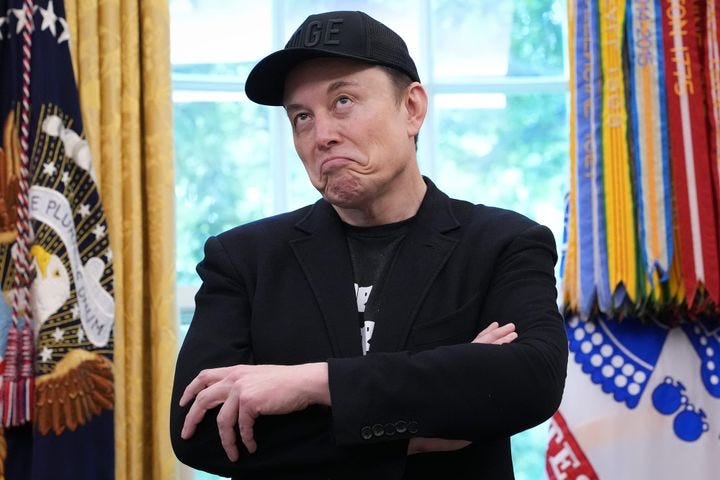
It is worth engaging seriously with Musk’s stated reasoning, because dismissing it without examination is not honest journalism.
Musk has consistently argued two things: first, that providing Starlink for offensive strikes inside Russian territory would make SpaceX “explicitly complicit in a major act of war”; and second, that he believes the path to ending this conflict is a negotiated peace deal, not escalation.
These are not irrational positions in the abstract. The question of whether a private company should be directly involved in enabling strikes on a nuclear power’s territory is genuinely complex. Musk has also provided tens of thousands of Starlink terminals to Ukraine — a contribution that has been, by almost universal assessment, one of the most significant pieces of military-relevant technology Ukraine has received from any source.
He is not Ukraine’s enemy. He has helped Ukraine survive.
But here is where his reasoning breaks down.
Ukraine is not asking Musk to strike Russia. Ukraine is asking to use Musk’s technology to strike the specific weapons systems that are killing Ukrainian civilians. The mobile ballistic missile launchers that Musk’s restrictions prevent Ukraine from targeting are the same launchers that fired the missiles which killed 17 people in Kyiv on August 5th.
The distinction Musk is drawing — “I’ll let you defend yourselves, but not inside Russia’s borders” — has a real-world consequence. It means that the Russian missiles, once fired, can only be addressed after launch. And without Patriot interceptors, they cannot be stopped at all.
“Instead of shooting down arrows” — that phrase from the Ukrainian defense engineer is not rhetoric. It is a precise description of the operational problem. Ukraine is being forced to play defense against projectiles it cannot shoot down, while being prevented from targeting the systems launching those projectiles.
When 17 people die in Kyiv from ballistic missiles that Ukraine lacked both the interceptors and the Starlink access to prevent — that is a consequence of decisions Elon Musk made. Not the only cause. Not the whole story. But a real, traceable part of it.
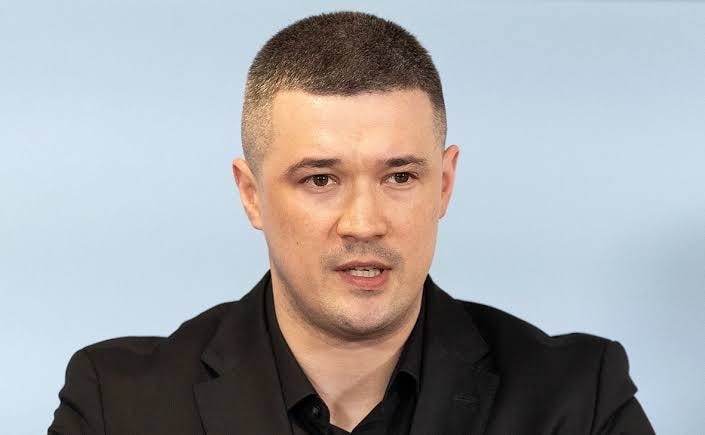
There is one element of this story that I find particularly significant and that I have not seen discussed widely.
The person currently working hardest to change Musk’s mind — making phone calls, sending messages, working through back channels — is Mykhailo Fedorov.
You may remember Fedorov. He was Ukraine’s Defense Minister. He built Ukraine’s drone warfare program. He is the architect of the deep strike campaign that has knocked out 40% of Russia’s oil refining capacity, struck oil depots across a dozen Russian regions, and brought the war home to Russian civilians in a way no previous strategy had achieved.
He was dismissed by Zelensky last month.
And despite that dismissal — despite having lost his position, his platform and his official authority — he is still making calls on Ukraine’s behalf. Still trying to unlock the capability he believes could save Ukrainian lives.
There is something extraordinary about that. A man without a title, fighting for a country that just removed him from its government, because he believes the cause is still right.
Fedorov also achieved something nobody else had. Earlier this year he personally negotiated with Musk to cut off Starlink access for Russian troops — the same troops who had been using captured terminals and black-market access to coordinate their own operations. That negotiation worked. Musk agreed. Russia lost critical battlefield communications.
If Fedorov could convince Musk to cut Russia off — why can he not convince him to give Ukraine full access?
That question does not have a clear answer. But it suggests the barrier is not technical. It is political.
The deepest issue here is not about Elon Musk specifically. It is about what the Starlink situation reveals about the structure of modern warfare.
A private citizen — unelected, unaccountable to any government, subject to no treaty or international law — has made consecutive decisions that have shaped the course of a war affecting tens of millions of people. He decided Ukraine could not hit Russia’s Black Sea Fleet. He decided Ukraine could not have full counteroffensive communications coverage. He is now deciding Ukraine cannot use precision guidance for deep strikes.
These are not small decisions. Each one has had measurable consequences for the battlefield, for the war’s duration, and for Ukrainian lives.
Musk has said, repeatedly and publicly, that he believes Ukraine should make a peace deal with Russia. That is a political position — one held by many people, including some with legitimate arguments. But it is a political position that he is now able to enforce through technical restrictions on a military-critical communications network.
No senator voted on this. No international body reviewed it. No treaty governs it. One man decided, based on his own assessment of geopolitics and escalation risk, what Ukraine is and is not allowed to do in defense of its own territory.
The Irregular Warfare Journal called it “When a CEO Plays President.” That framing is not hyperbole. It is a description of what is actually happening.
Ukraine is simultaneously facing:
A shortage of Patriot interceptors — missiles that shoot down ballistic weapons after launch. Trump promised a manufacturing license. Then walked it back. The missiles that killed 17 people on August 5th got through because there were not enough interceptors.
A blocked request for Starlink deep strike guidance — the capability that would allow Ukraine to hit the launchers before they fire. Musk said no. He keeps saying no. He says it is time to make a deal.
The Russia sanctions bill — passed by the Senate 86-11 on August 7th, named after Lindsey Graham who died 27 days earlier — now sits in the House, which is on recess until September.
Ukraine is caught between a man who won’t sell missiles, a man who won’t enable satellites, and a legislature that is on vacation.
And Russia fires every night.
I want to be honest about something.
Elon Musk gave Ukraine Starlink. Tens of thousands of terminals. For free, or at deeply subsidized cost. In the darkest days of 2022, when Ukraine’s communications infrastructure was being systematically destroyed, Starlink was one of the reasons Ukrainian forces could coordinate at all. The debt is real.
But gratitude does not mean silence.
If a benefactor gives you an umbrella and then holds it in a way that keeps one side of you dry while the other side gets rained on — you are allowed to say so.
Ukraine’s children are dying from missiles that Starlink access could help prevent. Musk knows this. He has decided, based on his own strategic judgment, that enabling that access is too escalatory.
I respect that he has thought about this. I disagree with where he landed.
And I think the Ukrainians who keep asking him to reconsider — Zelensky, Fedorov, the engineers building the drones — deserve to be heard. Not just thanked. Heard.
The archers are still firing.
If this kind of analysis matters to you — share it. And if you want to support independent Ukrainian journalism that covers the decisions shaping this war honestly — become a paid subscriber.
No algorithm. No boss. Just the truth.
Slava Ukraini. 🇺🇦
Comments
Nothing yet. Say the first thing.
Sign in to join the conversation.