
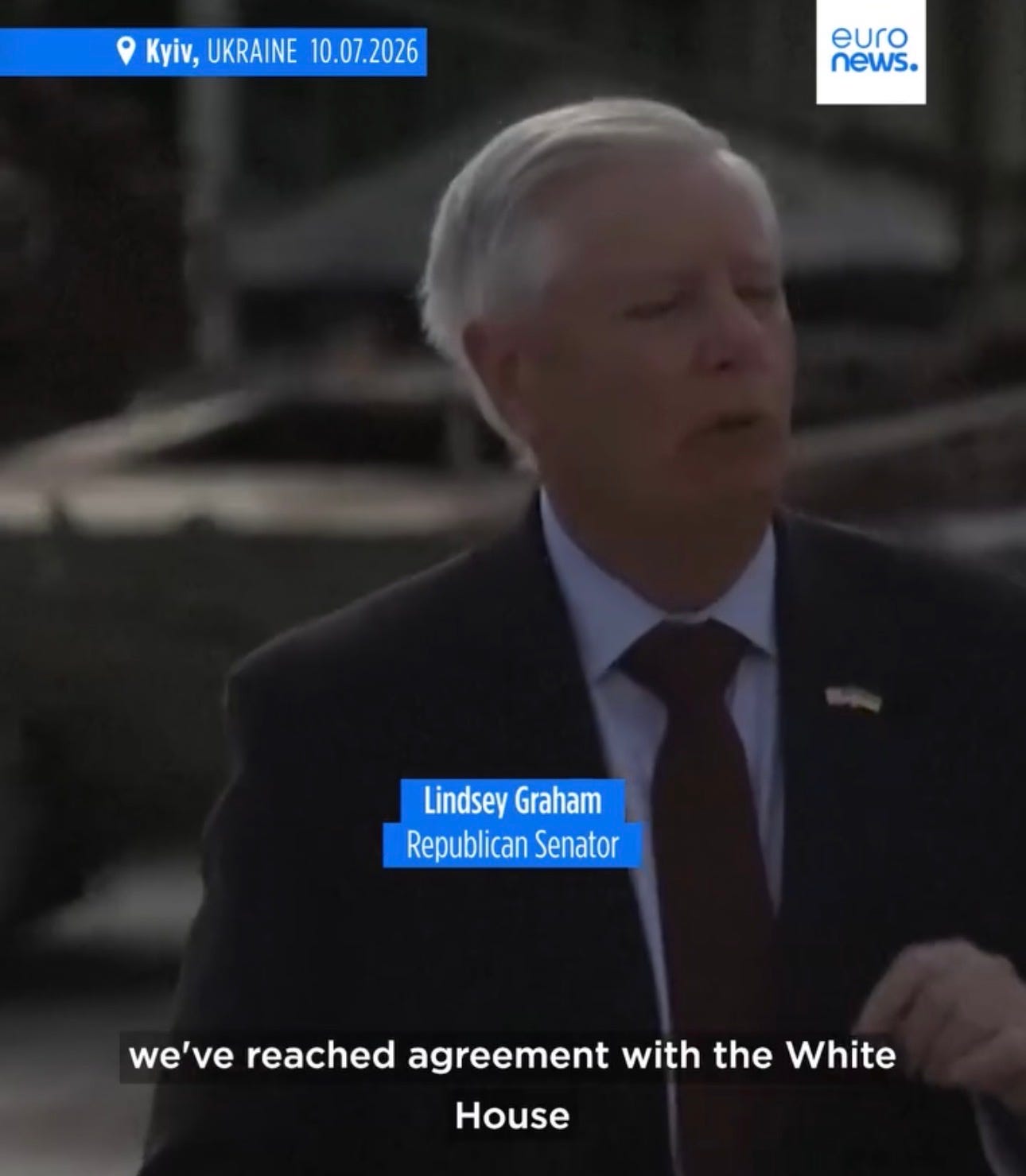
On Friday afternoon in Kyiv, Senator Lindsey Graham stood in front of Ukrainian tanks and spoke to reporters for what would be the last time.
“There are some things we can do on the technology front to build on the lethality of Ukraine to protect itself from ballistic missile attack,” he said. “If we did that, combined with creating tools to punish those countries that prop up Putin and make money off this war — then I think we’ve got the best chance since I’ve been coming here.”

He had been coming here for more than a decade. This was his tenth visit to Ukraine. He had just celebrated his 71st birthday three days earlier. He had just met with Zelensky, toured the SkyFall drone production facility, and announced that the White House had agreed to support a revised bipartisan Russia sanctions package — a bill he and Democratic Senator Richard Blumenthal had spent nearly two years building.
He flew home to Washington.
At approximately 8:30 PM on Saturday, July 11th, emergency services responded to a call at a Capitol Hill home owned by Graham. A person was suffering chest pains. Responders worked to stabilize him and transported him to the hospital.
Senator Lindsey Graham was pronounced dead that evening at age 71, from what his office described only as “a brief and sudden illness.”
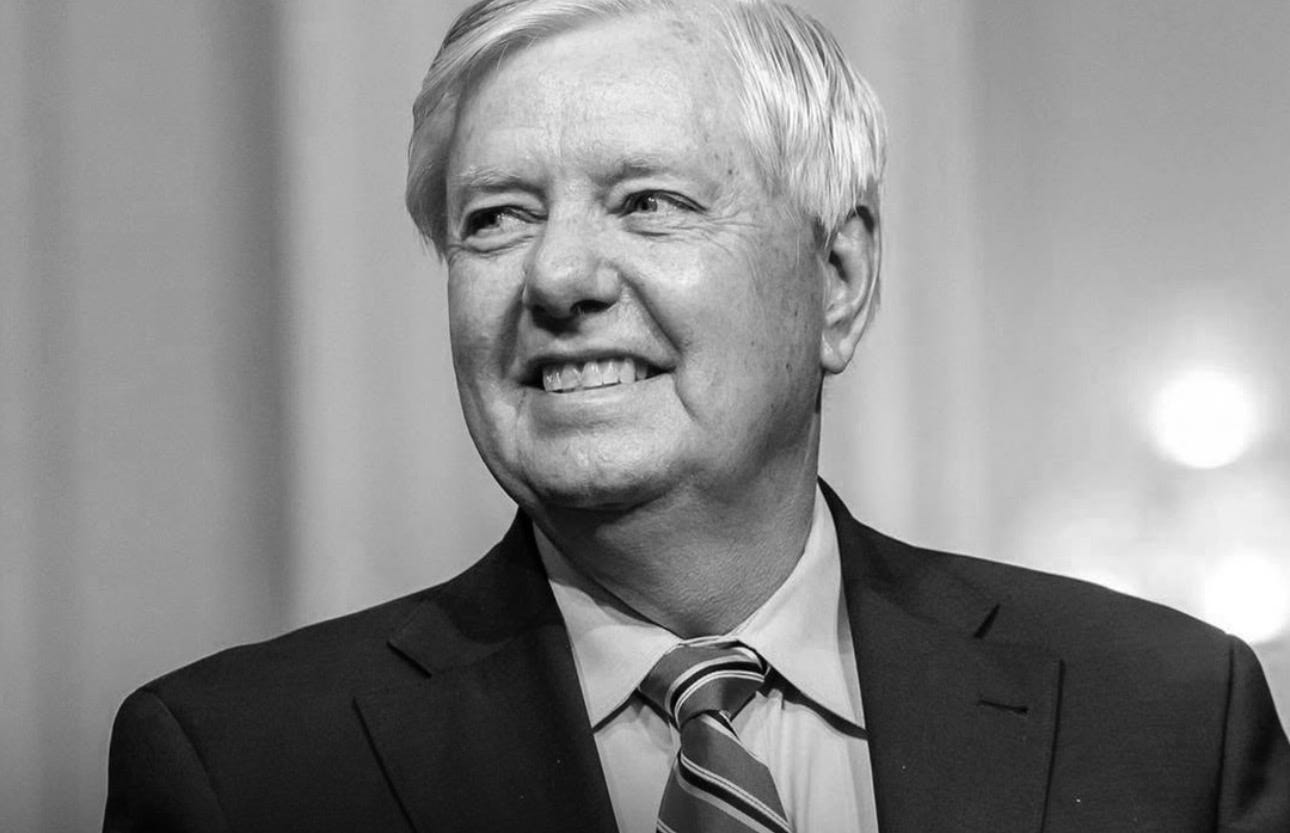
Lindsey Graham was a complicated figure in American politics — and I say that honestly, because he deserves honesty more than he deserves a hagiography.
He was a man who called Donald Trump “a race-baiting, xenophobic bigot” in 2015 and became one of his closest allies by 2017. He was a military hawk who voted for wars whose consequences were debated for decades. He was a senator who frustrated as many people as he inspired, often seeming to change position based on political winds.
But on Ukraine — he never wavered. Not once.
Graham was advocating for sanctions against Russia after its 2008 war on Georgia, when almost no one in Washington was paying attention. He pushed for military support for Ukraine after the 2014 annexation of Crimea when the conversation was barely happening. And when Russia launched its full-scale invasion in February 2022, he was in Kyiv within weeks — and kept coming back.
Ten times. Through the hottest days of the war. Through the periods when Western support was uncertain. Through the moments when visiting Kyiv carried genuine personal risk.
Zelensky called him “a true champion of freedom and the values that make our world safer.” He added: “He was here with our people when it was most needed. We were in constant dialogue, and I will miss that.”
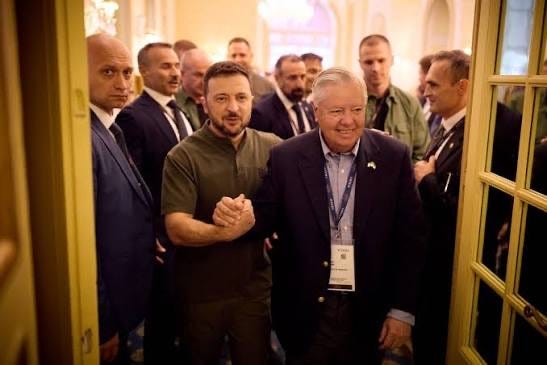
That is not diplomatic language. That is personal.
The Russia sanctions bill Graham announced from Kyiv on Friday was not a new idea. It had been in development for nearly two years.
The legislation — formally titled the Sanctioning Russia Act, nicknamed “sanctions from hell” by its sponsors — would give the President authority to impose tariffs of between 0 and 500 percent on any nation purchasing Russian crude oil or refined petroleum products. The mechanism was designed specifically to target China and India, which have become Russia’s primary energy customers since Western sanctions forced Moscow to redirect its exports eastward.
Graham had unveiled the legislation in January 2026 aboard Air Force One alongside Trump himself. The bill had secured commitment from 72 senators — a supermajority. And on Friday, speaking from Kyiv, Graham announced that the Trump administration had agreed to support the updated version, clearing what had been the final significant obstacle to passage.
The timing mattered enormously. Ukrainian drone strikes have taken more than 40 percent of Russia’s oil refining capacity offline in 2026. A sanctions regime that simultaneously targeted buyers of Russian oil would compound that pressure dramatically — potentially cutting off the revenue streams Russia depends on to fund the war at exactly the moment its domestic production is already disrupted.
Graham understood this. He had been in Kyiv specifically to discuss it with Zelensky and to align the legislative push with Ukraine’s military campaign.
He announced the breakthrough on Friday afternoon. He was dead by Saturday night.
Graham’s death leaves the sanctions legislation without its principal Senate architect at the moment it appeared closest to becoming law.
Euromaidanpress described it plainly: “His death leaves the 500% tariff bill without its principal Senate architect at the moment his announcement suggested it might finally pass.”
His co-sponsor, Democratic Senator Richard Blumenthal, has not yet issued a statement on the bill’s future. Senate Majority Leader John Thune has not addressed the legislation directly.
The political complications extend beyond the sanctions bill. Graham’s death leaves Republicans with a reduced Senate majority at a critical legislative moment. Republican Senator Mitch McConnell, 84, remains in an extended medical absence for undisclosed reasons. The combined effect of these absences could complicate Trump’s legislative agenda in the months before the November midterms.
Under South Carolina law, Governor Henry McMaster has until January 3rd, 2027 to appoint a replacement. Until then, the seat is vacant.
I want to address something directly, because it is being discussed widely and I believe in being honest with my readers rather than pretending questions don’t exist.
Within hours of Graham’s death, figures across the political spectrum began asking whether the circumstances were suspicious. Laura Loomer, on X, asked whether Russia had poisoned Graham. Alex Jones made similar claims. Russian state media is already spinning its own version of events.
I am not going to tell you these questions are unreasonable to ask. The timing — announcing White House-backed Russia sanctions from Kyiv on Friday, dead by Saturday night — is striking. Russia has a documented history of poisoning political adversaries. Graham was specifically named on Iranian assassination threat lists that were publicly circulating this week. And the cause of death has not been officially specified beyond “brief and sudden illness.”
These are facts. I am not going to pretend they are not.
But I am also going to tell you what I know as someone who has covered this war honestly for years.
Graham was 71 years old. He was running at a pace that would exhaust someone thirty years younger. He had just completed an international trip, met with a head of state, toured military facilities, held a press conference, and flown home — all within 48 hours. Men his age, with that schedule and that level of sustained stress, die of cardiac events. It is one of the most common causes of death in that demographic, under those conditions, without any external cause at all.
NBC confirmed emergency responders were called for chest pains — consistent with cardiac arrest. His family has not suggested anything unusual. His office has not suggested anything unusual. And no credible intelligence agency has publicly raised concerns.
What I would ask is this: demand transparency. The cause of death should be publicly confirmed through standard autopsy processes. That is not a conspiracy theory. That is a reasonable expectation for any public figure who dies suddenly in ambiguous circumstances. And it is especially reasonable given the current geopolitical context.
If the answer is cardiac arrest — as the available evidence currently suggests — then that is a tragedy. A man who worked himself to death in service of a cause he believed in.
If the answer is anything else, the world will need to know.
I want to end not with politics but with something more personal.
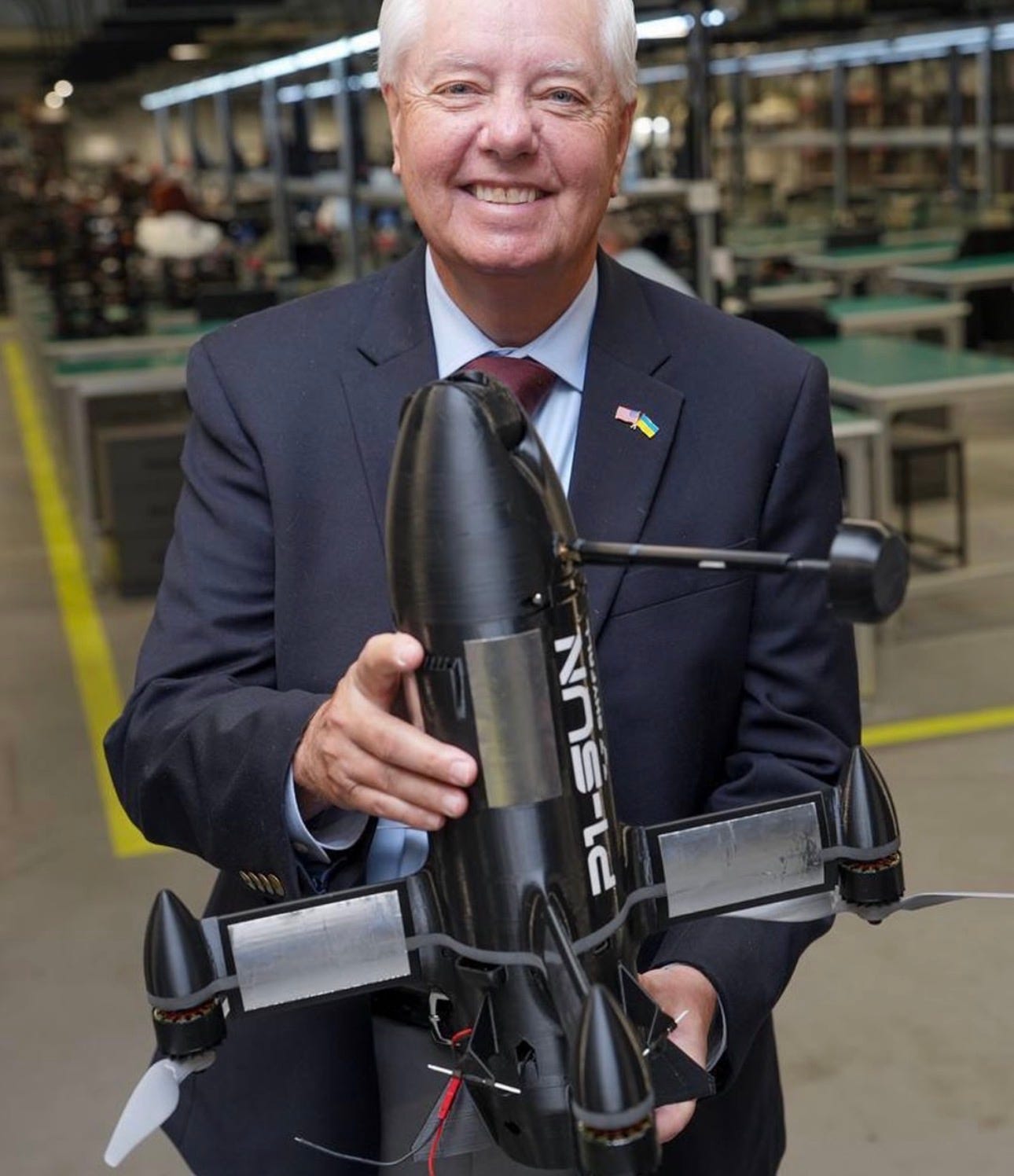
Lindsey Graham was in Ukraine ten times. Ten. During a full-scale war. On his most recent visit he held one of Ukraine’s P1-SUN interceptors — the missiles being used to shoot down the drones that kill our people. He posed for the photo. He put it on the record.
He was not perfect. No politician is. But he showed up when it was easier not to. He advocated for sanctions against Russia in 2008 when nobody wanted to hear it. He pushed for military aid in 2014 when the conversation wasn’t happening. He came to Kyiv in 2022, 2023, 2024, 2025 and twice in 2026. He understood that what Russia was doing to Ukraine was not just Ukraine’s problem — it was a test of whether the post-World War II international order meant anything at all.
His last act was standing in front of Ukrainian tanks and telling the world that Russia needed to be held accountable. His last meeting was with Zelensky. His last public statement was about protecting Ukraine from ballistic missiles.
Zelensky said: “He actively promoted bipartisan and bicameral support for Ukraine, and in recent weeks, he was working on important initiatives that could help bring peace closer, including strengthening sanctions against Russia.”
He flew home. He did not wake up.
The sanctions bill he spent two years building now faces an uncertain future. The seat he occupied for 23 years is vacant. The voice that kept pushing, kept advocating, kept coming back — is silent.
Rest in peace, Senator Graham.
Ukraine will not forget.
If this kind of journalism matters to you — share it. And if you want to support an independent Ukrainian voice covering this story honestly, for as long as it takes — become a paid subscriber.
No algorithm. No boss. Just the truth.
Slava Ukraini. 🇺🇦
Comments
Nothing yet. Say the first thing.
Sign in to join the conversation.