
In my previous articles and interviews I have stated a few times that I don’t believe smoking alone is the cause of lung cancer or other types of cancer. Smoking could be undermining conditions of the body terrain making it more susceptible to the primary causes of chronic illness, of which vaccinations are a major driver, as I have already established. For example, it’s been demonstrated by Thomas Riddick that both smoking and alcohol consumption temporarily lower zeta potential and thus temporarily degrade the blood flow. Thus, it would be a reasonable hypothesis that chain smoking or abuse of alcohol are putting some constant pressure on the circulatory system. Heavy smoking could very well be a contributing factor in chronic diseases of various kinds including cancer, especially in case of heavy cigarette smoking vs moderate pipe tobacco/cigar smoking, as discussed further in this article. The point of my writing about this topic is not to encourage anyone to smoke, but to encourage all of you to think for yourself.
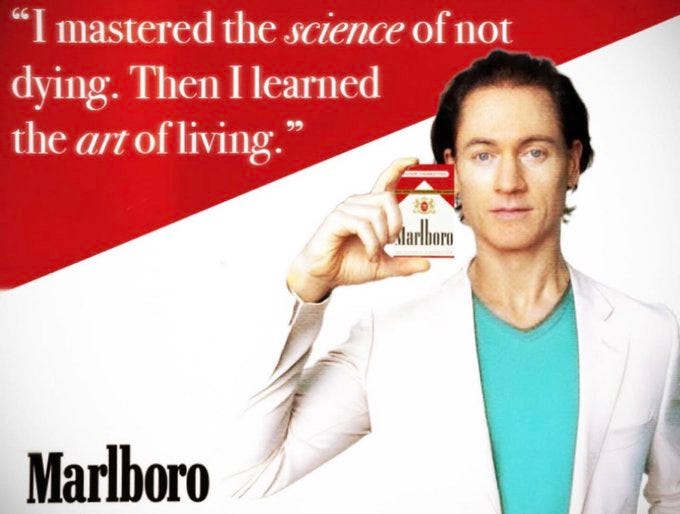
A brief commercial break, brought to you by Bryan Johnson, who seems to be reconsidering his massive drug addiction lately:
Let’s look at what the data shows and doesn’t show about smoking and cancer.
I read a book by Judyth Vary Baker, “Lee and Me” where she details her relationship with Lee Harvey Oswald during the months preceding JFK assassination. In it, she describes an underground operation where she and Oswald worked on what was called “cancer research” but likely was a “dirty” lab for the military-intelligence agencies attempting to make weaponizable cancer-causing viruses. For the record, I believe Judyth, since her late teens, was (and still may be) an intelligence asset. While the book contains a lot of factual material, it is a narrative likely co-produced with the deep state agencies. The same applies to the “Dr. Mary’s Monkey” book. Both are written as a propaganda of gain-of-function (GOF), even though the books have a lot of factually correct material. For the purposes of this article, neither Judy nor her book are important. What caught my attention was this quote:
Dr. Ochsner’s speech that day was impassioned, and it was easy to see why he had been president of the American Cancer Society. Before 1930 lung cancer was so rare, Ochsner explained, that it was not even listed on the International Classification of Disease system in the United States. Ochsner even recalled as a medical student that he was awakened in the middle of the night to witness an autopsy of a man who died of lung cancer, because his professors considered it to be a medical event so rare that he might not see another again in his lifetime. But now, [around 1960] said Ochsner, there was an epidemic of lung cancer and the victims were overwhelmingly cigarette smokers.
This quote became a starting point for my investigation. Ochsner allegedly stated that there was no lung cancer before 1930! Whether or not Ochsner said this, the statement is factually correct - lung cancer was exceedingly rare at that time. This is despite smoking being prevalent for centuries, and despite high rates of tobacco use in the United States:
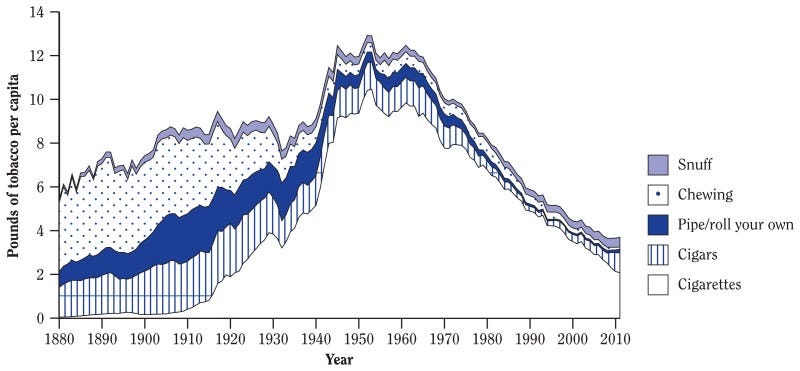
The only notable change in the above trends is the rapid rise of commercial cigarettes after 1930. That could be a possible explanation for lung cancer. One could hypothesize that it’s perhaps the switch to mass produced commercial cigarettes that has driven the cancer rates upward. Maybe it has something to do with inhalation of the products of burning paper and/or additives rather than tobacco itself? To some extend, that story holds, but strangely, only in men - discussed further below.
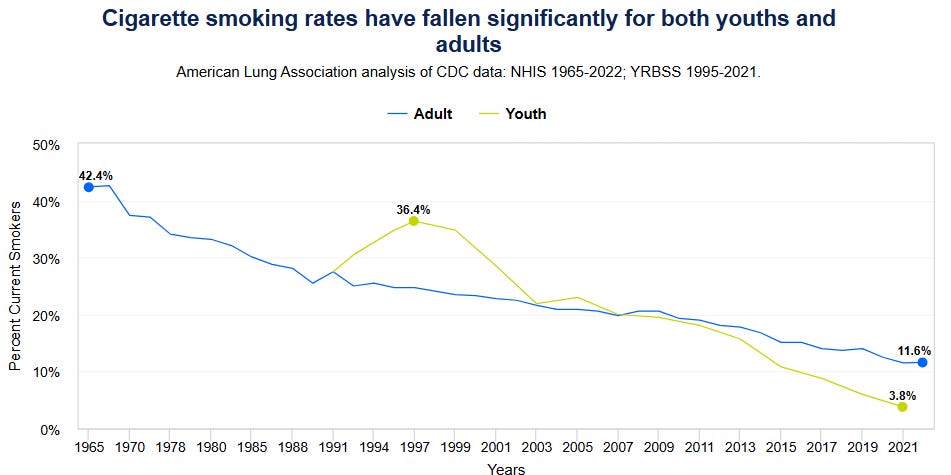
Alton Ochsner-initiated campaign, blaming cancer on smoking (while he himself worked on making cancer induced by injections) worked! The rates of cigarette smoking went up through the 50’s-60’s, but declined very substantially since then, especially in younger population:
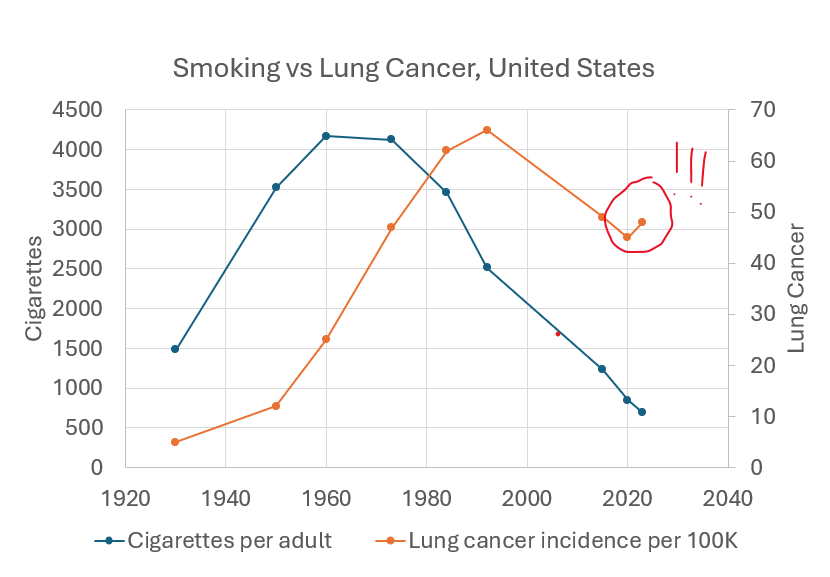
Below is the data on which the narrative that smoking causes cancer was largely constructed. For the lung cancer incidence I combined CDC Seer data with pre-1975 estimates [Source]. These symmetrical curves of cigarette consumption vs lung cancer rates are separated by 20 years (!) The large time lag is very hard to reconcile with biological realities of any toxic exposure. As you can see, the story of cigarettes causing lung cancer fell apart after the rollout of mRNA shots. However, even before 2021 it is evident that the decline in lung cancer has a different, shallower slope vs the steep decline in cigarette consumption:
The story of lung cancer is even curiouser when the data is assessed by gender. Here is the long term trend of % population, by gender, being cigarette smokers, 1975-2023:
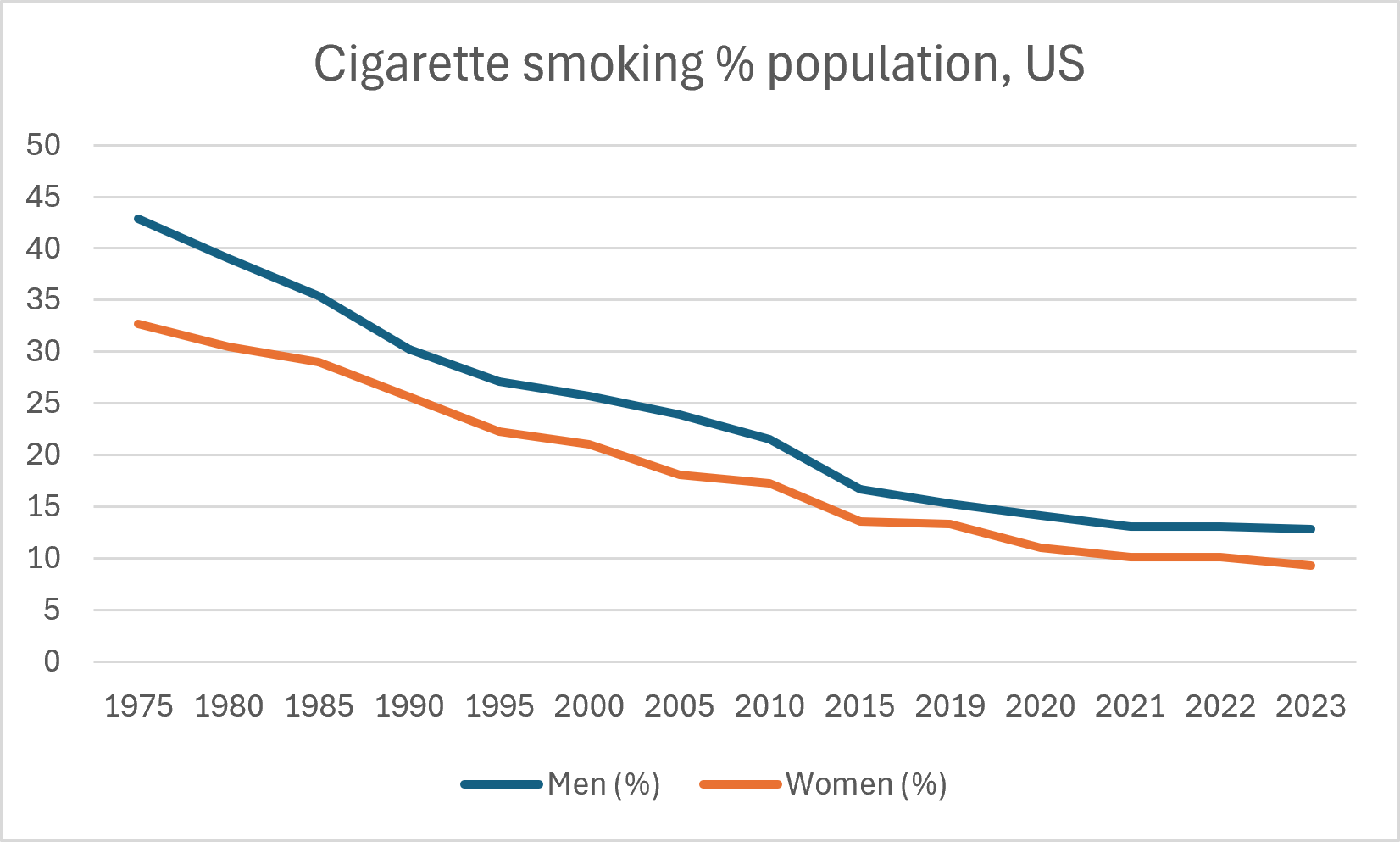
Here are CDC trends of lung cancer by gender, all ages for the same time period. Notice that very similar trends of smoking in men vs women translate to completely different trends in lung cancer! How come?
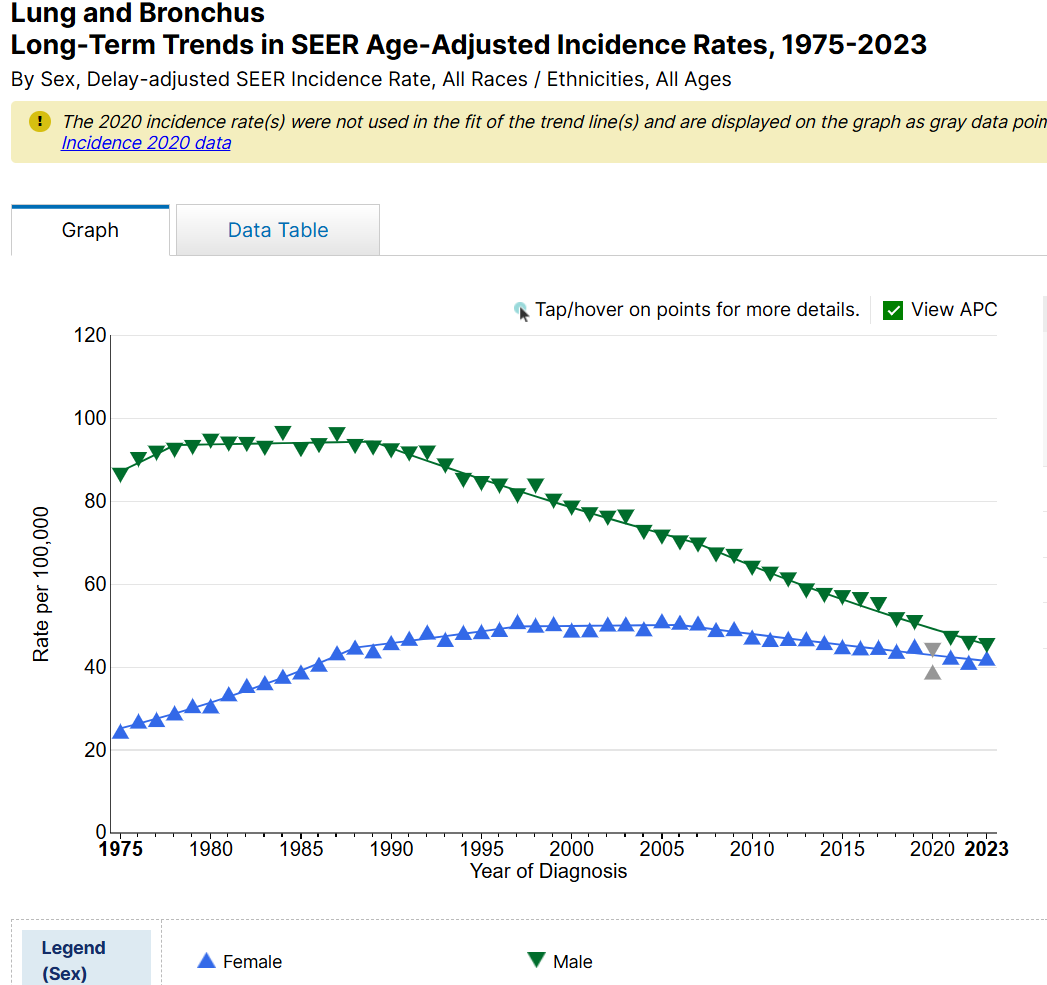
These 2 sets of charts are showing an extremely odd pattern that does not neatly fold into “smoking cigarettes causes cancer” narrative, because notice that in 1975, when both male and female rates of smoking began to decline, men had approximately 4 times (!!!) higher rate of lung cancer, while the rate of smokers in the population was only 10% higher. The gigantic gap between male and female rates of lung cancer that only began to narrow after 2005 is the best evidence that it wasn’t cigarettes, but something else entirely that was causing or exacerbating lung cancer.
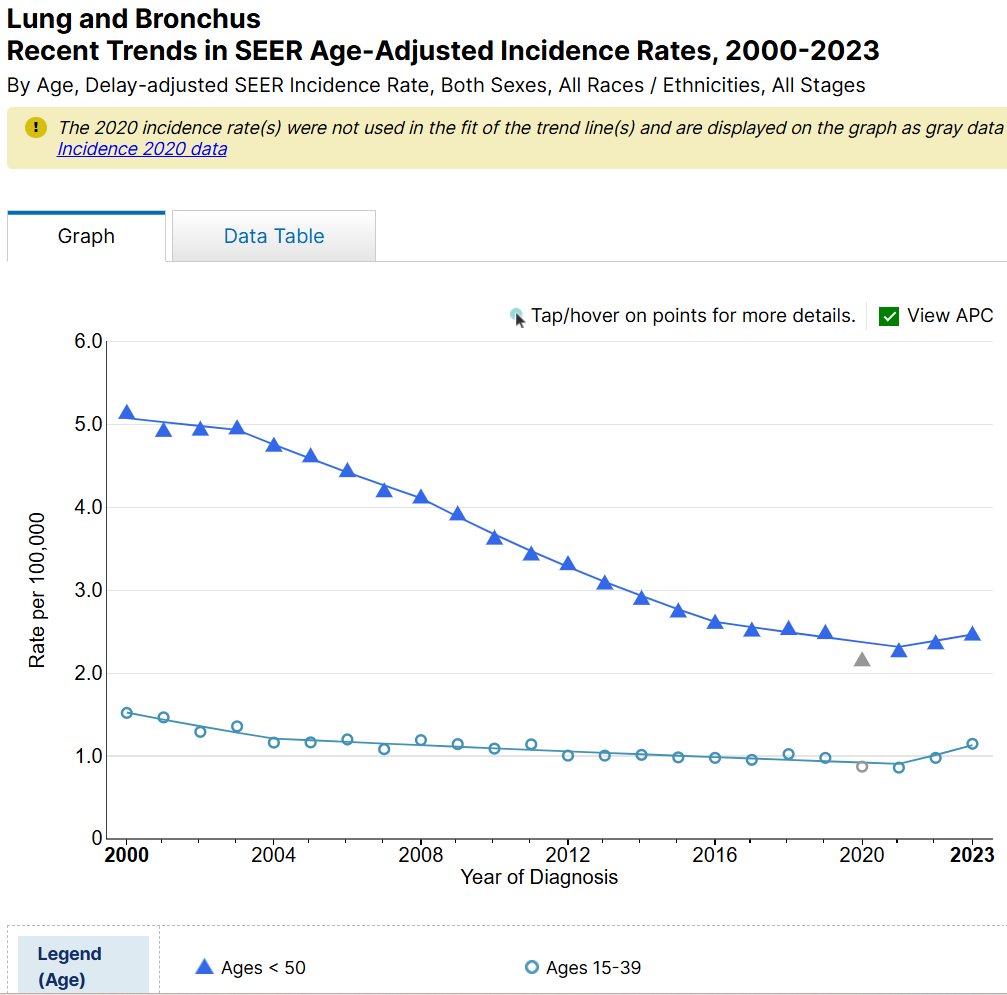
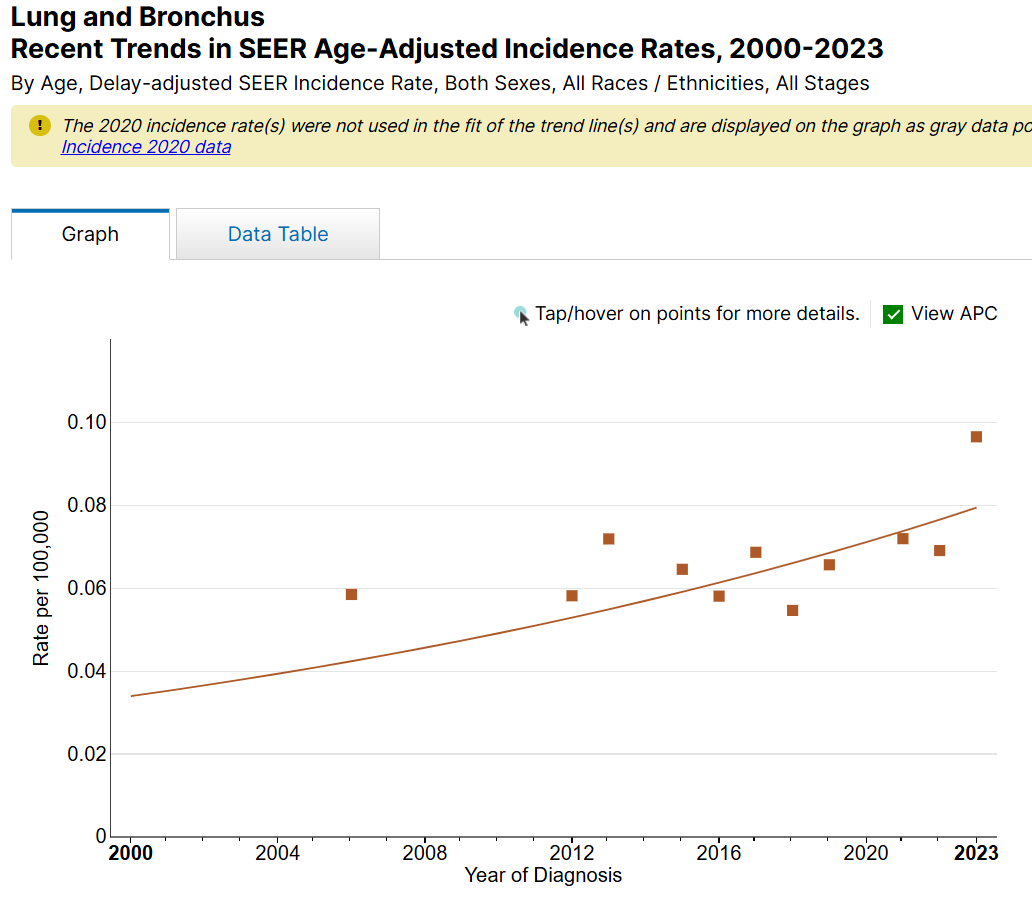
Another significant evidence against the narrative is the growth in the rates of lung cancer diagnosed in younger people and children who are not smokers and not exposed to smoke. These rates have accelerated after the mRNA rollout in 2021, notice the change in slope in all graphs below:
Incidence in <50 yo, and 15-39 yo, post mRNA rollout, the rate increased 3.2%.
Incidence in <15 yo, post mRNA rollout rate of incidence increased by 3.8%.
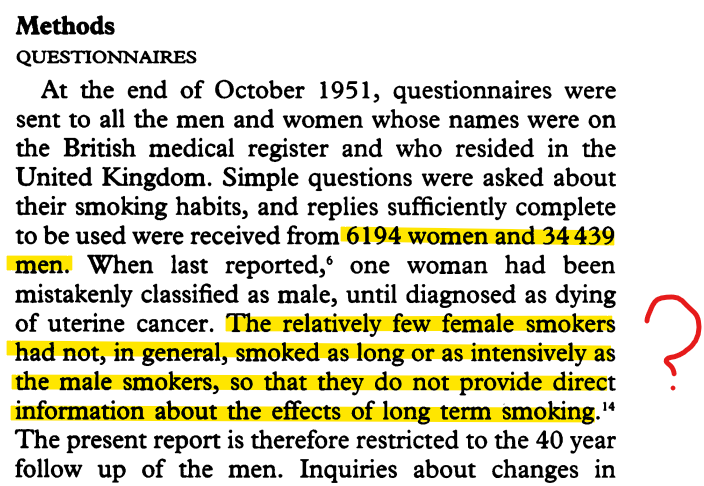
In this part of the article, I am going to review one of the foundational studies that was used to drive the legislation, policy and public messaging about smoking being the cause of cancer. The British Doctors Study (1951-1991), was a prospective survey collected from healthcare professionals and assessed over 40 years.
Strangely, data from women were excluded AFTER the surveys were collected and analyzed! The authors state that there were “relatively few women smokers” as an excuse, but even few women over 40 years make a really good sample to study, so this smacks as an effort to prove a preferred narrative, rather than an open-minded scientific research:
The results for various types of cancers in men seem to indicate that yes, indeed, cigarette smoking may have impact on lung cancer, and a few other types:
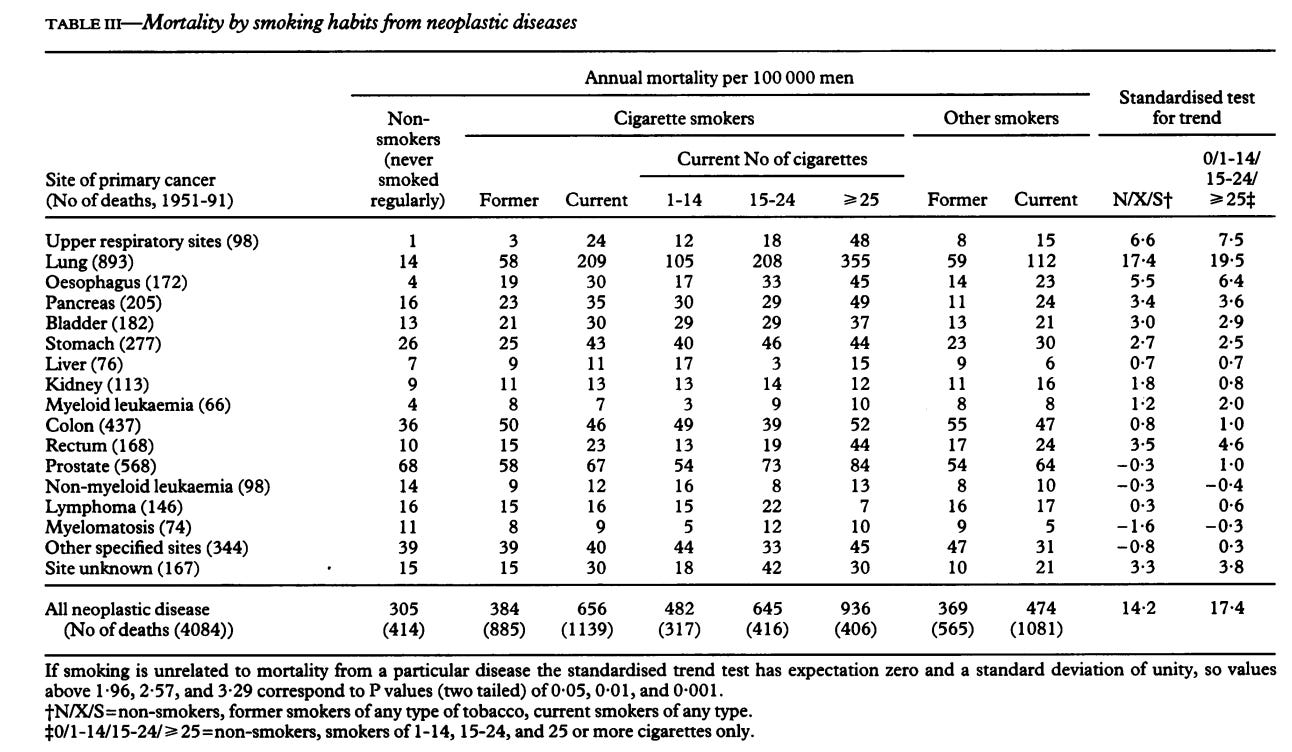
Three types (cancers of the upper respiratory sites, lung, and oesophagus) were particularly closely related, with the mortality in heavy cigarette smokers at least 15 times that in non-smokers; two other types (cancers of the bladder and pancreas) were about three times more common in heavy cigarette smokers than in nonsmokers.
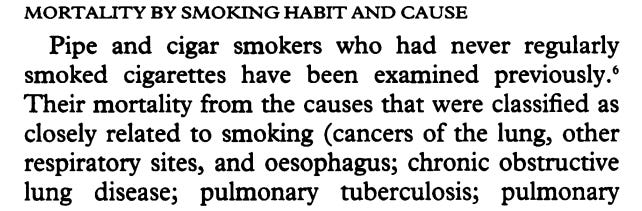
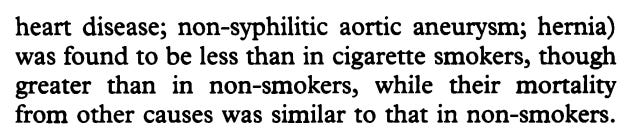
Non-cigarette smokers show far lower association with cancers vs. cigarette smokers:
Impact of smoking on overall mortality was rather puzzling:
for the 40 year period of the study as a whole, the overall mortality was twice as great in continuing cigarette smokers as in lifelong non-smokers throughout middle and early old age. The proportional excess in cigarette smokers decreased, however, in later life, and the ratio was reduced to 1-6:1 at 75-84 years of age and 1-3:1 at ages 85 years and over.
Effect on survival between cigarette smokers and non/former-smokers was found to be statistically significant, but diminishing later in life. This chart is for all-cause mortality, not specific to cancer:
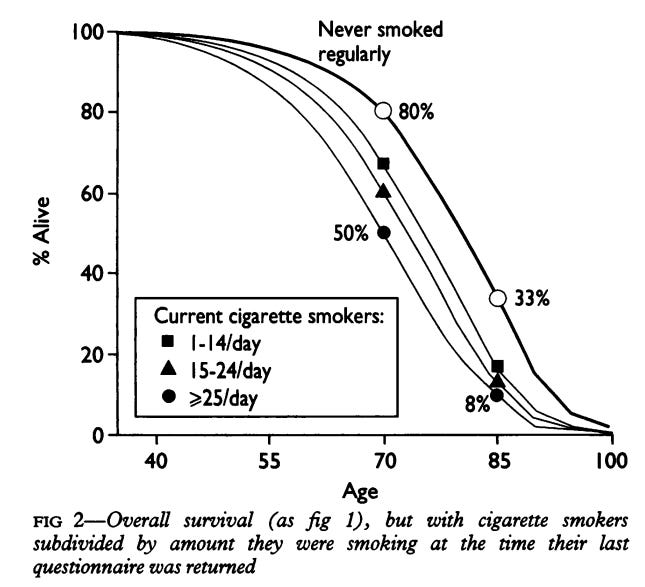
The most convincing factor in the above data is the “dose-dependency” effect demonstrated in the cigarette smoking. This was not reproduced in the tobacco/cigar cohort. Therefore, it’s quite possible that paper or additives in commercial cigarettes may indeed have some real effect for both, cancer and all-cause mortality. As I mentioned before, cigarette smoking, especially heavy use, may put a significant pressure on the circulatory system, which, in turn, would undermine all other self-healing/clearance mechanisms. Therefore, I believe this chart is a valid finding for a significant association between cigarette smoking and elevated all-cause mortality.
Pulmonary and cardiovascular disease and mortality were as highly related to cigarette smoking. Mechanistically, this relationship makes sense.
No! While this study provided an important long term prospective observation on the rates of cancer and all-cause mortality associated with smoking, it did not establish any causality. The authors of the paper do not claim that it does, and only state that this is a statistical association.
Furthermore, the arbitrary exclusion of women after the dataset was collected is the most troubling aspect of this study. The excuse provided (not enough of the 6100 survey responders were smokers) seems very shaky. A large % of the female population in the UK were smokers: 45% in 1951, which gradually declined to 28% in 1991. Therefore, the dataset could have contained ~2000 female smokers, and 40 years makes it a large sample! As I discussed previously, cancer rates in men and women are astonishingly different and cannot be explained by any natural causes or lifestyle choices. At the peak rates of smoking in the US and UK, both men and women had high rates of cigarette smoking, and women were almost exclusively cigarette smokers. Something really inconvenient must have been shown in the male vs female data and jeopardized the “smoking causes cancer” narrative.
Furthermore, in this study no adjustments for demographic, health status, medication, or any other factors - other than age - were performed. Finally, of course, no adjustment for vaccination status was performed, this is strictly a taboo topic in “science”. Yet, speculatively, I could say that this factor could have been a major one. The authors should have asked that question. They did not.
If you are a non-smoker, please don’t start, that’s clear. The rest of it is a much harder question to answer. I would like to conclude this article with a story about the longest lived human in recorded history - Jean Calment, a French woman who lived to 122+ years of age. She was born in 1875 and died in 1997!

As a teenager, Jean met Vincent Van Gogh, and found him very unpleasant. She was tiny (4’11). She reportedly had some childhood vaccines, but no records are available. She was from an upper middle class family, and she had a relatively comfortable life in a century of major wars and societal upheavals. From all the information available about her - she was not “health conscious”. She didn’t maintain a particular diet, she didn’t take vitamins or supplements, and didn’t seem to care about her “health metrics”. Worse - she ate chocolate by pounds a week!! What would MAHA-HHS say, sugar kills, that’s worse than being on heroin? Even worse than that - she drank wine (preferred sweet) and she smoked until the age of 117!
The only thing I can reliably conclude from Jean’s story - it’s not the smoking that kills you, it’s quitting that does.
For a one time donation
Art for today: Abstracted Roses, oil on panel, 12x12 in.

Comments
Nothing yet. Say the first thing.
Sign in to join the conversation.