
Text within this block will maintain its original spacing when published
The sun rests on the Palisades
Casting her last, sweet glance
To the forlorn Hudson, which lies
In its cold silver-bed lost in thought,
Murmuring a lonely “good night.”
Good night to you, princess of light, silent
As a dream of youth on the shore
You’re sinking, taking joy with you!
Luminously setting in our splendor,
Leaving the world alone — good night!
Soon only a red spot remains
On the horizon like blood, an ache
Takes shape in the West and a pain
Rocks the fields sleep and calm
And whispers everywhere: “good night”...
- Evening | אָװנט (Morris Rosenfeld, translated from the Yiddish by Alex Weiser)
Growing up, I associated Yiddish with the funny but slightly boring ladies who would tell Sholom Aleichem stories at the Secular Jewish Sunday school to which my parents intermittently sent me and my siblings (a compromise between doing anything religious and nothing religious with us Santa-loving, public school-attending, culturally Jewish children of mixed heritage). Yiddish was the goofy language of the song “Ale Brider” with the never-ending “Ay yay yay yay” refrain I’d yell with my cousin in the back seat of the car (windows open) while munching on Gryfe’s bagels driving home along Bathurst Street from shule.
Fast forward twenty years and my relationship to Yiddish has changed. On an opera audition trip to New York City years ago, I bought myself a ticket to Fidler afn Dakh, a Yiddish translation of Fiddler on the Roof. Given that I’d spent a few years studying German, I was surprised at how easily I understood the Yiddish dialogue. I was encouraged to attend the show by a singing mentor of mine who’d loved it, as well as a podcast called “Unorthodox” that described why they’d been so moved by watching this show all in Yiddish. Had the Holocaust not happened, millions of speakers would have lived on and Yiddish might have prevailed. Fidler afn Dakh gave us a taste of what life was like when Yiddish was the vernacular through familiar songs and stories.
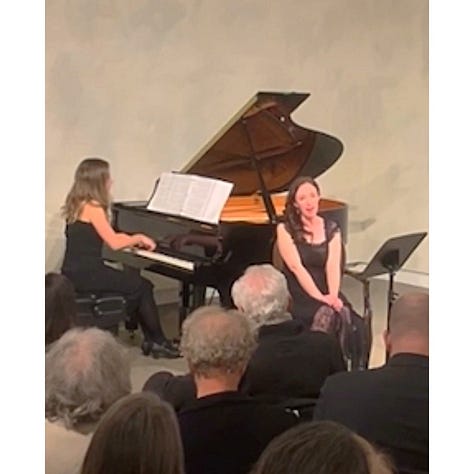
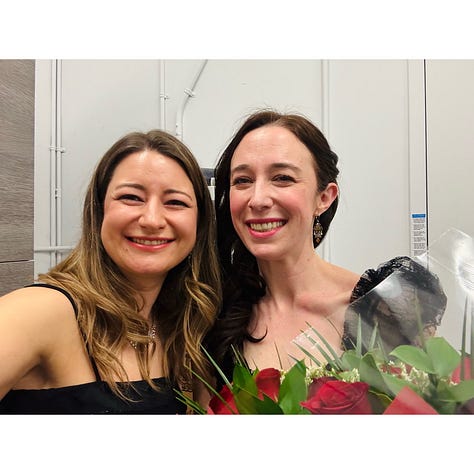
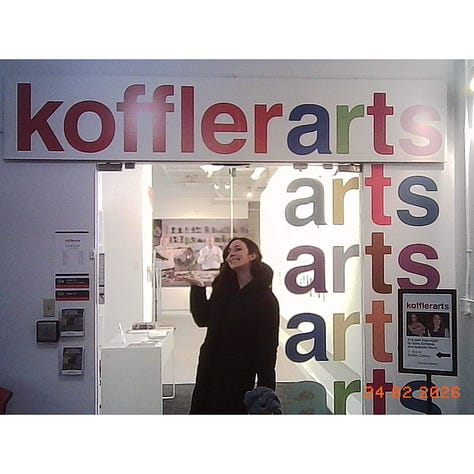
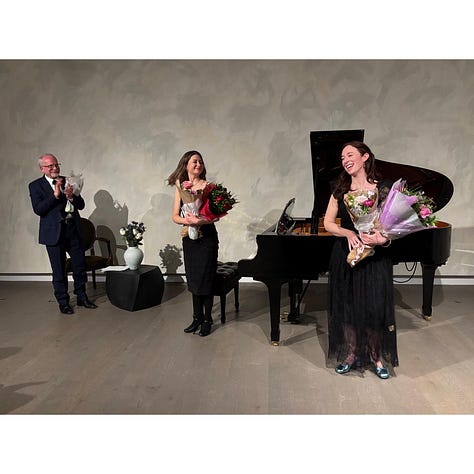
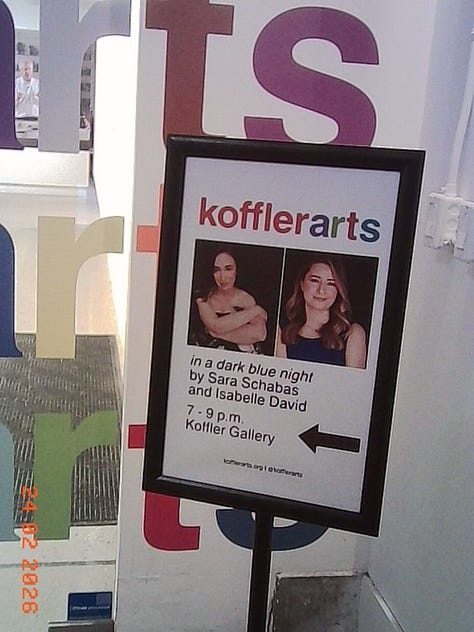
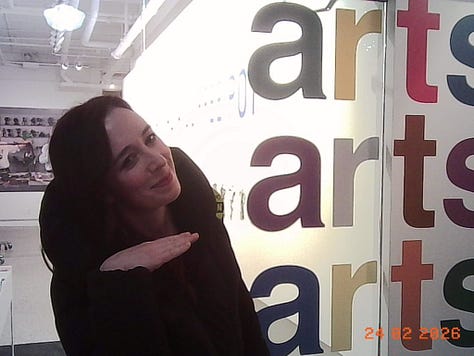
A few years ago, I received an email from the composer Alex Weiser introducing himself on the recommendation of a mutual acquaintance who noted our overlapping musical and literary interests. We had an introductory call over Zoom and he kindly sent me some of his scores to peruse. A year later, we finally met for coffee and a walk along Riverside Drive in New York City, discussing everything from music to politics to literature. The next day, Alex encouraged me to drop by the YIVO Institute for Jewish Research, where he worked. He left me a treasure trove of anthologies of Yiddish poetry and recordings to lug back to Canada with me. I’ve since performed one of Alex’s song cycles a couple of times, in a dark blue night, including last week in a particularly meaningful recital for Koffler Arts with my dear friend and collaborator Isabelle David.
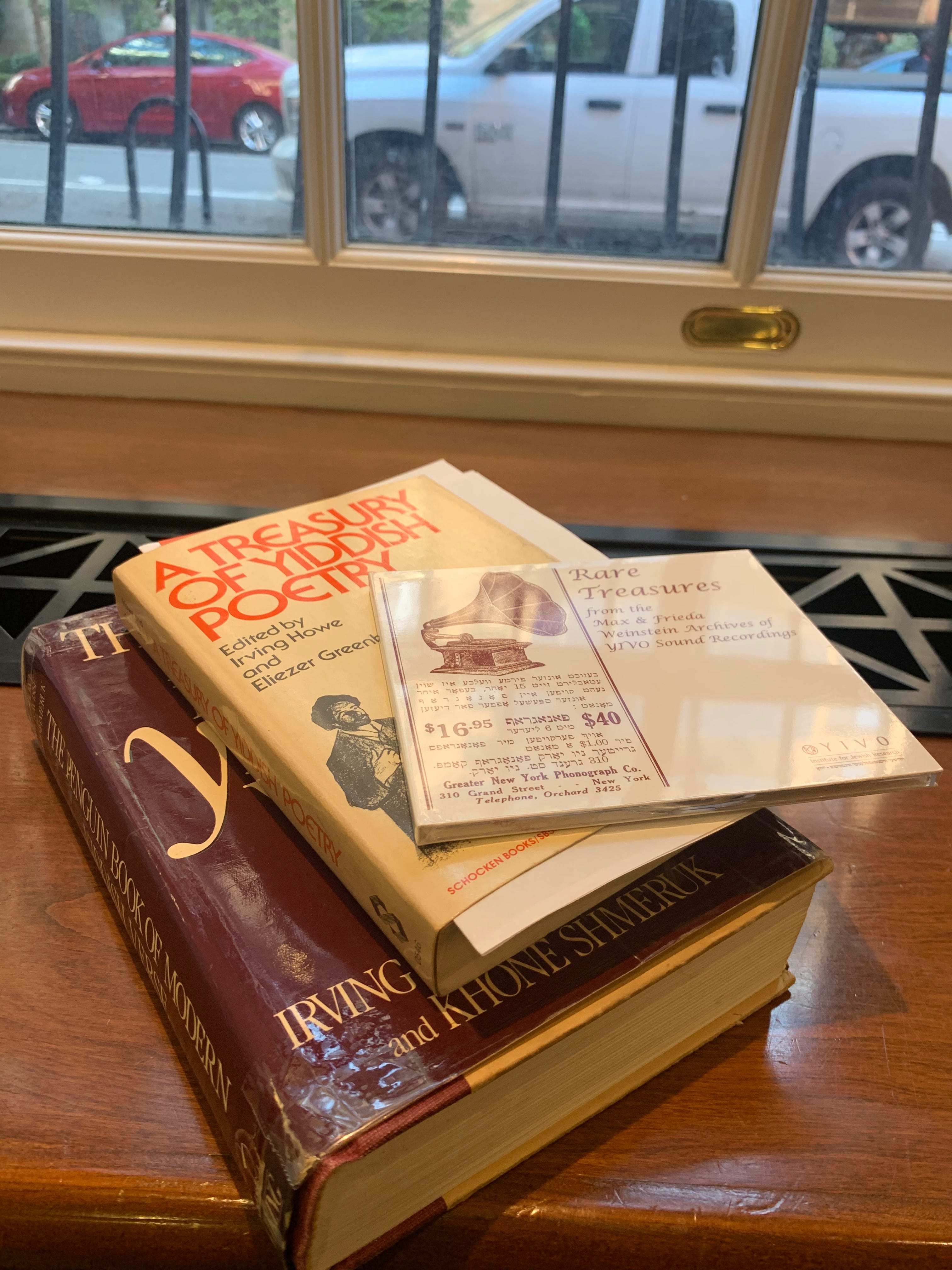
Working with Alex has allowed me to discover the Modernist side of Yiddish from the 1920s. In the introduction to The Penguin Book of Modern Yiddish Verse by Irving Howe, Ruth R. Wisse, and Khone Schmeruk, they write, “Is there, we may wonder, another body of imaginative writing in the modern era quite so rapid and cramped in its internal development, quite so harried by the brutal pressures of modern history, quite so bloodied at its point of fulfillment?” So much of Yiddish literature’s development was cut off abruptly, either by pogroms and forced migration, the Holocaust, a desire to assimilate, internal prejudices, and many other factors. A bit of research led me to the statistic that according to 2021 Census data, only approximately 20,155 people in Canada reported the ability to speak Yiddish—less than 0.05% of the Canadian population—and many of those who do speak it are in the very insular Hasidic community.
What I love about Alex’s work is partially how he places Yiddish within a contemporary context. He writes about Yiddish speakers in New York in the early twentieth century (like my own great-grandparents): “Today, the Yiddish-language world of Jewish immigrants in New York is often remembered with nostalgia and kitsch. But in reality it was rich and multifaceted, encompassing the full range of human experience from the quotidian to the sublime.” Singing in a dark blue night for a second time, I found the words fitting much easier in my mouth. I was able to use some of the German diction tools I’d learned during my time studying at the Franz Schubert Institut while incorporating the specificities of Yiddish, including its Hebrew and Slavic influenced consonants, many of which are sustained. In my opinion, the best lieder recitals are ones where you feel like you’re talking to the audience, or the audience feels like you’re talking to them. :) Isabelle and I loved lines like “Gute nakht dir, likht prinzessin” (good night to you, princess of light) , which felt much more conversational this time around. I sat in an armchair for this set to make things feel even more intimate.
Alex’s first song cycle, and all the days were purple, combines Yiddish poetry with some of my favourite American poets including Mark Strand, who I heard speak years ago in Chicago. I find it so moving how Alex brings this language of the past firmly into the present, placing it alongside contemporary poetry and setting it with a musical language much more rooted in composers like Philip Glass and Claude Debussy than in the Yiddish songs I grew up singing.
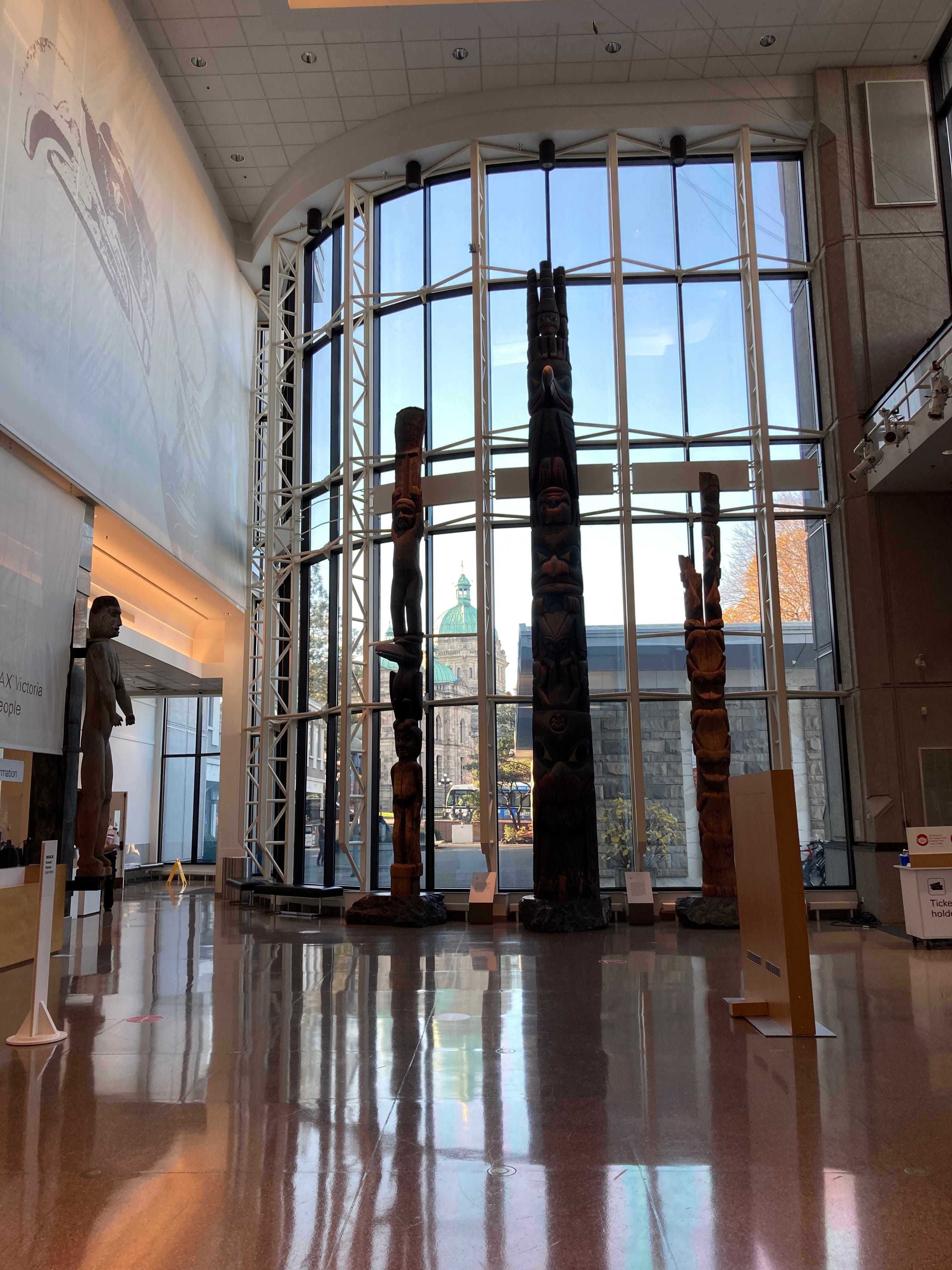
As a northern parallel, I can’t help but think about my moving time visiting the Royal BC Museum years ago and their Living Languages exhibit, which highlights the thirty-four First Nations languages of British Columbia, many of which, like Yiddish, have faced erasure due to genocide and cultural silencing. Finding ways to celebrate these languages through nuanced and moving works of art is such an imporant way to keep them alive.1 2
Anyway, that was a long-winded way of discussing my new fascination with all things Yiddish and Modernist (no kitsch necessary for the time being, please). I can’t wait to explore more of all of this. :)
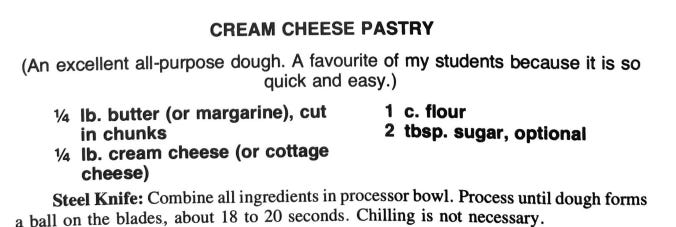
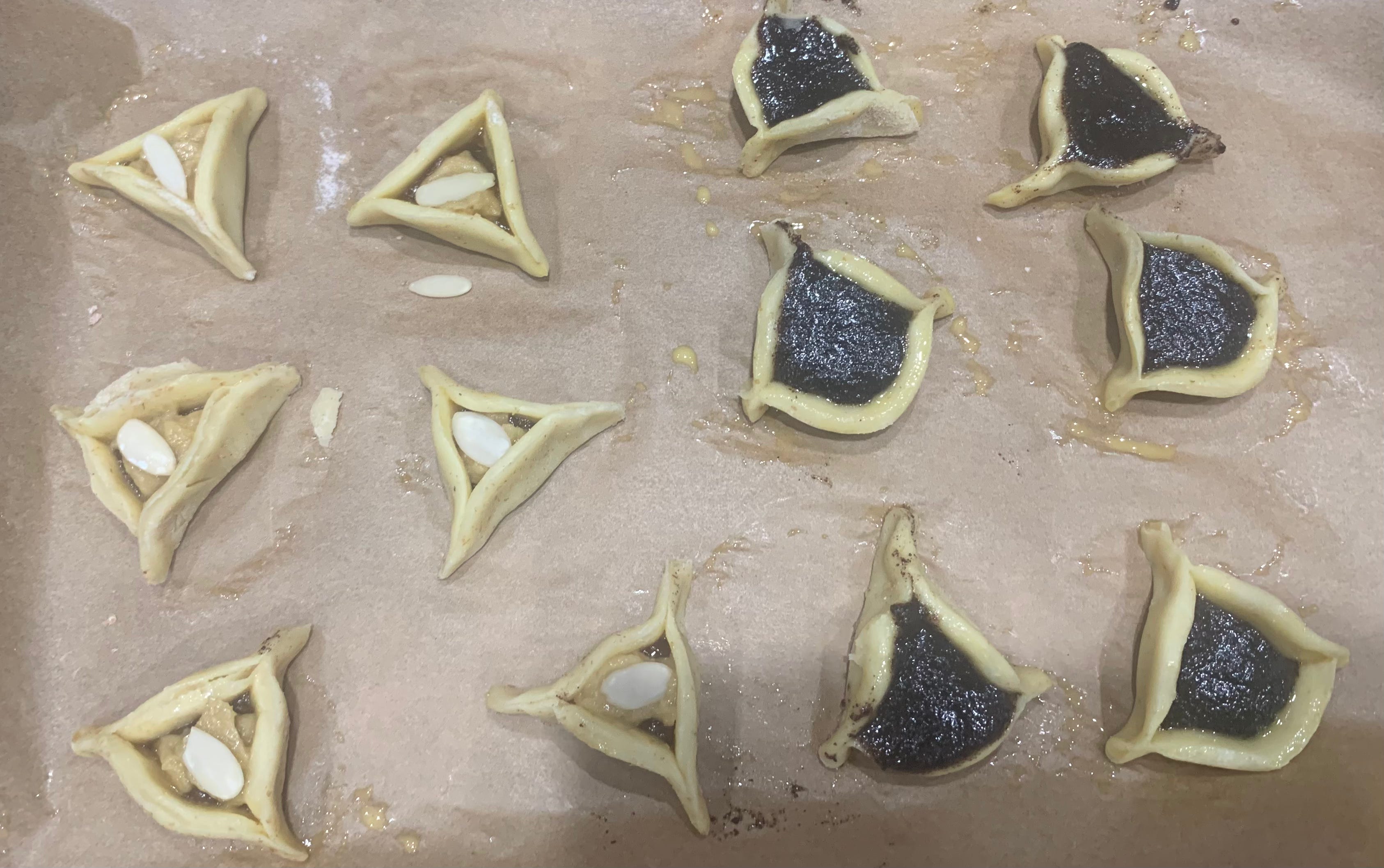
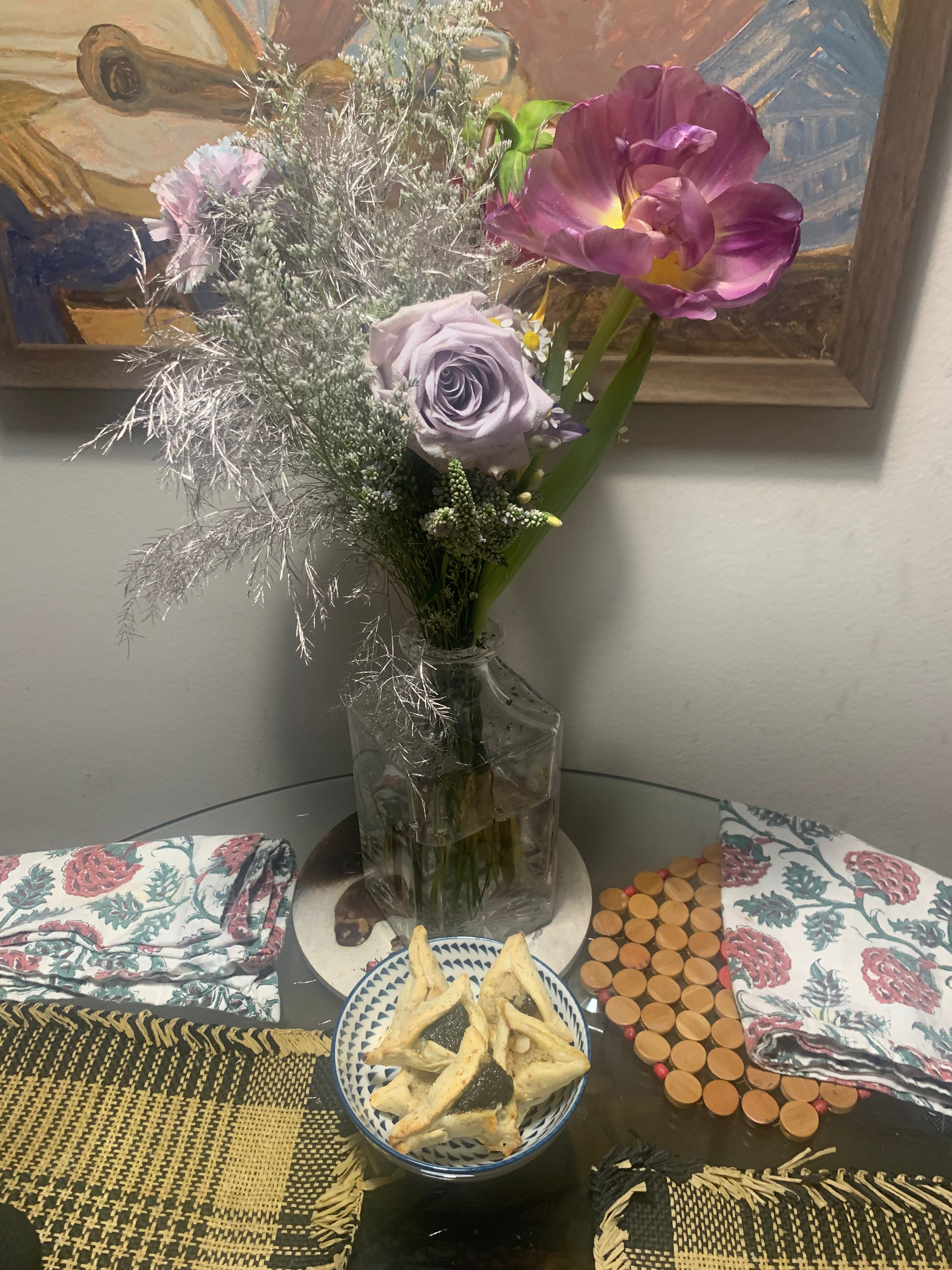
As I mentioned earlier, I grew up quite Secular/culturally Jewish, if anything. But, one way in which my family always liked to mark holidays (and which I’ve carried on) has been by making the associated foods. While I did not observe Purim, I had fun teaching my partner how to make and fold Hamantaschen this week. Here’s the recipe I grew up making (props to my mum in TO for scanning/sending it to me):

And I used Molly Yeh’s delicious poppyseed filling recipe, which is the best filling IMO:
1/2 cup poppy seeds, 1/2 cup vanilla unsweetened almond milk, 1/3 cup sugar, 1/4 cup honey, 1 teaspoon pure vanilla extract, Pinch kosher salt, Zest and juice of 1/2 lemon
Finely grind the poppy seeds, in batches if necessary, in a spice or coffee grinder. Transfer to a small saucepan and stir in the almond milk, sugar, honey, vanilla, salt and lemon zest and juice. Bring to a rapid simmer and cook, stirring often, until thick and jammy (if you draw a spoon across the bottom of the pan, you will see a line), 6 to 8 minutes. Transfer to a bowl and let cool completely. (You can refrigerate to expedite the process.)
Please remember this as you are slashing arts budgets, Mr. Carney!
Perhaps a concert highlighting some of these parallels is in order. Hmm…
No posts
Comments
Nothing yet. Say the first thing.
Sign in to join the conversation.