
The BBC investigation into childhood obesity in Campania highlights a real and urgent public health crisis. It rightly draws attention to children living with severe obesity, families struggling to recognize the problem, and food environments increasingly dominated by sugar-sweetened beverages, ultra-processed snacks and calorie-dense foods.
But one point deserves clarification.
The investigation does not demonstrate that the Mediterranean Diet has failed. If anything, it shows how profoundly we have abandoned it.
The challenge extends far beyond Italy. According to the World Health Organization, obesity is one of the defining public health challenges of our time. Adult obesity now affects more than 40% of the population in the United States and nearly 30% in the United Kingdom, while Italy’s adult obesity rate remains below one in five adults—around 17% according to WHO estimates. Yet Italy faces a different warning sign: childhood obesity remains among the highest in Europe, particularly in communities experiencing greater cultural and socioeconomic deprivation. The issue is not national identity or culinary tradition. It is the quality of the food environments in which children grow up.
That distinction matters.
The greatest risk is not the BBC investigation itself. The real risk is the simplistic conclusion that what many Italians eat today is still the Mediterranean Diet.
It is not.
Pizza overloaded with fries and processed toppings, packaged snacks, sugary drinks and ultra-processed foods are not the Mediterranean Diet. They are what has replaced it.
The question is not whether the Mediterranean Diet works. Decades of science have already answered that. The real question is why governments have stopped protecting the social, cultural and economic conditions that make it possible.
For more than seventy years, beginning with the pioneering work of Ancel and Margaret Keys in the Cilento during the 1950s, Southern Italy has been one of the world’s living laboratories for nutrition science. From the Seven Countries Study to the Lyon Diet Heart Study, the PREDIMED trial and decades of research by Antonia Trichopoulou, Walter Willett, Francesco Sofi, Ramon Estruch, Roberto Vicinanza and many others, the evidence has remained remarkably consistent. Today, more than 10,000 peer-reviewed scientific publications demonstrate that adherence to the Mediterranean Diet reduces cardiovascular disease, metabolic disorders and premature mortality while promoting healthy aging and longevity.
The science has not changed.
The food system has.
The science has never abandoned the Mediterranean Diet. Too often, public policy has.
This is precisely why Pollica, Italy’s UNESCO Emblematic Community of the Mediterranean Diet, matters.
UNESCO’s greatest innovation was not simply recognizing the Mediterranean Diet as an Intangible Cultural Heritage of Humanity. It was identifying the Emblematic Communities as its living custodians, recognizing that cultural heritage survives only when communities continue to practice, adapt, and transmit it across generations. These communities were conceived as the engines of safeguarding, entrusting mayors and local institutions with the task of transforming heritage into everyday life.
In this vision, mayors are not ceremonial guardians of tradition. They are stewards of public health, local food systems, cultural continuity and territorial development.
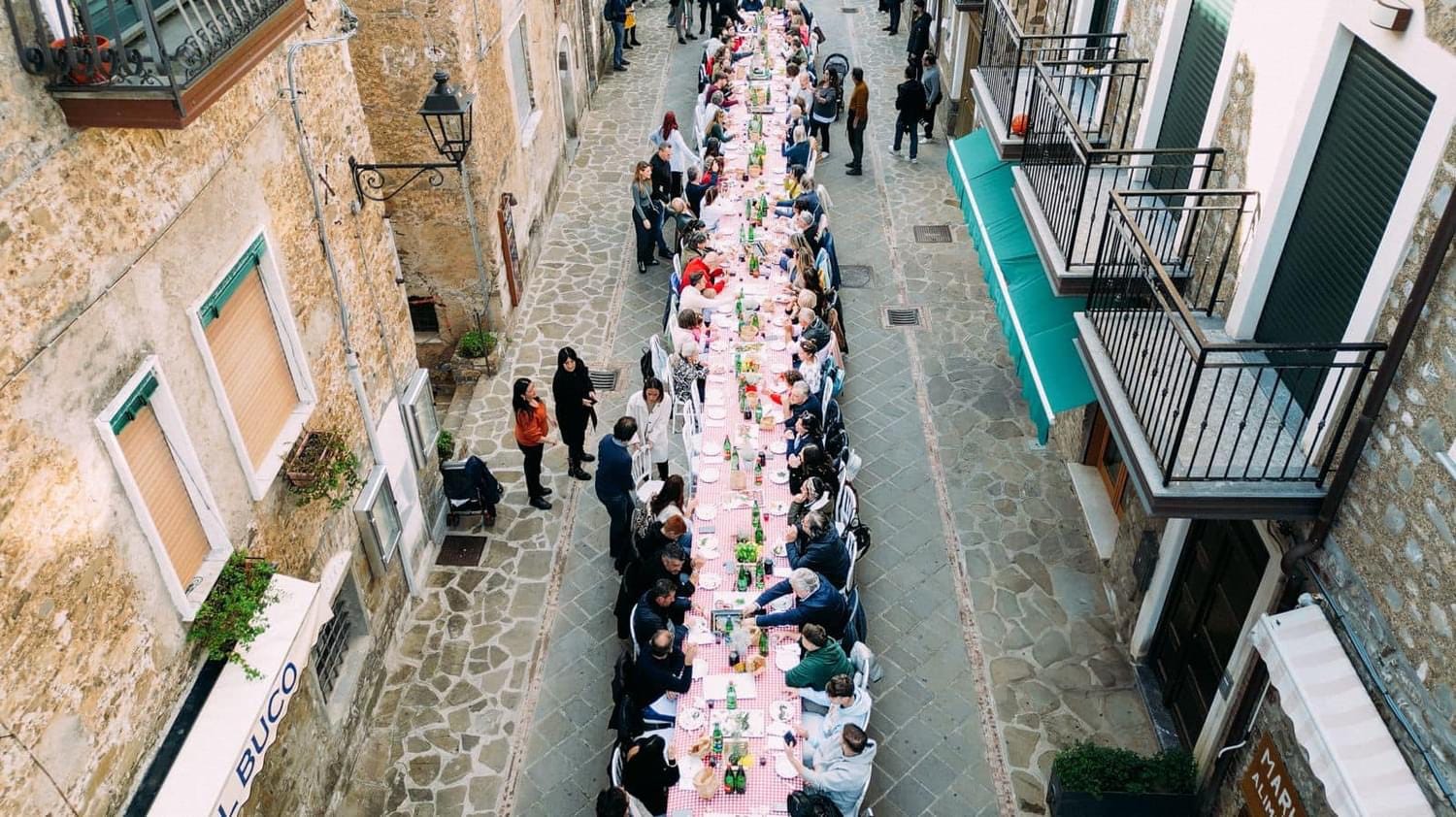
For more than fifteen years, the Municipality of Pollica, together with the Mediterranean Diet Study Center and the Permanent Secretariat of the UNESCO Emblematic Communities Network, has shown what this means in practice. Here, the Mediterranean Diet is not preserved behind glass as cultural memory; it is governed as public policy. School canteens, nutrition education, local procurement, farmers’ markets, the FOODSCAPE Urban Plan, regenerative agriculture, community participation, scientific research and cultural programs have been designed as one integrated ecosystem where health is created through the way a territory functions.
Recent projects such as LAFA (Longevity & Fertility Algorithm), developed with the University of Salerno within Italy’s ONFOODS-PNRR program, continue this scientific tradition by monitoring adherence to the Mediterranean Diet among younger generations using internationally validated tools such as KIDMED and MEDAS. The objective is not simply to celebrate the Mediterranean Diet, but to detect where it begins to weaken and intervene before unhealthy food environments become irreversible.
The results are remarkable. Nearly one in three children (30.6%) achieves high adherence to the Mediterranean Diet—around twice the Italian average reported in recent meta-analyses—while extra virgin olive oil remains the primary household fat in more than 96% of families, legumes continue to be widely consumed, and traditional Mediterranean cooking practices remain part of everyday life.
These outcomes are not accidental. They are the result of long-term investment in integrated policies: Mediterranean-inspired school meals, food education from early childhood, support for local farmers and short supply chains, farmers’ markets, food-sensitive urban planning, protection of agricultural landscapes and continuous collaboration between researchers, schools, citizens and local institutions. In Pollica, the Mediterranean Diet is not promoted through awareness campaigns. It is embedded in the way the community is governed.
Continuous monitoring also reveals where the first cracks are emerging. Industrial snacks increasingly dominate children’s breakfasts, sugary drinks remain widespread, while fruit, vegetables and fish are consumed less frequently than Mediterranean standards recommend, despite still performing better than regional averages. Prevention begins precisely here: not when obesity becomes a clinical emergency, but when science detects the first signs that a healthy food culture is beginning to erode.
This is what makes Pollica scientifically relevant. It is not simply a place where people still eat well. It is one of the few places in the world where the relationship between culture, governance, food environments and measurable health outcomes can be continuously observed, evaluated and improved.
As Mayor Stefano Pisani has argued, “The real failure is not the Mediterranean Diet. The real failure is allowing profit to come before health.” His words point to a broader truth: we cannot continue to privatize the profits generated by ultra-processed food while socializing the costs of obesity, diabetes and chronic disease.
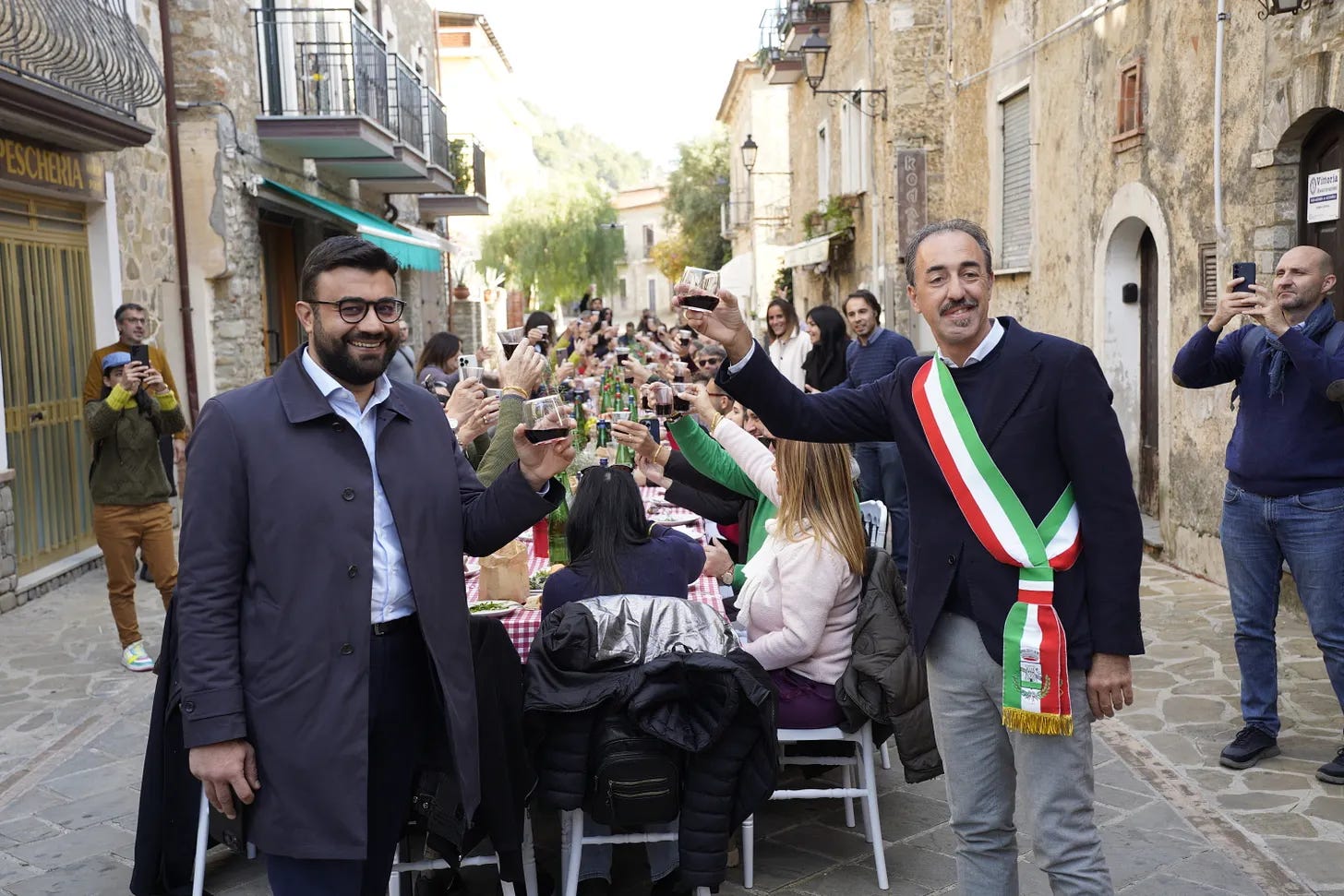
This is exactly what a UNESCO Emblematic Community should be.
Not an open-air museum.
A laboratory for the future.
Across Italy, organizations such as Coldiretti have played an extraordinary role in reconnecting citizens with local agriculture through farmers’ markets, schools, hospitals and short food supply chains. Their work deserves recognition.
But no farmers’ organization can replace coherent public policy.
Paradoxically, as the Mediterranean Diet became an increasingly profitable market for those eager to sell the next miracle diet, the next wellness trend or the next nutritional shortcut, we stopped investing in what truly made it valuable. Because the Mediterranean Diet is not a menu, nor a nutritional prescription. It is a living social, ecological and economic infrastructure that connects agriculture and food production, education, public health, biodiversity, landscapes, local economies and communities. We turned it into a consumable product rather than a system to sustain.
Yet the Mediterranean Diet was never just about food. It is a living cultural infrastructure that connects production and consumption, farmers and families, schools and farms, biodiversity and health, landscapes and local economies, science and tradition. Above all, it is a model of governance—one that places communities at the center of health, sustainability and shared prosperity.
That is precisely what public policy has forgotten.
Childhood obesity is not the consequence of individual failure. It is the outcome of food systems. Food environments are shaped by agricultural policy, school meals, fiscal incentives, urban planning, retail access, food marketing and cultural education. When these policies pull in different directions, families are left to fight a battle they cannot win. When they work together—as Pollica demonstrates—health becomes the natural outcome of the system.
These are political choices.
For too long, we have asked families to fight alone against food systems deliberately designed to maximize the consumption of ultra-processed products.
That is not prevention.
That is surrender.
Pollica proves that the Mediterranean Diet still works—not through nostalgia, but through evidence. Yet we do not want Pollica to become the world’s last Mediterranean Diet reserve.
Its value lies not in being exceptional, but in being replicable.
The Mediterranean Diet is sustained by communities before it is sustained by recipes; by public policy before it is sustained by individual will. It depends on school canteens, local farmers, educated citizens, responsible urban planning, scientific research, cultural transmission and courageous political leadership.
The science is settled.
More than 10,000 scientific publications have already shown what works.
The question is no longer whether the Mediterranean Diet is effective.
The question is whether governments are willing to build the systems that allow it to thrive.
The future of the Mediterranean Diet will not be decided in nutrition clinics.
It will be decided in village squares, around family tables, in school canteens, on farms, in town halls and in parliaments.
Wherever communities choose to protect not only what they eat, but the relationships, knowledge, landscapes and institutions that make healthy living possible.
The Mediterranean Diet does not need defending.
It needs governing.
No posts
Comments
Nothing yet. Say the first thing.
Sign in to join the conversation.