
When I was in my early twenties, a new-ish friend invited me on a weekend away to the countryside at their family’s house. I said yes immediately. I was newly living in somewhat-unfriendly London. I was eager to make and keep new friends. So off we went. When we pulled up in the drive, I realised it was an estate, perhaps several hundred years old. There were fields of sheep. There were something like twelve bedrooms. There was a room just for playing pool in the basement. It was dilapidated, beautiful, not something I’d ever seen before outside of the context of a museum. The other guests all knew each other from schools and circles I knew nothing about. At one point, I brought up the cuts to the NHS with disapproval. “Well you have to, you know,” said one of the other guests automatically. “With the aging population. It’s just not sustainable.” I was not invited back.
But what I was thinking of, all that time (besides how incongruous I was) was Jane Austen. Hers were the novels that I, an uncouth American, had access to that explained even a small part of what was happening. This was the house of a landowner, and I was in this context a curiosity as much as a guest. In that moment, I realised how well Austen serves as a primer on class and societal norms, especially in the UK of course, but to some degree elsewhere.
I’d first encountered Austen at ten. In a characteristically earnest and intentional move, my (American) parents took turns reading to me before bed. I could read to myself by then, of course, but they wanted to share slightly more “grown up” books with me. My father chose Haroun and The Sea of Stories and Sophie’s World, both of which have stuck with me for life, and both of which I can well hear still in his voice(s). My mother chose Much Ado About Nothing, which we took turns reading out loud, playing different characters. I found Shakspeare’s world of comedy confusing and fascinating in turns. The men and women insulting each other were flirting, I asked? (My mom even spent some time explaining the sex jokes to me…)
Then, for the next book, Mom chose Pride and Prejudice.
Reading is a good way of entering the Jane Austen world, a better way, I’d venture, than watching the many movies and TV series that have since been made. For watching Austen leads one to sink into the beautiful, near-fantasy elements: the estates like the one my friend’s family had, the fluttering lacy dresses, the semi-shirtlessness, the romantic lines that Austen herself would never have penned.
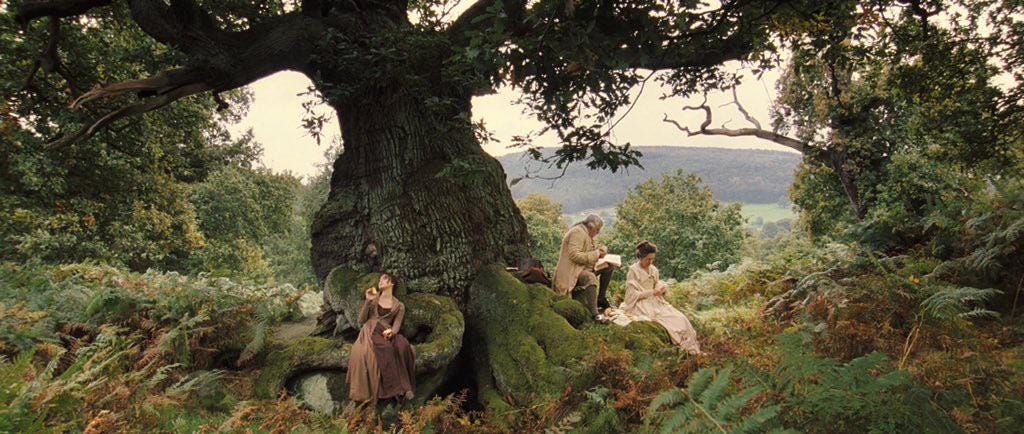
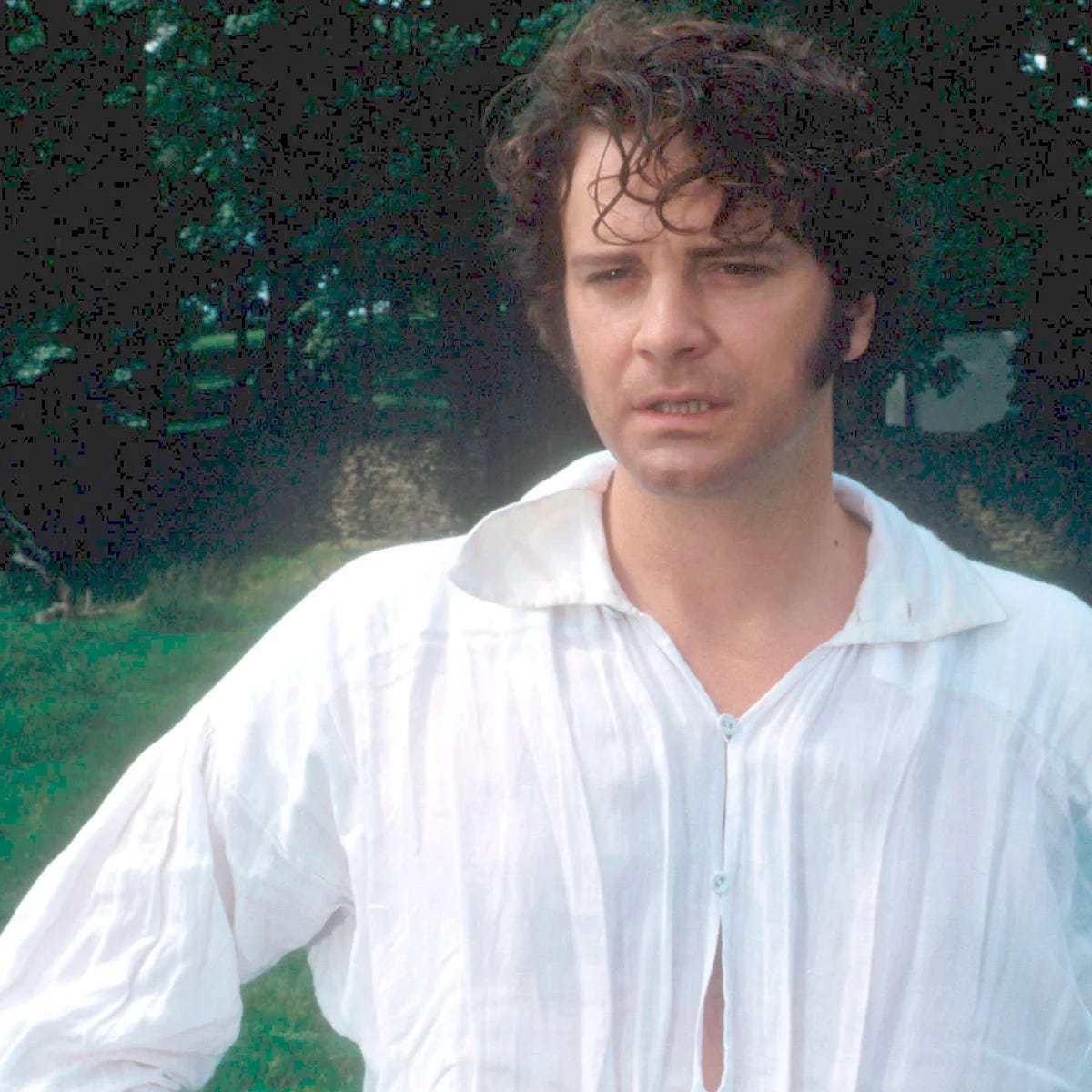
In contrast, when reading Pride and Prejudice, or any of her novels, one is faced with Austen’s directness: this is a story about a world where men are known in large part by their annual income. At the time, I found all the references to “10,000 pounds a year” confusing. In fact, my mother had to explain quite a bit of both subtext and text. I didn’t even quite catch Darcy’s final proposal, so unfamiliar and indirect was the language.
That visit to the countryside struck me, but I returned to London and a world that looked, superficially, a bit less like Austen’s world. Soon it all receded in my memory. Then, this winter, a full quarter of a century after I first read Austen’s work, I turned to her oevre again. Life was feeling a little rocky and tired over the winter in our unconventional household, and for a spell we found comfort and food for discussion watching all the beautiful Austen adaptations, all the frills and bucolic countrysides.
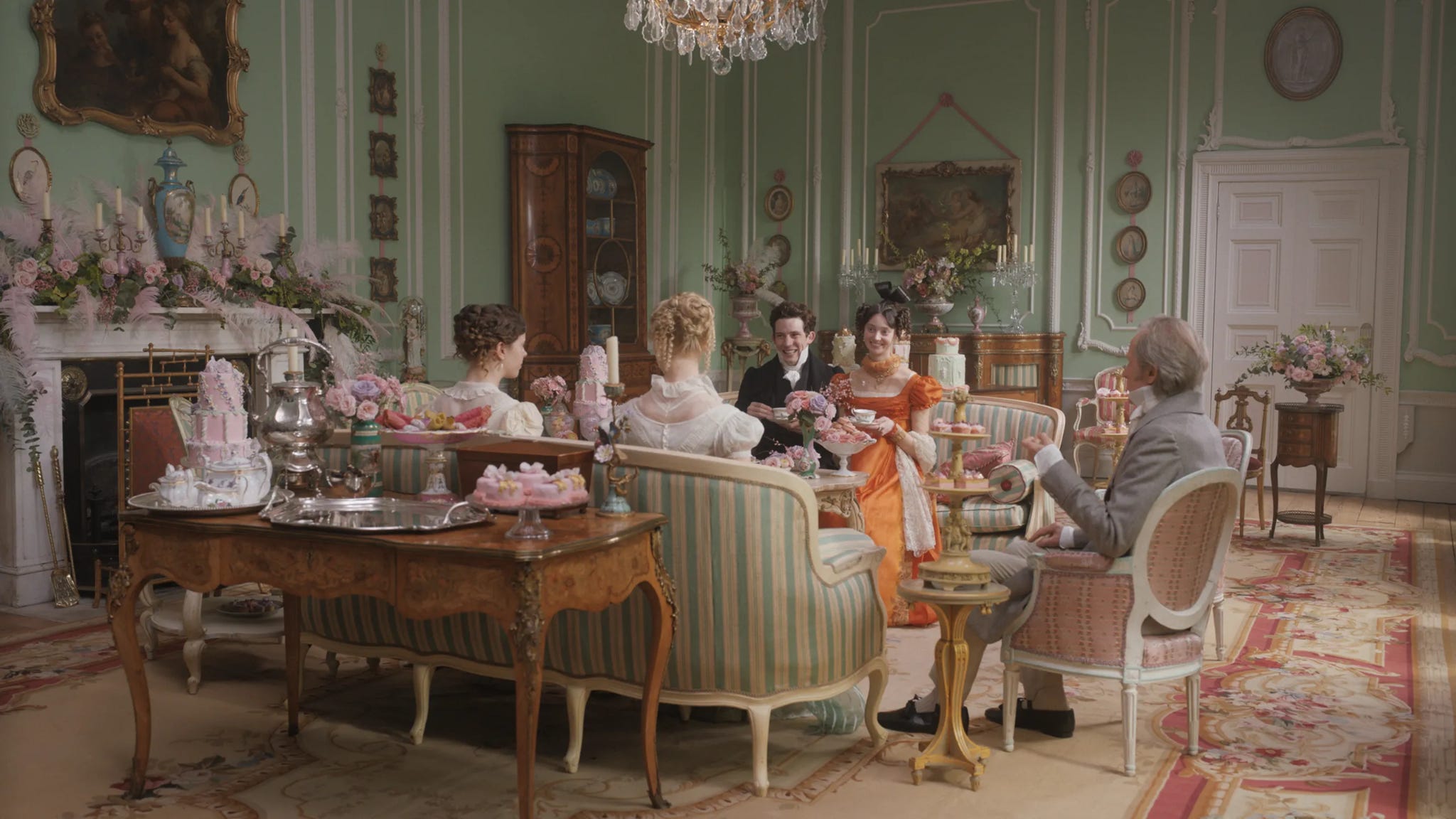
Like my ten year old self, I found I still needed some explanations (I was still googling, “how much is 10,000 pounds a year in today’s terms?”) This time around, though, in ways I had not even during my countryside visit, I began to see the corollaries between Austen’s world and my own. For in my world, (read: the world of Millennial and Gen Z folks who tended to have university degrees in the social sciences and humanities and have found themselves living precariously), people are rarely going to fancy estates for the weekend. They are, however, and far more than ten years ago, struggling to make key decisions related to love and money that will govern the next decades of their lives. They are not far from the Austen heroines in this way.
Here are just a few examples:
Quite a few friends are stuck in a complex bind around housing and work and dating, where they can’t afford to live except with their families or else in fairly temporary setups. This in turn makes it harder for them to plan ahead in life, date, or find work. Sociological data confirms this trend for our generation and those younger than us; more and more young men and women move home with their parents, unable to find work and especially “ladder” jobs that would lead to a career. And once they are there, they often effectively leave the “relationship force” as well.
When, in the movie version of Pride and Prejudice, Charlotte Lucas admonishes Elizabeth not to judge her for settling down with an unbelievably annoying man so that she can have the unexpected good fortune of a home of her own, rather than burdening her parents… her woes do not seem far from the lives of many people I knew. Of course, in the book, Charlotte Lucas does not have to say this; I suspect readers of her time could infer the feelings of both characters on their own.
Some of my friends and acquaintances are retraining (as therapists, AI trainers, teachers, and even members of the military) in the hopes of rising at least a little in fortune after a failed first shot at another career.
This seems to me not too different from the sailors and military men of Persuasion, many of whom joined in the hopes of rising at least a little, if not a lot, in their class position. And these stories mirrored Austen’s own life, where two brothers joined the navy and became admiral of the fleet and a rear admiral, in part to seek better fortunes.
Some friends were choosing partners, not wholly for their income or “prospects”, but with an appraisal all the same of how things might go financially.
I have friends staying in marriages because they cannot find work and need to try to keep the visa options related to that marriage. I have friends where, frankly, the income is the better part of what the man brings to the table, and I cannot imagine they’d be there without it. These days, perhaps due to the intensity of “assortative mating” trends, people are perhaps less frequently angling to marry “up”, although the many jokes about, and actual instances of, sugar daddy and mommy-ing suggest we haven’t entirely overcome this either. But certainly people are aware of what it might mean to marry whom, in terms of their long term prospects of owning a home or having things any easier than they do right now. Many a marriage is made between a man in tech or finances who can earn more and a woman with an less lucrative job but other offerings…
Many, many of my friends and acquaintances keep putting off marriage and/or settling down in the hopes that one more push in a given career, one more move in search of the right thing, will find them a better outcome. As a result, is very common among my friends for their most recent breakup to have to do with location, and that locational problem to have to do with one or more parties needing to seek just slightly better economic circumstances.
There is, in other words, a prolonged longing for and maneuvering towards a better set of prospects, one that may or may not materialise.
This searching for prospects was just as alive in Austen’s time. Among literature scholars, Austen is often described as writing about (the daughters of) “bad dads”, which is to say, fathers that have poorly provided for their children and/or died, leaving them without good options. For Austen’s own life involved such a dad. Her parents married (apparently for love, which was still a newish possibility then) and were relatively precarious. When her father died she and her sister and mother became rather less comfortable and dependent on her brothers. And those brothers themselves were quite varied in their fortunes. Besides the two admirals, there were four others. One was adopted by a rich relative and became rich, one was apparently disabled and given to a local family to care for. One became a rector and took over his father’s parish. One became a militia member and then a banker, and then ran the bank into the ground and then became a cleric. Relying on these men, Jane and her sister Cassandra remained unmarried, perhaps in part because they were without much in the way of a dowry.
In my own set, people are generally in downwardly mobile trajectories not due to a fatherly lack of wisdom or funds, but instead because of failures of the new system of class perpetuation for the “middle clases”: because of the financial ineffectuality of having a university degree (or three). Contrary to what so many were promised growing up, the job market did not care about those degrees as much as was claimed, at least not in the long run. Sometimes this downward mobility has to do with the overall precarity of the jobs market, or the need to keep moving to seek work, or or the unbelievable costs of owning a home, or all three of these things. The combination, in any case, very often means difficult dilemmas around housing, family, love and career.
Among my set it’s not just romantic love that forces these kinds of conundrums, but also romantic love of occupation. For today, many of us romanticise the idea of the right career, that related, imagined moment where we will fully express our potential, just as much or even far more than any romantic relationship. (This, I find, is more true of Millennials than Gen Z, who do not dream of work so much). Today, if one insists on seeking a fulfilling career at the cost of lifelong much-worse finances, one might be called a romantic just as Elizabeth Bennet was when she insisted on waiting for love rather than marrying someone unbelievably wealthy. And then, as now, some of us are still romantics, painfully so. I have friends who moved their entire lives around to be academics, moving from place to place only to lose such a position in the long run and find themselves incredibly precarious and adrift. In many ways those choices are even more heartbreaking than a bad marriage, and often just as final.
There’s something else about Austen’s world that feels familiar: there are older and newer paths to money, with very different cultural signifiers, and where new money sometimes tries to adere to older money’s norms. Austen’s was a time where the entire class structure was shifting rapidly, moving from a land-based system where gentry were tiny kings to a world where a small group of men could earn a fortune in trade (and colonialism, and even slavery). That’s why Caroline Bingley spends so much time talking about breeding – she is trying to show that she knows what good breeding is, even though her family’s fortune was recently earned, rather than long inherited.
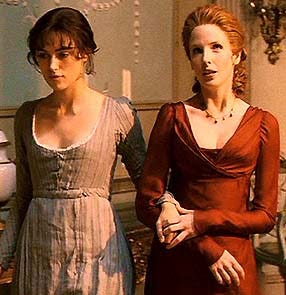
Caroline Bingley does not fail to remind me of those in the tech world especially, who make a (rare) upward trajectory due to changes in the economy, often by doing something relatively technical, but then seek to prove they are also valid within the old system, e.g. as “intellectuals” and “thought leaders” and so on. If you look, you will spot who I mean; they’re often adorning themselves with panels, thinktanks, Substacks, and more, even though their work does not require any of that, as is really just coding, engineering, impressing people at venture capital firms with a powerpoint, etc.
And all of the above have to do with the middle-upper classes. But of course, class is so much more than this. As time sped on during Austen’s writing years, and even after she died, this shift in the economy – from land-based agriculture to industrial life – also forced many of the poorest people off their land and into various forms of domestic service, so that England hit “peak servant” in about 1901. As I watch the rise of a million delivery drivers, Uber drivers, waiters, baristas, and part-time cleaners, personal trainers and coaches, and more, I can’t help but wonder how far our own trend will go, as a whole segment of society makes its living creating ease for another class.
I could not understand at ten or even at twenty-four what Austen was writing about, not really. I do now, at least a little more.
***
Austen’s work matters in part because she recognised that to write about marriage ( or long term relationships) is to write about class.
This insight was obvious in her time, but is sometimes lost today. In fact, when I write about marriage and class, readers sometimes respond with horror, and sometimes with a sudden, almost violent and painful recognition. A recent piece of mine, for example, described why marriage rates have fallen and what that does to people’s life prospects (and vice versa). It garnered some wonderful responses from the internet and also some truly heartbreaking ones from those anguished by the way dating has gone for them specifically. Some of the messages I received (especially on Instagram!) were from men who wrote furious comments about how they aren’t being chosen simply because they don’t or can’t make enough money. I think it’s important to stare their worries about class and partnership in the face, which is not the same thing as endorsing all their views. I do not believe women are broadly gold diggers, of course, but it is true that when men lost their presumed ability to “provide”, as wages lowered for everyone and both parties are now enabled and expected to work full time, the appeal of many a heterosexual partnership has declined. Perhaps that is the way it should be for these particular pairings, given what’s on offer, not just materially but emotionally. Nevertheless, it is also true that in this setup, this dire confluence of capitalism and yet-unlearned gender roles, both men and women frequently suffer from a lack of good skills and options for partnership.
More than that, though, I heard in the laments of men and women alike not only that options were bad but also that it was heartbreaking to realise how much decisions that seem (to us, today) like they should be about love are in reality revealed to be about livelihood, “safety”, ease, class. In Austen’s time it was still understood that marriage was in large part a financial transaction; but soon, that changed. Just a few decades later, in the Victorian era, people largely expected to marry for love. (Which is not to say that people stopped choosing, in reality, in large part due to money.) In fact, we might wonder whether romantic love really served in Victorian times, and indeed in the present, as the cultural consolation, the opiate of the masses, promising happiness is coming even as we all scrape by and fight precarity and downward mobility. In any case, then as now, many ended up saying one thing and doing another, angling for a rich husband while believing in soulmates, buying a carriage/car to impress women while decrying women looking for money, and more. That is why, when I read the laments of my Instagram followers, I think not only of Austen but also of a quote that came thirty years after Austen’s untimely death, one that does not sound entirely distinct from her analysis, even as it is more extreme, more polemic: “The bourgeoisie has torn away from the family its sentimental veil, and has reduced the family relation to a mere money relation.”
It’s not my favourite way to think about it, but it’s not entirely wrong, as evidenced by the women still looking for a man in finance, or even the men grumbling that women only want a man in finance. Still, I prefer to think of these kinds of questions another Marxist way, which is that men and women make relationship decisions, but not in conditions of their own choosing.
There is love, there is personal choice, sometimes at grave costs. But while we get to make some choices, when it comes to our personal lives, we do not get to choose what our choices will be. This is the bitter part of the theoretical freedom a capitalist system offers. It is also, realistically, why so many care about the bank accounts of their partners. Realistically, it will matter, even if they wish it didn’t, and realistically, they will only get a few options.
This awkward reality about human choice when it comes to love and money is, in Austens’ novels, what allows her to play moralist. For a true moral dilemma is never about encountering ideal options, but about sticking to some kind of principles or wisdom even when one is sorely tested by a lack of good options. Lizzie Bennet turns down an outrageously good deal financially to avoid marrying a man she thinks has harmed her family. That Austen eventually ties that up tale with a better beau (pardon the pun) does not negate that earlier moral dilemma one bit. Furthermore, one can really best understand Austen by reading all the novels together. In that full body of work, one repeatedly sees a world where people are frequently in positions where they choose, or even “have” to choose, money over love. Dashing men choose to propose to a wealthier woman rather than the one they love (Persuasion). People choose marriage poorly because of money and then end up turning to affairs instead (Mansfield Park). I look at my friends, and they are often leaving places, jobs, even people they love for financial or visa reasons, choosing the sensible option with a bit of a sigh, cheating on their jobs with some side hustle. Or else abandoning the “sensible”(in the modern sense!) path, with a worried backward glance. Plus ça change…
Austen is a moralist, not an activist. She would not have written rants about the bourgeoisie – and in many ways that is her strength. Not just because polemics can be tiring, but because novels do something else: they illustrate how the class system feels. Most of us – those of us smart enough not to become social theorists anyway – do not run around living our lives thinking about why the class system is bad all day long. We don’t experience it at that level. We spend our time hoping to marry off our daughters, or at least ourselves. We obsess over what schools our children will get into (which is the modern equivalent, in many ways, of Mrs. Bennet’s worries). We try out a new career, even if it means we have to be months away at sea, or move to Chicago. We tell our friends: imagine, 10,000 pounds a year. Imagine, six figures at that age. Today, I have no doubt Austen would have written about people and their failed startups, silly flexes, strange situationships, and more with a clear-headed realism and a tongue in cheek that few writers get right today.
Although she is not a polemicist, not an activist, Austen’s works have one advantage over many in our own time—she can name things as they are without fliching when it comes to love and money, and do it without losing heart. That’s what I could not understand at ten, but see now. Her characters struggle to figure out how to be moral in a system that isn’t. Sometimes they settle, sometimes they don’t, but Austen is always alive to the reality of what’s at stake, what’s possible, how many people sell out and make poor choices, and how many of us don’t quite get what we want. Jane had herself turned down a marriage offer after accepting it when she was 27 and probably knew she was choosing a life of precarity. (She may have been protecting her ability to write).
Austen portrays the world where many don’t get what they want because of the class system with great wit, without drowning in bitterness and without looking away from harsh reality. She managed it even though her own life involved being single and financially precarious. I admire it. I think about it a lot lately.
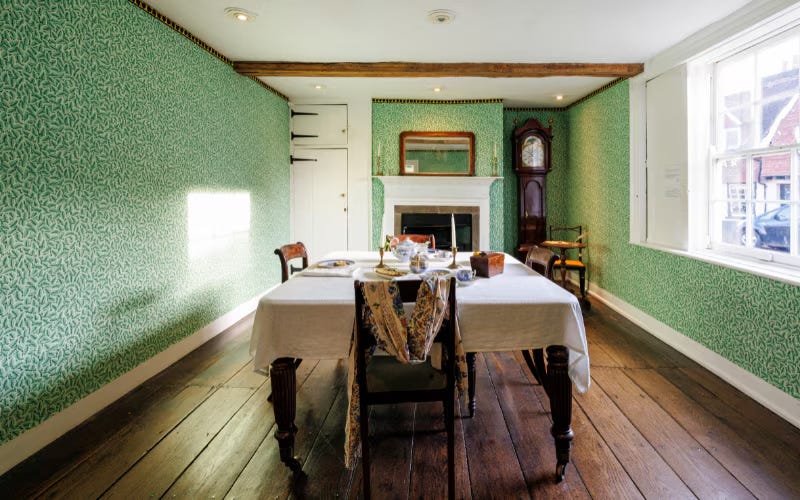
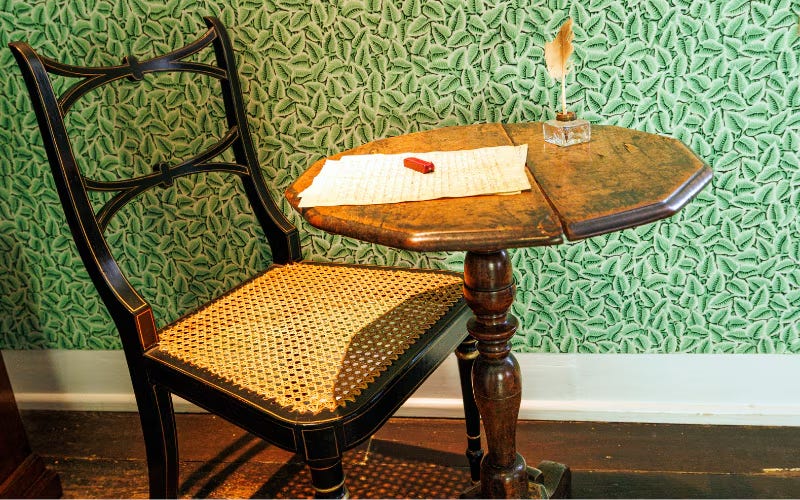
Austen’s dining room, with her writing desk.
Thanks to Deborah Stein for her help with this piece!
No posts
Comments
Nothing yet. Say the first thing.
Sign in to join the conversation.